



Search News
Industry Portal
Popular Tags
How to choose train control equipment for signaling reliability
Author
Time
Click Count
How to Choose Train Control Equipment for Signaling Reliability
Selecting train control equipment for signaling is not a matter of comparing catalog functions and choosing the system with the longest feature list. Technical evaluators are making a safety-critical architecture decision that can affect headway, maintainability, traffic recovery, cybersecurity exposure, and the practical cost of keeping a railway available for decades.
The difficult part is that signaling reliability is rarely determined by one cabinet, one onboard computer, or one radio link. It is an end-to-end property. An interlocking can be highly dependable while a poorly designed interface to axle counters, platform screen doors, traction power equipment, or the operations control center creates recurring operational restrictions. Likewise, a modern communication-based train control (CBTC) system may support short headways on paper but still disappoint if radio coverage, degraded-mode logic, or fleet integration has not been assessed with enough discipline.
The right choice begins with a simple but often neglected question: what must this railway continue doing when normal conditions are no longer present? A mainline mixed-traffic route, an unattended metro, a regional corridor being upgraded in stages, and a high-speed line all need different answers.
Start with the operating railway, not the equipment category
Before reviewing suppliers, establish the operational envelope. This should cover train types, target service frequency, line speed, braking performance assumptions, route topology, station dwell sensitivity, tunnel and viaduct sections, and the expected evolution of traffic over the asset life. A control system selected for today’s timetable may become a constraint long before its hardware reaches end of life.
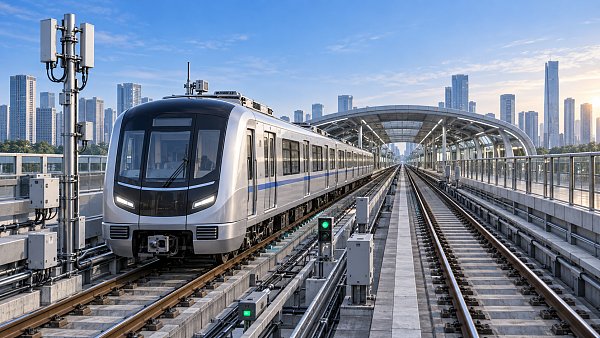
For example, an urban corridor pursuing close headways needs more than nominal moving-block capability. Evaluators should examine train separation under realistic passenger loading, the consequences of uneven dwell times, radio handover behavior near station approaches, and how the system reacts when a train loses communication. The recovery logic matters as much as the headline capacity figure. If controllers need a lengthy manual process to restore one failed train, peak service can unravel quickly.
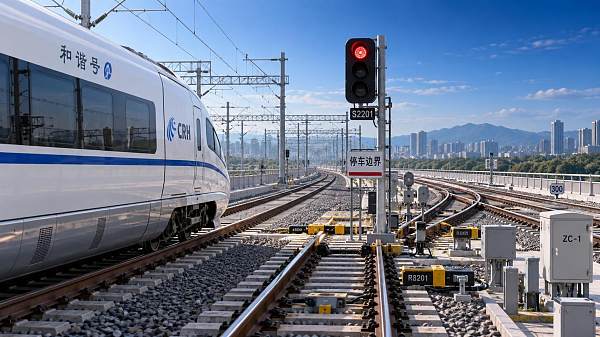
On a conventional or mixed-traffic railway, the harder issue is often migration. Existing relay interlockings, legacy track circuits, axle counters, level crossings, and onboard protection systems may need to remain in service while the new architecture is introduced. In those projects, the best train control equipment for signaling is not necessarily the most advanced platform. It is the platform with a credible transition plan, clearly controlled interfaces, and a safe fallback arrangement that operations staff can actually use.
Write these conditions into the technical requirement before discussing product configuration. Otherwise, bidders will naturally optimize around their own installed-base strengths, and the comparison will become difficult to normalize later.
Treat SIL4 as evidence to verify, not a label to accept
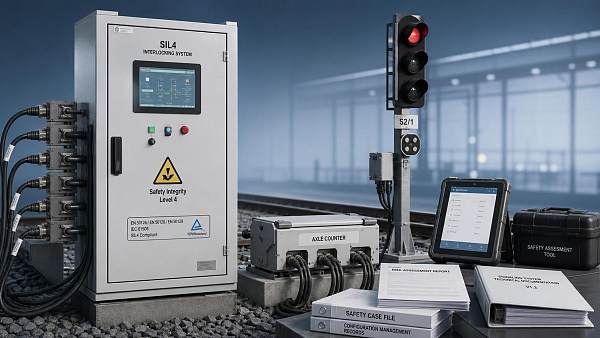
Safety Integrity Level 4 is central to many railway signaling applications, but “SIL4 capable” is not enough for a procurement decision. The meaningful question is whether the proposed safety case covers the intended function, configuration, environmental conditions, interfaces, and operating rules of the project.
A supplier may have established safety evidence for a proven interlocking platform, yet a particular interface module, communications architecture, software version, or local adaptation may require separate assessment. That does not make the solution unsuitable. It means the evaluation team must distinguish between proven core technology and project-specific engineering work.
Ask to see the structure of the safety assurance approach rather than requesting a vague declaration. Relevant material commonly includes hazard logs, requirements traceability, verification and validation planning, configuration-management procedures, independent assessment arrangements, and the assumptions placed on operators or maintainers. Applicable CENELEC, IEC, national, or authority-specific requirements should be confirmed early, particularly for cross-border or export projects.
One practical warning: safety and availability are connected but not interchangeable. A fail-safe system that defaults to restrictive operation may protect people correctly while still creating frequent service disruption. Evaluation criteria need to assess both safe failure behavior and the operational impact of common faults.
Evaluate the architecture at its interfaces
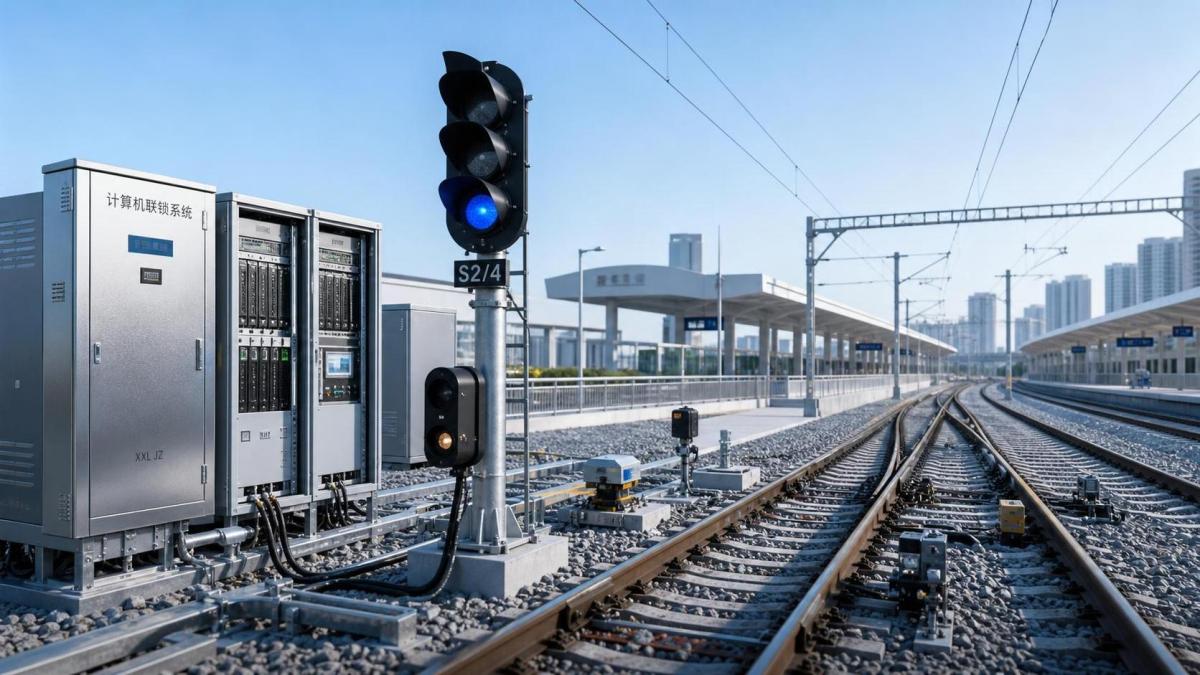
Signaling projects tend to fail at boundaries. The central equipment may be technically mature, but its interfaces can introduce timing uncertainty, duplicated data, unclear responsibility, or difficult test conditions. This is especially visible where train control meets traction power, rolling-stock braking, automatic train operation, passenger information, platform systems, and central traffic management.
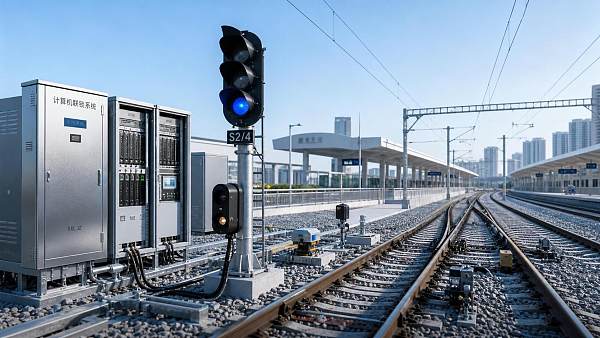
For an interlocking, evaluators should review how field elements are detected and commanded, how point-machine status is validated, how route locking is handled during degraded operation, and whether diagnostic data can distinguish a field failure from a communication or logic fault. For onboard control units, examine compatibility with train-borne sensors, brake interfaces, odometry sources, driver displays, and the rolling stock’s existing electrical environment.
Communications deserve equally close attention. A CBTC or radio-based train protection system depends on predictable performance, but not every outage has the same consequence. A short interruption may be manageable if the train maintains a supervised profile; a wider coverage loss in a terminal area may affect many services at once. The design review should therefore include radio propagation assumptions, interference management, redundancy architecture, handover zones, network time synchronization, and the behavior of trains when communications degrade.
Interoperability should be tested at three levels: physical connectivity, data exchange, and operational behavior. Two systems can exchange messages correctly and still create unacceptable behavior when a train is late, a route is cancelled, a platform is unavailable, or a field device reports an inconsistent state. Factory testing alone will not reveal every issue. The procurement plan should reserve time for integrated testing with representative rolling stock and real operating scenarios.
Choose reliability based on maintainable design
Reliability figures without maintenance context can be misleading. A system may demonstrate strong component reliability yet remain expensive to operate if fault isolation is slow, replacement requires extensive recertification, or every software change requires a major site intervention. The maintenance team should participate in technical evaluation from the beginning, not after contract award.
Useful questions include: Can a failed module be identified remotely? Is diagnostic information understandable without supplier-only tools? Are logs time-synchronized across interlocking, wayside, radio, and onboard subsystems? What spare modules must be held locally? Can equipment be replaced without re-entering a large volume of configuration data? How are software patches validated and rolled back?
Environmental resilience also deserves more than a checklist response. Trackside equipment may face heat, moisture, dust, vibration, lightning exposure, electromagnetic interference, or unreliable auxiliary power. Onboard systems experience a different combination of vibration, electrical transients, temperature cycling, and fleet-specific integration issues. A proposal should show how the selected configuration addresses the actual deployment environment rather than merely citing general product capability.
Lifecycle support is where apparently similar bids begin to separate. Confirm the supplier’s approach to obsolescence management, long-term spare availability, supported software versions, cyber vulnerability handling, engineering-data ownership, and training. A low initial equipment price may have little value if the operator becomes dependent on a narrow support channel for routine diagnostic work.
Do not leave cybersecurity outside the signaling review
Digital signaling has enlarged the operational attack surface. Remote maintenance access, IP-based communications, centralized diagnostics, wireless links, and connections to enterprise networks all require explicit control. Cybersecurity should not be treated as an IT appendix added after the safety design is frozen.
The review should establish asset ownership, network segmentation, identity and access management, secure remote-access procedures, logging, patch governance, incident response responsibilities, and supplier notification obligations. The detail will depend on the system and local regulatory environment, but a few principles are consistent: access should be traceable, safety-related networks should not be exposed casually, and emergency maintenance procedures should not create a permanent weak point.
There is also a human factor. If the approved cyber process is too slow for a genuine operational fault, people may bypass it under pressure. A workable design accounts for controlled urgent access, clear escalation, and post-event review.
Compare suppliers through delivery risk, not brochures
For technical evaluators, the supplier assessment should focus on whether the delivery organization can turn a system into a working railway. Relevant evidence includes experience with comparable operating conditions, engineering capacity for local adaptation, interface-management discipline, testing resources, configuration-control practices, and the availability of competent long-term support.
Comparable does not simply mean another project using the same equipment family. A high-density automated metro is not directly comparable with a freight-heavy national corridor. A supplier may be strong in one environment and still need a carefully structured partnership or additional validation in another. Ask suppliers to identify the parts of the proposal that are standard, configurable, newly developed, or dependent on third parties. The clarity of that answer is often more informative than a polished capability presentation.
Independent intelligence can help keep this review grounded. GTOT’s rail signaling coverage, for instance, approaches signaling as part of a wider transport system: interlocking architecture, onboard control, traction interaction, braking behavior, communications evolution, and supply-chain constraints. That broader view is useful because signaling reliability is affected by equipment beyond the signal room. A braking interface assumption, unstable power collection condition, or delayed rolling-stock modification can become a control-system problem during commissioning.
Build the decision around scenarios that can break the timetable
A strong evaluation does not end with a weighted scorecard, although a scorecard is useful. It tests each bidder’s architecture against disruptive but credible scenarios: loss of one communications path, an occupied track section with uncertain detection, a failed point indication, restricted-speed operation, loss of a wayside controller, an onboard reset at a station, a power interruption, or a transition between old and new signaling territories.
For each scenario, request a clear answer on four points: what remains safe, what service can continue, what action is required from staff, and how the system returns to normal operation. This reveals hidden dependencies quickly. It also exposes whether degraded modes were designed for railway operations or merely documented for assurance purposes.
The most dependable selection is usually not the one that promises zero disruption. Railways are complex physical systems; faults will occur. The better choice is the train control architecture that fails safely, limits the affected area, provides usable diagnostics, supports disciplined recovery, and remains supportable throughout its operating life. That is the standard technical evaluators should hold when choosing train control equipment for signaling reliability.
Recommended News
 Sep 24, 2026When should rail operators upgrade to CBTC-based railway automation systems?Railway automation systems: learn when CBTC upgrades deliver capacity, resilience and safer operations—and how to plan a phased, low-risk migration.
 Sep 12, 2026How automatic train control reduces the risk of signal overrunsAutomatic train control reduces signal overrun risk with continuous speed supervision, braking curves, fail-safe responses, and stronger rail safety assurance.
 Sep 02, 2026How to choose train control equipment for signaling reliabilityTrain control equipment for signaling: learn how to assess safety, reliability, interfaces, cybersecurity, and lifecycle support for resilient railway operations.
 Aug 17, 2026When does upgrading railway signaling systems improve line capacity?Railway signaling systems improve line capacity when headways, junction recovery, and service stability become the real bottlenecks. Learn the signs and best upgrade path.
 Aug 04, 2026What Drives Railway Signal Control Systems Pricing in New Rail Projects?Railway signal control systems pricing depends on scope, SIL4 safety, interfaces, testing, and lifecycle support. Learn the real cost drivers to compare bids and avoid overruns.
 Aug 02, 2026How to Evaluate Train Control Systems for Mainline Capacity and SafetyTrain control systems for mainline demand more than feature comparisons. Learn how to assess capacity, safety, interoperability, degraded modes, and migration before you shortlist.
 Jul 31, 2026How to Evaluate a SIL4 Signalling Equipment Exporter for Safety Compliance and Project RiskSIL4 signalling equipment exporter evaluation starts with evidence, not claims. Learn how to verify safety compliance, project risk, integration capability, and lifecycle support.
 Jul 10, 2026SIL4 Signalling Systems: Key Safety Functions and Integration RisksSIL4 signalling systems explained: explore key safety functions, integration risks, and practical evaluation criteria to verify real-world railway reliability.
 Jul 08, 2026Automatic Train Control Fail Safe: Core Design Checks That MatterAutomatic train control fail safe explained: learn the core design checks for braking priority, fault detection, communication integrity, and safer rail system performance.
 Jul 06, 2026Train Control Equipment ETCS: Key Functions, Levels, and Deployment DifferencesTrain control equipment ETCS explained: explore key functions, ETCS levels, deployment differences, and evaluation risks to support smarter rail upgrade and procurement decisions.
 Jun 28, 2026Rail Signalling North America: Standards and Upgrade Priorities in 2026Rail signalling North America in 2026: explore key standards, cyber risks, and upgrade priorities shaping safer, smarter, higher-capacity rail networks.
 Jun 25, 2026How to Compare Railway Control Systems for Safer Network UpgradesRailway control systems comparison made practical: learn how to assess safety, migration risk, interoperability, and supplier capability for smarter, safer network upgrades.
 Jun 24, 2026Railway Automation Systems Standards in 2026: What Is Changing?Railway automation systems in 2026 face stricter standards in safety, cybersecurity, interoperability, and compliance. Discover what is changing and how projects can stay competitive.
 Jun 22, 2026Rail Signalling Basics: Common Failure Points and Safety Upgrade PrioritiesRail signalling basics explained: discover common failure points, risk-based safety upgrade priorities, and practical steps to improve reliability, compliance, and network performance.
 Jun 20, 2026LTE-M Rail Transit: Where It Fits Better Than Legacy WirelessLTE-M rail transit explained: discover where it outperforms legacy wireless in rail monitoring, low-power devices, and scalable telemetry for smarter, cost-efficient operations.
 Jun 16, 2026LTE-M Rail Transit: What to Check Before DeploymentLTE-M rail transit deployment starts with the right checks. Learn how to evaluate coverage, latency, handovers, cybersecurity, and system integration before rollout.
 Jun 15, 2026How to Evaluate Railway Control Components for Safer Signaling UpgradesRailway control components shape signaling safety, uptime, and integration success. Learn how to evaluate compatibility, SIL, resilience, and lifecycle fit before your next upgrade.
 Jun 12, 2026Railway Automation Systems: Key Standards and Performance ChecksRailway automation systems explained through key standards, SIL checks, interoperability, diagnostics, and lifecycle risks—discover how to compare solutions with confidence.
 Jun 10, 2026Railway Control Components: What Matters Most in System SelectionRailway control components selection affects safety, interoperability, and lifecycle cost. Discover the key criteria for choosing resilient rail systems with confidence.
 Jun 08, 2026Rail Signalling vs CBTC: What Matters for Network UpgradesRail signalling vs CBTC: learn what matters for network upgrades, from capacity and interoperability to automation, lifecycle cost, and safer long-term performance.
 Jun 03, 2026LTE-M Rail Transit: When It Fits Signaling, Monitoring, and Field OperationsLTE-M rail transit can strengthen signaling support, asset monitoring, and field operations—learn where it fits, what to test, and how GTOT helps reduce deployment risk.
 Jun 01, 2026Railway Signal Control Systems: CBTC or Interlocking?Railway signal control systems are evolving fast. Compare CBTC and interlocking to assess safety, capacity, cybersecurity, and lifecycle value for smarter rail upgrades.
 May 31, 2026Railway Safety Technology: When CBTC Adds Real ValueRailway safety technology gains real value with CBTC when it improves headway, SIL4 safety, resilience, and lifecycle performance across complex rail scenarios.
 May 23, 2026LTE-M Rail Transit: Where It Fits Best in 2026LTE-M rail transit in 2026: discover where it fits best for low-power monitoring, asset visibility, and cost-efficient rail digitalization across stations, depots, and trackside systems.