



Search News
Industry Portal
Popular Tags
LTE-M Rail Transit: What to Check Before Deployment
Author
Time
Click Count
LTE-M Rail Transit: What to Check Before Deployment
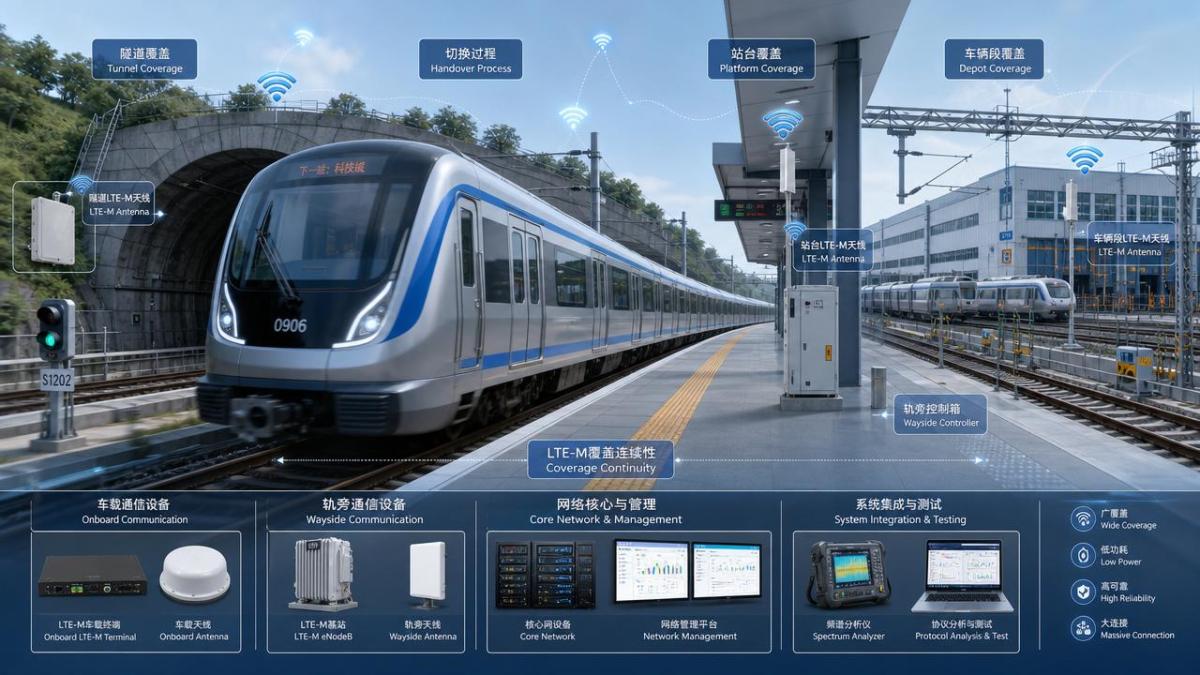
Before deploying LTE-M rail transit systems, a basic signal check is not enough.
Real decisions depend on how the network behaves under rail-specific pressure.
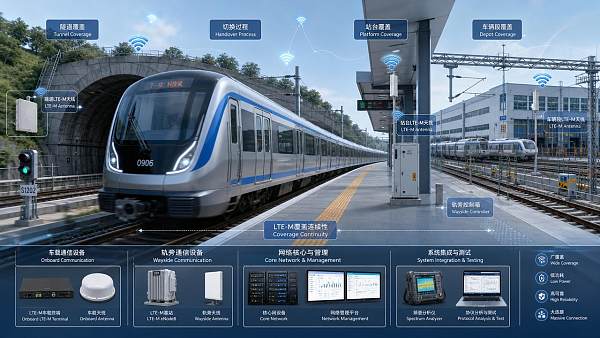
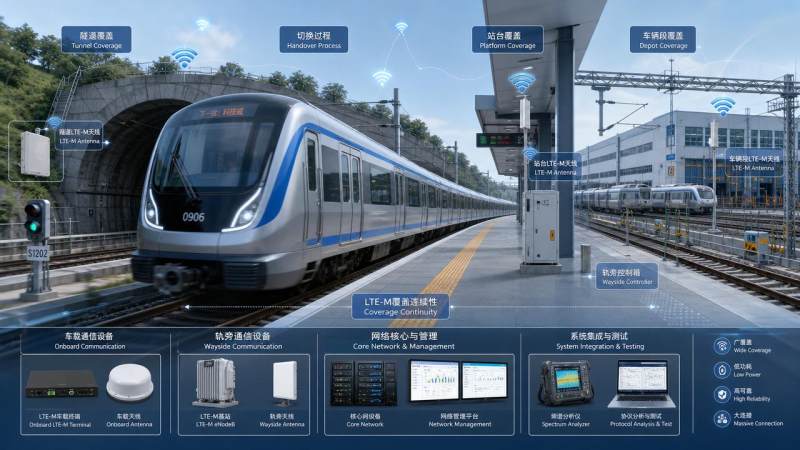
That includes moving trains, tunnels, depots, cuttings, stations, and mixed urban interference.
In practice, LTE-M rail transit must be judged as an operational system, not a standalone radio feature.
A sound evaluation starts with five questions.
Can coverage remain continuous?
Can latency stay predictable?
Will handovers hold at line speed?
Is the cybersecurity model rail-ready?
And will it integrate cleanly with signalling, braking, and onboard control functions?
Start with the rail use case, not the radio spec
Many LTE-M rail transit reviews fail because the checklist begins with generic telecom criteria.
That approach misses what rail operations actually require every minute of the day.
A freight corridor, metro line, and regional passenger route do not stress LTE-M the same way.
So the first task is mapping operational profiles before reviewing vendors, modules, or deployment costs.
Define the traffic model clearly
List every service expected to run on the LTE-M rail transit network.
Separate safety-related data from maintenance, diagnostics, telemetry, video triggers, and passenger-side services.
This makes bandwidth planning more honest and prevents hidden overload later.
- Identify peak uplink and downlink demand by trainset and by line section.
- Measure required message frequency for control, health monitoring, and event alarms.
- Define acceptable loss, delay, and retry behavior for each service class.
- Document fallback behavior when LTE-M rail transit performance drops below threshold.
Check coverage continuity in difficult rail environments
Coverage is the most visible issue, but also the easiest one to oversimplify.
For LTE-M rail transit, average signal strength means little without route-level continuity data.
A strong outdoor result can hide weak performance in tunnels, viaduct shadows, yards, or station canyons.
That is why field verification matters more than desktop prediction alone.
Coverage checks that matter
- Run drive tests and onboard tests in both normal and degraded traffic periods.
- Test tunnels, depots, maintenance sheds, wash plants, and terminal throats.
- Review antenna placement against metallic reflections and train body shielding.
- Check overlap zones where handover decisions will be made at speed.
- Confirm indoor coverage where train preparation or remote diagnostics happen.
From recent project trends, weak spots usually appear at operational edges, not on the main alignment.
That includes sidings, crossovers, depot entrances, and maintenance access roads.
Verify latency, jitter, and handover under motion
This is where LTE-M rail transit selection becomes more technical.
A network can look healthy in static tests and still struggle when trains move across cells.
Rail systems depend on consistency more than occasional peak speed.
That means latency variation often matters as much as median latency.
What to test during mobility trials
- Round-trip delay at low, medium, and maximum operating speed.
- Jitter under simultaneous train reporting and background traffic.
- Packet loss during cell reselection and handover.
- Recovery time after brief fades or tunnel exits.
- Performance during multiple train movements in the same radio zone.
More importantly, test results should be tied to operational thresholds.
If the line supports automated functions, even small instability can become a system acceptance issue.
Ask how handover logic is tuned
Not all LTE-M rail transit deployments use the same handover philosophy.
Parameter tuning, neighbor lists, overlap design, and priority settings shape real mobility behavior.
A vendor should explain how these settings are optimized for rail geometry rather than standard urban mobility.
Review integration with signalling, braking, and onboard systems
An LTE-M rail transit network does not operate in isolation.
Its value depends on how well it fits the wider rail control architecture.
This is especially important in projects linked to signalling supervision, remote diagnostics, and braking status feedback.
Compatibility gaps usually appear at interfaces, not in the radio core.
Focus on interface realism
- Check protocol compatibility with onboard controllers and ground-side gateways.
- Validate time synchronization across subsystems sharing operational data.
- Confirm how alarms flow into maintenance and traffic management platforms.
- Review electromagnetic compatibility near traction power and braking equipment.
- Assess installation constraints for antennas, cabling, and onboard modules.
In real projects, onboard space, vibration, heat, and maintenance access can reshape the design.
That also means lab compatibility alone should never close the evaluation.
Do not treat cybersecurity as a late-stage add-on
Cybersecurity is now a board-level deployment condition for LTE-M rail transit.
A connected train is part of critical infrastructure, even when the application seems low bandwidth.
The review should cover devices, SIM management, network access, monitoring, and incident recovery.
Minimum security questions
- How are credentials provisioned, rotated, and revoked?
- Can the LTE-M rail transit platform segment safety-related traffic from other flows?
- What logging supports root-cause analysis after a service anomaly?
- How are firmware updates validated and deployed across field assets?
- What resilience plan exists for denial, spoofing, or unauthorized access attempts?
A stronger signal here is operational discipline, not just a security brochure.
Teams should ask for procedures, test records, and recovery timelines.
Assess scalability, lifecycle cost, and vendor support
A deployment that works today may still be the wrong choice tomorrow.
LTE-M rail transit selection should reflect future fleet growth, software updates, and service expansion.
This is where financial and technical evaluation meet.
Compare beyond upfront cost
Look at the full support model, not only the first purchase price.
That includes spares, software maintenance, monitoring tools, and field engineering availability.
- Estimate scaling cost when adding trains, routes, and telemetry points.
- Review module lifecycle and sunset risk for core components.
- Check local support capability for urgent rail incidents.
- Ask for reference cases with similar speed, density, and control complexity.
This also matters for organizations tracking broader transport intelligence, like GTOT does across rail and maritime systems.
The most resilient platforms usually show the same pattern across sectors: stable interfaces, disciplined maintenance, and clear upgrade paths.
A practical LTE-M rail transit deployment checklist
To make the evaluation actionable, use a short decision framework.
It keeps the LTE-M rail transit discussion focused on evidence instead of claims.
- Define rail applications and rank them by criticality.
- Verify route-wide coverage with difficult locations included.
- Measure latency, jitter, and handover at operating speed.
- Validate subsystem interfaces under realistic onboard conditions.
- Audit cybersecurity controls and recovery procedures.
- Model lifecycle cost, scaling logic, and support response.
If one of these steps remains vague, the decision is not mature yet.
That is the clearest signal to pause, test again, and tighten the acceptance basis.
In the end, LTE-M rail transit is a deployment choice about reliability, not just connectivity.
When coverage, mobility, security, and integration are verified together, decisions become faster, safer, and easier to defend.
Recommended News
 Sep 24, 2026When should rail operators upgrade to CBTC-based railway automation systems?Railway automation systems: learn when CBTC upgrades deliver capacity, resilience and safer operations—and how to plan a phased, low-risk migration.
 Sep 12, 2026How automatic train control reduces the risk of signal overrunsAutomatic train control reduces signal overrun risk with continuous speed supervision, braking curves, fail-safe responses, and stronger rail safety assurance.
 Sep 02, 2026How to choose train control equipment for signaling reliabilityTrain control equipment for signaling: learn how to assess safety, reliability, interfaces, cybersecurity, and lifecycle support for resilient railway operations.
 Aug 17, 2026When does upgrading railway signaling systems improve line capacity?Railway signaling systems improve line capacity when headways, junction recovery, and service stability become the real bottlenecks. Learn the signs and best upgrade path.
 Aug 04, 2026What Drives Railway Signal Control Systems Pricing in New Rail Projects?Railway signal control systems pricing depends on scope, SIL4 safety, interfaces, testing, and lifecycle support. Learn the real cost drivers to compare bids and avoid overruns.
 Aug 02, 2026How to Evaluate Train Control Systems for Mainline Capacity and SafetyTrain control systems for mainline demand more than feature comparisons. Learn how to assess capacity, safety, interoperability, degraded modes, and migration before you shortlist.
 Jul 31, 2026How to Evaluate a SIL4 Signalling Equipment Exporter for Safety Compliance and Project RiskSIL4 signalling equipment exporter evaluation starts with evidence, not claims. Learn how to verify safety compliance, project risk, integration capability, and lifecycle support.
 Jul 10, 2026SIL4 Signalling Systems: Key Safety Functions and Integration RisksSIL4 signalling systems explained: explore key safety functions, integration risks, and practical evaluation criteria to verify real-world railway reliability.
 Jul 08, 2026Automatic Train Control Fail Safe: Core Design Checks That MatterAutomatic train control fail safe explained: learn the core design checks for braking priority, fault detection, communication integrity, and safer rail system performance.
 Jul 06, 2026Train Control Equipment ETCS: Key Functions, Levels, and Deployment DifferencesTrain control equipment ETCS explained: explore key functions, ETCS levels, deployment differences, and evaluation risks to support smarter rail upgrade and procurement decisions.
 Jun 28, 2026Rail Signalling North America: Standards and Upgrade Priorities in 2026Rail signalling North America in 2026: explore key standards, cyber risks, and upgrade priorities shaping safer, smarter, higher-capacity rail networks.
 Jun 25, 2026How to Compare Railway Control Systems for Safer Network UpgradesRailway control systems comparison made practical: learn how to assess safety, migration risk, interoperability, and supplier capability for smarter, safer network upgrades.
 Jun 24, 2026Railway Automation Systems Standards in 2026: What Is Changing?Railway automation systems in 2026 face stricter standards in safety, cybersecurity, interoperability, and compliance. Discover what is changing and how projects can stay competitive.
 Jun 22, 2026Rail Signalling Basics: Common Failure Points and Safety Upgrade PrioritiesRail signalling basics explained: discover common failure points, risk-based safety upgrade priorities, and practical steps to improve reliability, compliance, and network performance.
 Jun 20, 2026LTE-M Rail Transit: Where It Fits Better Than Legacy WirelessLTE-M rail transit explained: discover where it outperforms legacy wireless in rail monitoring, low-power devices, and scalable telemetry for smarter, cost-efficient operations.
 Jun 16, 2026LTE-M Rail Transit: What to Check Before DeploymentLTE-M rail transit deployment starts with the right checks. Learn how to evaluate coverage, latency, handovers, cybersecurity, and system integration before rollout.
 Jun 15, 2026How to Evaluate Railway Control Components for Safer Signaling UpgradesRailway control components shape signaling safety, uptime, and integration success. Learn how to evaluate compatibility, SIL, resilience, and lifecycle fit before your next upgrade.
 Jun 12, 2026Railway Automation Systems: Key Standards and Performance ChecksRailway automation systems explained through key standards, SIL checks, interoperability, diagnostics, and lifecycle risks—discover how to compare solutions with confidence.
 Jun 10, 2026Railway Control Components: What Matters Most in System SelectionRailway control components selection affects safety, interoperability, and lifecycle cost. Discover the key criteria for choosing resilient rail systems with confidence.
 Jun 08, 2026Rail Signalling vs CBTC: What Matters for Network UpgradesRail signalling vs CBTC: learn what matters for network upgrades, from capacity and interoperability to automation, lifecycle cost, and safer long-term performance.
 Jun 03, 2026LTE-M Rail Transit: When It Fits Signaling, Monitoring, and Field OperationsLTE-M rail transit can strengthen signaling support, asset monitoring, and field operations—learn where it fits, what to test, and how GTOT helps reduce deployment risk.
 Jun 01, 2026Railway Signal Control Systems: CBTC or Interlocking?Railway signal control systems are evolving fast. Compare CBTC and interlocking to assess safety, capacity, cybersecurity, and lifecycle value for smarter rail upgrades.
 May 31, 2026Railway Safety Technology: When CBTC Adds Real ValueRailway safety technology gains real value with CBTC when it improves headway, SIL4 safety, resilience, and lifecycle performance across complex rail scenarios.
 May 23, 2026LTE-M Rail Transit: Where It Fits Best in 2026LTE-M rail transit in 2026: discover where it fits best for low-power monitoring, asset visibility, and cost-efficient rail digitalization across stations, depots, and trackside systems.