



Search News
Industry Portal
Popular Tags
Rail Signalling Basics: Common Failure Points and Safety Upgrade Priorities
Author
Time
Click Count
Rail Signalling Basics: Common Failure Points and Safety Upgrade Priorities
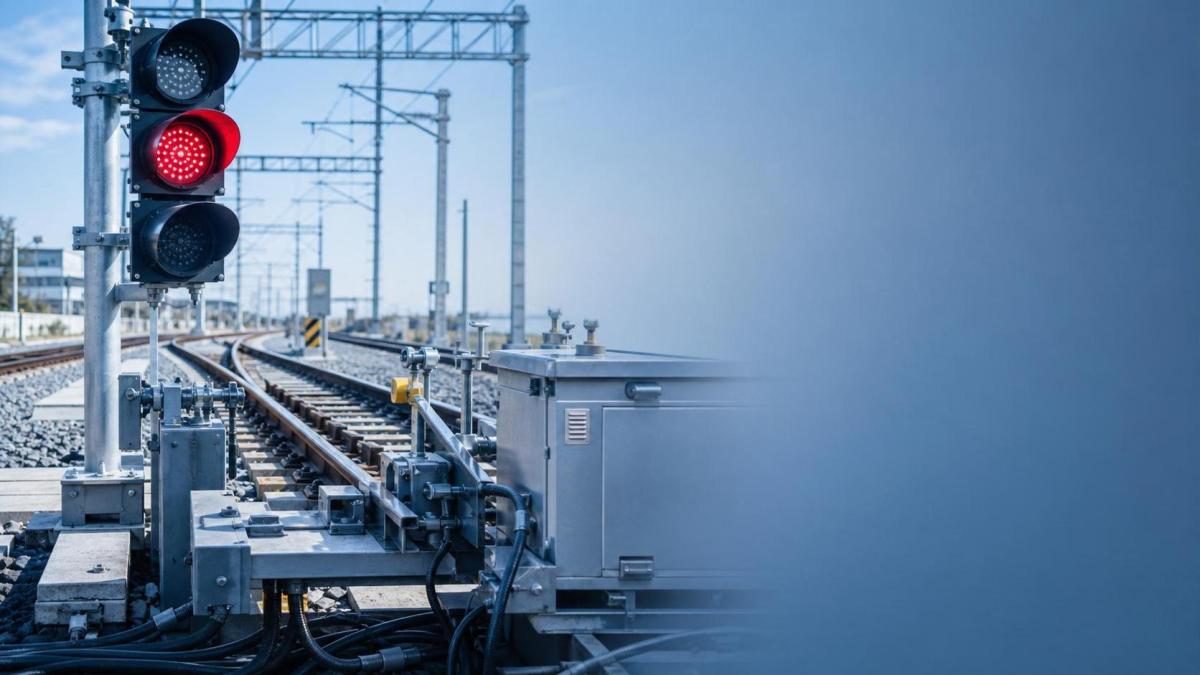
In rail signalling, small component failures can trigger much larger problems. Delays, unsafe movements, and maintenance overruns often begin with one overlooked weakness.
That is why rail signalling deserves a practical, risk-based review. The goal is not only compliance, but stable, predictable, and safe network performance.
From a technical and standards perspective, the best results come from identifying repeat failure points first. Then upgrades can be ranked by safety impact, not by habit or budget cycles alone.
In practice, modern rail signalling must handle harsher operating loads, denser traffic, and tighter availability targets. This makes weak interfaces and aging assets more visible than ever.
Why Rail Signalling Failures Matter So Much
Rail signalling is the control logic behind safe train separation, route setting, speed supervision, and movement authority. When it fails, operational disruption is only part of the story.
A single fault can create false occupancy, lost detection, wrong-side risk, or degraded mode operation. Even when fail-safe design works correctly, capacity usually drops immediately.
This also means maintenance teams face pressure from two directions. They must restore service quickly while preserving the integrity expected under SIL4-oriented safety principles.
For that reason, rail signalling reviews should focus on recurring vulnerabilities, hidden degradation, and interfaces where faults spread across subsystems.
The Most Common Rail Signalling Failure Points
Most rail signalling failures do not start with dramatic hardware collapse. They usually begin as small reliability losses, unstable data, poor contact quality, or environmental stress.
1. Track circuits and train detection drift
Track circuits remain a classic weak point in rail signalling. Bond degradation, ballast resistance changes, rail contamination, and poor tuning can all distort detection performance.
Seasonal moisture, leaf contamination, and stray current effects often make the problem worse. On high-density routes, even short intermittent faults can create major timetable disruption.
2. Point machines and detection contacts
Point machines combine mechanical motion, electrical control, and positional detection. That combination makes them one of the most failure-prone assets in any rail signalling system.
Wear, misalignment, lubrication failure, motor fatigue, and switch obstruction can cause incomplete movement. Contact feedback may then disagree with the actual blade position.
3. Interlocking input and output modules
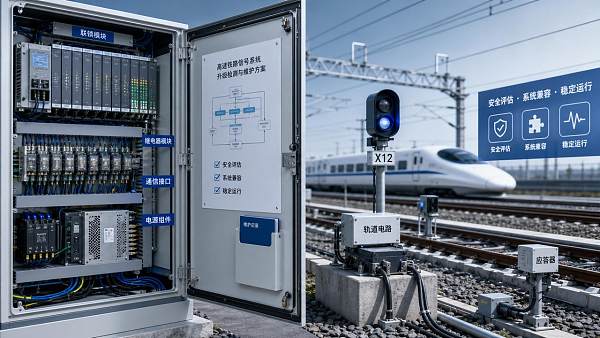
Even highly robust interlocking platforms depend on clean field inputs and reliable output actuation. Faulty relays, terminal loosening, and aging interface cards can reduce confidence fast.
The more interfaces a site has, the more important configuration discipline becomes. In rail signalling, poor change control can be as dangerous as component aging.
4. Power supply instability
Power issues are often underestimated in rail signalling fault analysis. Voltage dips, battery weakness, charger failure, and earthing defects can trigger widespread nuisance alarms.
More importantly, unstable power can mask root causes. Teams may replace field devices repeatedly before recognizing that the supply chain of the fault starts upstream.
5. Cable, connector, and enclosure degradation
Many rail signalling issues come from ordinary physical deterioration. Water ingress, corrosion, rodent damage, loose terminations, and vibration can all undermine dependable signal transmission.
This is especially common in legacy installations. The signalling logic may still be sound, but the field path carrying that logic has already become fragile.
6. Software configuration and data quality issues
As rail signalling becomes more digital, data errors matter more. Version mismatch, incorrect parameter loading, incomplete testing, and weak cybersecurity hygiene raise operational risk.
These faults may not look physical, but the consequences are very real. Incorrect logic states can affect alarms, route release timing, and operator trust in system behavior.
How to Assess Risk in Rail Signalling Systems
Not every defect deserves the same response. The smartest rail signalling strategy ranks issues by safety effect, frequency, detectability, and network consequence.
A useful review starts with failure history, near misses, maintenance delay data, and asset age. Then it checks whether the issue is local or capable of spreading wider.
From recent industry changes, one clearer signal stands out. Intermittent faults now deserve more attention because they consume time, create uncertainty, and often hide deeper degradation.
- Rate the failure by wrong-side potential and service impact.
- Check whether detection exists before the fault becomes operational.
- Measure mean time between failures and mean time to repair.
- Review environmental exposure and seasonal repeat patterns.
- Confirm whether the asset is obsolete or hard to source.
This structured approach keeps rail signalling decisions grounded in evidence. It also helps justify upgrade budgets in a language that operations and management both understand.
Safety Upgrade Priorities That Deliver the Most Value
When budgets are limited, upgrade order matters. The best rail signalling investments reduce unsafe exposure while also cutting avoidable delay and maintenance burden.
Upgrade priority 1: Improve train detection reliability
If track circuits show recurring instability, start there. In some locations, axle counters may provide a more robust answer than repeated tuning of aging circuits.
Where replacement is not immediate, strengthen inspection intervals, bonding quality checks, drainage control, and threshold monitoring. This often improves rail signalling resilience quickly.
Upgrade priority 2: Modernize point machine condition control
Point failures deserve early action because they combine safety relevance with high delay cost. Motor current trending, movement time monitoring, and obstruction analytics add useful warning time.
In real operations, this shifts maintenance from reactive response to planned intervention. That is a major step forward for rail signalling availability.
Upgrade priority 3: Strengthen power and backup integrity
Power quality upgrades often bring fast returns. Better chargers, healthier batteries, surge protection, and clearer alarm segmentation reduce avoidable rail signalling faults.
It also becomes easier to isolate actual field failures when the supply layer is stable. That saves diagnosis time during critical service windows.
Upgrade priority 4: Replace vulnerable field interfaces
Do not ignore cabinets, cables, glands, relays, and connectors. In older rail signalling sites, interface renewal may reduce faults more effectively than expensive core logic replacement.
This is especially true where water ingress and corrosion have become chronic. Simple physical integrity upgrades often produce measurable safety and reliability gains.
Upgrade priority 5: Tighten software assurance and change governance
Digital rail signalling needs disciplined configuration control. Independent verification, version traceability, test evidence, and rollback plans should be treated as core safety controls.
This also means access control and cybersecurity cannot be side topics. A secure signalling environment supports both safety integrity and operational trust.
A Practical Upgrade Matrix for Rail Signalling
What Stronger Rail Signalling Governance Looks Like
Technical upgrades work best when governance improves alongside them. A stronger rail signalling program connects inspection, failure analytics, spares planning, and change approval.
More specifically, teams should define clear trigger points for intervention. Waiting for repeated service failure is usually too late and too expensive.
- Set alert thresholds for repeat intermittent faults.
- Link fault logs with asset condition and weather data.
- Use obsolescence reviews in annual signalling plans.
- Audit configuration changes with independent sign-off.
- Track whether upgrades reduce delay minutes and repeat calls.
This kind of governance turns rail signalling from a repair function into a managed safety system. It also supports stronger credibility in technical audits and project tenders.
Final Takeaway
The basics of rail signalling are straightforward, but failure patterns are rarely random. The most common problems usually appear in detection, switching, power, interfaces, and configuration control.
That is why upgrade priorities should follow safety consequence and repeat fault evidence. In many cases, targeted improvements outperform broad but unfocused replacement programs.
If the aim is safer and smarter rail signalling, start with the assets that fail often, fail quietly, or fail across interfaces. Then build upgrades around verifiable risk reduction.
A practical next step is simple: map the top five recurring rail signalling faults on your network, rank them by consequence, and align the next budget cycle to those priorities.
Recommended News
 Sep 24, 2026When should rail operators upgrade to CBTC-based railway automation systems?Railway automation systems: learn when CBTC upgrades deliver capacity, resilience and safer operations—and how to plan a phased, low-risk migration.
 Sep 12, 2026How automatic train control reduces the risk of signal overrunsAutomatic train control reduces signal overrun risk with continuous speed supervision, braking curves, fail-safe responses, and stronger rail safety assurance.
 Sep 02, 2026How to choose train control equipment for signaling reliabilityTrain control equipment for signaling: learn how to assess safety, reliability, interfaces, cybersecurity, and lifecycle support for resilient railway operations.
 Aug 17, 2026When does upgrading railway signaling systems improve line capacity?Railway signaling systems improve line capacity when headways, junction recovery, and service stability become the real bottlenecks. Learn the signs and best upgrade path.
 Aug 04, 2026What Drives Railway Signal Control Systems Pricing in New Rail Projects?Railway signal control systems pricing depends on scope, SIL4 safety, interfaces, testing, and lifecycle support. Learn the real cost drivers to compare bids and avoid overruns.
 Aug 02, 2026How to Evaluate Train Control Systems for Mainline Capacity and SafetyTrain control systems for mainline demand more than feature comparisons. Learn how to assess capacity, safety, interoperability, degraded modes, and migration before you shortlist.
 Jul 31, 2026How to Evaluate a SIL4 Signalling Equipment Exporter for Safety Compliance and Project RiskSIL4 signalling equipment exporter evaluation starts with evidence, not claims. Learn how to verify safety compliance, project risk, integration capability, and lifecycle support.
 Jul 10, 2026SIL4 Signalling Systems: Key Safety Functions and Integration RisksSIL4 signalling systems explained: explore key safety functions, integration risks, and practical evaluation criteria to verify real-world railway reliability.
 Jul 08, 2026Automatic Train Control Fail Safe: Core Design Checks That MatterAutomatic train control fail safe explained: learn the core design checks for braking priority, fault detection, communication integrity, and safer rail system performance.
 Jul 06, 2026Train Control Equipment ETCS: Key Functions, Levels, and Deployment DifferencesTrain control equipment ETCS explained: explore key functions, ETCS levels, deployment differences, and evaluation risks to support smarter rail upgrade and procurement decisions.
 Jun 28, 2026Rail Signalling North America: Standards and Upgrade Priorities in 2026Rail signalling North America in 2026: explore key standards, cyber risks, and upgrade priorities shaping safer, smarter, higher-capacity rail networks.
 Jun 25, 2026How to Compare Railway Control Systems for Safer Network UpgradesRailway control systems comparison made practical: learn how to assess safety, migration risk, interoperability, and supplier capability for smarter, safer network upgrades.
 Jun 24, 2026Railway Automation Systems Standards in 2026: What Is Changing?Railway automation systems in 2026 face stricter standards in safety, cybersecurity, interoperability, and compliance. Discover what is changing and how projects can stay competitive.
 Jun 22, 2026Rail Signalling Basics: Common Failure Points and Safety Upgrade PrioritiesRail signalling basics explained: discover common failure points, risk-based safety upgrade priorities, and practical steps to improve reliability, compliance, and network performance.
 Jun 20, 2026LTE-M Rail Transit: Where It Fits Better Than Legacy WirelessLTE-M rail transit explained: discover where it outperforms legacy wireless in rail monitoring, low-power devices, and scalable telemetry for smarter, cost-efficient operations.
 Jun 16, 2026LTE-M Rail Transit: What to Check Before DeploymentLTE-M rail transit deployment starts with the right checks. Learn how to evaluate coverage, latency, handovers, cybersecurity, and system integration before rollout.
 Jun 15, 2026How to Evaluate Railway Control Components for Safer Signaling UpgradesRailway control components shape signaling safety, uptime, and integration success. Learn how to evaluate compatibility, SIL, resilience, and lifecycle fit before your next upgrade.
 Jun 12, 2026Railway Automation Systems: Key Standards and Performance ChecksRailway automation systems explained through key standards, SIL checks, interoperability, diagnostics, and lifecycle risks—discover how to compare solutions with confidence.
 Jun 10, 2026Railway Control Components: What Matters Most in System SelectionRailway control components selection affects safety, interoperability, and lifecycle cost. Discover the key criteria for choosing resilient rail systems with confidence.
 Jun 08, 2026Rail Signalling vs CBTC: What Matters for Network UpgradesRail signalling vs CBTC: learn what matters for network upgrades, from capacity and interoperability to automation, lifecycle cost, and safer long-term performance.
 Jun 03, 2026LTE-M Rail Transit: When It Fits Signaling, Monitoring, and Field OperationsLTE-M rail transit can strengthen signaling support, asset monitoring, and field operations—learn where it fits, what to test, and how GTOT helps reduce deployment risk.
 Jun 01, 2026Railway Signal Control Systems: CBTC or Interlocking?Railway signal control systems are evolving fast. Compare CBTC and interlocking to assess safety, capacity, cybersecurity, and lifecycle value for smarter rail upgrades.
 May 31, 2026Railway Safety Technology: When CBTC Adds Real ValueRailway safety technology gains real value with CBTC when it improves headway, SIL4 safety, resilience, and lifecycle performance across complex rail scenarios.
 May 23, 2026LTE-M Rail Transit: Where It Fits Best in 2026LTE-M rail transit in 2026: discover where it fits best for low-power monitoring, asset visibility, and cost-efficient rail digitalization across stations, depots, and trackside systems.