



Search News
Industry Portal
Popular Tags
LTE-M Rail Transit: When It Fits Signaling, Monitoring, and Field Operations
Author
Time
Click Count
LTE-M rail transit is not a universal replacement for mission-critical railway communications, but it can be a strong fit where signaling support, condition monitoring, and field operations demand wide-area coverage, low power use, and predictable connectivity. For technical evaluators, the key question is not whether LTE-M is advanced enough, but where its latency, bandwidth, reliability, and lifecycle economics align with rail safety architectures and operational workflows. This article examines the practical fit of LTE-M across rail environments, helping teams separate viable deployment cases from overextended assumptions.
Where LTE-M Rail Transit Makes Operational Sense
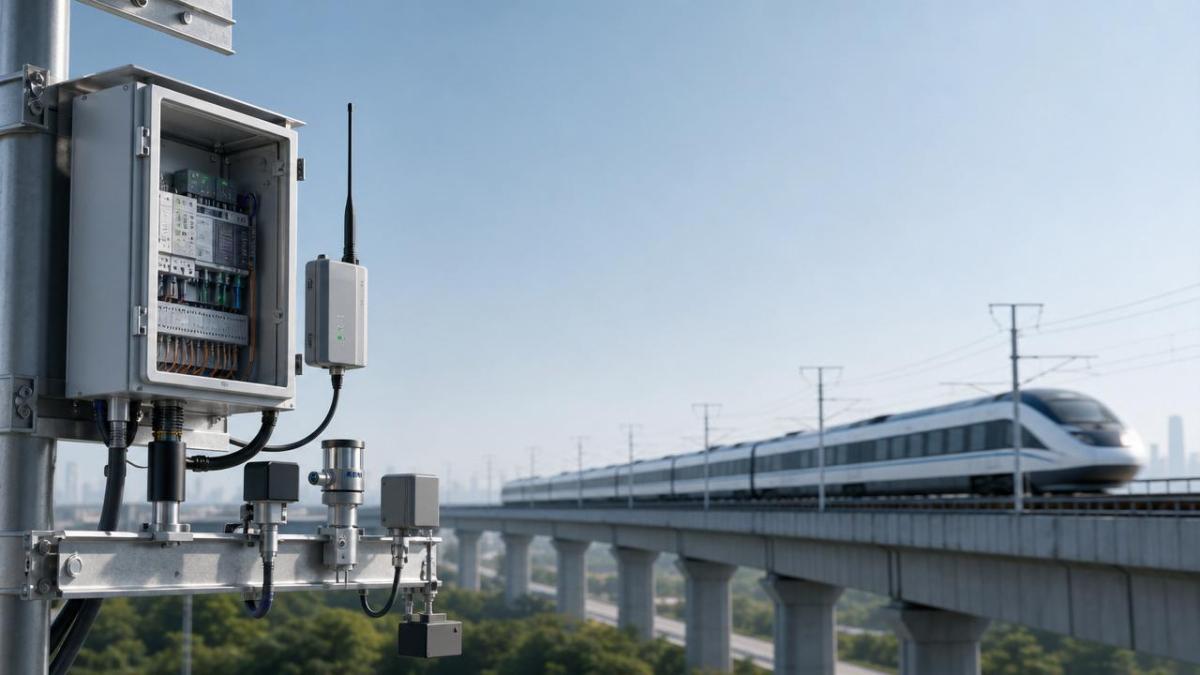
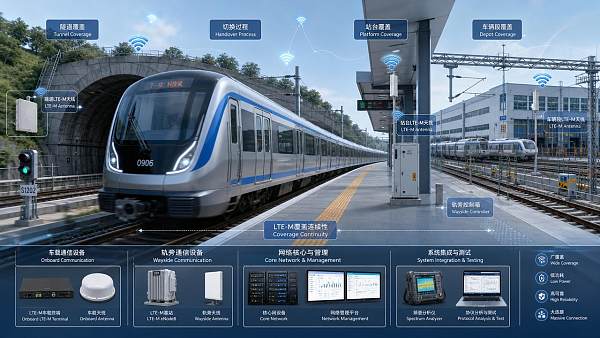
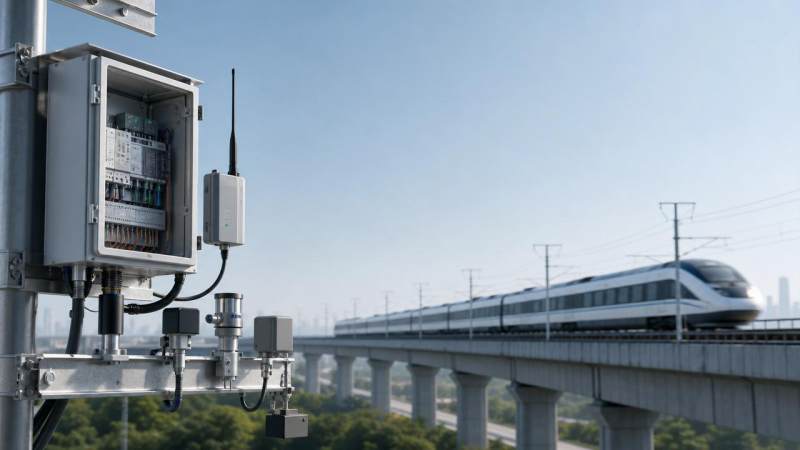
LTE-M rail transit belongs in the space between broadband railway communications and low-rate sensor networks. It supports mobility, deep coverage, low device power, and operator-grade network management.
For technical evaluators, the first decision is functional classification. A system supporting safety-critical movement authority is different from one reporting wayside cabinet temperature.
In railway signaling, LTE-M rail transit should usually be treated as a supporting communications layer, not the primary bearer for SIL4 control decisions.
Its strongest value appears where data is important, distributed, and operationally useful, yet not dependent on deterministic millisecond-level response.
Good-fit use cases for evaluators
- Wayside asset monitoring, including signal power cabinets, point machine status, relay room environment, and level crossing auxiliary data.
- Rolling stock telemetry where low-rate reports from brake health, door status, pantograph condition, or battery modules need wide-area transmission.
- Field operations tools, such as handheld maintenance terminals, inspection trackers, workforce safety alerts, and depot workflow synchronization.
- Non-vital signaling support, including diagnostics, configuration status, alarm forwarding, and condition-based maintenance evidence collection.
GTOT’s evaluation approach links railway signal control, traction power, braking systems, and land-sea supply chain intelligence. That matters because connectivity decisions affect asset reliability, procurement timing, and lifecycle cost.
What Technical Parameters Decide the Fit?
LTE-M rail transit evaluation should start with measurable engineering parameters, not vendor claims. The same network may be acceptable for alarms but unsuitable for closed-loop control.
The following table frames common evaluation dimensions for railway projects considering LTE-M rail transit in signaling support, monitoring, and field operations.
This parameter view prevents overextension. LTE-M rail transit can be technically strong when the use case values reach, battery endurance, and managed connectivity over raw throughput.
However, the railway architecture must define fallback behavior. If a communication link fails, the asset should enter a known safe or operationally acceptable state.
Signaling Support: Useful, But Not a Safety Shortcut
The phrase LTE-M rail transit often attracts attention in signaling discussions because railways need affordable connectivity for distributed assets. The risk is confusing support communication with vital control.
Railway signaling architectures normally separate vital and non-vital layers. Movement authority, interlocking logic, train detection, and route locking require rigorously validated safety cases.
Appropriate signaling-related roles
- Remote status reporting from non-vital signaling equipment where delayed information does not create unsafe movement conditions.
- Alarm forwarding for enclosure intrusion, power quality deterioration, temperature excursions, and communication room environmental changes.
- Maintenance history synchronization between field devices and central asset management platforms.
- Temporary connectivity during renewal projects, commissioning windows, or staged migration from legacy communication systems.
In GTOT’s rail signal intelligence work, LTE-M rail transit is evaluated against the broader control environment. The question is how it supports SIL-oriented systems without weakening safety boundaries.
Technical teams should document interface assumptions, alarm timing, diagnostic validity, cybersecurity exposure, and proof that non-vital data cannot influence vital logic incorrectly.
Monitoring and Maintenance: The Strongest Business Case
Condition monitoring is often where LTE-M rail transit produces the clearest value. Railways operate thousands of geographically dispersed assets that are expensive to inspect manually.
Instead of sending technicians to confirm whether a cabinet is overheating, a sensor can report temperature trends, battery voltage, door events, and fault counters.
This does not eliminate field work. It changes the work order from routine checking to evidence-based intervention, which matters when labor windows are short.
Assets that benefit from low-power connectivity
- Point machines can transmit motor current patterns, obstruction indications, heater status, and actuation counts for predictive maintenance review.
- Pantograph monitoring units can report carbon strip wear indicators, uplift anomalies, and environmental data without continuous broadband traffic.
- Brake system auxiliary sensors can provide event summaries, temperature alerts, and service condition records for engineering analysis.
- Depot and yard assets can connect without extensive trenching, particularly where temporary layouts or phased upgrades complicate cabling.
For technical evaluators, the procurement case should quantify avoided site visits, reduced fault localization time, battery replacement intervals, and data integration effort.
LTE-M rail transit is not justified by connectivity alone. It is justified when monitoring data changes maintenance decisions and asset availability.
Comparison: LTE-M, NB-IoT, 4G/5G, and Private Railway Networks
No single communication technology covers every railway requirement. LTE-M rail transit must be compared with NB-IoT, conventional cellular broadband, 5G, and dedicated railway radio.
The comparison below helps technical evaluators match technologies to operating scenarios instead of purchasing a fashionable communication layer.
The practical conclusion is not that LTE-M rail transit replaces these options. It often complements them, especially when thousands of low-rate endpoints create hidden maintenance cost.
Hybrid architectures are common. A railway may use private radio for control, fiber for backbone, broadband cellular for video, and LTE-M for dispersed monitoring.
Procurement Checklist: What Should Technical Evaluators Ask?
Purchasing LTE-M rail transit capability is not only a module selection exercise. It is a system decision involving coverage, devices, integration, cybersecurity, and support contracts.
The most reliable procurement process converts operating needs into acceptance criteria. This reduces ambiguity during tenders, factory testing, and site commissioning.
Evaluation checklist before issuing an RFQ
- Define whether each data flow is vital, non-vital operational, maintenance-related, commercial, or passenger-service related.
- Confirm expected payload size, reporting frequency, alarm priority, mobility pattern, and acceptable transmission delay.
- Request coverage evidence for stations, tunnels, depots, mountainous alignments, ports, bridges, and remote maintenance areas.
- Specify cybersecurity requirements, including SIM management, device identity, encryption, logging, patching, and access control.
- Review module availability, antenna design, environmental rating, battery strategy, and expected firmware maintenance period.
GTOT recommends separating proof-of-connectivity from proof-of-operational-value. A device connecting successfully does not prove that LTE-M rail transit improves maintenance outcomes.
Cost, Lifecycle, and Alternative Path Decisions
Budget pressure often makes LTE-M rail transit attractive, but cost must be evaluated over the full lifecycle. Device cost is only one line item.
Technical evaluators should include installation labor, SIM or connectivity fees, battery replacement, platform integration, cybersecurity maintenance, spares, and decommissioning.
The table below shows how cost drivers differ across common rail communication options for monitoring and field operations.
LTE-M rail transit can lower deployment friction, especially where the alternative is installing new fixed communication routes for every sensor location.
Yet the best financial case depends on maintenance economics. If the data does not reduce faults, visits, or downtime, a cheaper modem will not save the project.
Compliance, Safety Boundaries, and Cybersecurity
Railway procurement is constrained by safety assurance, electromagnetic compatibility, cybersecurity, and maintainability expectations. LTE-M rail transit must fit these constraints from the start.
Relevant references may include EN 50126 for RAMS thinking, EN 50128 or EN 50657 for software contexts, and EN 50129 for safety-related electronic systems.
For cybersecurity, evaluators may consider IEC 62443 principles, local railway authority requirements, secure provisioning, vulnerability response, and clear ownership of credentials.
Risk controls that should appear in specifications
- Logical separation between monitoring data and any system capable of influencing vital railway functions.
- Event logs that allow fault investigation without exposing sensitive operational data to unauthorized users.
- Firmware update policies that define approval, rollback, test environments, and maintenance windows.
- Environmental qualification aligned with vibration, temperature, humidity, electromagnetic exposure, and enclosure location.
A mature LTE-M rail transit proposal should describe not only how data moves, but how risk is contained when devices fail, roam, lose signal, or require updates.
Implementation Roadmap for Pilot and Scale Deployment
A controlled pilot is the best way to test LTE-M rail transit assumptions. The pilot should represent difficult locations, not only convenient stations.
Technical teams should select a balanced sample: one station, one depot, one open-line wayside location, one coverage-challenged area, and one moving asset if relevant.
Practical deployment sequence
- Define use cases, data ownership, alarm priority, and acceptance criteria before choosing devices or platforms.
- Run coverage verification under normal traffic, maintenance windows, peak station load, and weather conditions where possible.
- Test integration with maintenance systems, not only the vendor portal, so work orders can be generated correctly.
- Review battery drain, reconnection behavior, device logs, and false alarm rates over a meaningful operating period.
- Prepare scale-up rules covering approved hardware, SIM management, spare parts, training, and cybersecurity governance.
This roadmap helps avoid a common failure mode: a successful demonstration that cannot scale because interfaces, coverage, or maintenance ownership were never finalized.
Common Misconceptions About LTE-M Rail Transit
Many procurement difficulties come from unclear assumptions. LTE-M rail transit is often undersold as simple IoT or oversold as a railway control revolution.
Misconception 1: It can replace all dedicated railway communications
It cannot. Safety-critical applications require validated architectures, deterministic behavior where applicable, and formal safety cases. LTE-M rail transit is better positioned as an auxiliary layer.
Misconception 2: Low bandwidth means low value
Many valuable railway datasets are small. A point machine current trend or cabinet temperature alarm may prevent delays without needing broadband capacity.
Misconception 3: Public network coverage is automatically sufficient
Rail corridors include tunnels, cuttings, substations, yards, coastal sections, and maintenance shelters. LTE-M rail transit still needs route-specific coverage validation.
FAQ for Technical Evaluators
The following questions reflect typical search and procurement concerns when teams assess LTE-M rail transit for signaling support, monitoring, and field operations.
Is LTE-M rail transit suitable for signaling systems?
It is suitable for non-vital signaling support, diagnostics, alarm reporting, and maintenance data. It should not be assumed suitable for vital movement authority or interlocking logic.
What should be tested during a pilot?
Test coverage, reconnection time, payload reliability, battery behavior, cybersecurity processes, alarm accuracy, integration with maintenance systems, and performance during real operating conditions.
How does LTE-M compare with NB-IoT for rail assets?
NB-IoT can work well for fixed, infrequent sensor reporting. LTE-M rail transit is usually more attractive where mobility, lower latency, and richer device interaction matter.
What procurement documents should mention LTE-M requirements?
Requirements should appear in system specifications, interface control documents, cybersecurity plans, RAMS assessments, maintenance procedures, and acceptance test plans.
Why Consult GTOT for LTE-M Rail Transit Decisions?
GTOT supports technical evaluators who need more than a generic connectivity recommendation. Our perspective connects railway signaling, traction systems, braking assets, and macro-transport infrastructure.
Through the Strategic Intelligence Center, GTOT examines LTE-M rail transit alongside safety architecture, operational workflow, procurement constraints, and lifecycle economics.
Teams can consult GTOT for parameter confirmation, use-case screening, technology comparison, tender evaluation logic, certification requirement mapping, delivery risk review, and custom deployment planning.
If your project is assessing LTE-M rail transit for signaling support, condition monitoring, or field operations, contact GTOT to structure the decision before specifications become costly commitments.
Recommended News
 Sep 24, 2026When should rail operators upgrade to CBTC-based railway automation systems?Railway automation systems: learn when CBTC upgrades deliver capacity, resilience and safer operations—and how to plan a phased, low-risk migration.
 Sep 12, 2026How automatic train control reduces the risk of signal overrunsAutomatic train control reduces signal overrun risk with continuous speed supervision, braking curves, fail-safe responses, and stronger rail safety assurance.
 Sep 02, 2026How to choose train control equipment for signaling reliabilityTrain control equipment for signaling: learn how to assess safety, reliability, interfaces, cybersecurity, and lifecycle support for resilient railway operations.
 Aug 17, 2026When does upgrading railway signaling systems improve line capacity?Railway signaling systems improve line capacity when headways, junction recovery, and service stability become the real bottlenecks. Learn the signs and best upgrade path.
 Aug 04, 2026What Drives Railway Signal Control Systems Pricing in New Rail Projects?Railway signal control systems pricing depends on scope, SIL4 safety, interfaces, testing, and lifecycle support. Learn the real cost drivers to compare bids and avoid overruns.
 Aug 02, 2026How to Evaluate Train Control Systems for Mainline Capacity and SafetyTrain control systems for mainline demand more than feature comparisons. Learn how to assess capacity, safety, interoperability, degraded modes, and migration before you shortlist.
 Jul 31, 2026How to Evaluate a SIL4 Signalling Equipment Exporter for Safety Compliance and Project RiskSIL4 signalling equipment exporter evaluation starts with evidence, not claims. Learn how to verify safety compliance, project risk, integration capability, and lifecycle support.
 Jul 10, 2026SIL4 Signalling Systems: Key Safety Functions and Integration RisksSIL4 signalling systems explained: explore key safety functions, integration risks, and practical evaluation criteria to verify real-world railway reliability.
 Jul 08, 2026Automatic Train Control Fail Safe: Core Design Checks That MatterAutomatic train control fail safe explained: learn the core design checks for braking priority, fault detection, communication integrity, and safer rail system performance.
 Jul 06, 2026Train Control Equipment ETCS: Key Functions, Levels, and Deployment DifferencesTrain control equipment ETCS explained: explore key functions, ETCS levels, deployment differences, and evaluation risks to support smarter rail upgrade and procurement decisions.
 Jun 28, 2026Rail Signalling North America: Standards and Upgrade Priorities in 2026Rail signalling North America in 2026: explore key standards, cyber risks, and upgrade priorities shaping safer, smarter, higher-capacity rail networks.
 Jun 25, 2026How to Compare Railway Control Systems for Safer Network UpgradesRailway control systems comparison made practical: learn how to assess safety, migration risk, interoperability, and supplier capability for smarter, safer network upgrades.
 Jun 24, 2026Railway Automation Systems Standards in 2026: What Is Changing?Railway automation systems in 2026 face stricter standards in safety, cybersecurity, interoperability, and compliance. Discover what is changing and how projects can stay competitive.
 Jun 22, 2026Rail Signalling Basics: Common Failure Points and Safety Upgrade PrioritiesRail signalling basics explained: discover common failure points, risk-based safety upgrade priorities, and practical steps to improve reliability, compliance, and network performance.
 Jun 20, 2026LTE-M Rail Transit: Where It Fits Better Than Legacy WirelessLTE-M rail transit explained: discover where it outperforms legacy wireless in rail monitoring, low-power devices, and scalable telemetry for smarter, cost-efficient operations.
 Jun 16, 2026LTE-M Rail Transit: What to Check Before DeploymentLTE-M rail transit deployment starts with the right checks. Learn how to evaluate coverage, latency, handovers, cybersecurity, and system integration before rollout.
 Jun 15, 2026How to Evaluate Railway Control Components for Safer Signaling UpgradesRailway control components shape signaling safety, uptime, and integration success. Learn how to evaluate compatibility, SIL, resilience, and lifecycle fit before your next upgrade.
 Jun 12, 2026Railway Automation Systems: Key Standards and Performance ChecksRailway automation systems explained through key standards, SIL checks, interoperability, diagnostics, and lifecycle risks—discover how to compare solutions with confidence.
 Jun 10, 2026Railway Control Components: What Matters Most in System SelectionRailway control components selection affects safety, interoperability, and lifecycle cost. Discover the key criteria for choosing resilient rail systems with confidence.
 Jun 08, 2026Rail Signalling vs CBTC: What Matters for Network UpgradesRail signalling vs CBTC: learn what matters for network upgrades, from capacity and interoperability to automation, lifecycle cost, and safer long-term performance.
 Jun 03, 2026LTE-M Rail Transit: When It Fits Signaling, Monitoring, and Field OperationsLTE-M rail transit can strengthen signaling support, asset monitoring, and field operations—learn where it fits, what to test, and how GTOT helps reduce deployment risk.
 Jun 01, 2026Railway Signal Control Systems: CBTC or Interlocking?Railway signal control systems are evolving fast. Compare CBTC and interlocking to assess safety, capacity, cybersecurity, and lifecycle value for smarter rail upgrades.
 May 31, 2026Railway Safety Technology: When CBTC Adds Real ValueRailway safety technology gains real value with CBTC when it improves headway, SIL4 safety, resilience, and lifecycle performance across complex rail scenarios.
 May 23, 2026LTE-M Rail Transit: Where It Fits Best in 2026LTE-M rail transit in 2026: discover where it fits best for low-power monitoring, asset visibility, and cost-efficient rail digitalization across stations, depots, and trackside systems.