



Search News
Industry Portal
Popular Tags
SIL4 Signalling Systems: Key Safety Functions and Integration Risks
Author
Time
Click Count
SIL4 signalling systems are often described as the highest benchmark for railway safety, yet certification alone does not prove operational robustness. Their real value appears when safety logic, field interfaces, software behavior, maintenance controls, and lifecycle evidence remain coherent under traffic pressure, degraded modes, and change management. In a transport environment shaped by automation, tighter headways, and cross-border infrastructure investment, that distinction matters. For intelligence platforms such as GTOT, where railway control sits alongside traction, braking, and maritime reliability topics, SIL4 assessment is less about labels and more about how complex systems behave in service.
What SIL4 actually means in signalling practice
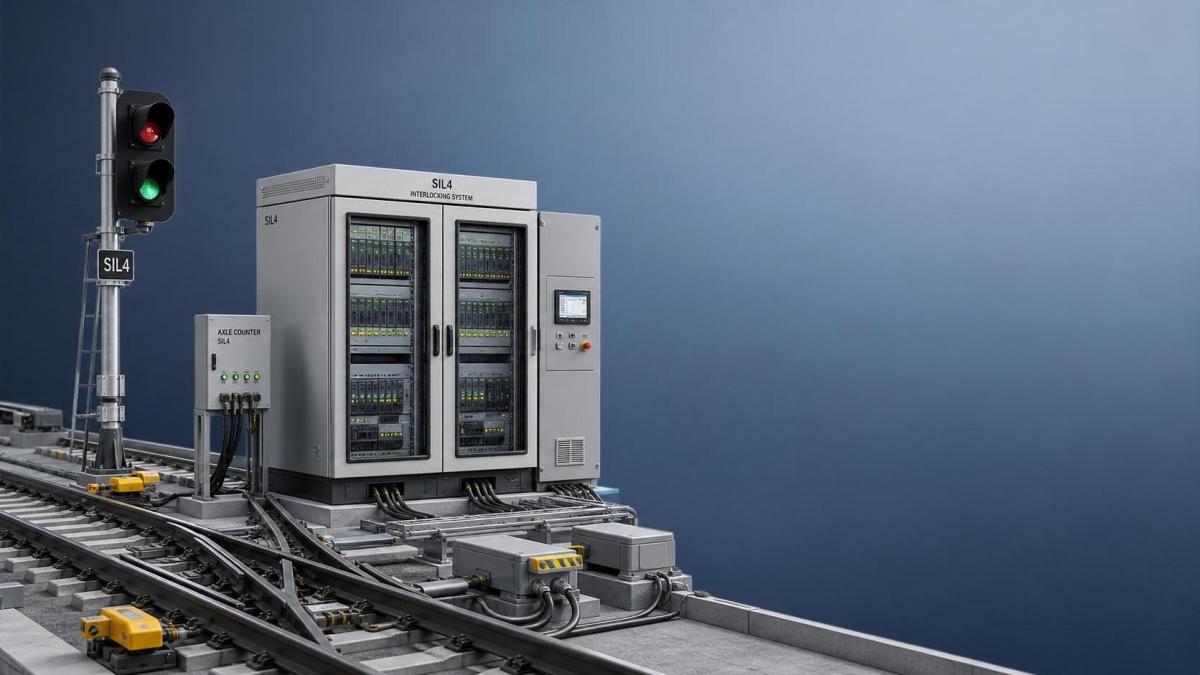
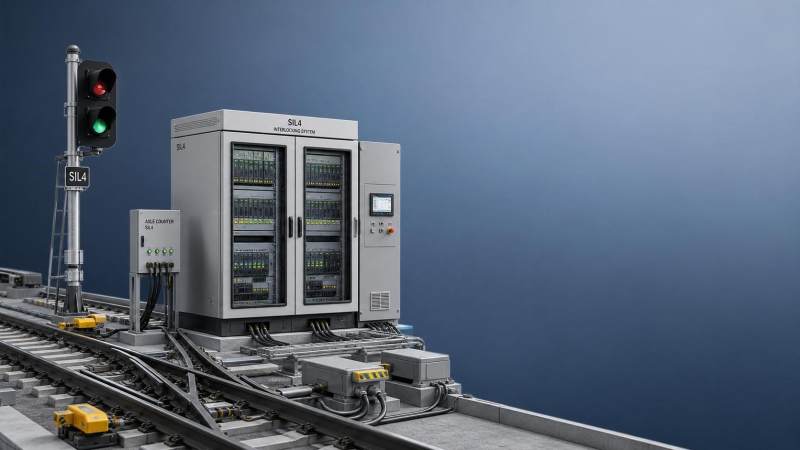
At system level, SIL4 refers to the highest Safety Integrity Level typically applied to railway signalling functions under standards such as EN 50126, EN 50128, and EN 50129.
That does not mean every component is equally critical. It means specific hazardous failures must be reduced to an extremely low tolerable rate through architecture, process discipline, verification, and operational controls.
In practical terms, SIL4 signalling systems protect train separation, route integrity, movement authority, speed supervision, and safe state transitions when faults occur.
A useful evaluation point is this: SIL4 is not a marketing adjective attached to hardware. It is a claim supported by hazard analysis, requirements traceability, validated design assumptions, and evidence that failure responses are deterministic.
Core safety functions behind the label
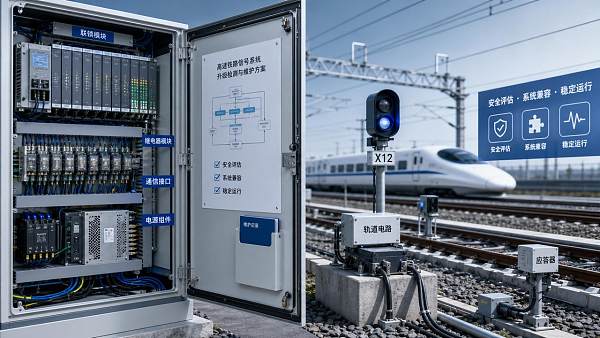
Most SIL4 signalling systems combine several safety functions, each with its own interfaces and failure modes.
- Interlocking logic that prevents conflicting routes and unsafe point positions.
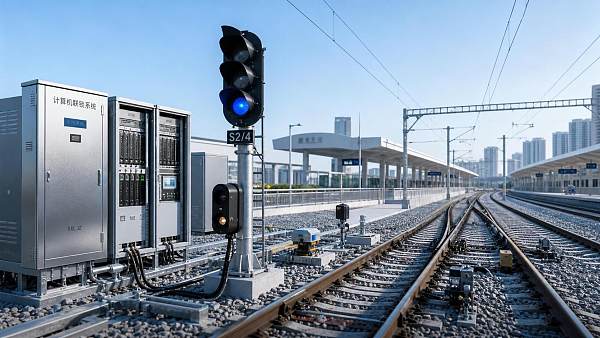
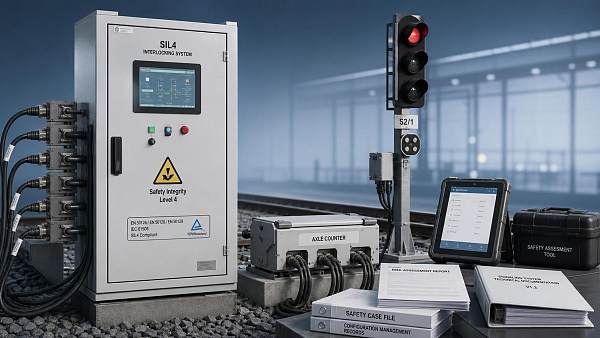
- Train detection through track circuits or axle counters, confirming section occupancy.
- Movement authority management in ETCS, CBTC, or other ATP frameworks.
- Overspeed supervision and braking trigger logic for restrictive conditions.
- Safe degradation, ensuring the system falls back to a controlled restrictive state.
Each function may be proven separately, but operational safety depends on their interaction. Integration gaps often emerge between well-designed subsystems rather than within a single safety computer.
Why the topic matters more now
Rail operators are increasing automation, network density, remote diagnostics, and software-driven asset management. These trends expand the interface surface around SIL4 signalling systems.
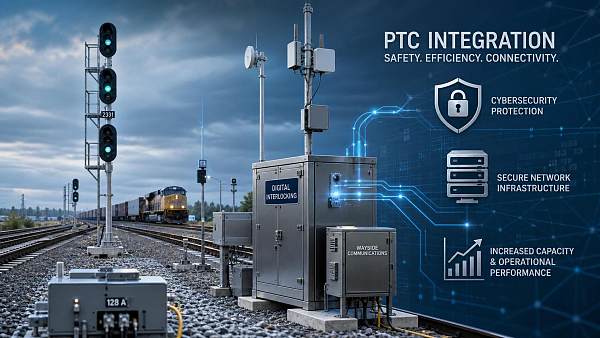
A modern signalling package rarely stands alone. It connects to onboard protection, traffic management, telecom networks, platform systems, power monitoring, maintenance workstations, and cybersecurity controls.
That wider context is where technical evaluation becomes more demanding. The question is no longer whether the interlocking is certified. The question is whether the certified logic remains trustworthy inside a changing operational ecosystem.
This broader perspective also aligns with GTOT’s cross-domain focus. Railway signalling, braking response, traction stability, and shipboard control all share a common discipline: safety claims are only credible when interfaces, failure assumptions, and operational constraints are visible.
Where integration risks usually appear
Many failures in SIL4 signalling systems are not caused by the core safety processor. They arise in boundaries where data, timing, configuration, and field conditions drift from design assumptions.
Interface and data risks
Train detection, point machines, balises, radio links, and supervisory software must exchange information with strict timing and integrity rules.
If message freshness, fallback handling, or data mapping are weak, a safe subsystem can still feed unsafe decisions upstream or downstream.
Configuration risks
Configuration data is often underestimated. Route tables, topology models, braking curves, object addresses, and maintenance overrides can all affect safety behavior.
A proven platform may still become unsafe through incorrect application data, especially during brownfield upgrades or phased commissioning.
Change and version risks
Software patches, hardware substitutions, telecom updates, and toolchain changes can alter behavior in subtle ways. SIL4 signalling systems require strict impact analysis, not just retesting of visible functions.
Operational environment risks
Humidity, vibration, EMC exposure, temperature variation, wheel contamination, and maintenance access conditions can all affect field performance. Laboratory evidence must match actual route conditions.
A practical view of evaluation criteria
When reviewing SIL4 signalling systems, it helps to separate certificate presence from operational readiness. The table below highlights evaluation dimensions that carry real decision value.
Different deployment scenarios, different risk priorities
Not all SIL4 signalling systems face the same operating profile. Risk evaluation should follow the service model rather than the certificate template.
High-speed mainline
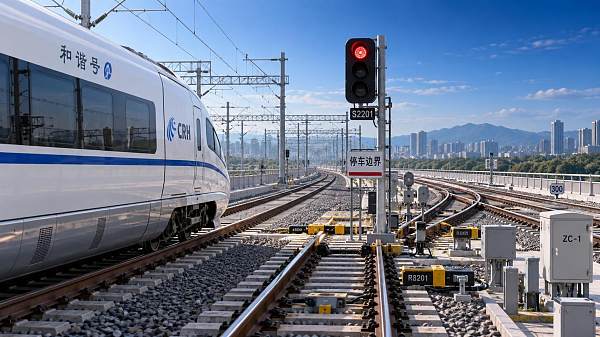
At high speed, braking curve accuracy, balise or radio continuity, and timing margins become critical. Small data errors can have a much larger consequence envelope.
Urban automated transit
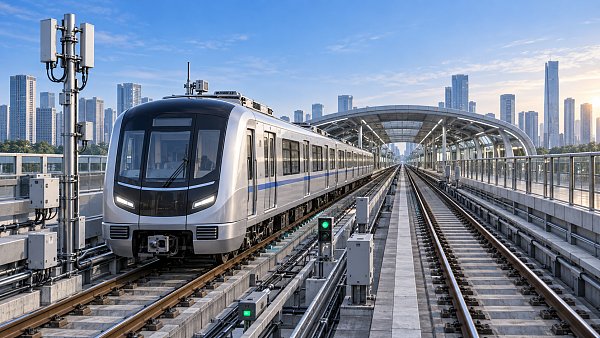
CBTC-style SIL4 signalling systems prioritize moving block integrity, platform coordination, fallback operation, and maintainability under frequent service hours.
Brownfield modernization
Legacy interfaces are often the hardest issue. Mixed generations of relays, axle counters, telecom paths, and supervisory tools can introduce undocumented dependencies.
Cross-border corridors
Here the pressure comes from interoperability, approval regimes, language-specific operating rules, and maintenance responsibility split across organizations.
What strong evidence looks like
Reliable SIL4 signalling systems usually present evidence that is structured, testable, and easy to challenge. Weak systems rely too heavily on generic certification language.
- A current hazard record linked to requirements and mitigations.
- Clear partitioning between safety-related and non-safety-related functions.
- Defined assumptions for external equipment, telecom quality, and human actions.
- Test evidence covering normal, degraded, and recovery modes.
- Configuration and software management that survives future modifications.
More importantly, the evidence should match the intended route, not just a reference project elsewhere. Site conditions, traffic patterns, and maintenance capability can change the risk profile materially.
How to frame the next review step
The most useful next step is to build an evaluation matrix around actual operating scenarios. Focus on what the system must prevent, what it depends on, and how it behaves when those dependencies weaken.
For SIL4 signalling systems, that usually means reviewing safety functions alongside interfaces, application data governance, maintainability, and migration constraints.
Where GTOT’s broader transport intelligence perspective becomes valuable is in connecting signalling claims with adjacent realities: braking performance, traction stability, digital communications, and supply chain continuity.
A SIL4 certificate is the starting point. The real decision comes from verifying whether the system can sustain safe operation, controlled degradation, and disciplined change throughout its service life.
Recommended News
 Sep 24, 2026When should rail operators upgrade to CBTC-based railway automation systems?Railway automation systems: learn when CBTC upgrades deliver capacity, resilience and safer operations—and how to plan a phased, low-risk migration.
 Sep 12, 2026How automatic train control reduces the risk of signal overrunsAutomatic train control reduces signal overrun risk with continuous speed supervision, braking curves, fail-safe responses, and stronger rail safety assurance.
 Sep 02, 2026How to choose train control equipment for signaling reliabilityTrain control equipment for signaling: learn how to assess safety, reliability, interfaces, cybersecurity, and lifecycle support for resilient railway operations.
 Aug 17, 2026When does upgrading railway signaling systems improve line capacity?Railway signaling systems improve line capacity when headways, junction recovery, and service stability become the real bottlenecks. Learn the signs and best upgrade path.
 Aug 04, 2026What Drives Railway Signal Control Systems Pricing in New Rail Projects?Railway signal control systems pricing depends on scope, SIL4 safety, interfaces, testing, and lifecycle support. Learn the real cost drivers to compare bids and avoid overruns.
 Aug 02, 2026How to Evaluate Train Control Systems for Mainline Capacity and SafetyTrain control systems for mainline demand more than feature comparisons. Learn how to assess capacity, safety, interoperability, degraded modes, and migration before you shortlist.
 Jul 31, 2026How to Evaluate a SIL4 Signalling Equipment Exporter for Safety Compliance and Project RiskSIL4 signalling equipment exporter evaluation starts with evidence, not claims. Learn how to verify safety compliance, project risk, integration capability, and lifecycle support.
 Jul 10, 2026SIL4 Signalling Systems: Key Safety Functions and Integration RisksSIL4 signalling systems explained: explore key safety functions, integration risks, and practical evaluation criteria to verify real-world railway reliability.
 Jul 08, 2026Automatic Train Control Fail Safe: Core Design Checks That MatterAutomatic train control fail safe explained: learn the core design checks for braking priority, fault detection, communication integrity, and safer rail system performance.
 Jul 06, 2026Train Control Equipment ETCS: Key Functions, Levels, and Deployment DifferencesTrain control equipment ETCS explained: explore key functions, ETCS levels, deployment differences, and evaluation risks to support smarter rail upgrade and procurement decisions.
 Jun 28, 2026Rail Signalling North America: Standards and Upgrade Priorities in 2026Rail signalling North America in 2026: explore key standards, cyber risks, and upgrade priorities shaping safer, smarter, higher-capacity rail networks.
 Jun 25, 2026How to Compare Railway Control Systems for Safer Network UpgradesRailway control systems comparison made practical: learn how to assess safety, migration risk, interoperability, and supplier capability for smarter, safer network upgrades.
 Jun 24, 2026Railway Automation Systems Standards in 2026: What Is Changing?Railway automation systems in 2026 face stricter standards in safety, cybersecurity, interoperability, and compliance. Discover what is changing and how projects can stay competitive.
 Jun 22, 2026Rail Signalling Basics: Common Failure Points and Safety Upgrade PrioritiesRail signalling basics explained: discover common failure points, risk-based safety upgrade priorities, and practical steps to improve reliability, compliance, and network performance.
 Jun 20, 2026LTE-M Rail Transit: Where It Fits Better Than Legacy WirelessLTE-M rail transit explained: discover where it outperforms legacy wireless in rail monitoring, low-power devices, and scalable telemetry for smarter, cost-efficient operations.
 Jun 16, 2026LTE-M Rail Transit: What to Check Before DeploymentLTE-M rail transit deployment starts with the right checks. Learn how to evaluate coverage, latency, handovers, cybersecurity, and system integration before rollout.
 Jun 15, 2026How to Evaluate Railway Control Components for Safer Signaling UpgradesRailway control components shape signaling safety, uptime, and integration success. Learn how to evaluate compatibility, SIL, resilience, and lifecycle fit before your next upgrade.
 Jun 12, 2026Railway Automation Systems: Key Standards and Performance ChecksRailway automation systems explained through key standards, SIL checks, interoperability, diagnostics, and lifecycle risks—discover how to compare solutions with confidence.
 Jun 10, 2026Railway Control Components: What Matters Most in System SelectionRailway control components selection affects safety, interoperability, and lifecycle cost. Discover the key criteria for choosing resilient rail systems with confidence.
 Jun 08, 2026Rail Signalling vs CBTC: What Matters for Network UpgradesRail signalling vs CBTC: learn what matters for network upgrades, from capacity and interoperability to automation, lifecycle cost, and safer long-term performance.
 Jun 03, 2026LTE-M Rail Transit: When It Fits Signaling, Monitoring, and Field OperationsLTE-M rail transit can strengthen signaling support, asset monitoring, and field operations—learn where it fits, what to test, and how GTOT helps reduce deployment risk.
 Jun 01, 2026Railway Signal Control Systems: CBTC or Interlocking?Railway signal control systems are evolving fast. Compare CBTC and interlocking to assess safety, capacity, cybersecurity, and lifecycle value for smarter rail upgrades.
 May 31, 2026Railway Safety Technology: When CBTC Adds Real ValueRailway safety technology gains real value with CBTC when it improves headway, SIL4 safety, resilience, and lifecycle performance across complex rail scenarios.
 May 23, 2026LTE-M Rail Transit: Where It Fits Best in 2026LTE-M rail transit in 2026: discover where it fits best for low-power monitoring, asset visibility, and cost-efficient rail digitalization across stations, depots, and trackside systems.