



Search News
Industry Portal
Popular Tags
Automatic Train Control Fail Safe: Core Design Checks That Matter
Author
Time
Click Count
Automatic train control fail safe sits at the center of modern rail assurance because it defines how a train protection architecture behaves when reality stops matching design assumptions.
For evaluation work, the issue is not whether a supplier claims compliance. The issue is whether the control chain still drives the train into a safe state under faults, latency, degraded inputs, and abnormal operating sequences.
That distinction matters more now as rail systems push tighter headways, higher automation, and closer integration between signalling, traction, braking, and communications.
Within GTOT’s wider view of land-sea critical equipment, this is a familiar pattern. Whether in railway signal control or smart vessel navigation, fail-safe design is less about features than about disciplined behavior under loss, drift, and uncertainty.
What fail-safe means in automatic train control
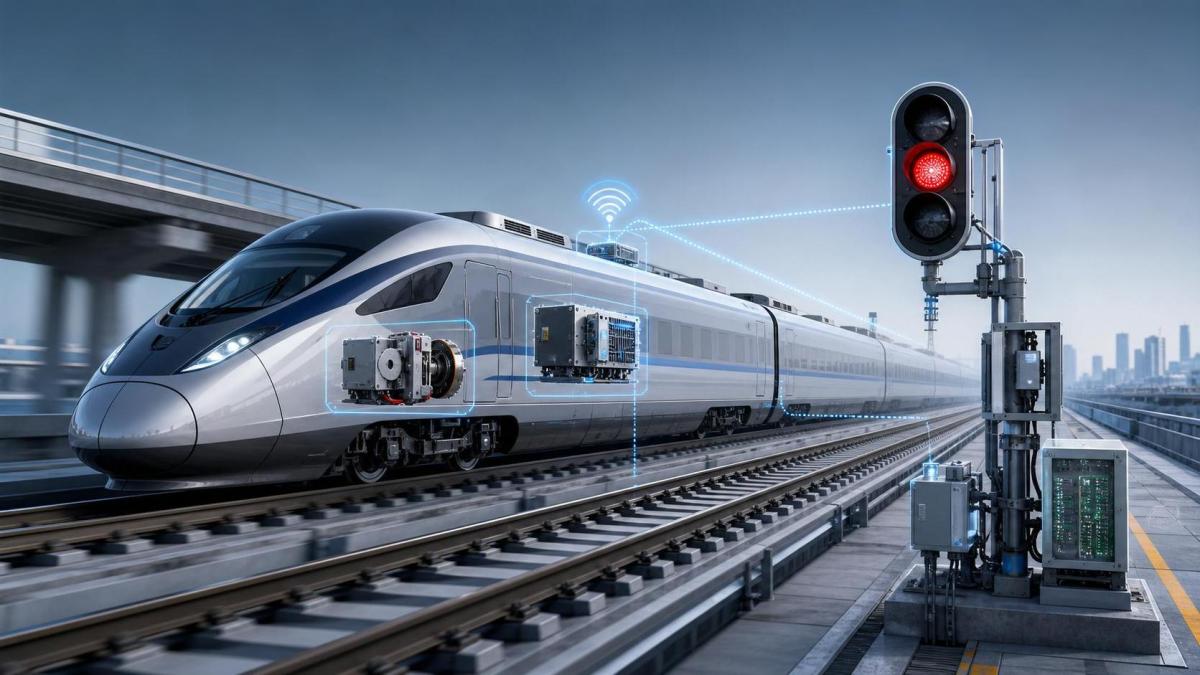
In practical terms, automatic train control fail safe means the system must default to a condition that prevents unsafe movement when confidence in control is lost.
That safe condition may be enforced braking, speed restriction, movement authority withdrawal, door interlock protection, or transition into a more restrictive operating mode.
The principle sounds straightforward, yet the design challenge is rarely simple. A credible architecture must handle sensor disagreement, processor failure, data corruption, communication interruption, and interface faults without creating ambiguous outputs.
This is why automatic train control fail safe is closely tied to SIL4 expectations. The real question is not only hazard rate, but also whether diagnostic coverage and response logic remain coherent across the full control path.
Why current rail programs focus on it
Railway investment is moving toward dense urban lines, high-speed corridors, and increasingly automated operations. In all three, failure margins become tighter and the operational cost of conservative shutdown becomes more visible.
At the same time, control systems are no longer isolated. Onboard ATP, interlocking, wayside radios, braking electronics, traction interfaces, and maintenance diagnostics now exchange more data and depend on shared timing assumptions.
That makes automatic train control fail safe a system question, not a single-box question. A component can pass its own tests and still contribute to unsafe behavior when integrated into a larger architecture.
GTOT tracks similar interdependency patterns across transport sectors. In rail, as in LNG shipping or smart vessel control, the strongest safety claims come from architectures that treat failure propagation as a first-order design problem.
The design checks that deserve close attention
A useful review starts with the points where unsafe commands could emerge, be delayed, or fail to reach the final actuator.
Redundancy must be independent, not decorative
Dual channels only help when they are isolated from common-cause failure. Shared power conditioning, identical software defects, hidden timing dependencies, or common network bottlenecks can cancel the value of redundancy.
Look for separation in processors, communication paths, voting logic, and failure detection assumptions. Independence should be demonstrated, not implied by hardware count.
Fault detection must be fast enough for the hazard
Detection latency is often underestimated. If overspeed, position error, or lost authority is recognized too late, a nominal fail-safe reaction may still miss the safe stopping envelope.
The timing budget should cover sensing, validation, processing, transmission, brake command issue, and physical brake build-up. Automatic train control fail safe performance depends on the whole chain.
Braking intervention paths need traceable priority
A key check is whether the emergency or protective brake command can be blocked, delayed, or degraded by comfort functions, traction requests, or supervisory software layers.
The safest designs give braking intervention a clearly dominant path with verified command priority, feedback confirmation, and deterministic fallback if one interface fails.
Communication integrity is more than availability
Loss of communication is obvious. Corrupted, stale, duplicated, or mis-sequenced data is harder. Message protection should cover authenticity, sequence control, timeout discipline, and safe handling of partial updates.
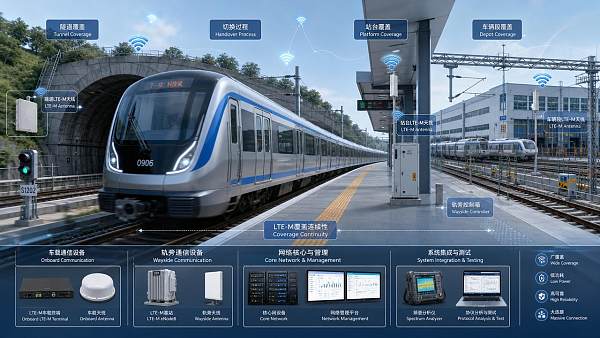
When LTE-M, radio-based control, or IP transport enters the architecture, the evaluation should focus on bounded behavior during degraded links, not just link restoration speed.
Mode transitions often hide the real risk
Transitions between full supervision, shunting, restricted manual, degraded operation, and cutover states deserve special scrutiny. Unsafe conditions frequently appear during mode change rather than steady-state running.
A strong automatic train control fail safe design defines explicit entry rules, exit rules, operator indications, and braking consequences for every transition.
Where assessment usually becomes more concrete
The most effective reviews map fail-safe claims against specific operational scenarios instead of generic supplier statements.
This scenario-based approach is especially useful when comparing suppliers whose documentation uses similar safety language but different engineering depth.
Signals that a fail-safe claim may be weaker than it looks
Several warning signs appear repeatedly in review work. None proves a bad design alone, but each deserves follow-up.
- Safety response descriptions rely on generic wording and omit timing values.
- Redundancy diagrams show duplication but not common-cause mitigation.
- Brake intervention logic is split across multiple vendors without clear command ownership.
- Failure cases emphasize component faults but ignore mode transition errors.
- Communication safety is described through availability metrics alone.
- Reset and recovery steps are under-specified after protective braking events.
When these gaps appear, automatic train control fail safe should be judged through evidence from hazard logs, FMEA, fault trees, integration tests, and on-train validation records.
How it connects to wider business value
Fail-safe quality affects more than certification. It influences timetable robustness, recovery from degraded service, maintenance burden, retrofit difficulty, and the credibility of technical submissions in restricted tenders.
That is one reason GTOT places railway signal control alongside braking systems and traction interfaces in its intelligence framework. A protection architecture only proves its value when adjacent systems behave predictably under stress.
For global transport programs, that perspective matters. Network operators, EPC teams, and equipment providers increasingly need evidence that safety, digitalization, and operational continuity can coexist.
A practical next step for evaluation
A disciplined review of automatic train control fail safe should end with a short list of architecture-specific questions, not a generic pass or fail impression.
Usually that means building a traceable check set around failure detection timing, safe-state definition, brake command priority, communication protection, and degraded mode behavior.
It also helps to compare the claimed safe response with the actual operating envelope of the line, including headway targets, fleet mix, braking performance, and communications design.
Where the evidence is thin, the right move is to request scenario-based proof, interface clarification, and recovery logic detail before drawing conclusions. That is usually where the real strength of a control architecture becomes visible.
Recommended News
 Sep 24, 2026When should rail operators upgrade to CBTC-based railway automation systems?Railway automation systems: learn when CBTC upgrades deliver capacity, resilience and safer operations—and how to plan a phased, low-risk migration.
 Sep 12, 2026How automatic train control reduces the risk of signal overrunsAutomatic train control reduces signal overrun risk with continuous speed supervision, braking curves, fail-safe responses, and stronger rail safety assurance.
 Sep 02, 2026How to choose train control equipment for signaling reliabilityTrain control equipment for signaling: learn how to assess safety, reliability, interfaces, cybersecurity, and lifecycle support for resilient railway operations.
 Aug 17, 2026When does upgrading railway signaling systems improve line capacity?Railway signaling systems improve line capacity when headways, junction recovery, and service stability become the real bottlenecks. Learn the signs and best upgrade path.
 Aug 04, 2026What Drives Railway Signal Control Systems Pricing in New Rail Projects?Railway signal control systems pricing depends on scope, SIL4 safety, interfaces, testing, and lifecycle support. Learn the real cost drivers to compare bids and avoid overruns.
 Aug 02, 2026How to Evaluate Train Control Systems for Mainline Capacity and SafetyTrain control systems for mainline demand more than feature comparisons. Learn how to assess capacity, safety, interoperability, degraded modes, and migration before you shortlist.
 Jul 31, 2026How to Evaluate a SIL4 Signalling Equipment Exporter for Safety Compliance and Project RiskSIL4 signalling equipment exporter evaluation starts with evidence, not claims. Learn how to verify safety compliance, project risk, integration capability, and lifecycle support.
 Jul 10, 2026SIL4 Signalling Systems: Key Safety Functions and Integration RisksSIL4 signalling systems explained: explore key safety functions, integration risks, and practical evaluation criteria to verify real-world railway reliability.
 Jul 08, 2026Automatic Train Control Fail Safe: Core Design Checks That MatterAutomatic train control fail safe explained: learn the core design checks for braking priority, fault detection, communication integrity, and safer rail system performance.
 Jul 06, 2026Train Control Equipment ETCS: Key Functions, Levels, and Deployment DifferencesTrain control equipment ETCS explained: explore key functions, ETCS levels, deployment differences, and evaluation risks to support smarter rail upgrade and procurement decisions.
 Jun 28, 2026Rail Signalling North America: Standards and Upgrade Priorities in 2026Rail signalling North America in 2026: explore key standards, cyber risks, and upgrade priorities shaping safer, smarter, higher-capacity rail networks.
 Jun 25, 2026How to Compare Railway Control Systems for Safer Network UpgradesRailway control systems comparison made practical: learn how to assess safety, migration risk, interoperability, and supplier capability for smarter, safer network upgrades.
 Jun 24, 2026Railway Automation Systems Standards in 2026: What Is Changing?Railway automation systems in 2026 face stricter standards in safety, cybersecurity, interoperability, and compliance. Discover what is changing and how projects can stay competitive.
 Jun 22, 2026Rail Signalling Basics: Common Failure Points and Safety Upgrade PrioritiesRail signalling basics explained: discover common failure points, risk-based safety upgrade priorities, and practical steps to improve reliability, compliance, and network performance.
 Jun 20, 2026LTE-M Rail Transit: Where It Fits Better Than Legacy WirelessLTE-M rail transit explained: discover where it outperforms legacy wireless in rail monitoring, low-power devices, and scalable telemetry for smarter, cost-efficient operations.
 Jun 16, 2026LTE-M Rail Transit: What to Check Before DeploymentLTE-M rail transit deployment starts with the right checks. Learn how to evaluate coverage, latency, handovers, cybersecurity, and system integration before rollout.
 Jun 15, 2026How to Evaluate Railway Control Components for Safer Signaling UpgradesRailway control components shape signaling safety, uptime, and integration success. Learn how to evaluate compatibility, SIL, resilience, and lifecycle fit before your next upgrade.
 Jun 12, 2026Railway Automation Systems: Key Standards and Performance ChecksRailway automation systems explained through key standards, SIL checks, interoperability, diagnostics, and lifecycle risks—discover how to compare solutions with confidence.
 Jun 10, 2026Railway Control Components: What Matters Most in System SelectionRailway control components selection affects safety, interoperability, and lifecycle cost. Discover the key criteria for choosing resilient rail systems with confidence.
 Jun 08, 2026Rail Signalling vs CBTC: What Matters for Network UpgradesRail signalling vs CBTC: learn what matters for network upgrades, from capacity and interoperability to automation, lifecycle cost, and safer long-term performance.
 Jun 03, 2026LTE-M Rail Transit: When It Fits Signaling, Monitoring, and Field OperationsLTE-M rail transit can strengthen signaling support, asset monitoring, and field operations—learn where it fits, what to test, and how GTOT helps reduce deployment risk.
 Jun 01, 2026Railway Signal Control Systems: CBTC or Interlocking?Railway signal control systems are evolving fast. Compare CBTC and interlocking to assess safety, capacity, cybersecurity, and lifecycle value for smarter rail upgrades.
 May 31, 2026Railway Safety Technology: When CBTC Adds Real ValueRailway safety technology gains real value with CBTC when it improves headway, SIL4 safety, resilience, and lifecycle performance across complex rail scenarios.
 May 23, 2026LTE-M Rail Transit: Where It Fits Best in 2026LTE-M rail transit in 2026: discover where it fits best for low-power monitoring, asset visibility, and cost-efficient rail digitalization across stations, depots, and trackside systems.