



Search News
Industry Portal
Popular Tags
How to Compare Railway Control Systems for Safer Network Upgrades
Author
Time
Click Count
Upgrading a rail network rarely fails because of one dramatic mistake. More often, risk builds through small mismatches between legacy assets, operating rules, and new railway control systems. A sound comparison process matters because safety, capacity, maintainability, and digital readiness now move together. For networks facing denser traffic, higher automation targets, and tighter investment scrutiny, selecting the right control architecture is no longer a procurement exercise alone. It is a long-horizon decision about resilience across the wider transport chain.
Why comparison has become more demanding
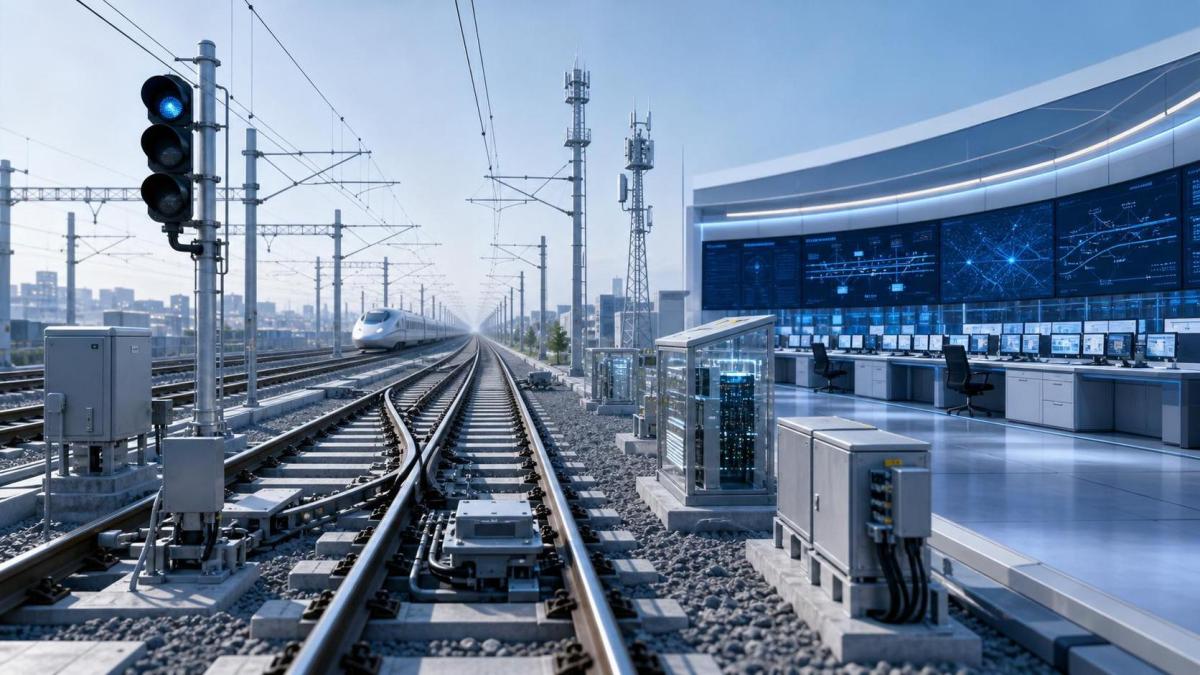
Railway control systems used to be compared mainly on route protection and compliance. That baseline still matters, but network upgrades now sit inside a broader mobility and logistics context.
Urban growth increases headway pressure. Cross-border corridors require better interoperability. Decarbonization pushes operators toward smarter traffic management and energy-aware operations. At the same time, cyber risk has moved from a side topic to a board-level concern.
This is where GTOT’s transport perspective becomes useful. Rail signalling does not operate in isolation from traction behavior, braking performance, or the reliability expectations seen across ports and shipping corridors. A safer upgrade often comes from understanding those connections, not just reviewing equipment brochures.
What should be compared in railway control systems
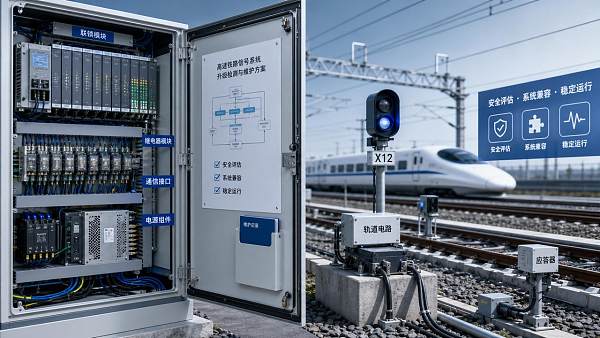
At the core, railway control systems coordinate train movements, route setting, detection, protection logic, and communication between field and control layers. Yet systems that appear similar on paper can behave very differently during migration, degraded operation, or future expansion.
A useful comparison starts by separating the system into practical layers. That makes trade-offs visible early.
This layered view also helps compare conventional signalling, CBTC-based urban solutions, ETCS-oriented mainline systems, and hybrid migration platforms without forcing them into one simplified checklist.
Safety is more than SIL4 certification
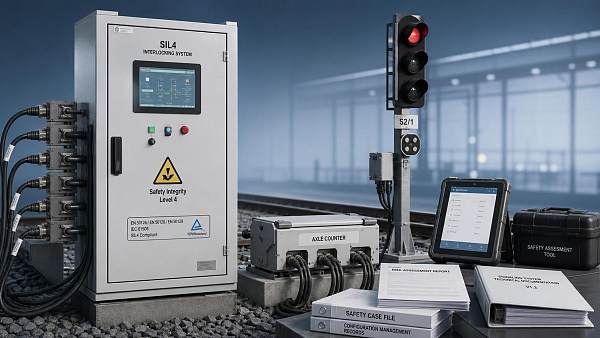
SIL4 remains a critical reference, but safe network upgrades depend on how safety is sustained in real operating conditions. The strongest railway control systems are not simply certified; they are engineered to remain understandable, testable, and recoverable throughout their lifecycle.
That means looking beyond the certificate toward practical evidence:
- How hazards were identified across mixed legacy and new assets
- Whether failure modes are isolated or can cascade through interfaces
- How degraded mode rules are presented to controllers and maintainers
- Whether software changes require manageable validation effort
- How cybersecurity controls protect safety-related functions
In actual upgrades, transition risk is often higher than steady-state risk. Temporary interfaces, staged commissioning, and mixed fleets can create blind spots. Comparing railway control systems without a migration safety lens can therefore produce false confidence.
Interoperability and migration decide long-term value
A technically elegant platform can still become a poor choice if it locks the network into expensive future conversions. Interoperability should be judged at three levels: train-to-track communication, subsystem integration, and enterprise data use.
For example, a mainline corridor may need compatibility with regional signalling, freight locomotives, and central traffic systems from different generations. An urban network may prioritize automatic operation, platform interfaces, and rapid timetable recovery. The comparison criteria should reflect those realities.
GTOT’s intelligence approach is relevant here because rail upgrades increasingly connect with upstream and downstream logistics performance. A corridor that improves signalling capacity but complicates traction maintenance, braking integration, or terminal scheduling may underperform its business case.
Questions that reveal migration strength
- Can old and new railway control systems coexist during phased cutover?
- How many site-specific adaptations are needed for each station or block section?
- Does the supplier support open interfaces or mostly proprietary gateways?
- What is the fallback operating mode if communication quality drops?
- How easily can future automation grades be added without redesigning the core?
Performance indicators that deserve closer attention
Capacity claims can be misleading when viewed without context. A safer comparison links performance metrics to timetable structure, dwell variability, mixed traffic, and recovery behavior after disruption.
Several indicators usually tell more than headline throughput:
- Route setting and release times under normal and degraded conditions
- Mean time to diagnose and isolate field failures
- Availability targets supported by actual spare and service models
- Alarm quality, not just alarm quantity
- Recovery speed after point machine, detection, or communication faults
Where high-speed or dense commuter traffic is involved, coordination with pantograph stability, traction power behavior, and braking response also matters. Railway control systems shape movement authority, but trainborne and wayside performance together determine whether theoretical headways can be safely delivered.
Supplier capability is part of the technical assessment
Two suppliers may offer similar technical functions while presenting very different delivery risk. A safer upgrade depends on engineering maturity, documentation quality, verification discipline, and long-term support capacity.
It helps to compare supplier capability through operational evidence rather than presentation slides.
This is one reason why intelligence portals such as GTOT matter in early evaluation. Market context, project patterns, and technology adoption signals often reveal delivery strength before a formal tender reaches final scoring.
A practical framework for comparing options
A workable assessment framework should connect strategic goals with verifiable system behavior. In practice, five filters usually keep the process grounded.
1. Define the target operating model
Set the expected traffic density, automation grade, mixed-fleet profile, and maintenance philosophy before comparing railway control systems. Otherwise, features will be judged without a real operating context.
2. Score migration risk separately
Do not hide cutover complexity inside a general technical score. Temporary architectures, possession windows, simulation quality, and test strategy deserve their own weighting.
3. Model lifecycle cost with reliability assumptions
Capital price is only one part of the decision. Include obsolescence exposure, software maintenance, spare holdings, training renewal, and failure recovery costs.
4. Test operational resilience
Ask each candidate to demonstrate response to communication loss, false occupancy, point failure, and partial control center outage. Resilience should be observed, not assumed.
5. Check future extensibility
The better railway control systems allow staged digitalization. That can include richer diagnostics, centralized traffic optimization, or eventual integration with wider freight and port corridors.
Where to focus next
The most reliable upgrade decisions usually begin with a disciplined baseline: current failure patterns, interface inventory, operating bottlenecks, and future service assumptions. From there, comparison becomes clearer because every technical claim can be tested against actual network needs.
If the goal is safer network modernization, start by building a comparison matrix that combines SIL4 evidence, interoperability, migration risk, diagnostics depth, and supplier delivery capability. Then review each option against realistic scenarios rather than ideal conditions. That approach produces a more credible shortlist and a stronger foundation for phased investment.
Recommended News
 Sep 24, 2026When should rail operators upgrade to CBTC-based railway automation systems?Railway automation systems: learn when CBTC upgrades deliver capacity, resilience and safer operations—and how to plan a phased, low-risk migration.
 Sep 12, 2026How automatic train control reduces the risk of signal overrunsAutomatic train control reduces signal overrun risk with continuous speed supervision, braking curves, fail-safe responses, and stronger rail safety assurance.
 Sep 02, 2026How to choose train control equipment for signaling reliabilityTrain control equipment for signaling: learn how to assess safety, reliability, interfaces, cybersecurity, and lifecycle support for resilient railway operations.
 Aug 17, 2026When does upgrading railway signaling systems improve line capacity?Railway signaling systems improve line capacity when headways, junction recovery, and service stability become the real bottlenecks. Learn the signs and best upgrade path.
 Aug 04, 2026What Drives Railway Signal Control Systems Pricing in New Rail Projects?Railway signal control systems pricing depends on scope, SIL4 safety, interfaces, testing, and lifecycle support. Learn the real cost drivers to compare bids and avoid overruns.
 Aug 02, 2026How to Evaluate Train Control Systems for Mainline Capacity and SafetyTrain control systems for mainline demand more than feature comparisons. Learn how to assess capacity, safety, interoperability, degraded modes, and migration before you shortlist.
 Jul 31, 2026How to Evaluate a SIL4 Signalling Equipment Exporter for Safety Compliance and Project RiskSIL4 signalling equipment exporter evaluation starts with evidence, not claims. Learn how to verify safety compliance, project risk, integration capability, and lifecycle support.
 Jul 10, 2026SIL4 Signalling Systems: Key Safety Functions and Integration RisksSIL4 signalling systems explained: explore key safety functions, integration risks, and practical evaluation criteria to verify real-world railway reliability.
 Jul 08, 2026Automatic Train Control Fail Safe: Core Design Checks That MatterAutomatic train control fail safe explained: learn the core design checks for braking priority, fault detection, communication integrity, and safer rail system performance.
 Jul 06, 2026Train Control Equipment ETCS: Key Functions, Levels, and Deployment DifferencesTrain control equipment ETCS explained: explore key functions, ETCS levels, deployment differences, and evaluation risks to support smarter rail upgrade and procurement decisions.
 Jun 28, 2026Rail Signalling North America: Standards and Upgrade Priorities in 2026Rail signalling North America in 2026: explore key standards, cyber risks, and upgrade priorities shaping safer, smarter, higher-capacity rail networks.
 Jun 25, 2026How to Compare Railway Control Systems for Safer Network UpgradesRailway control systems comparison made practical: learn how to assess safety, migration risk, interoperability, and supplier capability for smarter, safer network upgrades.
 Jun 24, 2026Railway Automation Systems Standards in 2026: What Is Changing?Railway automation systems in 2026 face stricter standards in safety, cybersecurity, interoperability, and compliance. Discover what is changing and how projects can stay competitive.
 Jun 22, 2026Rail Signalling Basics: Common Failure Points and Safety Upgrade PrioritiesRail signalling basics explained: discover common failure points, risk-based safety upgrade priorities, and practical steps to improve reliability, compliance, and network performance.
 Jun 20, 2026LTE-M Rail Transit: Where It Fits Better Than Legacy WirelessLTE-M rail transit explained: discover where it outperforms legacy wireless in rail monitoring, low-power devices, and scalable telemetry for smarter, cost-efficient operations.
 Jun 16, 2026LTE-M Rail Transit: What to Check Before DeploymentLTE-M rail transit deployment starts with the right checks. Learn how to evaluate coverage, latency, handovers, cybersecurity, and system integration before rollout.
 Jun 15, 2026How to Evaluate Railway Control Components for Safer Signaling UpgradesRailway control components shape signaling safety, uptime, and integration success. Learn how to evaluate compatibility, SIL, resilience, and lifecycle fit before your next upgrade.
 Jun 12, 2026Railway Automation Systems: Key Standards and Performance ChecksRailway automation systems explained through key standards, SIL checks, interoperability, diagnostics, and lifecycle risks—discover how to compare solutions with confidence.
 Jun 10, 2026Railway Control Components: What Matters Most in System SelectionRailway control components selection affects safety, interoperability, and lifecycle cost. Discover the key criteria for choosing resilient rail systems with confidence.
 Jun 08, 2026Rail Signalling vs CBTC: What Matters for Network UpgradesRail signalling vs CBTC: learn what matters for network upgrades, from capacity and interoperability to automation, lifecycle cost, and safer long-term performance.
 Jun 03, 2026LTE-M Rail Transit: When It Fits Signaling, Monitoring, and Field OperationsLTE-M rail transit can strengthen signaling support, asset monitoring, and field operations—learn where it fits, what to test, and how GTOT helps reduce deployment risk.
 Jun 01, 2026Railway Signal Control Systems: CBTC or Interlocking?Railway signal control systems are evolving fast. Compare CBTC and interlocking to assess safety, capacity, cybersecurity, and lifecycle value for smarter rail upgrades.
 May 31, 2026Railway Safety Technology: When CBTC Adds Real ValueRailway safety technology gains real value with CBTC when it improves headway, SIL4 safety, resilience, and lifecycle performance across complex rail scenarios.
 May 23, 2026LTE-M Rail Transit: Where It Fits Best in 2026LTE-M rail transit in 2026: discover where it fits best for low-power monitoring, asset visibility, and cost-efficient rail digitalization across stations, depots, and trackside systems.