



Search News
Industry Portal
Popular Tags
How to Evaluate Railway Control Components for Safer Signaling Upgrades
Author
Time
Click Count
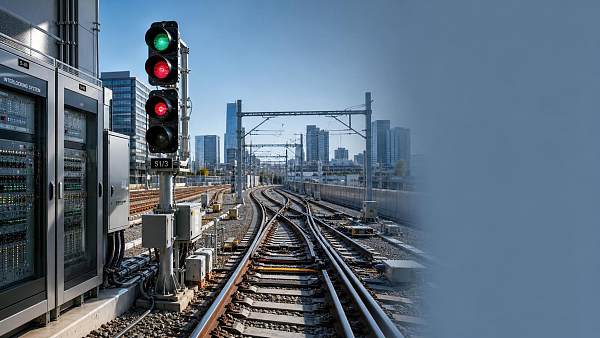
Signaling upgrades promise higher capacity, tighter headways, and more automation. Yet safer outcomes depend on how railway control components are evaluated before they enter the field.
A relay, axle counter, onboard controller, interlocking module, or communication interface may look compliant on paper. In practice, hidden mismatches can weaken system integrity, maintenance efficiency, and operational resilience.
That is why technical review now extends beyond component datasheets. It must connect safety logic, lifecycle behavior, environmental endurance, and network-level interoperability in one decision framework.
Why evaluation matters more in today’s rail environment
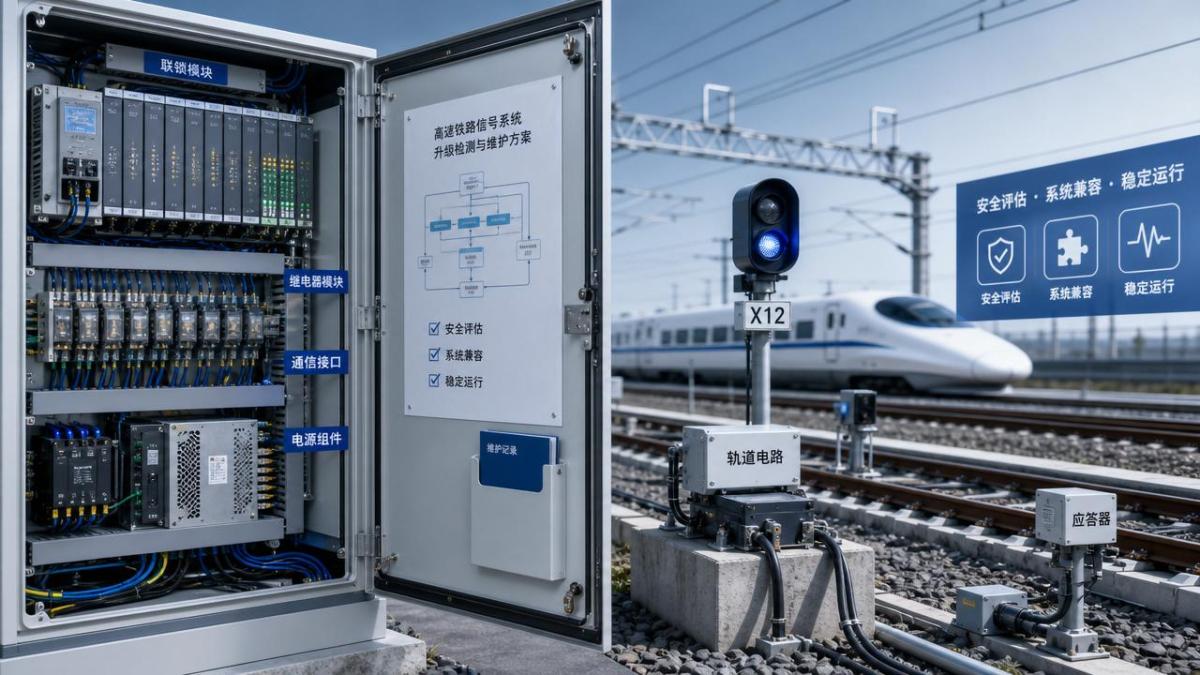
Modern railways operate under denser traffic, stronger cybersecurity expectations, and stricter safety accountability. In that setting, railway control components are no longer isolated hardware items. They are part of an always-connected control chain.
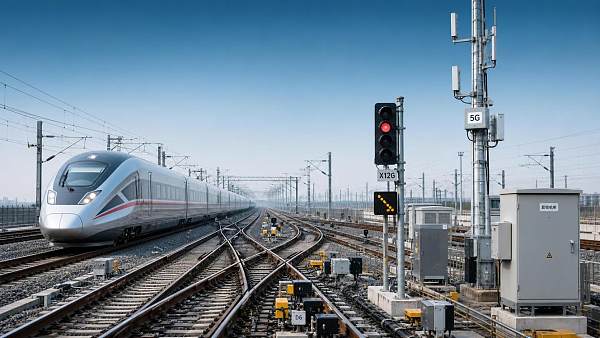
This is especially relevant for programs involving digital interlocking, CBTC migration, ETCS deployment, or hybrid upgrades where legacy assets remain in service. A single weak interface can affect route setting, train detection, braking curves, or fault recovery.
Across the broader transport economy, reliable land corridors also support port throughput, logistics continuity, and supply chain confidence. That cross-sector view is increasingly visible on intelligence platforms such as GTOT, where rail signaling sits beside traction, braking, and smart maritime systems as part of one performance ecosystem.
What counts as railway control components in a signaling upgrade
The term covers far more than interlocking hardware. It includes the functional devices and interfaces that create, transmit, verify, or execute safe movement authority.
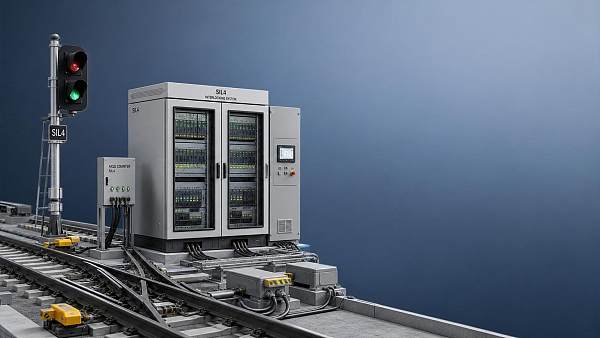
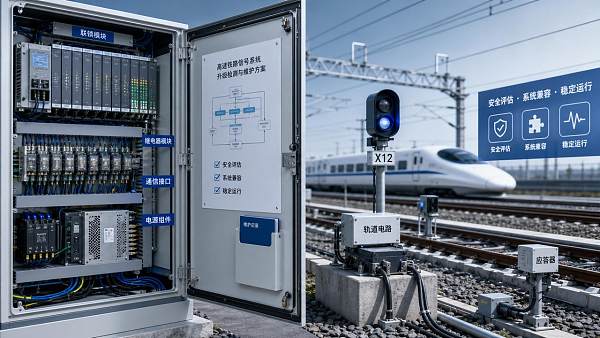
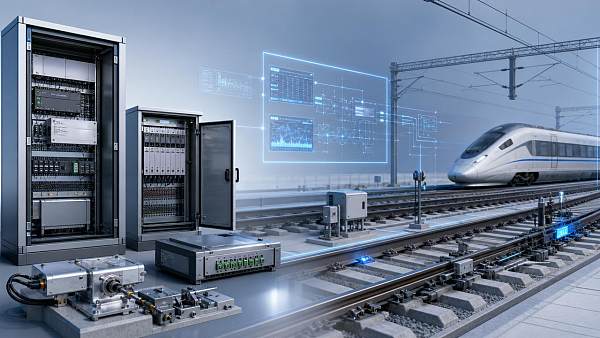
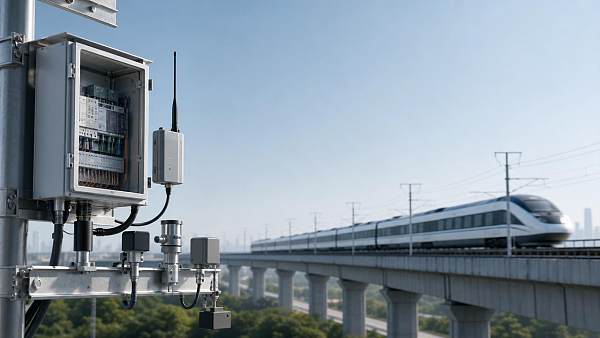
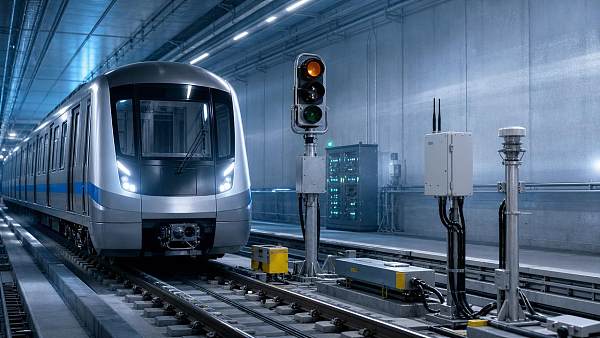
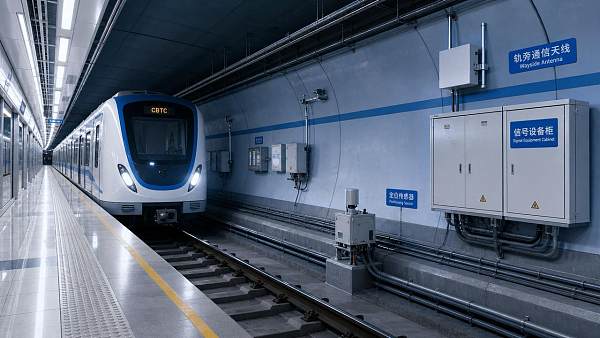
Typical examples include train detection units, point machine controllers, signal drivers, balise interfaces, onboard and wayside processors, data communication gateways, power conditioning modules, and diagnostic subsystems.
Some components are safety-critical by design. Others appear secondary, yet still influence fail-safe behavior. Power supply stability, enclosure sealing, connector quality, and software revision control often shape real-world reliability as much as the main control logic.
A practical way to classify them
This classification helps separate procurement convenience from engineering reality. Not every item carries the same risk, so not every item should be judged with the same weighting.
The core dimensions of a sound evaluation
A credible review of railway control components usually starts with safety integrity, but it should not end there. Safer signaling upgrades come from balanced judgment across several dimensions.
Safety integrity and fail-safe design
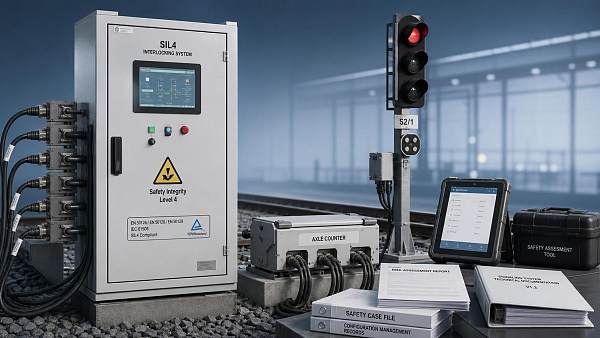
Check the claimed SIL performance against independent assessment records, hazard logs, and application conditions. A SIL4 claim matters only when supported by valid architecture, verification scope, and operational assumptions.
Look closely at fault detection, safe-state transition time, redundancy logic, and degraded mode behavior. The question is not just whether a failure is rare, but whether the system fails predictably.
System compatibility
Compatibility should be assessed at electrical, mechanical, software, and protocol levels. Legacy interfaces often create the most expensive surprises during commissioning.
Voltage ranges, contact logic, timing tolerances, mounting envelopes, firmware dependencies, and data formats all deserve documented review. Even minor version conflicts can trigger intermittent faults.
Lifecycle performance
The best railway control components are not only safe at handover. They remain supportable over years of operation, inspection, and software updates.
Useful indicators include mean time between hazardous failures, spare parts continuity, obsolescence planning, maintenance access, remote diagnostics, and documented upgrade pathways.
Environmental resilience
Field conditions can distort lab assumptions. Heat, salt, dust, vibration, electromagnetic interference, flooding, and unstable power quality all influence component behavior.
This matters on coastal freight corridors, high-speed lines, tunnels, desert routes, and mixed-traffic urban networks. Evaluation should reflect the real duty profile, not a generic one.
Where many upgrade projects go wrong
Most failures in signaling modernization are not caused by one dramatic defect. They emerge from layered assumptions that were never tested together.
- Treating catalog compliance as proof of application suitability.
- Underestimating interface risk between old and new control layers.
- Ignoring maintenance constraints in remote or high-traffic corridors.
- Evaluating hardware without reviewing software management discipline.
- Using generic environmental test data for specialized route conditions.
- Prioritizing unit price over lifecycle support and failure consequence.
In actual projects, these gaps often appear late, during factory acceptance, site integration, or the first months of service. By then, schedule pressure makes disciplined correction much harder.
How to structure the evaluation process
A strong process reduces subjectivity. It also makes decisions easier to defend to operators, EPC teams, assessors, and financial stakeholders.
Start with the operating context
Define line speed, axle load, signaling architecture, traffic density, maintenance windows, climate exposure, and migration strategy. Railway control components should be judged inside that operating envelope.
Build a weighted criteria matrix
Not every project values the same attributes equally. A metro automation upgrade may emphasize communication latency and availability. A remote freight corridor may emphasize ruggedness and diagnostic visibility.
Use evidence, not claims
Ask for test reports, RAMS documentation, configuration control records, cybersecurity procedures, and field references from comparable applications. Evaluation improves when evidence comes from similar duty conditions.
Test integration before full deployment
Bench simulation, hardware-in-the-loop testing, and pilot sections can expose timing conflicts, data translation errors, and fallback weaknesses. Integration testing is often where the true quality of railway control components becomes visible.
Signals from adjacent transport sectors
Rail does not innovate in isolation. Across high-speed traction, smart shipping, and LNG transport, asset owners are applying the same discipline: verify safety-critical hardware through lifecycle intelligence, not just initial specification.
That broader view is useful. GTOT’s land-and-sea perspective highlights a common pattern across transport systems: the assets that perform best are those evaluated with equal attention to reliability, maintainability, and digital traceability.
For signaling upgrades, this means component decisions should support future diagnostics, data transparency, and long-term modernization, not only current commissioning targets.
What to check before making the final decision
Before shortlisting or approving railway control components, it helps to confirm a final set of questions.
- Does the component meet required safety integrity in this exact application?
- Can it integrate cleanly with legacy and future systems?
- Is field maintenance realistic under the available access conditions?
- Are environmental and EMC test conditions relevant to the route?
- Is software governance mature enough for controlled updates?
- Will spare support and technical documentation remain available?
If several answers remain uncertain, the issue is rarely solved by adding paperwork. Usually, it points to a need for deeper validation, clearer requirements, or a different component strategy.
A practical next step
Safer signaling upgrades begin with a disciplined view of railway control components as long-life, system-critical assets. The most useful next step is to map each component against safety role, interface exposure, environmental stress, and support horizon.
From there, compare evidence across suppliers, review assumptions behind compliance claims, and focus attention on interfaces where failure consequences are hardest to recover from. That approach creates a stronger basis for decisions that must remain dependable long after commissioning.
Recommended News
 Sep 24, 2026When should rail operators upgrade to CBTC-based railway automation systems?Railway automation systems: learn when CBTC upgrades deliver capacity, resilience and safer operations—and how to plan a phased, low-risk migration.
 Sep 12, 2026How automatic train control reduces the risk of signal overrunsAutomatic train control reduces signal overrun risk with continuous speed supervision, braking curves, fail-safe responses, and stronger rail safety assurance.
 Sep 02, 2026How to choose train control equipment for signaling reliabilityTrain control equipment for signaling: learn how to assess safety, reliability, interfaces, cybersecurity, and lifecycle support for resilient railway operations.
 Aug 17, 2026When does upgrading railway signaling systems improve line capacity?Railway signaling systems improve line capacity when headways, junction recovery, and service stability become the real bottlenecks. Learn the signs and best upgrade path.
 Aug 04, 2026What Drives Railway Signal Control Systems Pricing in New Rail Projects?Railway signal control systems pricing depends on scope, SIL4 safety, interfaces, testing, and lifecycle support. Learn the real cost drivers to compare bids and avoid overruns.
 Aug 02, 2026How to Evaluate Train Control Systems for Mainline Capacity and SafetyTrain control systems for mainline demand more than feature comparisons. Learn how to assess capacity, safety, interoperability, degraded modes, and migration before you shortlist.
 Jul 31, 2026How to Evaluate a SIL4 Signalling Equipment Exporter for Safety Compliance and Project RiskSIL4 signalling equipment exporter evaluation starts with evidence, not claims. Learn how to verify safety compliance, project risk, integration capability, and lifecycle support.
 Jul 10, 2026SIL4 Signalling Systems: Key Safety Functions and Integration RisksSIL4 signalling systems explained: explore key safety functions, integration risks, and practical evaluation criteria to verify real-world railway reliability.
 Jul 08, 2026Automatic Train Control Fail Safe: Core Design Checks That MatterAutomatic train control fail safe explained: learn the core design checks for braking priority, fault detection, communication integrity, and safer rail system performance.
 Jul 06, 2026Train Control Equipment ETCS: Key Functions, Levels, and Deployment DifferencesTrain control equipment ETCS explained: explore key functions, ETCS levels, deployment differences, and evaluation risks to support smarter rail upgrade and procurement decisions.
 Jun 28, 2026Rail Signalling North America: Standards and Upgrade Priorities in 2026Rail signalling North America in 2026: explore key standards, cyber risks, and upgrade priorities shaping safer, smarter, higher-capacity rail networks.
 Jun 25, 2026How to Compare Railway Control Systems for Safer Network UpgradesRailway control systems comparison made practical: learn how to assess safety, migration risk, interoperability, and supplier capability for smarter, safer network upgrades.
 Jun 24, 2026Railway Automation Systems Standards in 2026: What Is Changing?Railway automation systems in 2026 face stricter standards in safety, cybersecurity, interoperability, and compliance. Discover what is changing and how projects can stay competitive.
 Jun 22, 2026Rail Signalling Basics: Common Failure Points and Safety Upgrade PrioritiesRail signalling basics explained: discover common failure points, risk-based safety upgrade priorities, and practical steps to improve reliability, compliance, and network performance.
 Jun 20, 2026LTE-M Rail Transit: Where It Fits Better Than Legacy WirelessLTE-M rail transit explained: discover where it outperforms legacy wireless in rail monitoring, low-power devices, and scalable telemetry for smarter, cost-efficient operations.
 Jun 16, 2026LTE-M Rail Transit: What to Check Before DeploymentLTE-M rail transit deployment starts with the right checks. Learn how to evaluate coverage, latency, handovers, cybersecurity, and system integration before rollout.
 Jun 15, 2026How to Evaluate Railway Control Components for Safer Signaling UpgradesRailway control components shape signaling safety, uptime, and integration success. Learn how to evaluate compatibility, SIL, resilience, and lifecycle fit before your next upgrade.
 Jun 12, 2026Railway Automation Systems: Key Standards and Performance ChecksRailway automation systems explained through key standards, SIL checks, interoperability, diagnostics, and lifecycle risks—discover how to compare solutions with confidence.
 Jun 10, 2026Railway Control Components: What Matters Most in System SelectionRailway control components selection affects safety, interoperability, and lifecycle cost. Discover the key criteria for choosing resilient rail systems with confidence.
 Jun 08, 2026Rail Signalling vs CBTC: What Matters for Network UpgradesRail signalling vs CBTC: learn what matters for network upgrades, from capacity and interoperability to automation, lifecycle cost, and safer long-term performance.
 Jun 03, 2026LTE-M Rail Transit: When It Fits Signaling, Monitoring, and Field OperationsLTE-M rail transit can strengthen signaling support, asset monitoring, and field operations—learn where it fits, what to test, and how GTOT helps reduce deployment risk.
 Jun 01, 2026Railway Signal Control Systems: CBTC or Interlocking?Railway signal control systems are evolving fast. Compare CBTC and interlocking to assess safety, capacity, cybersecurity, and lifecycle value for smarter rail upgrades.
 May 31, 2026Railway Safety Technology: When CBTC Adds Real ValueRailway safety technology gains real value with CBTC when it improves headway, SIL4 safety, resilience, and lifecycle performance across complex rail scenarios.
 May 23, 2026LTE-M Rail Transit: Where It Fits Best in 2026LTE-M rail transit in 2026: discover where it fits best for low-power monitoring, asset visibility, and cost-efficient rail digitalization across stations, depots, and trackside systems.