



Search News
Industry Portal
Popular Tags
Rail Signalling Upgrade Mistakes That Cause Costly Delays
Author
Time
Click Count
Rail signalling upgrades can unlock capacity, safety, and automation—but small planning mistakes often trigger major delays, budget overruns, and compliance risks. For project managers and engineering leads, understanding where rail signalling programs typically go wrong is essential to keeping timelines, stakeholders, and system integration under control. This article highlights the most common upgrade mistakes and how to avoid them before they escalate into costly disruptions.
What rail signalling upgrades involve and why they matter
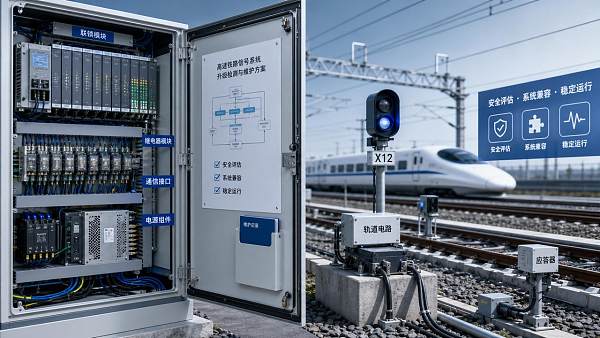
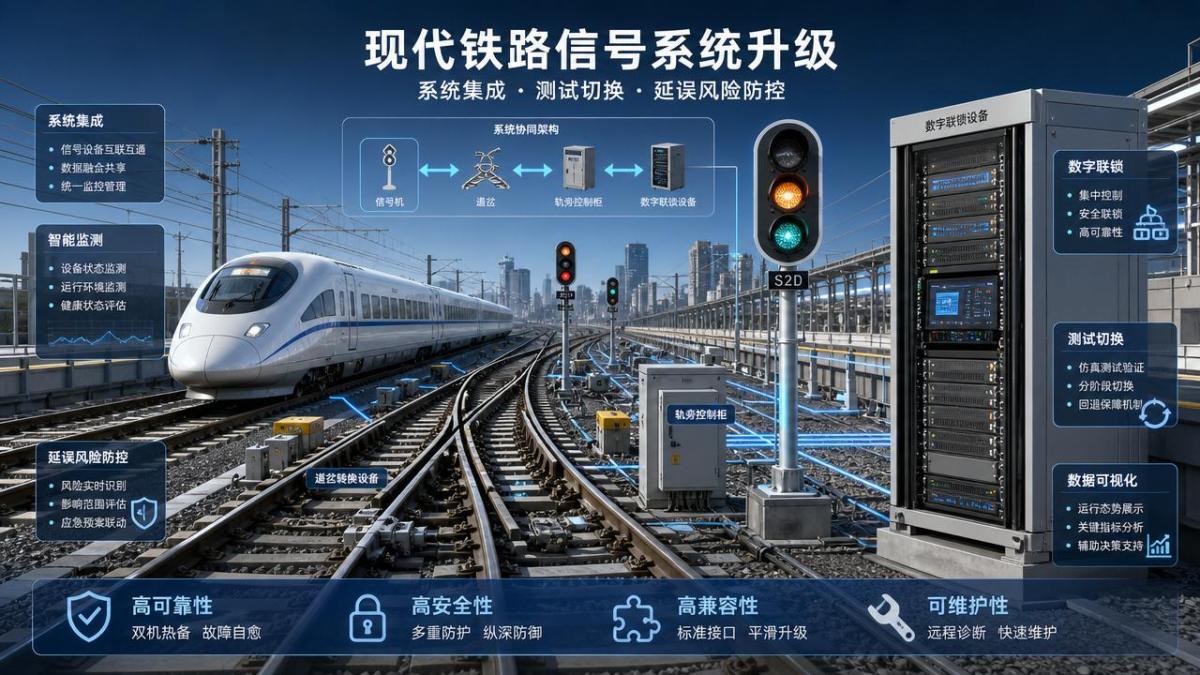
A rail signalling upgrade is not simply a hardware refresh. In most projects, it is a coordinated change across interlocking logic, train detection, communications, control software, human-machine interfaces, power supply, testing procedures, cybersecurity, and operating rules. In busy passenger corridors, freight networks, and metro systems, signalling is the operational nerve center that protects movement authority, supports headway reduction, and enables higher line utilization.
That is why mistakes in rail signalling programs are unusually expensive. A civil delay may shift a handover date, but a signalling error can freeze testing access, invalidate safety evidence, or force redesign across multiple interfaces. For project managers, the challenge is that risk often hides in coordination gaps rather than in the core technology itself. The system may be technically sound, yet still miss commissioning because requirements changed late, possessions were not secured, or legacy assets were misunderstood.
Across the wider transport sector observed by GTOT, this pattern is familiar: highly integrated systems fail less from isolated component weakness and more from poor stitching between disciplines. In rail signalling, that stitching includes engineering, operations, safety assurance, telecommunications, rolling stock compatibility, and supply chain readiness.
Why the industry pays close attention to rail signalling risk
The current rail market puts exceptional pressure on upgrade delivery. Networks are expected to increase capacity without long shutdowns, maintain SIL4-level safety integrity, integrate digital control layers, and do all of this while budgets remain tightly governed. At the same time, many operators are modernizing legacy infrastructure in phases, meaning new rail signalling must coexist with old equipment for months or years.
This creates a difficult project environment. Contractors and operators must manage brownfield constraints, limited track access, software version dependencies, and strict regulator expectations. Delays are rarely absorbed quietly; they affect timetables, public performance metrics, financing assumptions, and downstream contracts. For engineering leads, every missed interface can ripple into revalidation, retesting, and extended blockade costs.
Industry overview: where upgrade complexity usually concentrates
Before looking at mistakes, it helps to identify where rail signalling upgrades become operationally fragile. The table below summarizes the typical pressure points.
The most common rail signalling upgrade mistakes
1. Treating signalling as a standalone package
One of the biggest mistakes is managing rail signalling as if it can progress independently from rolling stock, telecoms, power, platform operations, and civil access. In reality, signalling sits at the center of operational integration. If package managers optimize only their own milestones, conflicts appear late: equipment rooms are unfinished, cable routes are blocked, software baselines differ, or drivers have not been trained on transitional rules.
The fix is early interface ownership. Every interface should have a named accountable lead, agreed assumptions, design freeze dates, and a formal change path. This is basic project governance, but in rail signalling it directly protects commissioning dates.
2. Underestimating legacy asset conditions
Many delays start with poor knowledge of what already exists on site. Drawings may be outdated, cable cores may be unavailable, housings may be corroded, and relay room layouts may not match records. Teams often assume that integration with legacy rail signalling assets will be straightforward until installation or testing reveals hidden constraints.
Project leaders should insist on high-quality surveys, targeted intrusive investigations where justified, and a red-flag process for undocumented conditions. Budgeting for verification upfront is far cheaper than redesign during possession windows.
3. Freezing requirements too late
Late requirement changes are especially damaging in rail signalling because they propagate into software logic, control tables, test scripts, safety cases, operator instructions, and sometimes hardware quantities. A small operational request such as changing route priorities or overlap behavior can trigger wide rework.
Disciplined requirement management matters. Stakeholders need structured review points, and “minor” changes should be impact-assessed against design maturity, validation effort, and cutover risk. If decision-makers do not understand these consequences, they will continue to request changes at the worst possible time.
4. Weak possession and cutover planning
Even a well-designed rail signalling solution can fail at implementation if the migration plan is unrealistic. Teams sometimes compress commissioning activities into possessions that leave no room for defect resolution, independent checks, weather delays, or handback contingencies. The result is overrun risk, reduced test coverage, or emergency rollback.
Strong cutover planning breaks work into executable steps, confirms resource readiness by shift, tests fallback scenarios, and rehearses decision thresholds. For major blockades, a minute-by-minute possession plan is not excessive; it is often the only way to manage operational exposure.
5. Inadequate systems assurance and safety evidence
Rail signalling cannot enter service based on engineering confidence alone. Independent safety assessment, hazard closure, configuration control, and traceable verification evidence are fundamental. Some programs delay these activities because they seem administrative compared with design and installation. That is a serious mistake.
When assurance lags, projects may finish physical works yet remain unable to commission. The practical lesson is simple: safety documentation must be developed in parallel with engineering, not after it. For project managers, assurance milestones deserve the same executive visibility as manufacturing and site access.
6. Ignoring software and data configuration discipline
Modern rail signalling upgrades depend heavily on software versions, data sets, logic builds, and interface parameters. Delays often come not from defective design, but from teams working from inconsistent baselines. A test may pass in the factory and fail on site because one configuration file, firmware release, or naming convention is different.
Robust configuration management is therefore a delivery control tool, not just an engineering formality. Clear version governance, controlled access, change logs, and environment separation reduce rework and protect safety evidence.
Who is most affected by these mistakes
Rail signalling errors affect more than the signalling team. Their consequences spread across the project organization and operating business.
Practical ways to prevent costly delays
For project management teams, prevention is less about one perfect method and more about disciplined control in several areas at once. The most effective rail signalling programs usually share the following practices.
- Define the operational concept early, including degraded modes, transitional rules, and handback criteria.
- Build an interface matrix that is actively managed, not filed away after kickoff.
- Link design maturity gates to survey confidence, assurance progress, and possession readiness.
- Use integrated testing strategies that connect factory tests, site tests, dynamic tests, and safety evidence.
- Protect configuration discipline across software, data, documents, and installed assets.
- Maintain realistic contingency for access restrictions, weather, supply delays, and defect closure.
These are not abstract controls. They directly influence whether a rail signalling upgrade proceeds as a sequence of managed decisions or as a chain of last-minute recoveries.
A useful management lens for complex upgrade programs
A helpful way to manage rail signalling risk is to separate the project into four lenses: product readiness, site readiness, operational readiness, and assurance readiness. Product readiness asks whether the design, software, and factory outputs are stable. Site readiness checks whether access, installation conditions, utilities, and legacy interfaces are truly available. Operational readiness covers procedures, training, control room alignment, and disruption planning. Assurance readiness confirms whether the evidence base can support approval and entry into service.
Many delayed projects appear healthy under one or two of these lenses while failing under the others. Senior reviews should therefore avoid relying on a single progress percentage. A rail signalling package that is 90% installed but only 50% assured is not close to completion in any meaningful commissioning sense.
Conclusion and next-step guidance
Rail signalling upgrades remain one of the highest-value investments in modern transport because they improve safety, unlock capacity, and support automation. Yet the same strategic importance makes delivery unforgiving. The most costly delays usually do not come from a single dramatic failure. They emerge from underestimated legacy conditions, late scope shifts, weak interface control, poor possession planning, and incomplete assurance.
For project managers and engineering leaders, the best response is early systems thinking backed by rigorous execution. Treat rail signalling as an integrated operational change, not just an engineering package. If your team is planning a brownfield migration, digital interlocking renewal, or control system modernization, now is the right time to pressure-test assumptions, map interfaces in detail, and align assurance with delivery from day one. That discipline is what turns a technically ambitious rail signalling program into a reliable project outcome.
Recommended News
 Sep 24, 2026When should rail operators upgrade to CBTC-based railway automation systems?Railway automation systems: learn when CBTC upgrades deliver capacity, resilience and safer operations—and how to plan a phased, low-risk migration.
 Sep 12, 2026How automatic train control reduces the risk of signal overrunsAutomatic train control reduces signal overrun risk with continuous speed supervision, braking curves, fail-safe responses, and stronger rail safety assurance.
 Sep 02, 2026How to choose train control equipment for signaling reliabilityTrain control equipment for signaling: learn how to assess safety, reliability, interfaces, cybersecurity, and lifecycle support for resilient railway operations.
 Aug 17, 2026When does upgrading railway signaling systems improve line capacity?Railway signaling systems improve line capacity when headways, junction recovery, and service stability become the real bottlenecks. Learn the signs and best upgrade path.
 Aug 04, 2026What Drives Railway Signal Control Systems Pricing in New Rail Projects?Railway signal control systems pricing depends on scope, SIL4 safety, interfaces, testing, and lifecycle support. Learn the real cost drivers to compare bids and avoid overruns.
 Aug 02, 2026How to Evaluate Train Control Systems for Mainline Capacity and SafetyTrain control systems for mainline demand more than feature comparisons. Learn how to assess capacity, safety, interoperability, degraded modes, and migration before you shortlist.
 Jul 31, 2026How to Evaluate a SIL4 Signalling Equipment Exporter for Safety Compliance and Project RiskSIL4 signalling equipment exporter evaluation starts with evidence, not claims. Learn how to verify safety compliance, project risk, integration capability, and lifecycle support.
 Jul 10, 2026SIL4 Signalling Systems: Key Safety Functions and Integration RisksSIL4 signalling systems explained: explore key safety functions, integration risks, and practical evaluation criteria to verify real-world railway reliability.
 Jul 08, 2026Automatic Train Control Fail Safe: Core Design Checks That MatterAutomatic train control fail safe explained: learn the core design checks for braking priority, fault detection, communication integrity, and safer rail system performance.
 Jul 06, 2026Train Control Equipment ETCS: Key Functions, Levels, and Deployment DifferencesTrain control equipment ETCS explained: explore key functions, ETCS levels, deployment differences, and evaluation risks to support smarter rail upgrade and procurement decisions.
 Jun 28, 2026Rail Signalling North America: Standards and Upgrade Priorities in 2026Rail signalling North America in 2026: explore key standards, cyber risks, and upgrade priorities shaping safer, smarter, higher-capacity rail networks.
 Jun 25, 2026How to Compare Railway Control Systems for Safer Network UpgradesRailway control systems comparison made practical: learn how to assess safety, migration risk, interoperability, and supplier capability for smarter, safer network upgrades.
 Jun 24, 2026Railway Automation Systems Standards in 2026: What Is Changing?Railway automation systems in 2026 face stricter standards in safety, cybersecurity, interoperability, and compliance. Discover what is changing and how projects can stay competitive.
 Jun 22, 2026Rail Signalling Basics: Common Failure Points and Safety Upgrade PrioritiesRail signalling basics explained: discover common failure points, risk-based safety upgrade priorities, and practical steps to improve reliability, compliance, and network performance.
 Jun 20, 2026LTE-M Rail Transit: Where It Fits Better Than Legacy WirelessLTE-M rail transit explained: discover where it outperforms legacy wireless in rail monitoring, low-power devices, and scalable telemetry for smarter, cost-efficient operations.
 Jun 16, 2026LTE-M Rail Transit: What to Check Before DeploymentLTE-M rail transit deployment starts with the right checks. Learn how to evaluate coverage, latency, handovers, cybersecurity, and system integration before rollout.
 Jun 15, 2026How to Evaluate Railway Control Components for Safer Signaling UpgradesRailway control components shape signaling safety, uptime, and integration success. Learn how to evaluate compatibility, SIL, resilience, and lifecycle fit before your next upgrade.
 Jun 12, 2026Railway Automation Systems: Key Standards and Performance ChecksRailway automation systems explained through key standards, SIL checks, interoperability, diagnostics, and lifecycle risks—discover how to compare solutions with confidence.
 Jun 10, 2026Railway Control Components: What Matters Most in System SelectionRailway control components selection affects safety, interoperability, and lifecycle cost. Discover the key criteria for choosing resilient rail systems with confidence.
 Jun 08, 2026Rail Signalling vs CBTC: What Matters for Network UpgradesRail signalling vs CBTC: learn what matters for network upgrades, from capacity and interoperability to automation, lifecycle cost, and safer long-term performance.
 Jun 03, 2026LTE-M Rail Transit: When It Fits Signaling, Monitoring, and Field OperationsLTE-M rail transit can strengthen signaling support, asset monitoring, and field operations—learn where it fits, what to test, and how GTOT helps reduce deployment risk.
 Jun 01, 2026Railway Signal Control Systems: CBTC or Interlocking?Railway signal control systems are evolving fast. Compare CBTC and interlocking to assess safety, capacity, cybersecurity, and lifecycle value for smarter rail upgrades.
 May 31, 2026Railway Safety Technology: When CBTC Adds Real ValueRailway safety technology gains real value with CBTC when it improves headway, SIL4 safety, resilience, and lifecycle performance across complex rail scenarios.
 May 23, 2026LTE-M Rail Transit: Where It Fits Best in 2026LTE-M rail transit in 2026: discover where it fits best for low-power monitoring, asset visibility, and cost-efficient rail digitalization across stations, depots, and trackside systems.