Search News
Industry Portal
Popular Tags
Train Control Equipment ETCS: Key Functions, Levels, and Deployment Differences
Author
Time
Click Count
Train Control Equipment ETCS: Key Functions, Levels, and Deployment Differences
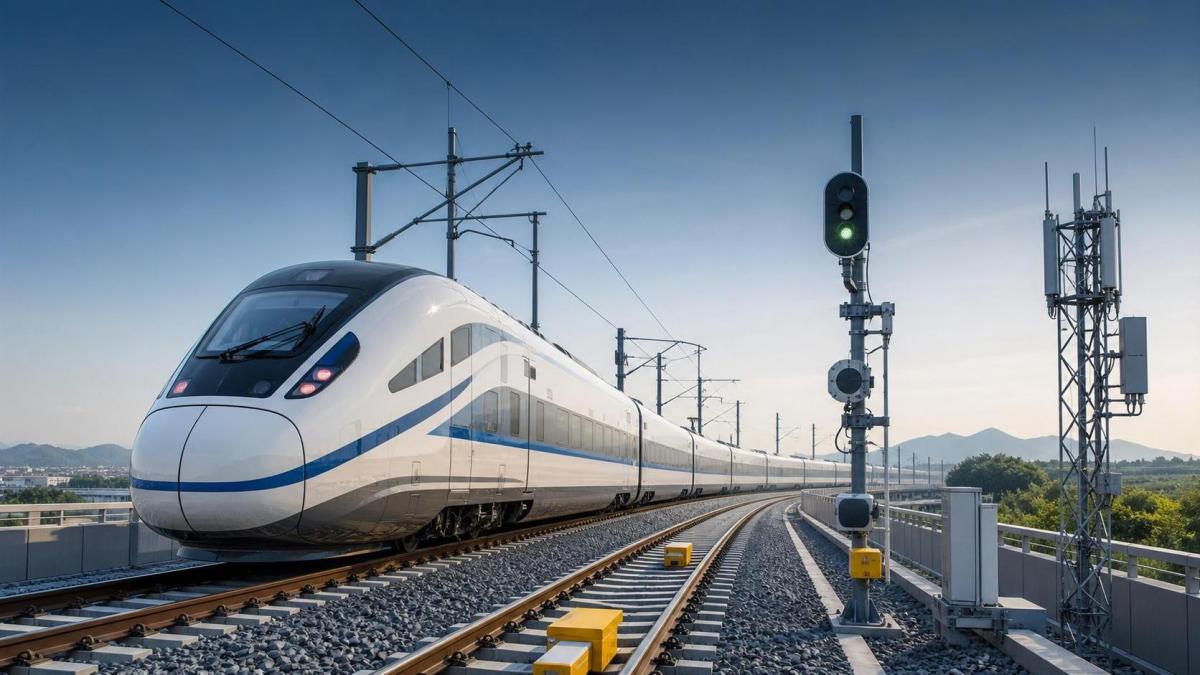
For technical evaluation, train control equipment ETCS is more than a signalling label. It is a reference framework for safety logic, interoperability, operational capacity, and long-term upgrade control.
That matters because procurement decisions rarely stop at compliance. They also affect retrofit effort, maintenance burden, data architecture, and future cross-border operation.
In practical terms, train control equipment ETCS helps evaluators compare how trains receive movement authority, supervise speed, react to braking curves, and stay interoperable across mixed networks.
The system sits inside the wider ERTMS structure, but the evaluation focus is usually narrower. Teams want to know which functions are onboard, which are trackside, and which level fits a route strategy.
That is where deployment differences become decisive. A Level 1 overlay creates one investment profile, while Level 2 or Level 3 shifts the balance toward communications, software assurance, and network resilience.
What Train Control Equipment ETCS Actually Does
At its core, train control equipment ETCS protects train movement using continuous or intermittent supervision. It calculates safe speed, checks location, and intervenes before a train exceeds permitted limits.
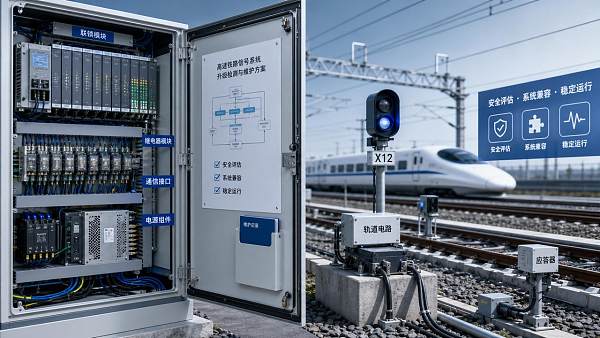
This sounds simple, but the function stack is broad. A complete ETCS architecture connects balises, onboard computers, radio links, interlocking interfaces, odometry, driver display, and braking supervision.
Core onboard functions
- Receive and interpret movement authority and route data.
- Build braking curves from train characteristics and line constraints.
- Supervise target speed, ceiling speed, and release speed.
- Monitor train position using odometry and balise reference points.
- Trigger warnings and automatic braking when limits are exceeded.
- Support driver-machine interaction through the DMI.
Core trackside functions
- Transmit static and dynamic route information.
- Link interlocking status with movement authority generation.
- Provide location reference through balises.
- Support radio-based control where continuous communication is required.
When these functions are evaluated properly, train control equipment ETCS becomes easier to compare across suppliers. The question shifts from features on paper to operational behavior under real constraints.
How ETCS Levels Change System Behavior
The most common source of confusion is the level structure. ETCS levels do not simply indicate technical maturity. They define how information is transmitted and how train separation logic is supported.
Level 0 and STM context
Level 0 means the ETCS onboard unit is fitted, but the line is not ETCS-equipped. National protection may still apply through STM, depending on route and legacy requirements.
Level 1
Level 1 is typically a spot transmission system. Balises pass information to the train at fixed points. It often overlays conventional lineside signalling without removing all legacy assets.
For many networks, this makes train control equipment ETCS Level 1 attractive in phased upgrades. Civil works stay relatively contained, while ATP capability improves substantially.
Level 2
Level 2 adds continuous radio communication, usually through GSM-R, with movement authority sent from the Radio Block Centre. Balises still support position referencing.
This changes the evaluation model. Capacity can improve, lineside signal dependence can fall, and traffic management becomes more flexible. Yet telecom resilience becomes far more critical.
Level 3
Level 3 aims at moving block concepts and stronger reliance on train integrity confirmation. In theory, it unlocks higher capacity and less trackside equipment.
In practice, deployment remains more limited and more conditional. Train integrity, fallback logic, and migration planning still shape whether Level 3 is commercially realistic.
Deployment Differences That Matter in Evaluation
On paper, train control equipment ETCS can look standardized enough to simplify selection. In real projects, deployment differences introduce most of the cost, schedule, and interoperability risk.
Brownfield versus greenfield
A greenfield high-speed route allows clean architecture choices. Interfaces, telecom design, axle counters, interlocking logic, and onboard baselines can be aligned from day one.
Brownfield corridors are harder. Legacy signalling, mixed rolling stock, limited possessions, and older depots can turn a technically correct ETCS design into a difficult operational program.
Passenger high-speed versus freight-heavy routes
Passenger high-speed lines value short headways, high availability, and stable braking models. Freight-heavy corridors often care more about train length, variable braking performance, and migration flexibility.
That means train control equipment ETCS should be judged against traffic mix, not only nominal compliance. The same level can perform very differently under different rolling stock assumptions.
National values and baseline management
Interoperability is not automatic just because ETCS is specified. National values, baseline versions, packet handling, and transition rules still require disciplined configuration management.
This is often where hidden integration effort appears. Small inconsistencies in baseline policy can create large validation workloads later in testing and authorization.
Key Risks When Comparing Train Control Equipment ETCS
From a procurement perspective, the strongest ETCS proposal is not always the one with the longest feature list. It is the one with the clearest control of interfaces, validation, and operational fallback.
These are not abstract concerns. They shape headway, punctuality, maintenance access, and the number of exceptions that operations teams must manage every week.
A Practical Evaluation Framework
A useful assessment of train control equipment ETCS usually combines standards review with route-specific operating evidence. Looking at one without the other tends to distort the decision.
- Confirm the target ETCS level and migration sequence.
- Check onboard compatibility with rolling stock diversity.
- Review interlocking, RBC, telecom, and balise interfaces.
- Test degraded mode behavior, not only nominal operation.
- Verify baseline, national values, and authorization roadmap.
- Quantify lifecycle cost, spares strategy, and software support terms.
This kind of framework is especially valuable when multiple bidders all claim interoperability. The differentiator is usually how clearly each one manages transition complexity and proof of performance.
From recent market shifts, one stronger signal is the rise of lifecycle evaluation. Buyers increasingly ask whether train control equipment ETCS can stay maintainable through telecom changes, software revisions, and network expansion.
Why This Matters for Long-Term Network Strategy
ETCS choices influence far more than train protection. They affect traffic growth potential, cross-border access, depot tooling, staff training, and the pace of digital railway transformation.
For organizations tracking critical rail technology, this links directly to a wider intelligence picture. GTOT follows how signalling control systems, braking performance, and traction reliability converge in real transport investment cycles.
That broader view matters because ETCS is never isolated. It interacts with train dynamics, route modernization plans, cybersecurity posture, and the efficiency targets of increasingly connected freight and passenger corridors.
In the end, the best train control equipment ETCS decision is the one grounded in operational reality. Check the level logic, test the interfaces, examine migration risk, and tie every requirement back to network performance.
That approach keeps the evaluation practical. It also makes procurement more defensible when safety, interoperability, and future capacity all need to hold under real-world pressure.
Recommended News
 Sep 24, 2026When should rail operators upgrade to CBTC-based railway automation systems?Railway automation systems: learn when CBTC upgrades deliver capacity, resilience and safer operations—and how to plan a phased, low-risk migration.
 Sep 12, 2026How automatic train control reduces the risk of signal overrunsAutomatic train control reduces signal overrun risk with continuous speed supervision, braking curves, fail-safe responses, and stronger rail safety assurance.
 Sep 02, 2026How to choose train control equipment for signaling reliabilityTrain control equipment for signaling: learn how to assess safety, reliability, interfaces, cybersecurity, and lifecycle support for resilient railway operations.
 Aug 17, 2026When does upgrading railway signaling systems improve line capacity?Railway signaling systems improve line capacity when headways, junction recovery, and service stability become the real bottlenecks. Learn the signs and best upgrade path.
 Aug 04, 2026What Drives Railway Signal Control Systems Pricing in New Rail Projects?Railway signal control systems pricing depends on scope, SIL4 safety, interfaces, testing, and lifecycle support. Learn the real cost drivers to compare bids and avoid overruns.
 Aug 02, 2026How to Evaluate Train Control Systems for Mainline Capacity and SafetyTrain control systems for mainline demand more than feature comparisons. Learn how to assess capacity, safety, interoperability, degraded modes, and migration before you shortlist.
 Jul 31, 2026How to Evaluate a SIL4 Signalling Equipment Exporter for Safety Compliance and Project RiskSIL4 signalling equipment exporter evaluation starts with evidence, not claims. Learn how to verify safety compliance, project risk, integration capability, and lifecycle support.
 Jul 10, 2026SIL4 Signalling Systems: Key Safety Functions and Integration RisksSIL4 signalling systems explained: explore key safety functions, integration risks, and practical evaluation criteria to verify real-world railway reliability.
 Jul 08, 2026Automatic Train Control Fail Safe: Core Design Checks That MatterAutomatic train control fail safe explained: learn the core design checks for braking priority, fault detection, communication integrity, and safer rail system performance.
 Jul 06, 2026Train Control Equipment ETCS: Key Functions, Levels, and Deployment DifferencesTrain control equipment ETCS explained: explore key functions, ETCS levels, deployment differences, and evaluation risks to support smarter rail upgrade and procurement decisions.
 Jun 28, 2026Rail Signalling North America: Standards and Upgrade Priorities in 2026Rail signalling North America in 2026: explore key standards, cyber risks, and upgrade priorities shaping safer, smarter, higher-capacity rail networks.
 Jun 25, 2026How to Compare Railway Control Systems for Safer Network UpgradesRailway control systems comparison made practical: learn how to assess safety, migration risk, interoperability, and supplier capability for smarter, safer network upgrades.
 Jun 24, 2026Railway Automation Systems Standards in 2026: What Is Changing?Railway automation systems in 2026 face stricter standards in safety, cybersecurity, interoperability, and compliance. Discover what is changing and how projects can stay competitive.
 Jun 22, 2026Rail Signalling Basics: Common Failure Points and Safety Upgrade PrioritiesRail signalling basics explained: discover common failure points, risk-based safety upgrade priorities, and practical steps to improve reliability, compliance, and network performance.
 Jun 20, 2026LTE-M Rail Transit: Where It Fits Better Than Legacy WirelessLTE-M rail transit explained: discover where it outperforms legacy wireless in rail monitoring, low-power devices, and scalable telemetry for smarter, cost-efficient operations.
 Jun 16, 2026LTE-M Rail Transit: What to Check Before DeploymentLTE-M rail transit deployment starts with the right checks. Learn how to evaluate coverage, latency, handovers, cybersecurity, and system integration before rollout.
 Jun 15, 2026How to Evaluate Railway Control Components for Safer Signaling UpgradesRailway control components shape signaling safety, uptime, and integration success. Learn how to evaluate compatibility, SIL, resilience, and lifecycle fit before your next upgrade.
 Jun 12, 2026Railway Automation Systems: Key Standards and Performance ChecksRailway automation systems explained through key standards, SIL checks, interoperability, diagnostics, and lifecycle risks—discover how to compare solutions with confidence.
 Jun 10, 2026Railway Control Components: What Matters Most in System SelectionRailway control components selection affects safety, interoperability, and lifecycle cost. Discover the key criteria for choosing resilient rail systems with confidence.
 Jun 08, 2026Rail Signalling vs CBTC: What Matters for Network UpgradesRail signalling vs CBTC: learn what matters for network upgrades, from capacity and interoperability to automation, lifecycle cost, and safer long-term performance.
 Jun 03, 2026LTE-M Rail Transit: When It Fits Signaling, Monitoring, and Field OperationsLTE-M rail transit can strengthen signaling support, asset monitoring, and field operations—learn where it fits, what to test, and how GTOT helps reduce deployment risk.
 Jun 01, 2026Railway Signal Control Systems: CBTC or Interlocking?Railway signal control systems are evolving fast. Compare CBTC and interlocking to assess safety, capacity, cybersecurity, and lifecycle value for smarter rail upgrades.
 May 31, 2026Railway Safety Technology: When CBTC Adds Real ValueRailway safety technology gains real value with CBTC when it improves headway, SIL4 safety, resilience, and lifecycle performance across complex rail scenarios.
 May 23, 2026LTE-M Rail Transit: Where It Fits Best in 2026LTE-M rail transit in 2026: discover where it fits best for low-power monitoring, asset visibility, and cost-efficient rail digitalization across stations, depots, and trackside systems.