



Search News
Industry Portal
Popular Tags
LTE-M Rail Transit: Where It Fits Beyond CBTC Networks
Author
Time
Click Count
As rail operators look beyond core CBTC architectures, LTE-M rail transit is emerging as a practical layer for non-vital connectivity, asset monitoring, and maintenance data exchange. For technical evaluators, understanding where LTE-M fits—and where it does not—helps clarify integration value, deployment limits, and its role in building more flexible, data-driven transit networks.
In metro, suburban, and mixed-traffic rail environments, the key question is rarely whether wireless data is useful. The real question is which traffic should remain inside deterministic, safety-related communications and which traffic can shift to a lower-cost, wider-coverage bearer without creating integration risk.
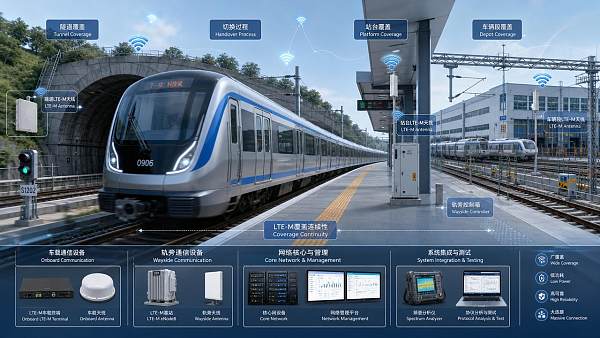
For technical assessment teams, LTE-M rail transit should be evaluated as a complementary connectivity option rather than a universal replacement. It is especially relevant where operators need battery-efficient field devices, moderate data rates, simplified deployment, and support for thousands of distributed endpoints across depots, tunnels, stations, and wayside assets.
Where LTE-M Rail Transit Sits in the Railway Communications Stack
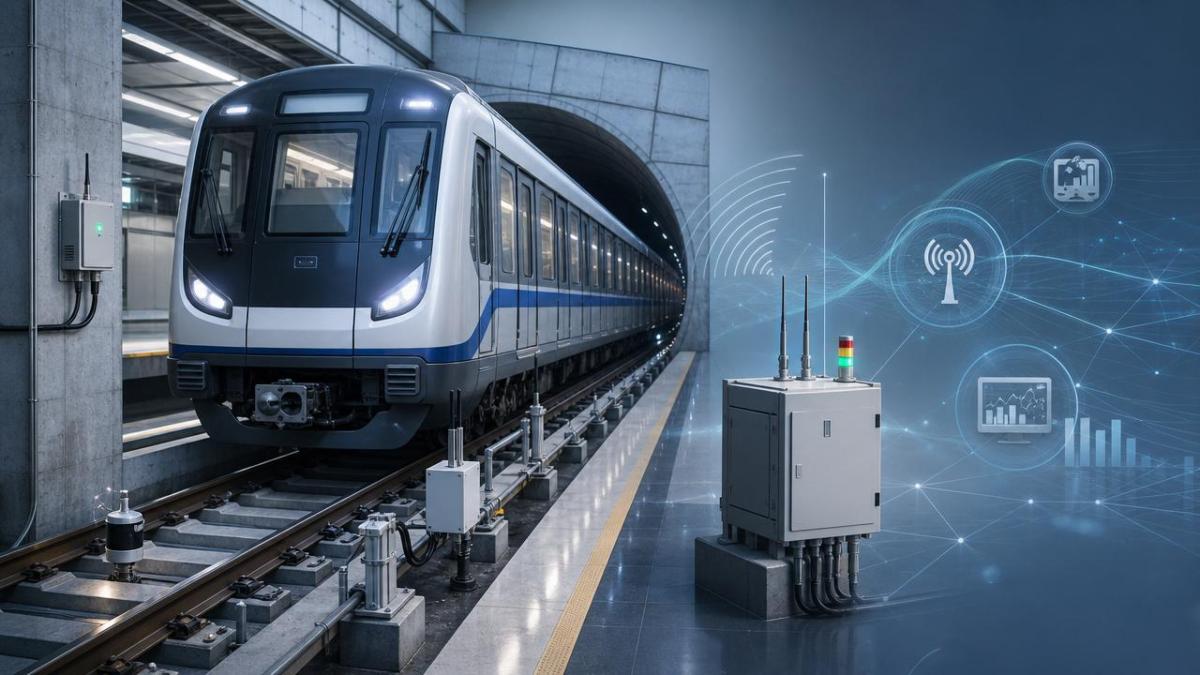
CBTC networks are designed around highly reliable train control performance, strict latency budgets, and defined fail-safe behavior. In many implementations, essential movement authority, train localization exchange, and automatic train protection functions require communications engineered for predictable response windows, often measured in tens of milliseconds rather than seconds.
By contrast, LTE-M rail transit is better suited to non-vital services. Typical use cases include condition monitoring, event logs, HVAC status reporting, door cycle counting, brake health snapshots, pantograph monitoring, energy meter upload, and remote firmware scheduling. These functions benefit from network reach and device density, but they do not normally demand the same deterministic characteristics as train separation logic.
Why the distinction matters
Technical evaluators must separate four layers of rail communications: vital control, operational support, maintenance telemetry, and business analytics. LTE-M generally fits best in the third layer and part of the second. Trying to place safety-critical traffic on a bearer optimized for low-power wide-area machine communications can introduce unacceptable validation burden, unclear failure modes, and unnecessary approval complexity.
A practical rule of thumb
- If a missed message can directly affect safe train movement, LTE-M is usually not the primary bearer.
- If data can tolerate delays of 1–10 seconds, batch upload, or store-and-forward behavior, LTE-M becomes more attractive.
- If the endpoint must run on battery for 3–10 years, LTE-M can outperform higher-power broadband links.
- If the device sends packets under 100 KB per event and reports 1–24 times per day, LTE-M is often operationally efficient.
The table below helps evaluators map rail applications to the most realistic communications role for LTE-M rail transit.
The main conclusion is straightforward: LTE-M rail transit creates value when it extends digital visibility around the train control core, not when it tries to displace that core. This distinction lowers project risk and gives assessment teams a clearer architecture boundary.
Best-Fit Use Cases Beyond CBTC Networks
The strongest business case for LTE-M rail transit appears in large fleets and asset-heavy corridors where maintenance data has historically been fragmented. A network with 200–800 cars, 20–80 stations, and several hundred wayside cabinets can generate thousands of daily status points that do not belong on critical signaling channels.
Rolling stock condition monitoring
Rolling stock operators increasingly want near-real-time visibility into subsystem status without waiting for depot download. LTE-M can carry door fault counters, brake compressor trends, battery voltage, temperature alarms, vibration signatures, and event timestamp packages from onboard gateways. For fleets where even a 2% reduction in unscheduled removals matters, this data path can support measurable maintenance savings.
Wayside and station assets
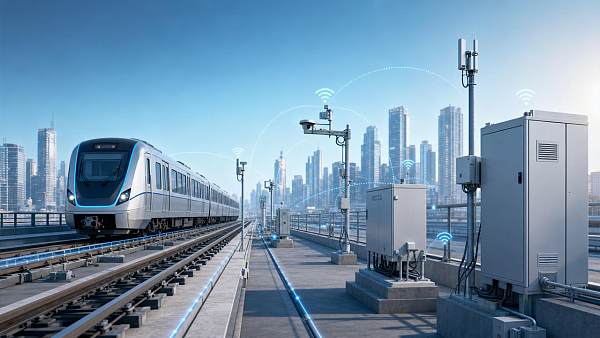
Trackside power cabinets, point machine monitors, platform devices, tunnel environmental sensors, and station utility meters often sit outside the strictest control network boundaries. Many of these assets send small payloads at intervals of 15 minutes, 1 hour, or on exception only. That traffic profile aligns well with LTE-M rail transit, particularly when wired backhaul is expensive or difficult to retrofit.
Depot workflows and maintenance digitization
Depots need reliable exchange of inspection forms, diagnostic snapshots, spare parts requests, and work order closeout. While LTE-M is not a substitute for full high-bandwidth depot Wi-Fi in all cases, it can support handheld devices, fixed sensors, and lower-volume maintenance data where coverage consistency is more important than peak throughput.
Typical use cases technical teams prioritize
- Remote health checks for doors, brakes, and auxiliary power units.
- Battery-powered intrusion, temperature, or water ingress sensors in stations and tunnels.
- Asset event logs transmitted within 30 seconds to several minutes after a fault.
- Energy and environmental data collection from dispersed facilities.
- Predictive maintenance inputs aggregated into fleet management dashboards.
These use cases matter because they convert isolated maintenance observations into network-level intelligence. For an intelligence-driven platform such as GTOT, this is exactly where rail digitalization becomes commercially relevant: improving asset value, reducing avoidable failures, and supporting better procurement decisions across signaling-adjacent infrastructure.
Technical Evaluation Criteria: Performance, Integration, and Limits
A sound evaluation of LTE-M rail transit should move beyond generic claims about IoT connectivity. Technical teams should score it against at least six dimensions: latency tolerance, payload profile, power budget, mobility needs, coverage behavior, and cybersecurity integration. If even two of these are poorly matched, the deployment case may weaken quickly.
Performance thresholds to check early
In practice, LTE-M works best when applications accept moderate bandwidth and non-deterministic timing compared with train control radio systems. A useful screening range is uplink-oriented data below a few hundred kilobytes per session, reporting intervals above 5 seconds, and occasional retry tolerance. If an application requires uninterrupted mobility handover with strict sub-100 ms command cycles, it is likely in the wrong category.
Integration with existing rail architectures
The real challenge is not just radio performance. It is system integration. LTE-M endpoints may need to connect with onboard TCMS interfaces, depot maintenance systems, condition monitoring platforms, cybersecurity logging tools, and enterprise asset management software. Evaluators should examine interface count, protocol conversion needs, timestamp coherence, and fallback behavior during coverage loss.
The next table provides a practical screening framework for technical assessment teams comparing LTE-M rail transit against common railway data requirements.
This framework shows that the decision is less about whether LTE-M is modern and more about whether the application profile is aligned. When alignment is good, deployment can be efficient. When alignment is poor, hidden integration cost can exceed any connectivity savings.
Common limits technical teams should not ignore
- Coverage in complex tunnels or cut-and-cover sections may require repeaters, alternate bearers, or hybrid architecture.
- High-speed mobility behavior should be tested on the actual line profile, especially above 120 km/h.
- Some maintenance applications appear low-volume but generate large firmware files or image attachments that strain low-bandwidth designs.
- Railway cybersecurity segmentation and key management can add 4–12 weeks to interface approval timelines.
Deployment Strategy, Procurement Questions, and Risk Control
For procurement and engineering teams, LTE-M rail transit should be introduced through a phased deployment model. A typical path includes 3 stages: laboratory validation, limited field pilot, and scaled rollout. Each stage should have explicit exit criteria tied to packet delivery, device uptime, alarm integrity, and maintenance workflow improvement.
A practical 5-step implementation path
- Define non-vital use cases and exclude all safety-related control functions at the start.
- Run a line-by-line radio survey covering stations, depots, portals, and tunnel sections.
- Pilot 20–50 endpoints for at least 8–12 weeks to capture real operational variability.
- Validate data flow into maintenance, analytics, and asset management systems.
- Scale only after confirming support processes, SIM lifecycle control, and cybersecurity governance.
Questions buyers and evaluators should ask suppliers
The supplier discussion should be detailed. Ask how endpoints behave when coverage drops for 30 seconds, 5 minutes, or longer. Ask whether devices buffer data locally, how time synchronization is handled, and whether remote firmware updates can be segmented to avoid failed sessions. Also ask what evidence exists for vibration tolerance, temperature range, ingress protection, and rail EMC compatibility if the device is mounted close to harsh equipment zones.
Risk areas that deserve early mitigation
There are three recurring risks. First is architecture drift, where non-vital systems slowly accumulate operational dependencies without formal review. Second is fragmented ownership between signaling, rolling stock, telecom, and IT teams. Third is underestimating lifecycle cost, including SIM management, data plans, field replacement cycles, and software support over 5–10 years.
For organizations that manage complex portfolios of rail control components, traction equipment, and transport intelligence, the value of LTE-M rail transit lies in disciplined scope control. It should expand observability and service responsiveness around core assets such as braking systems, pantographs, and onboard auxiliaries without blurring the safety boundary enforced by primary rail control systems.
What Technical Evaluators Should Conclude
LTE-M rail transit is not a substitute for the communications backbone that supports vital CBTC functions. It is, however, a credible and often cost-effective layer for non-vital telemetry, maintenance digitization, and distributed asset intelligence. Its value increases when fleets are large, assets are dispersed, and maintenance teams need data from places where wiring is expensive or operationally disruptive.
The most successful assessments begin with a strict use-case filter, continue with measurable field testing, and end with an integration plan that covers data ownership, cybersecurity, and lifecycle support. For technical evaluators, that approach turns LTE-M from a generic connectivity concept into a practical decision tool.
If your team is reviewing signaling-adjacent connectivity, rolling stock monitoring, or wider transport intelligence architectures, GTOT can help you compare deployment models, identify realistic application boundaries, and refine procurement criteria. Contact us to get a tailored evaluation framework, discuss product details, or explore broader rail digitalization solutions.
Recommended News
 Sep 24, 2026When should rail operators upgrade to CBTC-based railway automation systems?Railway automation systems: learn when CBTC upgrades deliver capacity, resilience and safer operations—and how to plan a phased, low-risk migration.
 Sep 12, 2026How automatic train control reduces the risk of signal overrunsAutomatic train control reduces signal overrun risk with continuous speed supervision, braking curves, fail-safe responses, and stronger rail safety assurance.
 Sep 02, 2026How to choose train control equipment for signaling reliabilityTrain control equipment for signaling: learn how to assess safety, reliability, interfaces, cybersecurity, and lifecycle support for resilient railway operations.
 Aug 17, 2026When does upgrading railway signaling systems improve line capacity?Railway signaling systems improve line capacity when headways, junction recovery, and service stability become the real bottlenecks. Learn the signs and best upgrade path.
 Aug 04, 2026What Drives Railway Signal Control Systems Pricing in New Rail Projects?Railway signal control systems pricing depends on scope, SIL4 safety, interfaces, testing, and lifecycle support. Learn the real cost drivers to compare bids and avoid overruns.
 Aug 02, 2026How to Evaluate Train Control Systems for Mainline Capacity and SafetyTrain control systems for mainline demand more than feature comparisons. Learn how to assess capacity, safety, interoperability, degraded modes, and migration before you shortlist.
 Jul 31, 2026How to Evaluate a SIL4 Signalling Equipment Exporter for Safety Compliance and Project RiskSIL4 signalling equipment exporter evaluation starts with evidence, not claims. Learn how to verify safety compliance, project risk, integration capability, and lifecycle support.
 Jul 10, 2026SIL4 Signalling Systems: Key Safety Functions and Integration RisksSIL4 signalling systems explained: explore key safety functions, integration risks, and practical evaluation criteria to verify real-world railway reliability.
 Jul 08, 2026Automatic Train Control Fail Safe: Core Design Checks That MatterAutomatic train control fail safe explained: learn the core design checks for braking priority, fault detection, communication integrity, and safer rail system performance.
 Jul 06, 2026Train Control Equipment ETCS: Key Functions, Levels, and Deployment DifferencesTrain control equipment ETCS explained: explore key functions, ETCS levels, deployment differences, and evaluation risks to support smarter rail upgrade and procurement decisions.
 Jun 28, 2026Rail Signalling North America: Standards and Upgrade Priorities in 2026Rail signalling North America in 2026: explore key standards, cyber risks, and upgrade priorities shaping safer, smarter, higher-capacity rail networks.
 Jun 25, 2026How to Compare Railway Control Systems for Safer Network UpgradesRailway control systems comparison made practical: learn how to assess safety, migration risk, interoperability, and supplier capability for smarter, safer network upgrades.
 Jun 24, 2026Railway Automation Systems Standards in 2026: What Is Changing?Railway automation systems in 2026 face stricter standards in safety, cybersecurity, interoperability, and compliance. Discover what is changing and how projects can stay competitive.
 Jun 22, 2026Rail Signalling Basics: Common Failure Points and Safety Upgrade PrioritiesRail signalling basics explained: discover common failure points, risk-based safety upgrade priorities, and practical steps to improve reliability, compliance, and network performance.
 Jun 20, 2026LTE-M Rail Transit: Where It Fits Better Than Legacy WirelessLTE-M rail transit explained: discover where it outperforms legacy wireless in rail monitoring, low-power devices, and scalable telemetry for smarter, cost-efficient operations.
 Jun 16, 2026LTE-M Rail Transit: What to Check Before DeploymentLTE-M rail transit deployment starts with the right checks. Learn how to evaluate coverage, latency, handovers, cybersecurity, and system integration before rollout.
 Jun 15, 2026How to Evaluate Railway Control Components for Safer Signaling UpgradesRailway control components shape signaling safety, uptime, and integration success. Learn how to evaluate compatibility, SIL, resilience, and lifecycle fit before your next upgrade.
 Jun 12, 2026Railway Automation Systems: Key Standards and Performance ChecksRailway automation systems explained through key standards, SIL checks, interoperability, diagnostics, and lifecycle risks—discover how to compare solutions with confidence.
 Jun 10, 2026Railway Control Components: What Matters Most in System SelectionRailway control components selection affects safety, interoperability, and lifecycle cost. Discover the key criteria for choosing resilient rail systems with confidence.
 Jun 08, 2026Rail Signalling vs CBTC: What Matters for Network UpgradesRail signalling vs CBTC: learn what matters for network upgrades, from capacity and interoperability to automation, lifecycle cost, and safer long-term performance.
 Jun 03, 2026LTE-M Rail Transit: When It Fits Signaling, Monitoring, and Field OperationsLTE-M rail transit can strengthen signaling support, asset monitoring, and field operations—learn where it fits, what to test, and how GTOT helps reduce deployment risk.
 Jun 01, 2026Railway Signal Control Systems: CBTC or Interlocking?Railway signal control systems are evolving fast. Compare CBTC and interlocking to assess safety, capacity, cybersecurity, and lifecycle value for smarter rail upgrades.
 May 31, 2026Railway Safety Technology: When CBTC Adds Real ValueRailway safety technology gains real value with CBTC when it improves headway, SIL4 safety, resilience, and lifecycle performance across complex rail scenarios.
 May 23, 2026LTE-M Rail Transit: Where It Fits Best in 2026LTE-M rail transit in 2026: discover where it fits best for low-power monitoring, asset visibility, and cost-efficient rail digitalization across stations, depots, and trackside systems.