



Search News
Industry Portal
Popular Tags
Smart Maritime Logistics: 5 Ways to Cut Port-to-Port Delays
Author
Time
Click Count
Smart maritime logistics starts with the delay pattern, not the vessel type
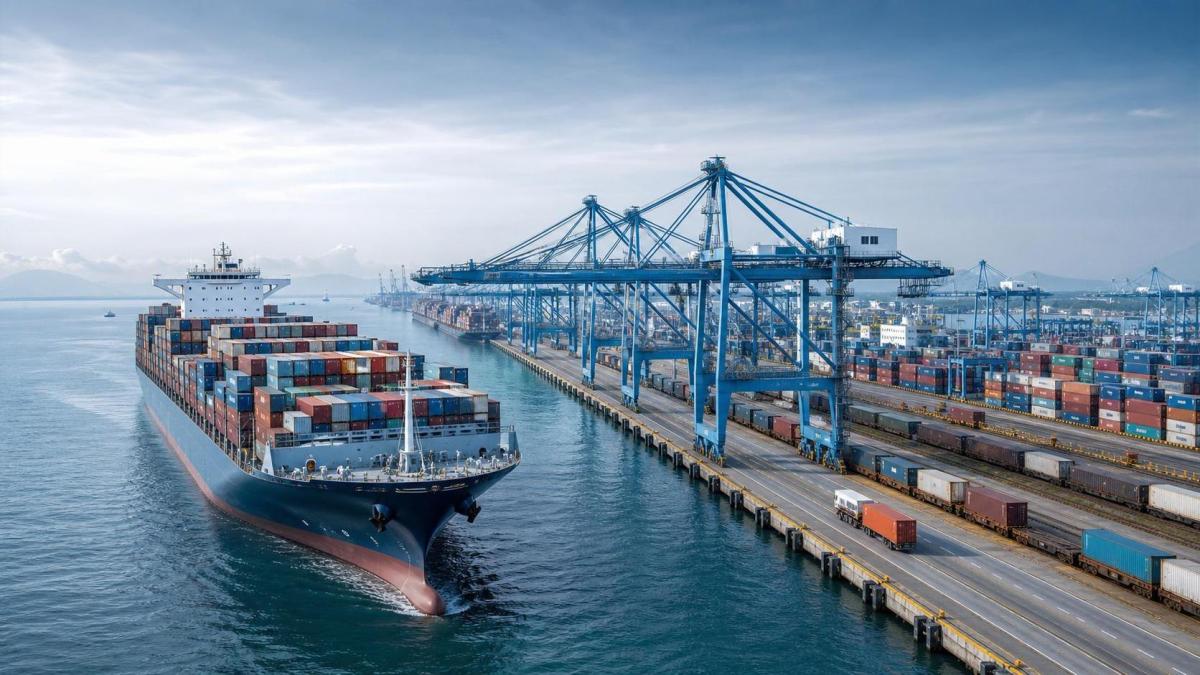
Port-to-port delays rarely come from one weak link alone.
They usually build across route planning, berth windows, cargo handoff, fuel strategy, and equipment visibility.
That is why smart maritime logistics matters most when schedules are tight, terminals are uneven, and cargo value is sensitive to time loss.
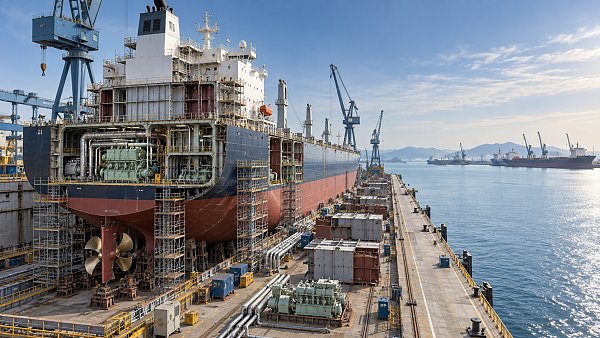
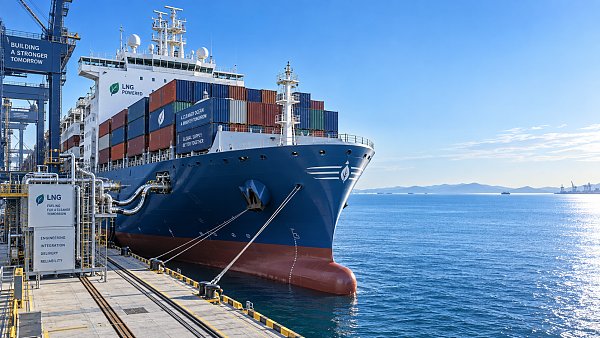
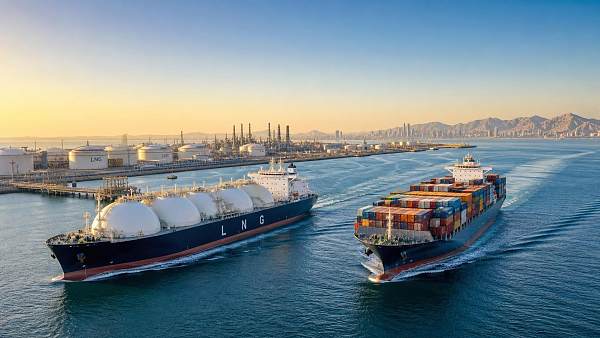
In practice, a liner service, an LNG movement, and a smart container ship loop can all face delays for different reasons.
The right response depends on where uncertainty enters the voyage.
This is also where GTOT’s land-sea perspective becomes useful.
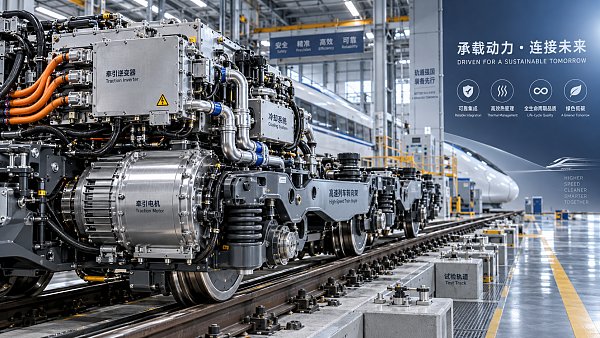
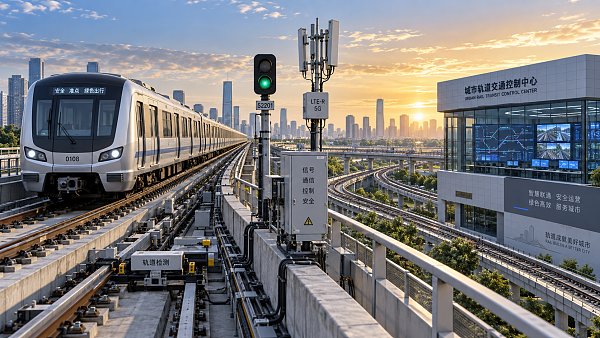
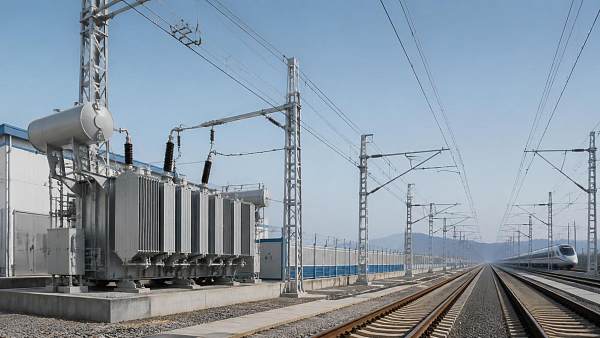
The same discipline used in railway signal control, traction reliability, and braking precision applies to maritime timing decisions.
Smart maritime logistics works best when data is treated as an operational control layer, not just a reporting tool.
When route volatility is the real problem, AI planning needs operational context
One common delay scenario appears before a vessel reaches any port.
Weather shifts, congestion updates, bunker constraints, and slot changes can quickly make the original route plan obsolete.
Here, smart maritime logistics should focus on dynamic routing rather than static ETA prediction.
The key judgment is whether the system only suggests a shorter route or actually balances fuel burn, berth availability, and downstream transshipment impact.
That distinction matters.
A route that saves six hours at sea can still create twelve hours of waiting outside a crowded terminal.
For long-haul container operations, route intelligence should connect to port call probability, not just navigation software.
For LNG carriers, the logic goes further because cargo condition, boil-off management, and terminal slot discipline affect every timing decision.
A frequent misjudgment is assuming all AI routing tools deliver the same value.
In reality, smart maritime logistics only reduces delay when route models absorb live port constraints and equipment behavior.
Berth-side congestion calls for ship-to-shore synchronization, not more status updates
Another high-impact scenario happens near arrival.
The vessel is on time, but cranes, yard space, customs clearance, or truck appointments are not aligned.
At that point, delay is no longer a navigation issue.
It becomes a coordination issue across the terminal ecosystem.
Smart maritime logistics in this setting should enable shared decision windows.
That means vessel systems, terminal operating systems, and hinterland scheduling tools exchange actionable timestamps, not isolated alerts.
This is especially relevant for smart container ships, where ship-to-shore synergy can shorten idle time only if terminal readiness is visible early enough.
GTOT often tracks this kind of interconnection logic across maritime and rail nodes.
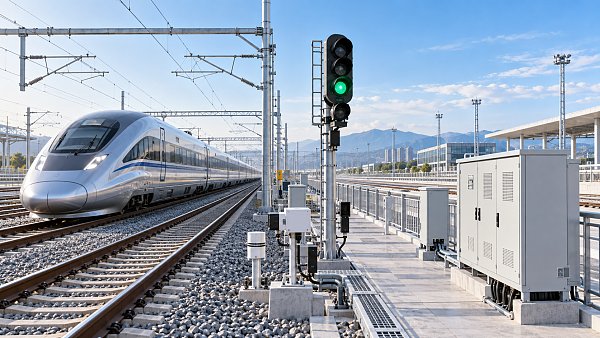
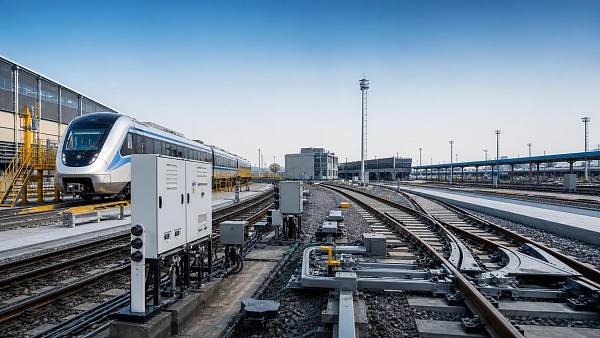
A port delay does not end at the quay when inland rail slots, signal-controlled corridors, and yard turnaround targets are linked.
A useful question before deployment is simple.
Can the platform trigger revised berth, crane, and inland transfer priorities automatically, or does it only display congestion after it happens?
Different delay environments require different control logic
The same smart maritime logistics architecture will not perform equally across every route or terminal pair.
The table below shows where judgment priorities usually shift.
If the handoff to inland transport breaks, cross-modal visibility becomes the priority
Many port-to-port delays are hidden by a narrow definition of the voyage.
A vessel may discharge on schedule, yet the shipment still loses time because rail departure, yard release, or documentation status is fragmented.
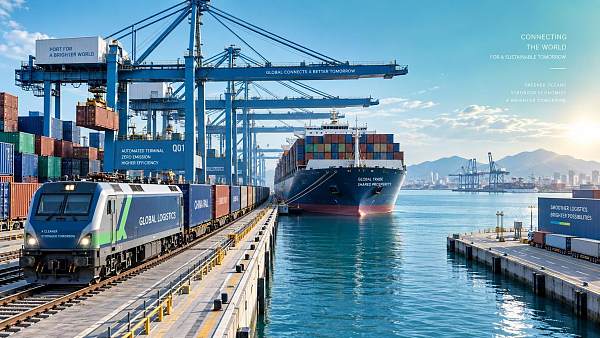
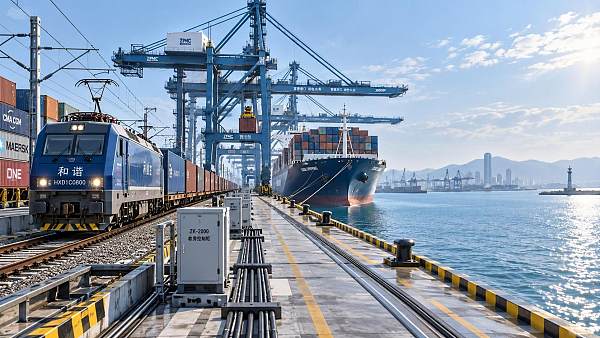
This matters most at intercontinental gateways, where sea and rail performance must work as one timetable.
Smart maritime logistics becomes more effective when it is linked to inland control logic.
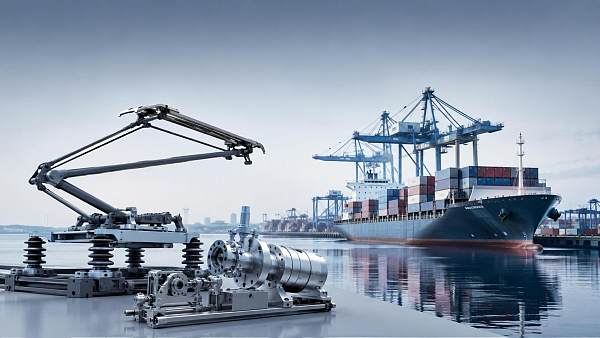
GTOT’s broader focus on signalling systems, pantographs, and braking systems highlights a useful lesson.
Reliability is not only about speed.
It is about synchronized response under tight operational tolerances.
In marine logistics, that means events from terminal discharge, customs release, and inland slot confirmation should sit in one exception workflow.
A common oversight is buying visibility tools that stop at the vessel boundary.
That creates beautiful dashboards and weak recovery performance.
Fuel, emissions, and schedule recovery often pull in different directions
Not every delay should be solved by adding speed.
That approach can increase fuel cost, raise emissions pressure, and still miss the optimum arrival slot.
Smart maritime logistics is valuable here because it supports trade-off decisions, not just speed optimization.
For a smart container ship, slower steaming may protect berth timing better than late acceleration.
For LNG carriers, propulsion mode and cargo management can change the economics of schedule recovery.
In practical deployment, one of the best indicators is whether the platform compares several recovery paths with cost, emissions, and delay outcomes side by side.
If it cannot, teams tend to react tactically and repeat the same delay pattern on the next leg.
This is where strategic intelligence matters more than raw data volume.
A decision layer should explain which variable is driving the delay penalty and which action actually reduces total disruption.
Where smart maritime logistics is often misread
- Treating ETA accuracy as the whole solution, while ignoring berth, crane, and inland dependencies.
- Comparing systems by interface design alone, instead of data depth and exception response quality.
- Focusing on procurement cost, while overlooking integration, retraining, and maintenance effort.
- Assuming similar ports require identical workflows, despite major differences in congestion behavior and data maturity.
- Using one rule set for container ships and LNG carriers, even though their timing constraints differ sharply.
A workable rollout usually begins with narrow delay corridors
The most practical way to deploy smart maritime logistics is to begin with one repeated delay corridor.
That could be a congested port pair, a transshipment leg with unstable connections, or a sea-rail gateway with poor handoff timing.
Start by mapping where time is lost, who owns the data, and which decisions still depend on manual escalation.
Then confirm whether the needed inputs are operationally reliable enough for automation.
In many cases, the first win does not come from a fully autonomous stack.
It comes from better exception thresholds, cleaner port-call data, and earlier coordination with terminal and inland systems.
A sensible evaluation framework should include these checks.
- Define the delay source by voyage phase, not by broad annual averages.
- Separate navigation gains from berth and transfer gains.
- Test whether recommendations remain useful when port conditions change suddenly.
- Measure recovery quality, not only prediction accuracy.
- Check compatibility with terminal, rail, and compliance workflows before scaling.
Smart maritime logistics delivers the strongest results when delay reduction is treated as a control problem across the whole transport chain.
The next step is usually clear.
Compare two or three real delay scenarios, define the operational differences, and build an adaptation standard around timing, integration, and recovery cost.
That approach is slower than a quick software purchase, but it is far more likely to cut port-to-port delays in measurable terms.
Recommended News
 Sep 29, 2026What drives traction systems price differences between rail projects?Traction systems price differences explained: compare duty cycles, voltage compatibility, integration, localization, and lifecycle costs for smarter rail procurement.
 Sep 26, 2026What to assess before selecting an electric traction system manufacturerChoose an electric traction system manufacturer with confidence. Explore key criteria for performance, reliability, safety, integration, energy efficiency, and lifecycle support.
 Sep 25, 2026When do full digitalization systems justify the investment?Full digitalization systems: discover when rail and maritime operators can turn connected data into safer operations, higher availability, and measurable ROI.
 Sep 23, 2026What drives automatic train control systems cost on rail projects?Automatic train control systems cost depends on integration, migration, safety testing, communications, and lifecycle support. Explore the key budget drivers for rail projects.
 Sep 21, 2026How to assess an ocean going vessel builder’s delivery riskAssess an ocean going vessel builder’s delivery risk with proven checks for schedules, capacity, design maturity, critical equipment, quality, and project controls.
 Sep 20, 2026What drives rail safety technology costs over a project lifecycle?Rail safety technology cost goes beyond equipment—explore lifecycle drivers from integration and safety assurance to cybersecurity, commissioning, and obsolescence.
 Sep 16, 2026What to verify before choosing an advanced ocean-going vessels supplierAdvanced ocean-going vessels supplier checklist: verify design authority, build quality, digital systems, delivery reliability, and lifecycle support before you buy.
 Sep 15, 2026What rail safety technology best reduces level-crossing risks in Southeast Asia?Rail safety technology Southeast Asia: discover how fail-safe signalling, barriers, obstacle detection and remote monitoring reduce level-crossing risks.
 Sep 14, 2026How exporters can reduce customs delays in global trade logisticsGlobal trade logistics for exporters: reduce customs delays with accurate data, clearance-ready documents, early filing, and proactive exception management.
 Sep 13, 2026When do global transportation network systems reduce delivery delays?Global transportation network systems reduce delivery delays by improving rail-port-vessel coordination, real-time visibility, and proactive decisions across complex land-sea supply chains.
 Sep 09, 2026When should you choose a rail and maritime manufacturer with dual-sector capability?Rail and maritime manufacturer guide: learn when dual-sector capability reduces integration risk, improves lifecycle support, and strengthens rail-to-port operations.
 Sep 08, 2026What to verify before selecting a railway signalling equipment supplierRailway signalling equipment supplier checklist: verify safety evidence, integration, cybersecurity, delivery capability, and lifecycle support before award.
 Sep 07, 2026How to size a traction power transformer for railway load demandTraction power transformer sizing guide: model railway load demand, peak duty, voltage regulation, harmonics, and contingency capacity for reliable service.
 Sep 07, 2026How do customization options for industrial connectors affect lead times?Customization options for industrial connectors can impact lead times, cost, and compliance. Learn how to specify smarter for rail and marine projects.
 Sep 05, 2026What information should an industrial sourcing guide include?Industrial sourcing information procurement guide: evaluate suppliers, compliance, lifecycle costs, interfaces, and lead times for smarter rail and maritime purchasing decisions.
 Sep 01, 2026How to find reliable maritime tender information before biddingMaritime tender information: learn how to verify sources, define bid-ready scopes, check qualifications, and reduce risk before submitting competitive marine bids.
 Aug 30, 2026How to select railway automation equipment for depots with phased upgradesRailway automation equipment for depots: learn how to plan phased upgrades that improve safety, throughput, integration, and lifecycle control.
 Aug 27, 2026How industrial sourcing intelligence pricing data supports budget approvalIndustrial sourcing intelligence pricing data helps teams benchmark scope, assess supplier risk, and build defensible budget approvals for complex rail and maritime assets.
 Aug 26, 2026When does a marine fuel efficiency solution make financial sense in the Middle East?Marine fuel efficiency solution Middle East: learn when retrofit savings, compliance value, and vessel data align to deliver credible ROI and smarter shipping investment decisions.
 Aug 24, 2026When does maritime automation for tankers deliver a real payback?Maritime automation for tankers delivers real payback when it cuts fuel use, reduces cargo risk, and improves uptime. See how owners can time investment for stronger ROI.
 Aug 23, 2026When do maritime logistics systems in the Middle East justify the costMaritime logistics systems Middle East: discover when rising delays, manual coordination, and poor visibility make system investment the smarter move for regional operators.
 Aug 22, 2026What drives vessel navigation system price for commercial fleetsVessel navigation system price depends on integration, compliance, automation, and support—not just hardware. Learn what drives fleet costs and compare quotes with confidence.
 Aug 21, 2026How to assess shipbuilding maritime tenders before biddingShipbuilding maritime tenders require more than price checks. Learn how to assess technical scope, compliance, supply chain, and commercial risk before bidding with confidence.
 Aug 20, 2026When does working with an ocean-going vessels distributor reduce supply risk?Ocean-going vessels distributor: learn when this partner cuts supply risk through stronger compliance, faster response, and better sourcing resilience in complex maritime procurement.