



Search News
Industry Portal
Popular Tags
Industrial Technology for Semiconductors: Key Performance Factors in 2026
Author
Time
Click Count
Industrial Technology for Semiconductors: Key Performance Factors in 2026
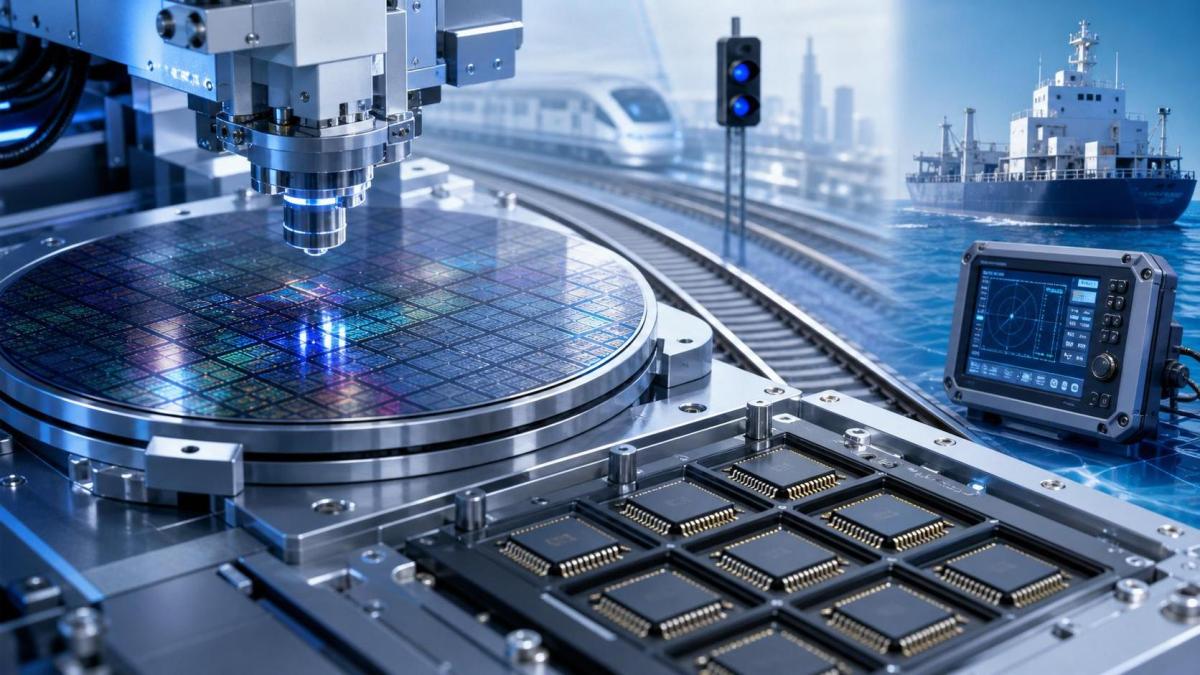
As chips become the control backbone of rail signalling, traction systems, smart vessels, and LNG carrier intelligence, industrial technology for semiconductors is becoming a defining benchmark for 2026.
For technical evaluations, the question is no longer only about processing power. The real issue is whether a device performs reliably in harsh, safety-critical, and continuously connected environments.
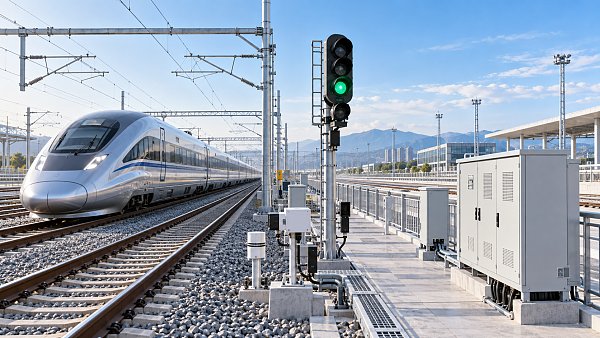
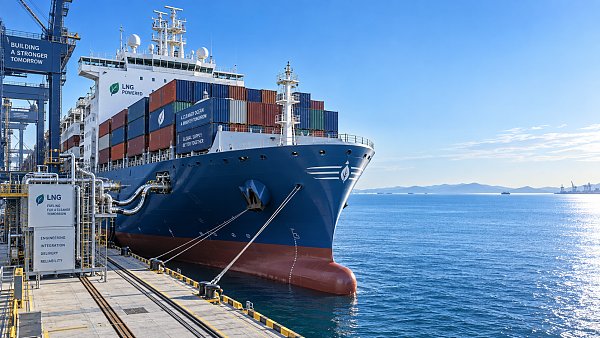
That matters even more in systems like SIL4 railway control, high-speed pantograph monitoring, brake control electronics, smart container ship automation, and LNG carrier sensing networks.
From a practical standpoint, industrial technology for semiconductors must now support speed, thermal resilience, predictable lifetime, and clean integration with wider control architectures.
In 2026, the strongest solutions will be those that balance advanced node performance with rugged design discipline, packaging maturity, and traceable compliance against application-specific standards.
Why 2026 Raises the Bar for Industrial Technology for Semiconductors
Recent changes in transport infrastructure are pushing semiconductor requirements far beyond conventional industrial control.
Rail systems need lower latency, tighter fail-safe behavior, and stronger cyber-physical integrity. Ocean-going platforms need wider temperature tolerance, lower maintenance risk, and better remote diagnostics.
That shift makes industrial technology for semiconductors a cross-domain decision point, not just a component choice.
A chip used in transportation intelligence must survive vibration, contamination, humidity, electrical noise, thermal cycling, and long operating windows without unstable drift.
More importantly, it must do so while supporting deterministic control and dependable communication across larger equipment ecosystems.
This is where performance assessment becomes more rigorous. The best industrial technology for semiconductors is measured by field resilience as much as by lab specifications.
Core Performance Factors That Matter Most
1. Reliability Under Continuous Duty
Reliability remains the first screen in any serious review of industrial technology for semiconductors.
In railway signal control systems, semiconductor faults can affect route logic, interlocking response, and onboard communication timing. In smart vessels, failure can disrupt navigation, cargo coordination, or engine support analytics.
Useful indicators include FIT rate, mission profile validation, burn-in strategy, process stability, and long-term drift data.
A strong supplier should show evidence across real operating cycles, not only accelerated test charts.
2. Thermal Stability and Power Integrity
Thermal behavior is becoming a sharper differentiator in industrial technology for semiconductors.
High-speed rail environments generate repeated thermal stress from compact electronics, switching loads, and enclosure constraints. LNG carrier control systems add cold exposure, salt conditions, and long deployment cycles.
The evaluation should cover junction temperature behavior, heat dissipation path, package resistance, and power fluctuation tolerance under transient events.
Good thermal design is not a side feature. It is a direct contributor to uptime, signal integrity, and lifetime cost.
3. Precision Manufacturing and Process Control
Manufacturing precision decides how consistently a semiconductor platform behaves across lots, years, and deployment regions.
For industrial technology for semiconductors, process capability is not only about miniaturization. It is also about analog stability, sensor accuracy, power efficiency, and resistance to production variation.
This becomes important when fleet operators require interchangeable performance across braking systems, traction modules, shipboard automation, or distributed monitoring units.
Wafer control, packaging consistency, and screening discipline should all be reviewed as part of technical due diligence.
Integration Efficiency Across Land and Sea Systems
One of the clearest trends for 2026 is that industrial technology for semiconductors must fit larger control ecosystems with less friction.
A technically impressive chip still creates risk if integration takes too long, requires custom redesign, or introduces uncertain software dependencies.
In actual projects, integration efficiency often determines whether a platform scales smoothly from pilot to fleet deployment.
Key checkpoints include interface compatibility, embedded security support, firmware lifecycle control, diagnostic transparency, and ecosystem documentation quality.
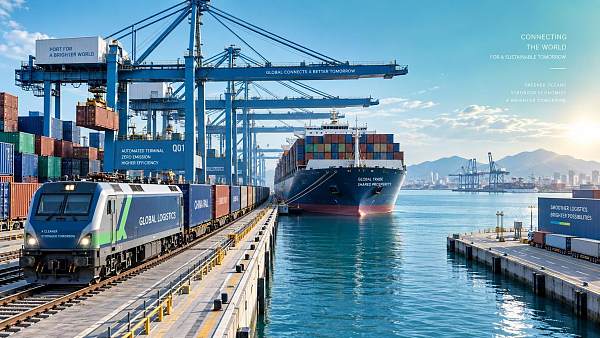
For GTOT-relevant sectors, this applies directly to rail automation, onboard power control, ship-shore data exchange, and predictive maintenance frameworks.
The stronger semiconductor solutions reduce system complexity while improving observability. That is a practical advantage during procurement, commissioning, and later upgrades.
Standards, Qualification, and Risk Signals
Technical decisions in industrial technology for semiconductors cannot rely on performance claims alone. Qualification depth and standards alignment need equal weight.
Depending on use case, reviews may involve IEC, ISO, functional safety requirements, maritime compliance, EMC verification, and sector-specific reliability benchmarks.
More revealing signals often sit behind the certificate list. Look at failure analysis transparency, change notification discipline, second-source strategy, and traceability at package level.
This also means reviewing supply continuity. Advanced industrial technology for semiconductors loses value if lifecycle support is too short for rail or marine asset timelines.
A practical standards review should separate marketing-grade compliance language from evidence that can support tender qualification and long-term fleet confidence.
How to Assess Industrial Technology for Semiconductors in Real Procurement
In real procurement work, structured comparison beats feature-heavy presentations.
A useful review model for industrial technology for semiconductors should combine technical, operational, and lifecycle filters from the start.
- Define the mission profile clearly. Include duty cycle, thermal range, vibration exposure, latency limits, and maintenance expectations.
- Check reliability evidence against the actual use case. Generic industrial claims are rarely enough for transport-grade applications.
- Review packaging and thermal design early. Many field problems begin where attractive chip specifications meet weak enclosure realities.
- Evaluate software and interface maturity. Integration costs often exceed the price difference between chip options.
- Stress-test lifecycle support assumptions. Rail and marine projects need longevity, controlled revisions, and dependable supply continuity.
This approach keeps industrial technology for semiconductors tied to deployment reality, where uptime, safety, and maintainability carry more weight than brochure claims.
What Will Separate Leaders From Followers
By 2026, the strongest semiconductor platforms will not win only because they are faster or smaller.
They will stand out because their industrial technology for semiconductors delivers dependable behavior under stress, integrates cleanly, and supports years of operational certainty.
That is especially relevant for sectors aligned with GTOT, where control intelligence links rail safety, traction power, ship automation, and cryogenic logistics into one broader infrastructure story.
A careful assessment should therefore connect chip-level metrics with system-level consequences.
When industrial technology for semiconductors is reviewed through reliability, thermal stability, precision manufacturing, standards discipline, and integration efficiency, decision quality improves significantly.
The most practical next step is simple: build a scorecard around those factors, test suppliers against real mission profiles, and keep every technical decision tied to long-life operational value.
Recommended News
 Sep 29, 2026What drives traction systems price differences between rail projects?Traction systems price differences explained: compare duty cycles, voltage compatibility, integration, localization, and lifecycle costs for smarter rail procurement.
 Sep 26, 2026What to assess before selecting an electric traction system manufacturerChoose an electric traction system manufacturer with confidence. Explore key criteria for performance, reliability, safety, integration, energy efficiency, and lifecycle support.
 Sep 25, 2026When do full digitalization systems justify the investment?Full digitalization systems: discover when rail and maritime operators can turn connected data into safer operations, higher availability, and measurable ROI.
 Sep 23, 2026What drives automatic train control systems cost on rail projects?Automatic train control systems cost depends on integration, migration, safety testing, communications, and lifecycle support. Explore the key budget drivers for rail projects.
 Sep 21, 2026How to assess an ocean going vessel builder’s delivery riskAssess an ocean going vessel builder’s delivery risk with proven checks for schedules, capacity, design maturity, critical equipment, quality, and project controls.
 Sep 20, 2026What drives rail safety technology costs over a project lifecycle?Rail safety technology cost goes beyond equipment—explore lifecycle drivers from integration and safety assurance to cybersecurity, commissioning, and obsolescence.
 Sep 16, 2026What to verify before choosing an advanced ocean-going vessels supplierAdvanced ocean-going vessels supplier checklist: verify design authority, build quality, digital systems, delivery reliability, and lifecycle support before you buy.
 Sep 15, 2026What rail safety technology best reduces level-crossing risks in Southeast Asia?Rail safety technology Southeast Asia: discover how fail-safe signalling, barriers, obstacle detection and remote monitoring reduce level-crossing risks.
 Sep 14, 2026How exporters can reduce customs delays in global trade logisticsGlobal trade logistics for exporters: reduce customs delays with accurate data, clearance-ready documents, early filing, and proactive exception management.
 Sep 13, 2026When do global transportation network systems reduce delivery delays?Global transportation network systems reduce delivery delays by improving rail-port-vessel coordination, real-time visibility, and proactive decisions across complex land-sea supply chains.
 Sep 09, 2026When should you choose a rail and maritime manufacturer with dual-sector capability?Rail and maritime manufacturer guide: learn when dual-sector capability reduces integration risk, improves lifecycle support, and strengthens rail-to-port operations.
 Sep 08, 2026What to verify before selecting a railway signalling equipment supplierRailway signalling equipment supplier checklist: verify safety evidence, integration, cybersecurity, delivery capability, and lifecycle support before award.
 Sep 07, 2026How to size a traction power transformer for railway load demandTraction power transformer sizing guide: model railway load demand, peak duty, voltage regulation, harmonics, and contingency capacity for reliable service.
 Sep 07, 2026How do customization options for industrial connectors affect lead times?Customization options for industrial connectors can impact lead times, cost, and compliance. Learn how to specify smarter for rail and marine projects.
 Sep 05, 2026What information should an industrial sourcing guide include?Industrial sourcing information procurement guide: evaluate suppliers, compliance, lifecycle costs, interfaces, and lead times for smarter rail and maritime purchasing decisions.
 Sep 01, 2026How to find reliable maritime tender information before biddingMaritime tender information: learn how to verify sources, define bid-ready scopes, check qualifications, and reduce risk before submitting competitive marine bids.
 Aug 30, 2026How to select railway automation equipment for depots with phased upgradesRailway automation equipment for depots: learn how to plan phased upgrades that improve safety, throughput, integration, and lifecycle control.
 Aug 27, 2026How industrial sourcing intelligence pricing data supports budget approvalIndustrial sourcing intelligence pricing data helps teams benchmark scope, assess supplier risk, and build defensible budget approvals for complex rail and maritime assets.
 Aug 26, 2026When does a marine fuel efficiency solution make financial sense in the Middle East?Marine fuel efficiency solution Middle East: learn when retrofit savings, compliance value, and vessel data align to deliver credible ROI and smarter shipping investment decisions.
 Aug 24, 2026When does maritime automation for tankers deliver a real payback?Maritime automation for tankers delivers real payback when it cuts fuel use, reduces cargo risk, and improves uptime. See how owners can time investment for stronger ROI.
 Aug 23, 2026When do maritime logistics systems in the Middle East justify the costMaritime logistics systems Middle East: discover when rising delays, manual coordination, and poor visibility make system investment the smarter move for regional operators.
 Aug 22, 2026What drives vessel navigation system price for commercial fleetsVessel navigation system price depends on integration, compliance, automation, and support—not just hardware. Learn what drives fleet costs and compare quotes with confidence.
 Aug 21, 2026How to assess shipbuilding maritime tenders before biddingShipbuilding maritime tenders require more than price checks. Learn how to assess technical scope, compliance, supply chain, and commercial risk before bidding with confidence.
 Aug 20, 2026When does working with an ocean-going vessels distributor reduce supply risk?Ocean-going vessels distributor: learn when this partner cuts supply risk through stronger compliance, faster response, and better sourcing resilience in complex maritime procurement.