Search News
Industry Portal
Popular Tags
How to assess an ocean vessel technology provider's integration capabilities
Author
Time
Click Count
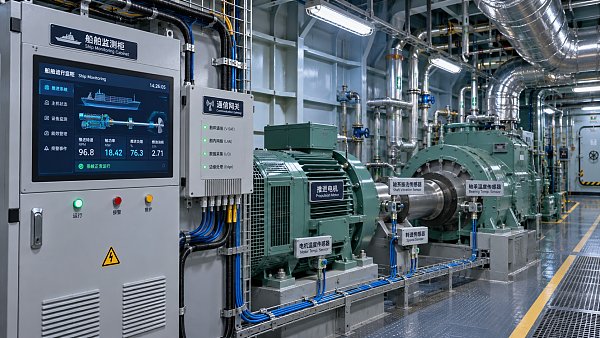
An ocean vessel technology provider should be judged on its ability to make systems work together under real operating conditions, not just on the quality of its individual products. The strongest evidence is a clear division of integration responsibilities, documented interfaces, and test results showing how the combined system behaves when equipment, communications, or data fail.
Start with a specific operational task: for example, sending propulsion and fuel-consumption data ashore for voyage analysis. Trace that task from the original sensors through onboard networks and gateways to the shore application. At each boundary, establish who owns the interface, what information is exchanged, and how the receiving system detects missing or unreliable data. Gaps in that chain are often more revealing than a polished system demonstration.
Define the integration scope before comparing providers
Two proposals can use the word “integration” to describe very different work. One provider may supply a monitoring platform that reads selected signals. Another may configure interfaces, coordinate equipment suppliers, test control functions, and support commissioning. Compare their offers against the same vessel-specific scope.
Build an interface register around the systems involved: navigation equipment, propulsion controls, power management, alarm and monitoring systems, cargo systems, and ship-to-shore communications, as applicable. For each connection, record the source and destination, the intended data or command, the communication method, and the party responsible for design and testing.
Also identify whether each connection is read-only or permits commands. A dashboard that displays engine data has a different risk profile from an application that can change an operating setpoint. Control authority, safeguards, and approval routes need closer examination wherever information flows back toward vessel equipment.
For a newbuild, the shipyard may coordinate interfaces among equipment suppliers. For a retrofit, the owner may have to deal with legacy equipment, incomplete drawings, and restricted access to existing controllers. In either case, ask the provider to identify the dependencies outside its own supply: an interface cannot be completed by contract wording alone if another vendor must enable it.
Examine interfaces beyond a list of supported protocols
Protocol compatibility is a starting point, not proof of interoperability. Two systems may communicate using the same protocol but still disagree about signal meaning, units, update rates, or how equipment status is represented. A fuel-flow value, for example, is useful only if its unit, measurement location, timestamp, and validity are understood by the receiving application.
Request interface specifications and representative data mappings for the proposed equipment. They should make it possible to answer questions such as:
- Which signals are available, and which required signals are missing?
- How are units, timestamps, equipment identifiers, and operating states defined?
- How frequently is data updated, and how are delayed or invalid values marked?
- What happens if a source changes its software version or signal mapping?
- Who can access the interface documentation and configuration after delivery?
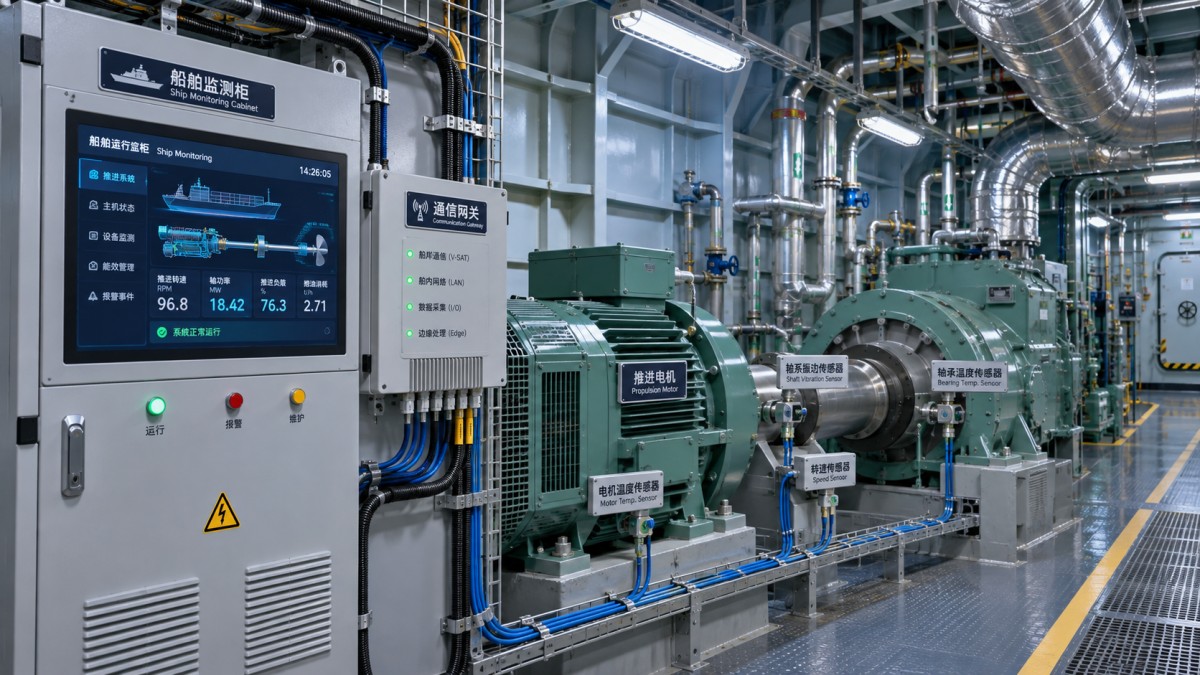
Pay particular attention to gateways. They can make legacy equipment accessible without replacing it, but they also introduce another component to configure, maintain, and troubleshoot. Ask how the gateway handles data buffering, loss of connection, restart, and conflicting configuration changes. If a gateway fails, the consequences should be clear for both the connected application and the underlying vessel system.
Where a provider proposes a proprietary interface, examine the practical effect on future work. Proprietary technology may be appropriate when it gives access to equipment functions that an open interface does not expose. The trade-off is greater dependence on the supplier for changes, troubleshooting, or replacement. Documentation rights, access to configuration files, and the availability of support therefore matter as much as the interface itself.
Test the complete chain, including failure conditions
A successful demonstration with simulated data shows that components can communicate in a controlled setting. It does not establish that the installed system will work with the vessel’s actual equipment, network configuration, and operating procedures. Ask for a test plan that progresses from interface checks to integrated testing and commissioning, with named participants and acceptance criteria.
For each important function, define the starting conditions, the action, the expected result, and the evidence to be recorded. A useful test of a shore reporting function, for example, would trace a known onboard value through the gateway to the shore application and check its identity, unit, timestamp, and status. It should also show what the application displays when that value stops updating.
Failure tests deserve the same attention as normal operation. Depending on the project, relevant scenarios include loss of a sensor input, a gateway restart, an interrupted satellite link, conflicting timestamps, or a network segment becoming unavailable. The test should establish whether alarms are raised where operators can act on them, whether local functions continue as intended, and how the system recovers.
For control interfaces, agree on safe test conditions and the authority to initiate each test. Demonstrating that a remote command can be sent is insufficient: the evaluation must cover permitted operating modes, interlocks, local override, and what happens when a command is rejected or communications are lost. Involve the equipment supplier and the vessel’s operational representatives in defining these tests.
Separate monitoring from safety and control functions
Integrated displays can help crews understand a vessel’s condition, but putting information on one screen does not make the underlying systems equally reliable or give them the same authority. Establish which systems provide advisory information, which perform control, and which carry out protective functions.
A route-optimization application, for example, may provide recommendations using weather and vessel data. Its integration needs to show where the data comes from, how current it is, and how the crew recognizes a recommendation that no longer reflects conditions. The bridge team’s operating procedures should make clear how advice is reviewed and acted upon.
Similarly, a platform that receives cargo data from an LNG carrier should not be assumed to have authority over cargo operations. If a proposed connection touches control or protective functions, examine its boundaries and failure behavior with the responsible equipment suppliers. A read-only arrangement may be preferable when the operational need is visibility rather than control.
Check cybersecurity across organizational boundaries
Integration expands the number of paths through which systems and people can interact. Ask the provider for a network architecture that shows onboard operational systems, business networks, remote support connections, shore services, and the security boundaries between them. The drawing should match the intended installation, not just a generic product diagram.
Evaluate how access is granted, approved, logged, and removed. Remote maintenance is useful only when the vessel and owner can control when access is available and understand what the provider can reach. Clarify how software updates are assessed and installed, how vulnerabilities are communicated, and who coordinates a response when an issue affects equipment from several suppliers.
Security measures must also fit vessel operations. A patch process that requires an unavailable connection, an unplanned restart, or intervention during a critical operation is not a complete support plan. Ask how changes are tested, scheduled, rolled back, and recorded, and how configurations can be restored after equipment replacement.
Match the design to the vessel’s operating profile
Integration priorities vary with the vessel and its mission. Use representative operating scenarios to expose differences between proposals.
On a container ship, ship-to-shore information can support voyage planning and fleet analysis, but a shore dashboard may receive delayed data during a connection outage. Ask how users distinguish current values from buffered or stale values. On an LNG carrier, the more consequential question may be whether the proposed architecture preserves clear boundaries around cargo-related equipment and responsibilities.
Fleet standardization also has limits. A common application can simplify reporting across vessels, but differences in sensors, equipment versions, and operating practices can make apparently identical metrics difficult to compare. Require the provider to identify those differences and explain how they will be represented in the data.
Establish the approval and commissioning path
A provider’s statement that equipment is suitable for marine use does not settle the approval path for the complete installation. Classification, flag-state, and other applicable requirements depend on the vessel, system function, and scope of the change. Identify the parties responsible for interpreting those requirements and preparing the evidence early in the project.
Ask which drawings, risk assessments, software records, test procedures, and commissioning results will be supplied, and who submits them where approval is needed. A component-level certificate may be relevant, but it does not by itself demonstrate that the assembled system and its interfaces have been accepted for the intended use.
For a retrofit, coordinate installation access, outage windows, and testing with the vessel’s schedule. For a newbuild, align integration milestones with the shipyard’s equipment delivery and trials. In both cases, unresolved dependencies should appear in the project plan with an owner and a decision date.
Compare lifecycle responsibility, not just delivery scope
Integration work continues after commissioning. Software changes, sensor replacement, network modifications, and new reporting requirements can all affect interfaces. Ask who maintains the system architecture and data mappings, how configuration changes are authorized, and whether the owner receives backups and usable documentation.
Support arrangements should describe how faults are diagnosed across supplier boundaries. If a shore application shows an implausible value, someone must be able to trace it from the display back through communications, the gateway, and the source equipment. Establish who leads that investigation and how logs and diagnostic access will be shared.
When comparing commercial proposals, include recurring software and communications costs, support coverage, update responsibilities, and charges for future interface changes. A lower initial price can be reasonable for a stable, limited monitoring scope; it becomes less attractive if routine changes require extensive supplier intervention.
Before selection, give shortlisted providers the same vessel scenario and ask each to return an interface register, architecture, test approach, responsibility matrix, and list of dependencies. The most useful proposal will show not only what the provider can connect, but also how the owner can verify the result, operate it safely, and maintain it when the vessel changes.
Recommended News
 Nov 23, 2026Can an AI route optimization platform handle cross-border truck restrictions in Europe?AI route optimization platform Europe: Discover how to assess cross-border truck restrictions, validate compliant routes, and avoid costly routing errors.
 Nov 21, 2026How to assess carrier integration in an intermodal transportation platformEvaluate an intermodal transportation platform with a practical guide to carrier coverage, event accuracy, integration failures, security and acceptance testing.
 Nov 20, 2026How to identify which railway safety standards apply to a projectRailway safety standards guide: Learn how to identify applicable requirements, map interfaces and build a defensible compliance baseline for your project.
 Nov 19, 2026How to evaluate motion control application references for a new projectEvaluate engineering application references for motion control with confidence. Compare load cycles, safety, integration, and evidence to reduce project risk.
 Nov 18, 2026When does electric marine propulsion make sense for ferries?Electric marine propulsion technology can transform ferry operations. Explore when battery-electric or hybrid systems make sense for your routes, charging access, and costs.
 Nov 17, 2026How much does it cost to buy an ocean-going vessel?Ocean going vessel cost ranges from a few million to hundreds of millions of dollars. Explore purchase prices, hidden costs, and key factors before you buy.
 Nov 16, 2026How to verify solution provider references before signing a contractVerify solution provider references before signing. Learn what to ask, which evidence to check, and how to turn findings into stronger contract terms.
 Nov 14, 2026How does automatic train control affect metro train headways?Discover how automatic train control for metro systems can reduce headways, improve service consistency and support capacity planning without compromising safety.
 Nov 13, 2026How to assess the financial return on rail infrastructure investmentAssess rail infrastructure investment with confidence. Explore lifecycle costs, NPV, IRR and risk scenarios to make better-informed funding decisions.
 Nov 12, 2026How to assess an ocean vessel technology provider's integration capabilitiesAssess an ocean vessel technology provider with a practical guide to interfaces, cybersecurity, failure testing, and lifecycle support. Make a confident choice.
 Nov 10, 2026When is external supplier evaluation support worth the cost?Discover when supplier evaluation support is worth the cost, how to estimate its return, and where independent expertise can reduce sourcing risks.
 Nov 09, 2026How can evaluation support help component suppliers prepare for audits?Supplier evaluation support for component suppliers helps uncover audit gaps, strengthen traceability, and build a clear, risk-based preparation plan.
 Nov 07, 2026How smart intermodal transportation reduces transfer delaysDiscover how smart intermodal transportation reduces transfer delays through real-time coordination, cargo-ready forecasts, and faster decisions.
 Nov 06, 2026How to evaluate AI route optimization suppliers in North AmericaAI route optimization supplier North America: discover how to compare providers, validate savings, assess security and choose a solution that fits your operations.
 Nov 04, 2026Can LTE-M track rail assets in areas with limited coverage?LTE-M rail transit for asset tracking can bridge coverage gaps with offline data storage. Discover its limits and how to assess your routes.
 Nov 01, 2026When is rail freight cheaper than maritime shipping?Compare rail and maritime cost to discover when rail freight can save money on inland routes, inventory and delays. Learn how to assess the full door-to-door cost.
 Oct 31, 2026How an AI route optimization dashboard handles traffic delaysDiscover how an AI route optimization dashboard responds to traffic delays, compares feasible routes, updates ETAs, and helps operators make informed decisions.
 Oct 29, 2026How to assess an automatic train control manufacturer for retrofitsAssess an automatic train control manufacturer for your retrofit. Learn how to verify compatibility, safety assurance, migration plans, and long-term support before choosing a supplier.
 Oct 28, 2026Does technical selection support in Southeast Asia cover local codes?Explore technical selection support Southeast Asia projects need to address local codes, assess compliance evidence, and map approval pathways. Learn what to ask before procurement.
 Oct 26, 2026How a product information platform keeps product data consistentDiscover how a product information platform keeps data consistent with clear ownership, validation, and approved updates. Learn what to check before choosing a solution.
 Oct 23, 2026When is renting heavy mining equipment cheaper than buying?Renting heavy industry equipment for mining? Discover when it costs less than buying, compare hidden fees and break-even points, and make a smarter fleet investment.
 Oct 21, 2026Can absolute safety monitoring eliminate all operational risk?Can absolute safety monitoring eliminate all risk? Discover its limits, hidden failure points, and practical safeguards to strengthen protection and make smarter safety decisions.
 Oct 19, 2026How to vet a European railway safety technology supplier’s track recordSeeking a railway safety technology supplier Europe can trust? Learn how to verify project references, safety credentials, and lifecycle support to build a defensible shortlist.
 Oct 15, 2026How to size train traction systems for frequent-stop rail serviceSize train traction systems for frequent-stop rail service with practical guidance on power, adhesion, thermal loads, and braking. Learn how to meet timetables without costly oversizing.