Search News
Industry Portal
Popular Tags
Can absolute safety monitoring eliminate all operational risk?
Author
Time
Click Count
No. Absolute safety monitoring cannot eliminate all operational risk. Continuous observation can reveal developing faults, support earlier intervention, and help prevent some hazardous events. Its effectiveness still depends on what sensors can detect, how reliably information reaches the decision maker, and whether a protective action takes effect before the hazard becomes an incident.
For quality control and safety management teams, a claim of complete protection deserves careful examination. A system may monitor selected conditions continuously while leaving other failure modes outside its coverage. Even accurate detection cannot guarantee an effective response. The useful question is how much risk monitoring reduces under defined operating conditions—and what protection remains when monitoring fails.
A healthy reading describes only what the system can observe.
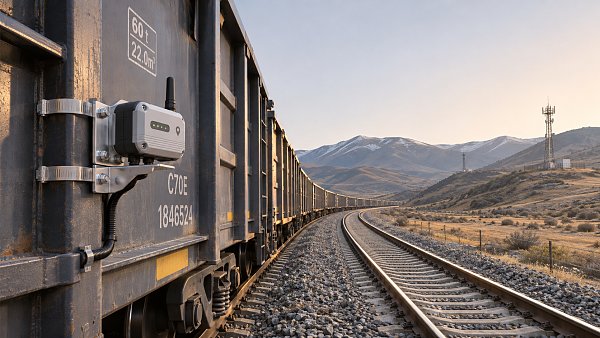
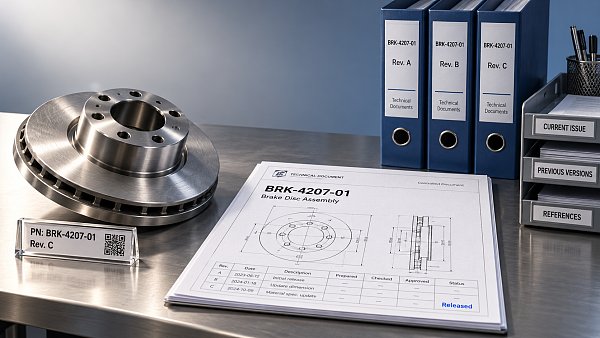
Consider a rail braking system. Monitoring pressure, temperature, or selected component states can provide valuable evidence about its condition. Those readings do not, by themselves, establish that the train will achieve the required stopping performance under every combination of load, adhesion, equipment condition, and operating demand. Each measurement answers a particular question; the safety assessment must connect those answers to the actual braking function.
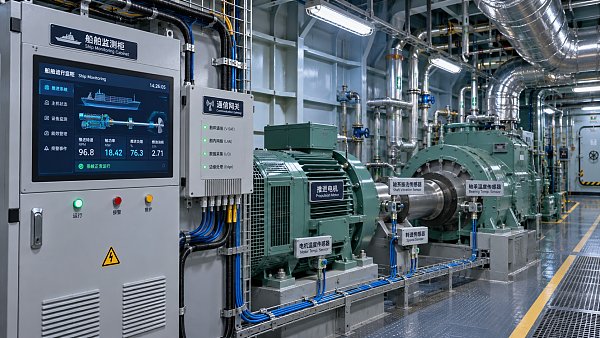
The same distinction applies at sea. Gas detection aboard an LNG carrier can warn of a release when gas reaches a detector at a detectable concentration. Detection depends on sensor location, ventilation, equipment health, and the release itself. A normal reading cannot establish that every possible leak location is safe. Nor can monitoring prevent a loss of containment simply by observing it.
This makes coverage more important than the number of measurements collected. A dashboard with hundreds of data points may still omit a critical failure mechanism. Conversely, a small set of carefully chosen measurements can provide strong protection against a clearly defined hazard when supported by dependable protective actions.
Quality teams should therefore connect each safety claim to a specific failure mode. What physical condition is measured? How does that condition relate to the hazard? Can the fault develop without changing the measured value? Could a sensor report a plausible but incorrect value? These questions reveal whether monitoring provides direct evidence of danger or only an indirect indication that requires interpretation.
Operating conditions also set limits on coverage. Vibration, moisture, contamination, temperature, electromagnetic interference, and maintenance activity can affect sensing or signal quality. Changes in equipment configuration may alter the relationship between a reading and the condition it represents. A threshold established for one duty profile may need reassessment when loads, routes, speeds, or operating practices change.
Continuous monitoring should consequently include checks on its own health. Loss of power, stale data, communication failure, and sensor disagreement need recognizable states. If missing information appears identical to a normal condition, the monitoring system can create false confidence precisely when its coverage has deteriorated.
Detection reduces risk only when the response arrives in time.
A monitoring system sits within a sequence: a hazardous condition develops, a sensor detects evidence of it, logic interprets that evidence, an alarm or command is issued, and a person or device acts. Every stage can introduce delay or failure. Assessing only sensor accuracy leaves much of the safety function unexamined.
The available response time varies substantially by hazard. A gradual temperature trend may allow inspection and planned maintenance. A rapidly developing electrical fault or gas release may require an automatic protective action. A warning delivered promptly to an operator can still be inadequate if diagnosis, authorization, and intervention take longer than the hazard allows.
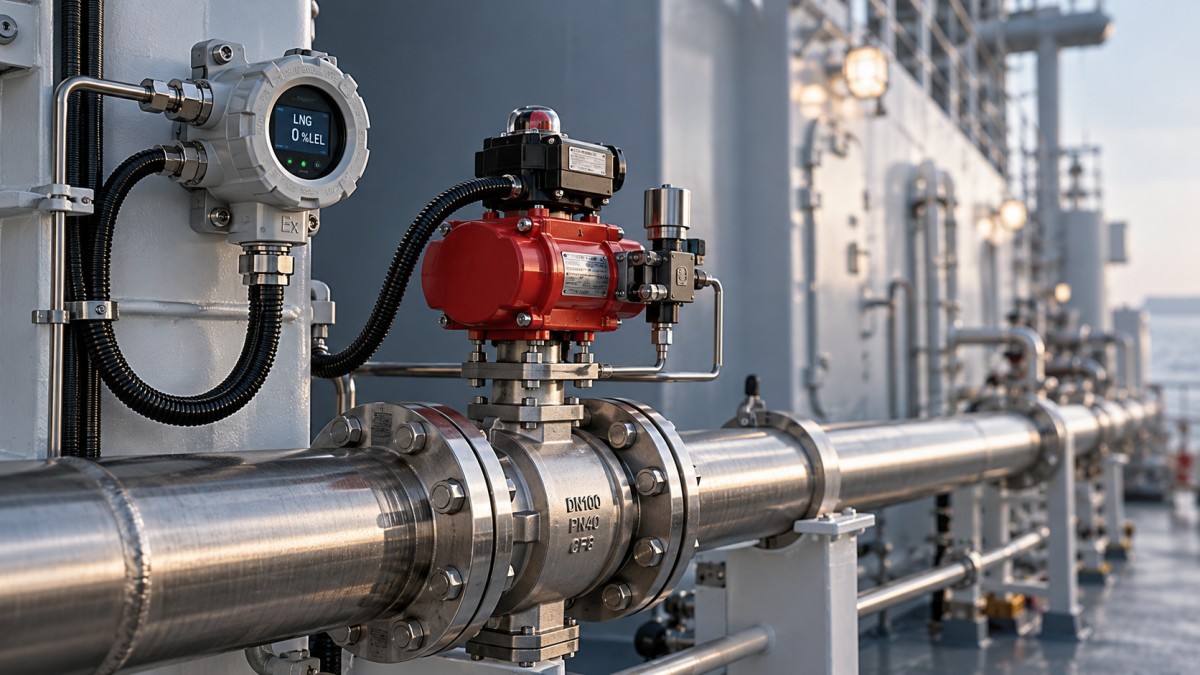
For each important hazard, the safety team needs to compare the credible speed of escalation with the entire response sequence. Include sampling intervals, filtering, communications, alarm presentation, operator workload, and the physical time needed to stop, isolate, or otherwise control the process. The relevant measure is whether the protective action becomes effective before the hazardous consequence occurs.
An alarm also needs a usable instruction. “Abnormal condition detected” offers little help if the operator must first determine which equipment is affected, whether the indication is trustworthy, and who can authorize action. Clear alarm priorities, defined responsibilities, and practical response procedures make detection more valuable. Training should include situations where information is incomplete or several alarms appear together.
Alarm thresholds involve tradeoffs. Raising sensitivity can improve early detection but may also generate more unwanted alarms. Reducing nuisance alarms without understanding their cause can conceal genuine deterioration. Repeated alarms that produce no clear action can weaken attention and encourage informal workarounds. Alarm review should examine causes, consequences, and required responses, rather than simply pursuing fewer notifications.
Automating the response can reduce dependence on human reaction time, but it introduces its own engineering questions. An unnecessary shutdown, isolation, or braking action may create secondary hazards. The protective action must be appropriate to the operating state, and its actuators, power supply, and control logic must remain capable of performing the required function.
Safe behavior can also depend on location and circumstances. A rail vehicle stopped in an unsuitable place or a vessel losing propulsion during a demanding maneuver may face additional risks. Protective logic therefore needs assessment against the wider operation. A local component reaching a nominally safe state does not automatically make the whole transport system safe.
Monitoring needs support from safeguards that can survive the same failure.
Operational risk is reduced through several kinds of control: preventing faults, detecting deterioration, limiting escalation, and managing consequences. Monitoring contributes strongly to detection and may initiate protection, but equipment design, inspection, maintenance, operating limits, and emergency arrangements remain necessary.
For a pantograph, condition monitoring may reveal abnormal contact behavior or developing mechanical problems. Maintaining safe operation also depends on component condition, installation, compatibility with the overhead system, and suitable operating limits. An indication of deterioration has limited value if replacement parts are unavailable or the maintenance organization cannot remove the asset from service.
On an LNG carrier, a gas alarm can support intervention, while containment, ventilation, isolation arrangements, and emergency procedures address different parts of the hazard. Their effectiveness must be assessed for the particular installation. Listing several safeguards does not establish that they work independently or that any one of them can compensate fully for another’s failure.
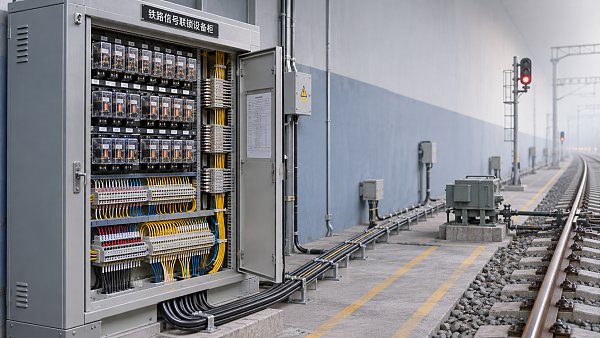
Shared dependencies deserve particular attention. Two sensors may provide little additional protection if both lose power from the same source. Separate displays can present the same incorrect upstream data. Multiple protective functions may depend on one network, one software component, or one environmental enclosure. A single fault can then defeat protections that appear separate on a diagram.
Redundancy helps when it addresses the relevant failure mechanisms. Depending on the hazard, this may require separation of power supplies, different sensing principles, independent protective logic, or physical segregation. Each choice needs justification. Adding equipment increases inspection, testing, and configuration responsibilities, so complexity should earn its place through a demonstrable safety benefit.
Claims about safety integrity also require careful boundaries. SIL4, where applicable, concerns the integrity requirements of a defined safety function within an assessed scope. It does not certify that an entire railway has no operational risk. Installation, interfaces, maintenance, human actions, and operation outside the assessed conditions can still affect the outcome.
For safety managers, the practical discipline is to identify residual risk explicitly. Which credible hazards remain after the safeguards are applied? Which assumptions must stay true? What happens when one protective function is unavailable? These answers support operating restrictions, additional controls, and decisions about whether continued operation is acceptable.
Evidence should show that the complete protective function works.
A monitoring demonstration can show that a sensor produces a reading or that an alarm appears on a screen. Acceptance for safety use requires evidence tied to the intended operating conditions and failure scenarios. Successful operation during a brief demonstration says little about an undetected fault, a degraded network, or a protective device that fails to respond.
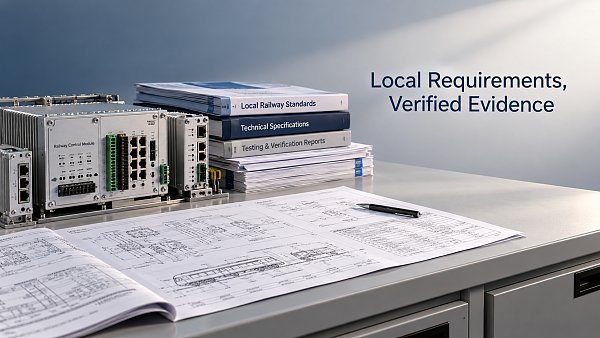
Useful evaluation begins with a traceable chain from hazard to measurement, decision, and action. Quality and safety teams can structure their review around a few practical questions:
- Which hazardous conditions are covered, and which remain outside the monitoring scope?
- What evidence supports detection performance across the intended operating conditions?
- How are failed sensors, incorrect readings, stale information, and communication losses identified?
- Can the required response take effect within the available time?
- What dependencies could disable both monitoring and protection?
- How will performance be maintained after repair, software changes, or changes in operating duty?
Validation should include abnormal and degraded conditions where testing can be performed safely. Depending on the system, suitable methods may include simulation, controlled fault injection, inspection, and functional testing. The objective is to establish behavior when something goes wrong: whether the fault is recognized, whether operators receive usable information, and whether the protective response remains available.
Maintenance must preserve that evidence over the asset’s life. Calibration confirms particular measurement characteristics; it does not necessarily verify the full alarm and protective action sequence. A functional test may be needed to establish that sensing, logic, communications, and final devices work together. Test scope and intervals should reflect the failure mechanisms, operating demands, and applicable requirements.
Temporary impairments need equally clear control. A bypassed alarm, isolated sensor, or overdue repair changes the protection available to operators. Its status should be visible, with defined responsibility, suitable restrictions or compensating measures, and a clear route back to normal service. Otherwise, a temporary workaround can quietly become part of routine operation.
Performance review should look beyond the number of alarms raised. Alarm frequency can increase because equipment is deteriorating, detection has improved, thresholds have changed, or sensors are becoming unreliable. Useful indicators include unavailable monitoring functions, overdue corrective work, repeated unresolved alarms, response delays, and hazardous conditions discovered through inspections that monitoring missed. Each needs interpretation in context.
Predictive tools require the same discipline. An algorithm may identify a developing pattern and help schedule maintenance, but a forecast depends on data quality and the conditions represented in its development and validation. When equipment or operating patterns change, its performance may change too. A health score should support a justified maintenance decision; it should not silently acquire the authority of a proven protective function.
A credible monitoring proposal should leave the operating team able to state what it detects, how quickly protection follows, and what remains exposed if the system becomes unavailable. If those answers are unclear, a promise of “absolute safety” offers little basis for accepting operational risk. The next useful step is to examine one high-consequence hazard through the complete detection and response sequence, then close the gaps that examination reveals.
Recommended News
 Nov 23, 2026Can an AI route optimization platform handle cross-border truck restrictions in Europe?AI route optimization platform Europe: Discover how to assess cross-border truck restrictions, validate compliant routes, and avoid costly routing errors.
 Nov 21, 2026How to assess carrier integration in an intermodal transportation platformEvaluate an intermodal transportation platform with a practical guide to carrier coverage, event accuracy, integration failures, security and acceptance testing.
 Nov 20, 2026How to identify which railway safety standards apply to a projectRailway safety standards guide: Learn how to identify applicable requirements, map interfaces and build a defensible compliance baseline for your project.
 Nov 19, 2026How to evaluate motion control application references for a new projectEvaluate engineering application references for motion control with confidence. Compare load cycles, safety, integration, and evidence to reduce project risk.
 Nov 18, 2026When does electric marine propulsion make sense for ferries?Electric marine propulsion technology can transform ferry operations. Explore when battery-electric or hybrid systems make sense for your routes, charging access, and costs.
 Nov 17, 2026How much does it cost to buy an ocean-going vessel?Ocean going vessel cost ranges from a few million to hundreds of millions of dollars. Explore purchase prices, hidden costs, and key factors before you buy.
 Nov 16, 2026How to verify solution provider references before signing a contractVerify solution provider references before signing. Learn what to ask, which evidence to check, and how to turn findings into stronger contract terms.
 Nov 14, 2026How does automatic train control affect metro train headways?Discover how automatic train control for metro systems can reduce headways, improve service consistency and support capacity planning without compromising safety.
 Nov 13, 2026How to assess the financial return on rail infrastructure investmentAssess rail infrastructure investment with confidence. Explore lifecycle costs, NPV, IRR and risk scenarios to make better-informed funding decisions.
 Nov 12, 2026How to assess an ocean vessel technology provider's integration capabilitiesAssess an ocean vessel technology provider with a practical guide to interfaces, cybersecurity, failure testing, and lifecycle support. Make a confident choice.
 Nov 10, 2026When is external supplier evaluation support worth the cost?Discover when supplier evaluation support is worth the cost, how to estimate its return, and where independent expertise can reduce sourcing risks.
 Nov 09, 2026How can evaluation support help component suppliers prepare for audits?Supplier evaluation support for component suppliers helps uncover audit gaps, strengthen traceability, and build a clear, risk-based preparation plan.
 Nov 07, 2026How smart intermodal transportation reduces transfer delaysDiscover how smart intermodal transportation reduces transfer delays through real-time coordination, cargo-ready forecasts, and faster decisions.
 Nov 06, 2026How to evaluate AI route optimization suppliers in North AmericaAI route optimization supplier North America: discover how to compare providers, validate savings, assess security and choose a solution that fits your operations.
 Nov 04, 2026Can LTE-M track rail assets in areas with limited coverage?LTE-M rail transit for asset tracking can bridge coverage gaps with offline data storage. Discover its limits and how to assess your routes.
 Nov 01, 2026When is rail freight cheaper than maritime shipping?Compare rail and maritime cost to discover when rail freight can save money on inland routes, inventory and delays. Learn how to assess the full door-to-door cost.
 Oct 31, 2026How an AI route optimization dashboard handles traffic delaysDiscover how an AI route optimization dashboard responds to traffic delays, compares feasible routes, updates ETAs, and helps operators make informed decisions.
 Oct 29, 2026How to assess an automatic train control manufacturer for retrofitsAssess an automatic train control manufacturer for your retrofit. Learn how to verify compatibility, safety assurance, migration plans, and long-term support before choosing a supplier.
 Oct 28, 2026Does technical selection support in Southeast Asia cover local codes?Explore technical selection support Southeast Asia projects need to address local codes, assess compliance evidence, and map approval pathways. Learn what to ask before procurement.
 Oct 26, 2026How a product information platform keeps product data consistentDiscover how a product information platform keeps data consistent with clear ownership, validation, and approved updates. Learn what to check before choosing a solution.
 Oct 23, 2026When is renting heavy mining equipment cheaper than buying?Renting heavy industry equipment for mining? Discover when it costs less than buying, compare hidden fees and break-even points, and make a smarter fleet investment.
 Oct 21, 2026Can absolute safety monitoring eliminate all operational risk?Can absolute safety monitoring eliminate all risk? Discover its limits, hidden failure points, and practical safeguards to strengthen protection and make smarter safety decisions.
 Oct 19, 2026How to vet a European railway safety technology supplier’s track recordSeeking a railway safety technology supplier Europe can trust? Learn how to verify project references, safety credentials, and lifecycle support to build a defensible shortlist.
 Oct 15, 2026How to size train traction systems for frequent-stop rail serviceSize train traction systems for frequent-stop rail service with practical guidance on power, adhesion, thermal loads, and braking. Learn how to meet timetables without costly oversizing.