Search News
Industry Portal
Popular Tags
Can LTE-M track rail assets in areas with limited coverage?
Author
Time
Click Count
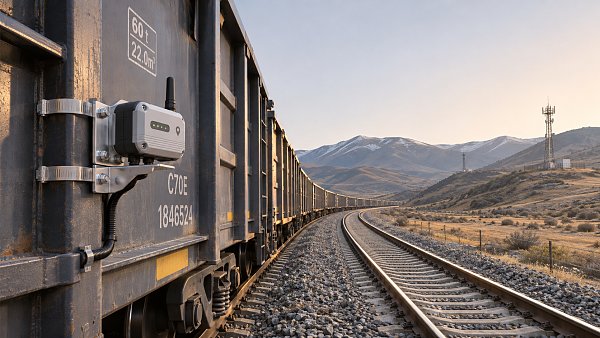
LTE-M can track rail assets across corridors with limited cellular coverage, provided the tracker can reach a compatible network often enough to meet the operational requirement. It can record positions during a coverage gap and upload them later, but it cannot provide live updates while disconnected. The distinction matters: a delayed journey history may be entirely adequate for a freight wagon, while it may be unacceptable for an asset that requires an immediate exception alert.
For technical evaluators considering LTE-M rail transit for asset tracking, the decision rests on three questions: where the device can connect, what it can still record when it cannot, and how old a location may be before it loses operational value. Network coverage maps are a useful starting point, but the answer depends on the installed tracker and the route it actually travels.
Coverage must be judged along the route, not at its endpoints
A rail asset can spend much of its journey in places that challenge cellular reception: cuttings, tunnels, remote sidings, yards surrounded by metal structures, or sections where the nearest serving site is distant. A tracker fitted inside a steel wagon or equipment enclosure may experience a different signal environment from a handset held outside it. Antenna placement, cable losses and nearby metal can all affect the connection.
LTE-M is designed for low-power, wide-area cellular applications and can offer improved coverage in some difficult radio conditions compared with conventional cellular devices. That does not turn an area without service into a covered area. The network also has to support LTE-M on frequencies compatible with the device, and the subscription must allow access to that service in each relevant operating territory.
For cross-border fleets, check the combination of operator support, device bands, roaming arrangements and commercial availability for every country or network expected on the route. General LTE coverage or a successful smartphone connection does not establish that an LTE-M tracker can register and transmit there.
Coverage should be assessed against the points where information is needed, not just the proportion of track shown as covered. A long gap may be tolerable when a wagon is in transit between known terminals. A short gap at a remote interchange may be more consequential if that is where custody changes or an arrival alert is required.
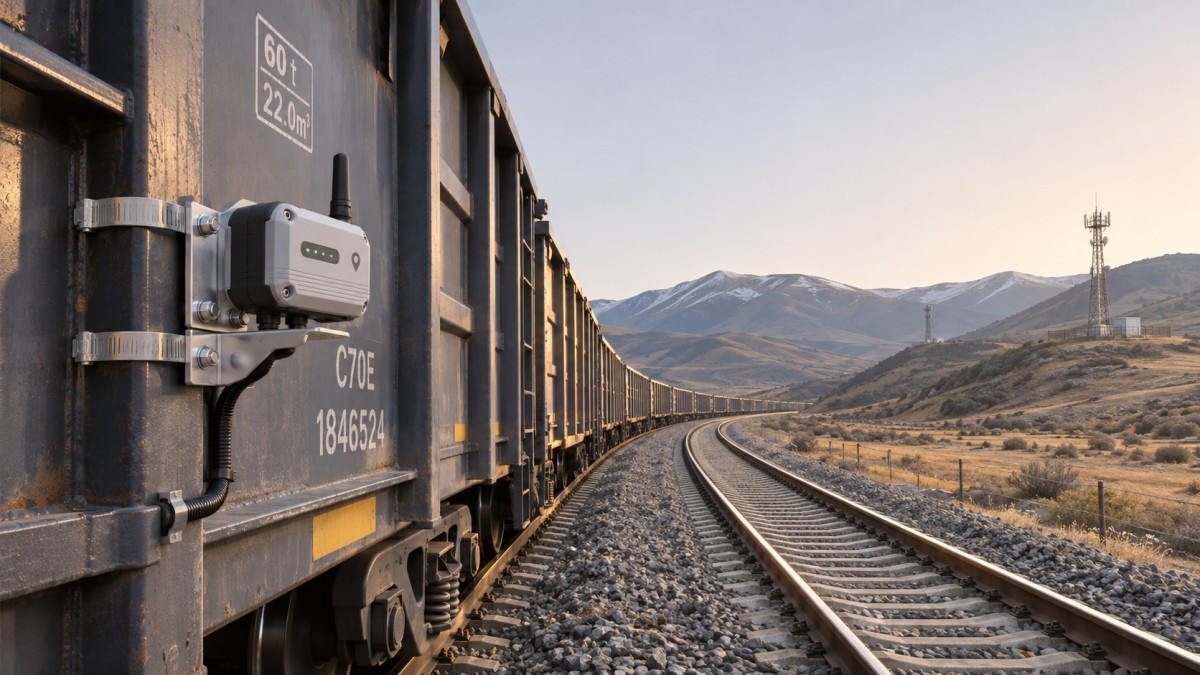
Start with the operator’s LTE-M coverage information, then test representative routes and installation positions. Include moving runs, stationary periods, yards and known obstructions. Record failed registrations, dropped sessions and delayed messages alongside successful transmissions. A test conducted only at a depot can miss the conditions that determine whether the tracking service is useful.
Store-and-forward preserves history, not live visibility
When LTE-M coverage disappears, a suitably equipped tracker can continue collecting data and retain it locally. After reconnecting, it uploads the buffered records to the platform. This store-and-forward approach can reconstruct a journey through a coverage gap, but the platform remains unaware of new events until the device has a communication path again.
That difference should be reflected in the service specification. “Location every 15 minutes,” for example, can describe two different requirements: a location recorded every 15 minutes, or a location received by the platform every 15 minutes. The first may be achievable through an outage; the second cannot be guaranteed by LTE-M alone where there is no coverage.
The implementation details also determine whether recovered data is trustworthy and useful:
- Buffer capacity and overflow: Establish how many records the device can retain at the configured reporting rate, including event messages. Ask what happens when memory fills: whether the oldest records are overwritten, new records are discarded, or another rule applies.
- Time and location stamps: The platform should distinguish when a position was captured from when it was received. Otherwise, an old buffered location can appear to be the asset’s current position.
- Upload behavior: Confirm whether the tracker sends the full backlog after reconnection, how it handles interrupted uploads and whether duplicate records can be identified.
- Event handling: Determine whether alarms generated offline are stored, whether they receive priority on reconnection and whether their delayed arrival changes the operational response.
- Power consumption: Check how often the device searches for service during a prolonged outage and how retries, positioning and backlog uploads affect the expected battery life.
A capacity calculation should use the longest plausible time without connectivity, not just the average gap. For a device recording one position every 15 minutes, a 24-hour outage produces 96 position records before accounting for alerts, diagnostics or other messages. A longer outage, a higher recording rate or repeated transmission failures requires more headroom. The practical limit depends on the device’s actual storage allocation and configuration.
Can the tracker still determine its position?
Communication coverage and positioning are separate constraints. A tracker may use a satellite positioning receiver to calculate its location while LTE-M is unavailable, then store that location for later upload. But satellite positioning also depends on reception. Tunnels, covered yards, mounting inside a metal enclosure and other obstructions can prevent or degrade a position fix.
Ask the supplier what the device records when it cannot obtain a valid fix. It may retain the last known position, record a position with an age or quality indicator, or omit the location for that interval. The application should make these states visible. A last known position is useful context, but it must not be presented as proof that the asset remains there.
Match the communication design to the visibility requirement
LTE-M is often a reasonable candidate for assets whose journeys can be reconstructed after reconnection and whose alerts can tolerate delay. Examples include periodic inventory updates for wagons, containers or trackside equipment where the operating process does not depend on a continuous feed. It is less suitable as the sole communication path when a missed or delayed message would prevent a time-sensitive response.
The following distinctions help narrow the choice:
Where a longer outage is unacceptable, a multi-network cellular device or a satellite communication option may reduce dependence on a single terrestrial network. Each has limits. Another cellular network may share the same geographic blind spot, while satellite communication requires a suitable terminal, antenna placement, service plan and visibility conditions. A satellite positioning receiver alone does not provide satellite messaging.
Other designs can capture data at fixed points, such as depot or yard gateways, and forward it when an asset passes nearby. That can support inventory and handover workflows, but it gives location evidence at those points rather than continuous visibility between them. The choice should follow the operational question: whether the team needs to know an asset’s route eventually, confirm that it passed a location, or receive an alert while an event is still unfolding.
Specify the test around decisions, not signal bars
A useful field evaluation starts with an agreed reporting objective. Define the maximum acceptable age of a location, the longest tolerable alert delay and the period over which offline history must be retained. Separate routine reports from exceptional events; they may have different urgency and reporting rates.
Then test the complete chain: installed device, antenna, positioning receiver, network subscription, backend and user interface. A device may reconnect successfully while the application mishandles the backlog, displays stale data as current or triggers obsolete alerts without context. Conversely, a coverage gap may have little operational impact if the device buffers the relevant events and reports them before the next decision point.
Include power behaviour in the same trial. Frequent location fixes and aggressive network retries can increase energy use, especially where service is intermittent. An externally powered locomotive tracker and a battery-powered wagon tracker may therefore need different reporting and retry settings even on the same route. Check how the unit behaves after power interruption or reset, including whether buffered records survive.
Acceptance should be based on observed results in representative conditions: where updates were received, how long records remained delayed, whether missing positions were clearly identified and whether the system recovered the expected backlog. Define how much route variation the evaluation covers and repeat it when installation, network access or operating geography changes materially.
LTE-M can be a practical part of a rail asset-tracking design in limited-coverage areas, especially when occasional delayed reporting is acceptable. Where the operation depends on knowing an asset’s position or receiving an alert during the gap itself, the decision turns on the availability of an additional communication path and on whether that path works at the places and times it is needed.
Recommended News
 Nov 23, 2026Can an AI route optimization platform handle cross-border truck restrictions in Europe?AI route optimization platform Europe: Discover how to assess cross-border truck restrictions, validate compliant routes, and avoid costly routing errors.
 Nov 21, 2026How to assess carrier integration in an intermodal transportation platformEvaluate an intermodal transportation platform with a practical guide to carrier coverage, event accuracy, integration failures, security and acceptance testing.
 Nov 20, 2026How to identify which railway safety standards apply to a projectRailway safety standards guide: Learn how to identify applicable requirements, map interfaces and build a defensible compliance baseline for your project.
 Nov 19, 2026How to evaluate motion control application references for a new projectEvaluate engineering application references for motion control with confidence. Compare load cycles, safety, integration, and evidence to reduce project risk.
 Nov 18, 2026When does electric marine propulsion make sense for ferries?Electric marine propulsion technology can transform ferry operations. Explore when battery-electric or hybrid systems make sense for your routes, charging access, and costs.
 Nov 17, 2026How much does it cost to buy an ocean-going vessel?Ocean going vessel cost ranges from a few million to hundreds of millions of dollars. Explore purchase prices, hidden costs, and key factors before you buy.
 Nov 16, 2026How to verify solution provider references before signing a contractVerify solution provider references before signing. Learn what to ask, which evidence to check, and how to turn findings into stronger contract terms.
 Nov 14, 2026How does automatic train control affect metro train headways?Discover how automatic train control for metro systems can reduce headways, improve service consistency and support capacity planning without compromising safety.
 Nov 13, 2026How to assess the financial return on rail infrastructure investmentAssess rail infrastructure investment with confidence. Explore lifecycle costs, NPV, IRR and risk scenarios to make better-informed funding decisions.
 Nov 12, 2026How to assess an ocean vessel technology provider's integration capabilitiesAssess an ocean vessel technology provider with a practical guide to interfaces, cybersecurity, failure testing, and lifecycle support. Make a confident choice.
 Nov 10, 2026When is external supplier evaluation support worth the cost?Discover when supplier evaluation support is worth the cost, how to estimate its return, and where independent expertise can reduce sourcing risks.
 Nov 09, 2026How can evaluation support help component suppliers prepare for audits?Supplier evaluation support for component suppliers helps uncover audit gaps, strengthen traceability, and build a clear, risk-based preparation plan.
 Nov 07, 2026How smart intermodal transportation reduces transfer delaysDiscover how smart intermodal transportation reduces transfer delays through real-time coordination, cargo-ready forecasts, and faster decisions.
 Nov 06, 2026How to evaluate AI route optimization suppliers in North AmericaAI route optimization supplier North America: discover how to compare providers, validate savings, assess security and choose a solution that fits your operations.
 Nov 04, 2026Can LTE-M track rail assets in areas with limited coverage?LTE-M rail transit for asset tracking can bridge coverage gaps with offline data storage. Discover its limits and how to assess your routes.
 Nov 01, 2026When is rail freight cheaper than maritime shipping?Compare rail and maritime cost to discover when rail freight can save money on inland routes, inventory and delays. Learn how to assess the full door-to-door cost.
 Oct 31, 2026How an AI route optimization dashboard handles traffic delaysDiscover how an AI route optimization dashboard responds to traffic delays, compares feasible routes, updates ETAs, and helps operators make informed decisions.
 Oct 29, 2026How to assess an automatic train control manufacturer for retrofitsAssess an automatic train control manufacturer for your retrofit. Learn how to verify compatibility, safety assurance, migration plans, and long-term support before choosing a supplier.
 Oct 28, 2026Does technical selection support in Southeast Asia cover local codes?Explore technical selection support Southeast Asia projects need to address local codes, assess compliance evidence, and map approval pathways. Learn what to ask before procurement.
 Oct 26, 2026How a product information platform keeps product data consistentDiscover how a product information platform keeps data consistent with clear ownership, validation, and approved updates. Learn what to check before choosing a solution.
 Oct 23, 2026When is renting heavy mining equipment cheaper than buying?Renting heavy industry equipment for mining? Discover when it costs less than buying, compare hidden fees and break-even points, and make a smarter fleet investment.
 Oct 21, 2026Can absolute safety monitoring eliminate all operational risk?Can absolute safety monitoring eliminate all risk? Discover its limits, hidden failure points, and practical safeguards to strengthen protection and make smarter safety decisions.
 Oct 19, 2026How to vet a European railway safety technology supplier’s track recordSeeking a railway safety technology supplier Europe can trust? Learn how to verify project references, safety credentials, and lifecycle support to build a defensible shortlist.
 Oct 15, 2026How to size train traction systems for frequent-stop rail serviceSize train traction systems for frequent-stop rail service with practical guidance on power, adhesion, thermal loads, and braking. Learn how to meet timetables without costly oversizing.