Search News
Industry Portal
Popular Tags
When is renting heavy mining equipment cheaper than buying?
Author
Time
Click Count
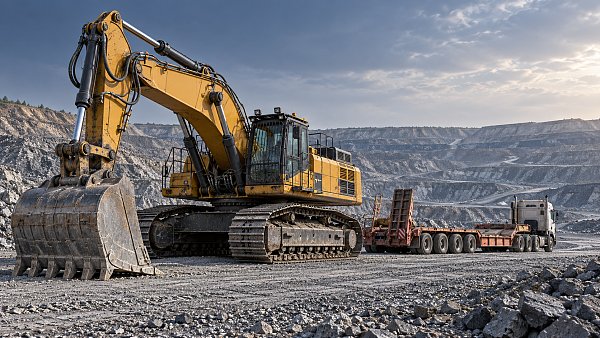
Renting heavy industry equipment for mining is often cheaper than buying when the work is short-term, utilization is low, or future demand is uncertain. But a low monthly rental rate does not automatically mean a lower project cost. Transport, operating-hour limits, maintenance obligations, standby time, financing, and resale value can change the answer.
For procurement teams, the real question is not simply, “What does this machine cost?” It is, “What will reliable production capacity cost over the period we actually need it?” A rented excavator that sits through a permitting delay can become expensive. A purchased haul truck without a dependable maintenance network can be more costly still.
The soundest decision compares both options over the same planning horizon, under realistic operating conditions, with clear responsibility for downtime and repairs.
Where renting usually has the cost advantage
Rental works best when it avoids an ownership cost the mine would otherwise struggle to recover. Several procurement situations fit that description.
- Short campaigns: Overburden removal, temporary stockpile handling, rehabilitation, and construction support may require equipment for only a defined stage.
- Uncertain production: Exploration results, permit approvals, commodity prices, or financing milestones may leave the operating schedule unsettled.
- Low or uneven utilization: A machine needed occasionally can tie up substantial capital while spending most of its time parked.
- Temporary capacity gaps: Rental can bridge a major overhaul, delayed delivery, or seasonal production increase without permanently expanding the fleet.
- Unproven equipment fit: Renting can allow operational evaluation before committing to a particular size, configuration, or technology.
These advantages depend on genuine flexibility. A long minimum term, restrictive cancellation clause, or repeated mobilization charge can remove much of the benefit. Rental availability also varies: standard excavators and loaders may be easier to source than large mining trucks, specialized drills, or highly customized production equipment.
Compare equivalent production—not just equivalent machines
Two machines in the same nominal class may not deliver the same output at your site. Payload, bucket configuration, material density, haul gradient, altitude, and ground conditions affect productivity. So do operator familiarity and compatibility with the existing fleet.
Before requesting prices, specify the required duty: material moved, working hours, expected shifts, ground conditions, attachments, and minimum availability. For mobile equipment, include haul distances and loading relationships. For crushers or screening plants, define feed characteristics and required product specifications.
A cheaper rental unit that creates a loading bottleneck is not necessarily economical. Conversely, buying a larger machine to cover occasional peak demand may leave the operation paying for capacity it rarely uses.
Use cost per productive hour or cost per tonne as a cross-check. Calendar-month costs are useful for budgeting, but production-based measures reveal whether the selected machine can meet the mine plan economically.
Build the cost comparison on one consistent horizon
Compare renting and buying over the same project period, using the same production requirement. Do not compare several months of rent with the full purchase price while ignoring the machine’s remaining value. Equally, do not assume a purchased machine will achieve an optimistic resale price without evidence.
Fuel, operators, and routine consumables should appear on both sides when relevant. If they are genuinely identical, they cancel out in the incremental comparison. If machine efficiency or staffing differs, retain those differences.
For a straightforward project comparison, use:
Total rental cost = rental charges + mobilization and return + operating costs + renter-paid maintenance and insurance + expected additional charges.
Total ownership cost = acquisition cost − net resale proceeds + financing or capital cost + operating costs + maintenance, insurance, and administration.
Do not add depreciation again when acquisition cost minus resale proceeds already captures the loss in asset value. For longer projects, discount cash flows consistently. Avoid double-counting financing costs and the cost of capital, and assess taxes with the finance team rather than assuming one option always has a tax advantage.
Find the break-even point, then test how fragile it is
There is no universal utilization percentage at which buying becomes cheaper. The threshold depends on the equipment, contract structure, maintenance exposure, and residual value.
For a simplified comparison within a fixed planning horizon:
Break-even active months = (fixed ownership costs − fixed rental costs) ÷ (rental cost per active month − ownership cost per active month).
This works only when the denominator is positive and the cost assumptions remain reasonably stable. Fixed ownership costs should include the expected loss in asset value over the assessment period, not the full purchase price without a resale adjustment.
A hypothetical indexed example
Assume a 12-month assessment period. The figures below are arbitrary cost units used to demonstrate the calculation—not equipment prices or market quotations. Common operating costs are excluded because they are assumed identical.
- Fixed ownership costs over the assessment period: 100 units.
- Additional ownership cost per active month: 8 units.
- Fixed rental mobilization and return costs: 20 units.
- Rental cost per active month, including applicable extras: 18 units.
The break-even point is (100 − 20) ÷ (18 − 8), or eight active months. At five active months, rental totals 110 units versus 140 for ownership. At ten active months, rental totals 200 units versus 180 for ownership.
The result assumes rental charges stop during inactive months and there are no extra transport costs. If the equipment must remain on hire throughout the year, rental may lose its advantage much earlier. Extending the planning horizon also requires recalculating resale value, maintenance exposure, and capital costs.
Run at least three scenarios: shorter-than-planned work, the expected schedule, and an extended campaign. Also test weaker resale proceeds, higher repair costs, and rental hour overages. A decision that wins only under the most optimistic assumptions deserves scrutiny.
The contract clauses that can reverse the result
Many rental overruns begin with a mismatch between how the mine operates and how the supplier bills. Resolve these points before issuing the purchase order.
Hours, standby, and off-hire
Confirm whether the rate includes a daily, weekly, or monthly operating-hour allowance, how meter readings are recorded, and what excess hours cost. A double-shift operation may exceed a standard allowance quickly.
Ask whether standby time is chargeable during weather disruption, blasting restrictions, or permit delays. Establish when billing starts and stops: dispatch, delivery, collection request, or return to the supplier’s yard. These are materially different arrangements.
Maintenance, wear, and damage
“Maintenance included” needs a written definition. Scheduled servicing may be covered while tires, undercarriage wear, ground-engaging tools, hoses, or damage remain the renter’s responsibility.
Record condition at delivery and return, supported by photographs and meter readings. Agree on wear assessment methods, service intervals, authorized repairs, and liability for failures. For abrasive or corrosive mining environments, confirm that the intended application is explicitly permitted.
Breakdown response and replacement capacity
A service commitment has limited value if replacement equipment cannot reach a remote site promptly. Check workshop location, technician access, critical parts availability, and the actual replacement mechanism.
Confirm whether rent pauses during a qualifying breakdown, whether replacement transport is chargeable, and what remedies apply. Rental transfers only the risks the agreement actually assigns to the supplier.
Remote logistics can outweigh the rental saving
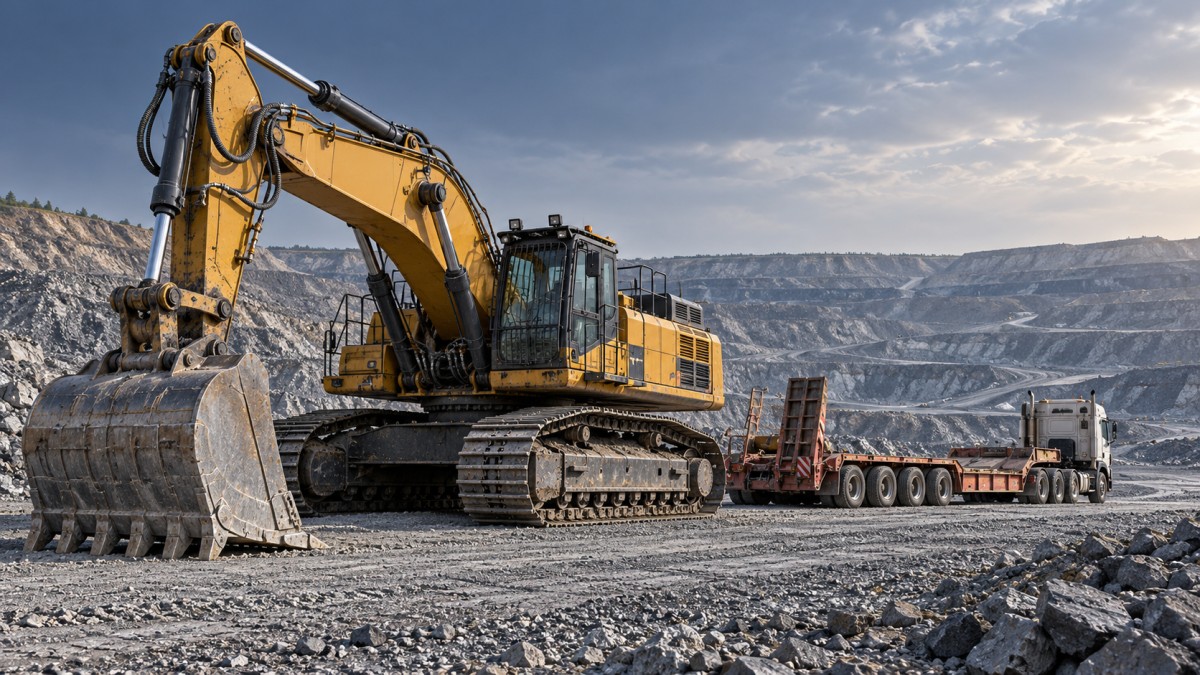
For remote or import-dependent mines, the journey to site can be a major part of equipment economics. Port handling, inland haulage, escorts, bridge restrictions, customs procedures, and assembly requirements affect both cost and readiness.
A short rental campaign becomes less attractive when a machine requires lengthy mobilization or costly dismantling for transport. Temporary import arrangements may also create documentation, security, or re-export obligations that require local advice.
Evaluate the complete equipment cycle: source, transport, commission, operate, demobilize, and return or sell. A supplier’s low rate matters less if the machine misses the operating window. Likewise, buying may be unattractive if the asset cannot be redeployed or sold economically after the campaign.
When buying—or combining both approaches—makes more sense
Buying tends to strengthen its case when demand is stable, productive hours are consistently high, and the equipment is central to long-term output. Ownership can also be preferable when the mine requires substantial customization, maintains strong workshop capability, or can redeploy assets across several operations.
However, ownership is not automatically cheaper because the purchase is already approved or cash is available. Capital still has an alternative use, and an idle machine continues to incur costs.
A mixed fleet often fits operating reality better than an all-rental or all-owned policy. Own equipment serving dependable base demand; rent additional units for peaks, uncertain phases, and maintenance cover. Keep the comparison fleet-wide: an extra machine may improve resilience, but only if the value of avoided disruption justifies its cost.
Make the decision with a defined exit
Before committing, procurement should obtain comparable quotations, validate production assumptions with operations, and confirm maintenance responsibilities with the site team. Finance should review cash flow, residual value, and the treatment of capital costs.
Then establish a review trigger. If a rental campaign extends beyond a specified date or utilization level, reassess buying, redeployment, or a negotiated longer-term arrangement. Do not let repeated extensions turn a temporary solution into an expensive permanent fleet.
Renting heavy industry equipment for mining is cheaper when the flexibility and avoided ownership exposure are worth more than the rental premium. Buying becomes more compelling when sustained utilization spreads ownership costs across dependable production. The better procurement decision is the one that remains economical after realistic delays, wear, logistics, and exit costs—not merely the one with the lowest opening price.
Recommended News
 Nov 23, 2026Can an AI route optimization platform handle cross-border truck restrictions in Europe?AI route optimization platform Europe: Discover how to assess cross-border truck restrictions, validate compliant routes, and avoid costly routing errors.
 Nov 21, 2026How to assess carrier integration in an intermodal transportation platformEvaluate an intermodal transportation platform with a practical guide to carrier coverage, event accuracy, integration failures, security and acceptance testing.
 Nov 20, 2026How to identify which railway safety standards apply to a projectRailway safety standards guide: Learn how to identify applicable requirements, map interfaces and build a defensible compliance baseline for your project.
 Nov 19, 2026How to evaluate motion control application references for a new projectEvaluate engineering application references for motion control with confidence. Compare load cycles, safety, integration, and evidence to reduce project risk.
 Nov 18, 2026When does electric marine propulsion make sense for ferries?Electric marine propulsion technology can transform ferry operations. Explore when battery-electric or hybrid systems make sense for your routes, charging access, and costs.
 Nov 17, 2026How much does it cost to buy an ocean-going vessel?Ocean going vessel cost ranges from a few million to hundreds of millions of dollars. Explore purchase prices, hidden costs, and key factors before you buy.
 Nov 16, 2026How to verify solution provider references before signing a contractVerify solution provider references before signing. Learn what to ask, which evidence to check, and how to turn findings into stronger contract terms.
 Nov 14, 2026How does automatic train control affect metro train headways?Discover how automatic train control for metro systems can reduce headways, improve service consistency and support capacity planning without compromising safety.
 Nov 13, 2026How to assess the financial return on rail infrastructure investmentAssess rail infrastructure investment with confidence. Explore lifecycle costs, NPV, IRR and risk scenarios to make better-informed funding decisions.
 Nov 12, 2026How to assess an ocean vessel technology provider's integration capabilitiesAssess an ocean vessel technology provider with a practical guide to interfaces, cybersecurity, failure testing, and lifecycle support. Make a confident choice.
 Nov 10, 2026When is external supplier evaluation support worth the cost?Discover when supplier evaluation support is worth the cost, how to estimate its return, and where independent expertise can reduce sourcing risks.
 Nov 09, 2026How can evaluation support help component suppliers prepare for audits?Supplier evaluation support for component suppliers helps uncover audit gaps, strengthen traceability, and build a clear, risk-based preparation plan.
 Nov 07, 2026How smart intermodal transportation reduces transfer delaysDiscover how smart intermodal transportation reduces transfer delays through real-time coordination, cargo-ready forecasts, and faster decisions.
 Nov 06, 2026How to evaluate AI route optimization suppliers in North AmericaAI route optimization supplier North America: discover how to compare providers, validate savings, assess security and choose a solution that fits your operations.
 Nov 04, 2026Can LTE-M track rail assets in areas with limited coverage?LTE-M rail transit for asset tracking can bridge coverage gaps with offline data storage. Discover its limits and how to assess your routes.
 Nov 01, 2026When is rail freight cheaper than maritime shipping?Compare rail and maritime cost to discover when rail freight can save money on inland routes, inventory and delays. Learn how to assess the full door-to-door cost.
 Oct 31, 2026How an AI route optimization dashboard handles traffic delaysDiscover how an AI route optimization dashboard responds to traffic delays, compares feasible routes, updates ETAs, and helps operators make informed decisions.
 Oct 29, 2026How to assess an automatic train control manufacturer for retrofitsAssess an automatic train control manufacturer for your retrofit. Learn how to verify compatibility, safety assurance, migration plans, and long-term support before choosing a supplier.
 Oct 28, 2026Does technical selection support in Southeast Asia cover local codes?Explore technical selection support Southeast Asia projects need to address local codes, assess compliance evidence, and map approval pathways. Learn what to ask before procurement.
 Oct 26, 2026How a product information platform keeps product data consistentDiscover how a product information platform keeps data consistent with clear ownership, validation, and approved updates. Learn what to check before choosing a solution.
 Oct 23, 2026When is renting heavy mining equipment cheaper than buying?Renting heavy industry equipment for mining? Discover when it costs less than buying, compare hidden fees and break-even points, and make a smarter fleet investment.
 Oct 21, 2026Can absolute safety monitoring eliminate all operational risk?Can absolute safety monitoring eliminate all risk? Discover its limits, hidden failure points, and practical safeguards to strengthen protection and make smarter safety decisions.
 Oct 19, 2026How to vet a European railway safety technology supplier’s track recordSeeking a railway safety technology supplier Europe can trust? Learn how to verify project references, safety credentials, and lifecycle support to build a defensible shortlist.
 Oct 15, 2026How to size train traction systems for frequent-stop rail serviceSize train traction systems for frequent-stop rail service with practical guidance on power, adhesion, thermal loads, and braking. Learn how to meet timetables without costly oversizing.