Search News
Industry Portal
Popular Tags
How to assess an automatic train control manufacturer for retrofits
Author
Time
Click Count
An automatic train control manufacturer should reach a retrofit shortlist only when it can explain how its equipment will work with the railway’s existing assets, how the transition will be controlled, and what evidence will support acceptance. A strong product specification helps, but it cannot establish whether a supplier can deliver an upgrade within the operator’s access windows, engineering resources, and service constraints.
For technical evaluators, the most useful comparison is therefore between credible delivery commitments. Give greater weight to documented interface compatibility, a defined safety assurance process, and a workable migration sequence than to headline capacity claims. A supplier with impressive new-build references may still be a poor fit for a railway with several rolling stock variants, incomplete signalling records, and limited overnight access.
Establish what the manufacturer is actually taking responsibility for
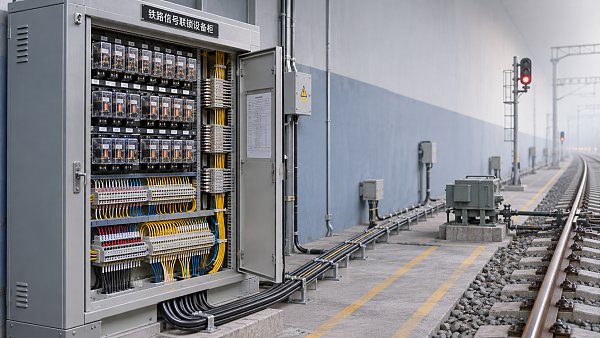
Before comparing proposals, define the retrofit boundary. Automatic train control can encompass train protection, automatic operation, and supervision, but suppliers may package these functions differently. One proposal may include onboard equipment and wayside control while assuming that another contractor will modify interlockings, communications, or the control centre. Another may include those interfaces but exclude the associated engineering and approval work.
Ask each bidder to identify the functions it supplies, the assets it modifies, and the interfaces it guarantees. The same responsibility map should cover design, installation, verification, commissioning, and support. Any activity assigned to the operator or a third party needs an agreed owner, deliverable, and acceptance criterion. Otherwise, apparent price differences may reflect missing scope.
The operator also needs a common baseline against which suppliers can bid. This should describe the signalling architecture, fleet variants, braking characteristics, train detection arrangements, communications infrastructure, operating modes, and known asset condition issues. Where records are incomplete, specify how surveys and validation will close the gaps. Asking suppliers to accept undefined legacy conditions without investigation is likely to produce qualifications, contingency pricing, or disputes later.
Separate essential outcomes from desirable improvements. Replacing obsolete train protection, introducing automatic operation, and increasing throughput may involve different dependencies. A capacity objective, for example, may depend on dwell times, junction conflicts, traction performance, and terminal arrangements as well as control technology. Require the manufacturer to identify those dependencies before accepting a performance commitment.
Test compatibility at the interfaces where the retrofit can fail
A claim that a system is “compatible with existing infrastructure” is too broad to evaluate. Compatibility needs to be demonstrated for the actual equipment versions, configurations, and operating conditions on the route. Start with an interface register covering onboard systems, interlockings, train detection, communications, supervision, power supplies, and maintenance tools.
For each significant interface, request the specification, implementation owner, known restrictions, and proposed verification method. Distinguish interfaces supported by existing evidence from those requiring new engineering. A protocol name alone does not establish that two implementations agree on message interpretation, timing, failure handling, or configuration.
Rolling stock deserves particular attention because nominally similar vehicles can contain different brake controllers, odometry arrangements, wiring modifications, and software versions. The manufacturer should explain how it will establish vehicle configurations and determine which require separate integration evidence. A successful installation on one train does not automatically justify acceptance across the fleet.
Brake integration provides a useful test of engineering depth. Ask how the proposed system obtains and validates the braking characteristics used in its supervision model, including the assumptions applied to degraded conditions. The supplier should explain how those assumptions will be substantiated and how changes to the vehicle or operating envelope will be controlled. Quoting stopping accuracy without defining speed, load, adhesion assumptions, and brake condition gives evaluators little usable evidence.
Communications claims need similar scrutiny. Nominal bandwidth or coverage does not demonstrate acceptable behaviour when messages are delayed, interrupted, or lost. Ask how the system responds, what restrictions follow, and how operation recovers. Where the design depends on a radio network, establish who owns coverage design, interference investigation, onboard antenna integration, and acceptance testing.

A useful evaluation workshop follows one normal movement and one degraded movement across the proposed architecture. For example, trace a train approaching a station, losing communications, stopping, and returning to service. Have the supplier identify the relevant control decisions, train protection responses, operator actions, and records at each stage. This makes interface assumptions easier to challenge than a presentation organised around individual products.
Early testing should address the uncertainties with the greatest consequences. Depending on the project, that may mean a laboratory connection to an existing interlocking, a representative vehicle installation, or simulation using route and fleet data. Agree beforehand what each activity can prove and what still requires site testing. A demonstration with simplified inputs should not silently become evidence for the full railway configuration.
Evaluate the safety argument and the migration plan together
Safety assurance and migration planning are closely connected in a retrofit. The railway may pass through several temporary configurations before reaching its final architecture. Each can introduce different interfaces, operating restrictions, maintenance obligations, and human actions. A proposal that explains the completed system thoroughly but leaves the transition vague carries substantial delivery uncertainty.
Ask for an assurance plan that identifies the applicable requirements, approval route, assessment responsibilities, and evidence deliverables. Requirements vary by jurisdiction and railway context, so a generic certificate or declaration of standards compliance should not be treated as project acceptance. A component’s safety integrity claim has a defined scope; it does not establish that the complete installation is acceptable for the intended operation.
The manufacturer should show how requirements flow into design, verification, and validation, and how hazards and assumptions are tracked to closure. Request representative evidence structures, subject to legitimate confidentiality limits. Evaluators need to see whether records connect a requirement to its implementation and test result, and whether unresolved conditions remain visible to the organisations responsible for accepting them.
Pay particular attention to application conditions inherited from reusable products or previous projects. These may require specific installation arrangements, maintenance actions, environmental limits, or operator procedures. Establish who will verify each condition and how compliance will be maintained. An assumption buried in a safety document can become an expensive infrastructure change late in delivery.
The migration plan should then describe an achievable sequence from the existing railway to the target system. Examine at least these questions:
- Which combinations of equipped and unequipped trains can operate during each stage?
- How are transitions between control regimes managed and verified?
- What work and testing must fit inside each possession?
- What criteria permit the railway to reopen for service?
- What happens if commissioning cannot be completed within the available window?
Rollback needs a technical definition. It may require restoring wiring, software, data, equipment states, or operating arrangements, followed by verification before trains can run. Some installation steps may make rapid restoration impractical. Require the supplier to identify those points and the contingency arrangements needed before they are reached.
Challenge the schedule through possession-level detail. A short installation duration can conceal lengthy isolation, access, test, and handback activities. The proposal should show the resources required from the operator as well as the supplier: drivers, maintainers, signalling staff, test trains, control room personnel, and assessors where applicable. A plan that depends on unavailable railway resources is not ready for commitment.
Include cybersecurity in this change process, especially where the retrofit creates new maintenance connections or exchanges data with existing networks. Evaluate access control, software update methods, diagnostic connections, and incident recovery. Security measures must also be compatible with operational recovery and safety obligations; those interactions need engineering ownership.
Use references and support commitments to test delivery credibility
Reference projects are valuable when their constraints resemble yours. A manufacturer’s total number of installations says little about its ability to manage a mixed fleet, interface with a particular legacy interlocking, or commission within short possessions. Ask bidders to explain which reference demonstrates each major capability and where your project introduces a material difference.
Relevant comparisons include the inherited signalling architecture, number of vehicle configurations, operating environment, migration approach, and extent of supplier responsibility. Establish whether the proposed organisation delivered the integration work itself and whether the team offered for your project includes the necessary experience. Product lineage and corporate references cannot substitute for an adequately staffed delivery team.
Where access permits, discuss references with the railway owner or operator. Useful questions concern the work needed to reach acceptance, the handling of interface changes, documentation quality, fault investigation, and support after entry into service. Treat a reference as evidence of specific capabilities rather than a blanket endorsement. Confidentiality may restrict detail, but suppliers should still be able to explain the relevance and limits of their evidence.
Long-term support should receive the same scrutiny as initial delivery. Identify which equipment, software tools, licences, and engineering services will be required to maintain the installation. Clarify who can change application data, replace failed equipment, restore configurations, and diagnose faults. These arrangements affect both maintenance independence and recovery time.
Open interfaces can help, but an interface description alone may be insufficient for another organisation to implement or maintain a connection. Ask what documentation, test facilities, configuration information, and usage rights are included. If particular activities remain dependent on the manufacturer, price and govern that dependency explicitly.
Obsolescence planning should address how replacement components and software changes will be qualified without creating an unmanageable revalidation burden. Look for clear notification arrangements, configuration records, support responsibilities, and a process for assessing the effect of changes on the accepted system. Commitments to “lifetime support” need contractual scope and workable mechanisms.
Make the selection depend on evidence, then compare cost
A weighted scorecard is useful only after unacceptable gaps have been identified. Define project-specific minimum conditions for interface responsibility, safety assurance, migration feasibility, and maintainability. Strong performance elsewhere should not compensate for an unresolved issue that prevents safe commissioning or sustained operation.
For suppliers that meet those conditions, compare cost on a common scope. Include surveys, interface development, vehicle modifications, test facilities, assurance, possession support, training, spares, licences, and continuing engineering services. Record exclusions and assumptions alongside the price. Where uncertainty remains, use a defined investigation or preliminary engineering stage to resolve it before committing to the affected work.
The final recommendation should state why the selected automatic train control manufacturer can deliver this retrofit, which evidence supports that judgment, and which residual risks the operator must own. Make outstanding commitments enforceable through named deliverables and acceptance gates. Before authorising work that changes the operating railway, the evaluator should be able to trace each major uncertainty to a responsible party, a verification activity, and a decision point.
Recommended News
 Nov 23, 2026Can an AI route optimization platform handle cross-border truck restrictions in Europe?AI route optimization platform Europe: Discover how to assess cross-border truck restrictions, validate compliant routes, and avoid costly routing errors.
 Nov 21, 2026How to assess carrier integration in an intermodal transportation platformEvaluate an intermodal transportation platform with a practical guide to carrier coverage, event accuracy, integration failures, security and acceptance testing.
 Nov 20, 2026How to identify which railway safety standards apply to a projectRailway safety standards guide: Learn how to identify applicable requirements, map interfaces and build a defensible compliance baseline for your project.
 Nov 19, 2026How to evaluate motion control application references for a new projectEvaluate engineering application references for motion control with confidence. Compare load cycles, safety, integration, and evidence to reduce project risk.
 Nov 18, 2026When does electric marine propulsion make sense for ferries?Electric marine propulsion technology can transform ferry operations. Explore when battery-electric or hybrid systems make sense for your routes, charging access, and costs.
 Nov 17, 2026How much does it cost to buy an ocean-going vessel?Ocean going vessel cost ranges from a few million to hundreds of millions of dollars. Explore purchase prices, hidden costs, and key factors before you buy.
 Nov 16, 2026How to verify solution provider references before signing a contractVerify solution provider references before signing. Learn what to ask, which evidence to check, and how to turn findings into stronger contract terms.
 Nov 14, 2026How does automatic train control affect metro train headways?Discover how automatic train control for metro systems can reduce headways, improve service consistency and support capacity planning without compromising safety.
 Nov 13, 2026How to assess the financial return on rail infrastructure investmentAssess rail infrastructure investment with confidence. Explore lifecycle costs, NPV, IRR and risk scenarios to make better-informed funding decisions.
 Nov 12, 2026How to assess an ocean vessel technology provider's integration capabilitiesAssess an ocean vessel technology provider with a practical guide to interfaces, cybersecurity, failure testing, and lifecycle support. Make a confident choice.
 Nov 10, 2026When is external supplier evaluation support worth the cost?Discover when supplier evaluation support is worth the cost, how to estimate its return, and where independent expertise can reduce sourcing risks.
 Nov 09, 2026How can evaluation support help component suppliers prepare for audits?Supplier evaluation support for component suppliers helps uncover audit gaps, strengthen traceability, and build a clear, risk-based preparation plan.
 Nov 07, 2026How smart intermodal transportation reduces transfer delaysDiscover how smart intermodal transportation reduces transfer delays through real-time coordination, cargo-ready forecasts, and faster decisions.
 Nov 06, 2026How to evaluate AI route optimization suppliers in North AmericaAI route optimization supplier North America: discover how to compare providers, validate savings, assess security and choose a solution that fits your operations.
 Nov 04, 2026Can LTE-M track rail assets in areas with limited coverage?LTE-M rail transit for asset tracking can bridge coverage gaps with offline data storage. Discover its limits and how to assess your routes.
 Nov 01, 2026When is rail freight cheaper than maritime shipping?Compare rail and maritime cost to discover when rail freight can save money on inland routes, inventory and delays. Learn how to assess the full door-to-door cost.
 Oct 31, 2026How an AI route optimization dashboard handles traffic delaysDiscover how an AI route optimization dashboard responds to traffic delays, compares feasible routes, updates ETAs, and helps operators make informed decisions.
 Oct 29, 2026How to assess an automatic train control manufacturer for retrofitsAssess an automatic train control manufacturer for your retrofit. Learn how to verify compatibility, safety assurance, migration plans, and long-term support before choosing a supplier.
 Oct 28, 2026Does technical selection support in Southeast Asia cover local codes?Explore technical selection support Southeast Asia projects need to address local codes, assess compliance evidence, and map approval pathways. Learn what to ask before procurement.
 Oct 26, 2026How a product information platform keeps product data consistentDiscover how a product information platform keeps data consistent with clear ownership, validation, and approved updates. Learn what to check before choosing a solution.
 Oct 23, 2026When is renting heavy mining equipment cheaper than buying?Renting heavy industry equipment for mining? Discover when it costs less than buying, compare hidden fees and break-even points, and make a smarter fleet investment.
 Oct 21, 2026Can absolute safety monitoring eliminate all operational risk?Can absolute safety monitoring eliminate all risk? Discover its limits, hidden failure points, and practical safeguards to strengthen protection and make smarter safety decisions.
 Oct 19, 2026How to vet a European railway safety technology supplier’s track recordSeeking a railway safety technology supplier Europe can trust? Learn how to verify project references, safety credentials, and lifecycle support to build a defensible shortlist.
 Oct 15, 2026How to size train traction systems for frequent-stop rail serviceSize train traction systems for frequent-stop rail service with practical guidance on power, adhesion, thermal loads, and braking. Learn how to meet timetables without costly oversizing.