Search News
Industry Portal
Popular Tags
How does automatic train control affect metro train headways?
Author
Time
Click Count
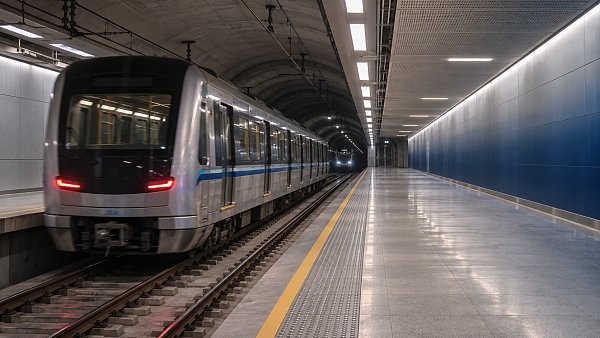
How much closer can metro trains run without compromising safety? Automatic train control for metro systems can reduce headways by supervising train movements, enforcing safe separation and supporting more consistent speeds and station stops. The signalling system, however, is only part of the answer. Braking performance, passenger dwell time, junction conflicts and terminal operations can each determine the interval that a line can actually sustain. For technical evaluators, the task is to distinguish a signalling system’s theoretical capability from the capacity of the railway around it.
What headway actually measures
Headway is the time between successive trains passing the same reference point. On a metro line, that point might be a platform departure marker, a tunnel section or the entrance to a terminal. The measurement location matters: trains may run close together in open tunnel but accumulate delay at a busy platform or conflicting junction.
A nominal capacity estimate is straightforward: trains per hour per direction = 3,600 ÷ headway in seconds. At an illustrative 120-second headway, that gives 30 trains per hour per direction. This is an arithmetic conversion, not a guarantee that a timetable can deliver 30 trains every hour. Recovery allowances, variable dwell times, maintenance conditions and service disruptions reduce the practical capacity available to an operator.
It is also useful to separate three related figures: the minimum technical headway under defined conditions, the scheduled headway in the timetable, and the actual headway observed in service. A supplier may quote the first, while passengers and planners experience the third.
How automatic train control changes train separation
Automatic train control, or ATC, is commonly used as an umbrella term for functions that protect and regulate train movement. The precise allocation of functions varies by system, but the following distinction is useful when assessing headway claims:
- Automatic train protection (ATP) supervises movement limits and speed, intervening when necessary to maintain safety.
- Automatic train operation (ATO) automates driving tasks such as acceleration, braking and stopping, to the extent provided by the system and operating mode.
- Automatic train supervision (ATS) supports traffic regulation, including monitoring trains and managing service according to operational rules.
ATP establishes the safe operating envelope. ATO can make driving and stopping more repeatable within that envelope. ATS can help maintain service regularity and manage perturbations. These functions influence different parts of the headway problem; none should be credited with removing a constraint it does not control.
Consider a following train approaching a platform. Its permitted movement depends on the position of the train ahead, the infrastructure and route status, and the separation margins defined by the signalling design. If the system can update movement authority more frequently and determine train position more precisely, the following train may be able to approach sooner or maintain a more useful speed profile. Whether this translates into a shorter platform headway depends on when the leading train departs, clears the relevant protection area and releases the route.
Fixed block and moving block: compare the protection, not just the label
In a conventional fixed-block arrangement, the line is divided into sections, and occupancy of a section constrains following movements. The size and location of blocks, detection equipment and braking margins affect how closely trains can follow. Shorter blocks and optimised signalling can improve performance, although they may introduce additional equipment and design complexity.
Moving-block systems, commonly associated with communications-based train control (CBTC), can calculate movement limits using reported train positions and other safety information rather than relying solely on fixed physical block boundaries for normal separation. This can reduce unused space between trains, particularly where fixed blocks are long relative to stopping distance. CBTC implementations differ, however: some use fixed-block fallback or other arrangements, and a “moving block” description alone does not establish achievable headway.
The useful comparison is therefore between complete operating cases. Evaluate the train detection method, position uncertainty, movement-authority update behaviour, braking assumptions, route release rules and fallback mode—not just whether the proposal says fixed block, moving block or CBTC.
Why braking distance is central to headway
A following train needs enough distance to stop safely within its permitted movement limit. The relevant calculation is not simply the advertised deceleration rate. It must account for the approved braking model and the uncertainties specified for the railway, which may include system response delays, gradient, train condition, wheel–rail adhesion, positioning error and engineering margins.
These assumptions affect the speed profile approaching a station or junction. A system using conservative or poorly matched inputs may require a train to slow earlier than expected. Conversely, an optimistic performance estimate that omits adverse but credible conditions is not a sound basis for a capacity commitment.
Evaluators should ask whether the headway study uses the same rolling stock characteristics, loading conditions, gradients and braking assumptions as the safety case. It should also identify which braking performance is available in normal operation and what changes when equipment is isolated or adhesion is degraded. A short interval achieved only with favourable assumptions may have limited operational value.
Where the expected capacity gain can disappear
A new ATC system can create room for more frequent trains, but it cannot make passengers board instantly or eliminate conflicting routes. The most restrictive element often moves once signalling is improved.
Platform dwell deserves particular attention because averages can be misleading. A station with a manageable average dwell may still disrupt the service if peak-period boarding produces frequent long stops. Door configuration, passenger distribution, accessibility needs and platform crowding all influence the result. A simulation based on one fixed dwell time can be useful for an initial comparison, but it is a weak representation of a crowded operational railway.
Terminals are equally easy to underestimate. A train must arrive, clear the relevant track sections, reverse or proceed through the turnback arrangement, and depart without blocking the next movement. Faster signalling may shorten parts of that sequence, but crossover layout and operating procedures can remain decisive.
Normal performance is only half the evaluation
For a capacity claim to be useful, it must state the operating mode. An unattended or highly automated service may achieve consistent station approaches under normal conditions, but a communication failure, trainborne equipment fault or unavailable trackside zone can change the rules. The result may be lower speeds, larger separation, manual driving or a restricted service pattern, depending on the system design and local procedures.
Ask for headway and throughput assessments for both normal and relevant degraded modes. The objective is not to expect full capacity during every failure; it is to understand how the railway behaves, how the operator detects and manages the condition, and how service returns to normal. Fallback arrangements also need to be examined alongside migration stages, especially where new equipment must coexist with legacy rolling stock or signalling during an upgrade.
Automation can improve repeatability, but it does not erase the need for operational resilience. A timetable built at the edge of the calculated minimum may be fragile: a short door obstruction can delay the next train, which then carries the delay into a junction or terminal. A slightly wider scheduled interval may yield a more reliable service, depending on the network and the operator’s objectives.
How to test a metro ATC headway claim
Start by requesting a defined reference case rather than a single headline number. The documentation should identify the measurement point, direction, train characteristics, infrastructure configuration, operating mode and traffic pattern. It should also make clear whether the result concerns train following in a plain tunnel, platform throughput, a junction or an end-to-end service.
Then examine the evidence behind the result:
- Trace the safety inputs. Check the braking model, location uncertainty, separation margins and route-release assumptions used in the performance study against the applicable system design and safety evidence.
- Inspect the timetable model. Look for realistic dwell-time variation, junction conflicts, terminal processes and recovery allowances. Request sensitivity tests for the assumptions most likely to change.
- Review interfaces. Train control depends on rolling stock, interlocking, communications, platform systems and power supplies. Confirm responsibilities and performance requirements at each interface.
- Examine degraded operation. Identify the failures studied, the resulting restrictions, expected operator actions and the conditions for restoring normal service.
- Define verification and acceptance. Agree how simulations, integration tests and operational trials will be used, and which measurable criteria apply at the chosen reference points.
For example, if two proposals both claim a 90-second minimum headway, they are not necessarily equivalent. One may assume a short, fixed dwell at a straight platform; the other may include a busy station, a junction and variable dwell. The figures become comparable only when their boundaries and assumptions are aligned.
Standards and safety evidence: what to look for
Standards provide a framework for specifying, developing and assuring railway systems; they do not prescribe one universal metro headway. Depending on the jurisdiction and project, relevant references may include the EN 50126 series for railway RAMS processes, EN 50128 or its applicable successor framework for railway software, and EN 50129 for safety-related electronic signalling systems. IEEE 1474 documents are also relevant to CBTC system requirements and performance considerations. Applicability, edition and contractual status should be confirmed for the project.
A safety integrity level, where allocated to a function, is not a capacity rating. It relates to the required integrity of that safety function, not to a promised number of trains per hour. Evaluators should instead look for a coherent chain from hazard analysis and safety requirements through design, verification, validation and operational constraints. Independent assessment arrangements should be established as required by the applicable regulatory and contractual framework.
Ultimately, automatic train control affects metro headways by changing how safely and consistently trains can follow one another. Its greatest value appears when signalling capability, rolling stock, station operation and the timetable are assessed as one system. The strongest proposal is not simply the one with the smallest quoted interval; it is the one that shows where that interval applies, what assumptions support it and how reliably the railway can operate around it.
Recommended News
 Nov 23, 2026Can an AI route optimization platform handle cross-border truck restrictions in Europe?AI route optimization platform Europe: Discover how to assess cross-border truck restrictions, validate compliant routes, and avoid costly routing errors.
 Nov 21, 2026How to assess carrier integration in an intermodal transportation platformEvaluate an intermodal transportation platform with a practical guide to carrier coverage, event accuracy, integration failures, security and acceptance testing.
 Nov 20, 2026How to identify which railway safety standards apply to a projectRailway safety standards guide: Learn how to identify applicable requirements, map interfaces and build a defensible compliance baseline for your project.
 Nov 19, 2026How to evaluate motion control application references for a new projectEvaluate engineering application references for motion control with confidence. Compare load cycles, safety, integration, and evidence to reduce project risk.
 Nov 18, 2026When does electric marine propulsion make sense for ferries?Electric marine propulsion technology can transform ferry operations. Explore when battery-electric or hybrid systems make sense for your routes, charging access, and costs.
 Nov 17, 2026How much does it cost to buy an ocean-going vessel?Ocean going vessel cost ranges from a few million to hundreds of millions of dollars. Explore purchase prices, hidden costs, and key factors before you buy.
 Nov 16, 2026How to verify solution provider references before signing a contractVerify solution provider references before signing. Learn what to ask, which evidence to check, and how to turn findings into stronger contract terms.
 Nov 14, 2026How does automatic train control affect metro train headways?Discover how automatic train control for metro systems can reduce headways, improve service consistency and support capacity planning without compromising safety.
 Nov 13, 2026How to assess the financial return on rail infrastructure investmentAssess rail infrastructure investment with confidence. Explore lifecycle costs, NPV, IRR and risk scenarios to make better-informed funding decisions.
 Nov 12, 2026How to assess an ocean vessel technology provider's integration capabilitiesAssess an ocean vessel technology provider with a practical guide to interfaces, cybersecurity, failure testing, and lifecycle support. Make a confident choice.
 Nov 10, 2026When is external supplier evaluation support worth the cost?Discover when supplier evaluation support is worth the cost, how to estimate its return, and where independent expertise can reduce sourcing risks.
 Nov 09, 2026How can evaluation support help component suppliers prepare for audits?Supplier evaluation support for component suppliers helps uncover audit gaps, strengthen traceability, and build a clear, risk-based preparation plan.
 Nov 07, 2026How smart intermodal transportation reduces transfer delaysDiscover how smart intermodal transportation reduces transfer delays through real-time coordination, cargo-ready forecasts, and faster decisions.
 Nov 06, 2026How to evaluate AI route optimization suppliers in North AmericaAI route optimization supplier North America: discover how to compare providers, validate savings, assess security and choose a solution that fits your operations.
 Nov 04, 2026Can LTE-M track rail assets in areas with limited coverage?LTE-M rail transit for asset tracking can bridge coverage gaps with offline data storage. Discover its limits and how to assess your routes.
 Nov 01, 2026When is rail freight cheaper than maritime shipping?Compare rail and maritime cost to discover when rail freight can save money on inland routes, inventory and delays. Learn how to assess the full door-to-door cost.
 Oct 31, 2026How an AI route optimization dashboard handles traffic delaysDiscover how an AI route optimization dashboard responds to traffic delays, compares feasible routes, updates ETAs, and helps operators make informed decisions.
 Oct 29, 2026How to assess an automatic train control manufacturer for retrofitsAssess an automatic train control manufacturer for your retrofit. Learn how to verify compatibility, safety assurance, migration plans, and long-term support before choosing a supplier.
 Oct 28, 2026Does technical selection support in Southeast Asia cover local codes?Explore technical selection support Southeast Asia projects need to address local codes, assess compliance evidence, and map approval pathways. Learn what to ask before procurement.
 Oct 26, 2026How a product information platform keeps product data consistentDiscover how a product information platform keeps data consistent with clear ownership, validation, and approved updates. Learn what to check before choosing a solution.
 Oct 23, 2026When is renting heavy mining equipment cheaper than buying?Renting heavy industry equipment for mining? Discover when it costs less than buying, compare hidden fees and break-even points, and make a smarter fleet investment.
 Oct 21, 2026Can absolute safety monitoring eliminate all operational risk?Can absolute safety monitoring eliminate all risk? Discover its limits, hidden failure points, and practical safeguards to strengthen protection and make smarter safety decisions.
 Oct 19, 2026How to vet a European railway safety technology supplier’s track recordSeeking a railway safety technology supplier Europe can trust? Learn how to verify project references, safety credentials, and lifecycle support to build a defensible shortlist.
 Oct 15, 2026How to size train traction systems for frequent-stop rail serviceSize train traction systems for frequent-stop rail service with practical guidance on power, adhesion, thermal loads, and braking. Learn how to meet timetables without costly oversizing.