Search News
Industry Portal
Popular Tags
When does electric marine propulsion make sense for ferries?
Author
Time
Click Count
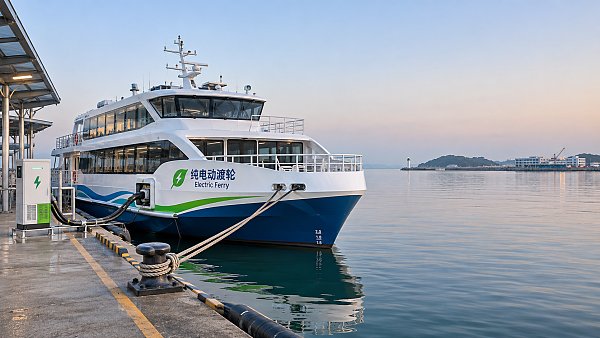
Electric marine propulsion technology makes the strongest case for ferries that repeat a known route, spend enough time alongside to recharge, and can obtain dependable shore power at an acceptable cost. Short crossings are a promising starting point, but distance alone does not settle the decision: a vessel with a short, high-power crossing and a tight turnaround may present a harder charging problem than one sailing farther at modest speed.
For a technical evaluator, the first choice is whether the service can operate reliably on batteries throughout its required schedule, including adverse conditions and disruption. If charging opportunities or onboard energy storage cannot support that duty, a hybrid system may capture some benefits while retaining an onboard energy source. The answer depends on the vessel and the terminals being assessed as one operating system.
Start with the timetable and the energy balance
A ferry’s daily energy demand is built from more than propulsion during a typical crossing. The assessment should cover maneuvering, hotel and auxiliary loads, loading and unloading periods, and any energy used while waiting for a berth. Weather, currents, passenger or vehicle loading, speed restrictions, and seasonal service patterns can all change the demand on a given sailing.
Construct an energy profile for each relevant leg and operating state. Use measured vessel data where available, supported by a propulsion and auxiliary load model for a new design or a materially different operating profile. A single average across the day can conceal the leg that sets the battery requirement: an exposed return crossing, for example, may demand more energy than the outward trip.
The useful question is how much energy must remain available between dependable charging opportunities. That interval may be one crossing, a round trip, or several sailings if only one terminal has charging equipment. Include the energy needed for expected delays, a missed charge, and the service’s required contingency or reserve. Reserve assumptions should reflect the route, emergency arrangements, approval requirements, and operator’s risk assessment.
Battery capacity should then be assessed at the point in its service life when it is expected to have less usable capacity, rather than only when new. The calculation also needs to account for operational state-of-charge limits and conversion losses. A battery that appears sufficient on a nameplate comparison may have too little usable energy to support the timetable after these allowances.
As an illustrative calculation, suppose a modeled crossing and its associated auxiliary loads require 1 MWh under a chosen operating condition. If charging is available only after the return leg, the ferry must cover both legs, their potentially different demands, and the required reserve before the next reliable charge. That does not imply a 2 MWh installed battery is sufficient: usable capacity limits, aging, losses, and any delay allowance must also be included.
Can the terminal replace the energy in time?
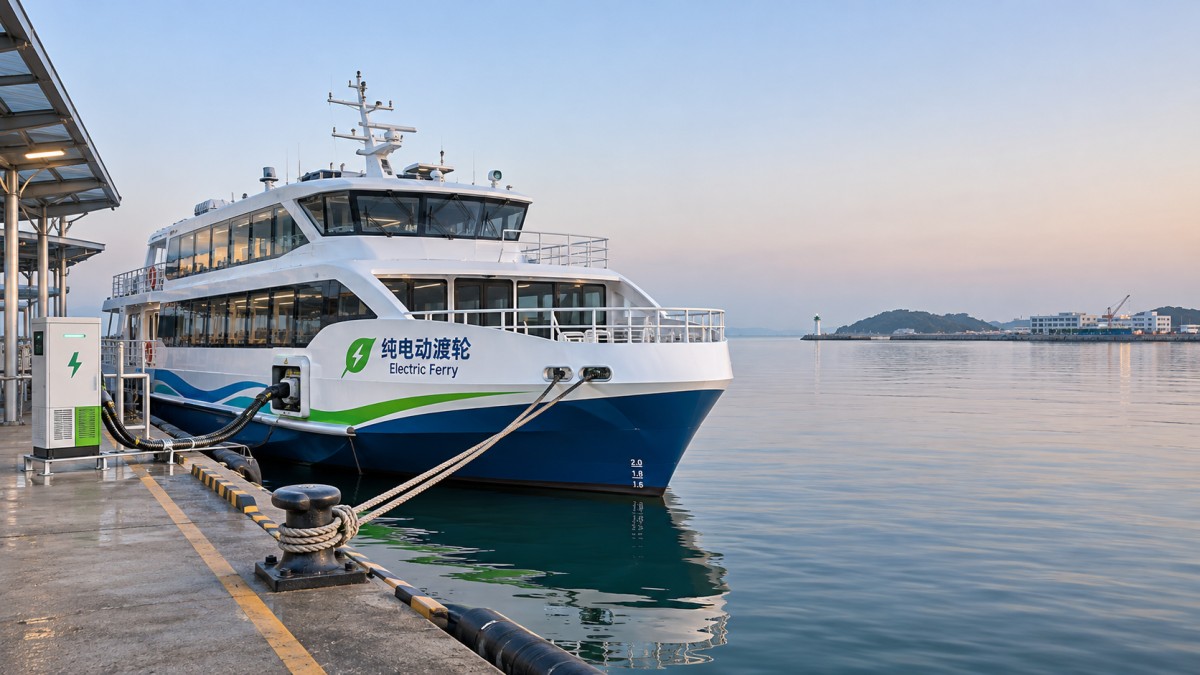
Frequent port calls help only when a ferry can connect, receive power, and disconnect within the working timetable. Nominal time alongside is not automatically charging time. Mooring, passenger movements, vehicle loading, connection checks, and operational safety procedures can reduce the window available for energy transfer.
For an initial screen, divide the energy that must be delivered during a stop by the effective charging time. The result is an average charging power requirement. For example, replacing 1 MWh in 20 minutes of effective charging requires an average of 3 MW delivered over that interval. Grid-side demand will be higher once charging losses are included. This simple calculation does not establish the required charger rating: power limits, battery temperature, state of charge, and the charging profile may prevent the system from sustaining that average.
The terminal study should therefore model the charging curve against the actual sequence of arrivals and departures. It should also examine the highest expected charging demand across vessels sharing the site. Two ferries arriving close together may require more grid capacity, managed charging, terminal energy storage, changes to the timetable, or some combination of those measures.
A grid connection that can supply the necessary energy over a day may still be unable to deliver it at the required power during short peaks. Evaluators need a site-specific understanding of connection capacity, upgrade scope, delivery schedule, electricity tariffs, and any limits imposed by other terminal loads. A feasible vessel design can become a poor project if a substation upgrade arrives after the planned service date or if peak demand charges dominate operating costs.
Charging availability matters as much as capacity. Test what happens when a connector is unavailable, a ferry arrives late, or a grid interruption prevents one planned charge. Depending on the route and timetable, the answer may involve redundant equipment, a second charging terminal, spare energy capacity, a substitute vessel, or an amended service plan. Each option carries a cost that belongs in the comparison.
Choose the propulsion architecture around service continuity
Fully electric propulsion is most attractive when the energy balance remains robust across demanding operating conditions and the terminals can recharge the vessel without compromising the schedule. It can also be compelling where overnight charging covers a substantial part of the duty and daytime top-ups are manageable. The evaluation should still account for shore-side equipment, maintenance, battery replacement, and how the service recovers from a failed charge.
A hybrid configuration deserves closer examination when some sailings exceed practical battery range, charging cannot be guaranteed at every required call, or the service needs flexibility during disruption. The onboard generator or other energy source can cover part of the duty or provide contingency, while batteries supply propulsion and auxiliary loads for selected periods. The benefit depends on how the vessel is operated: a hybrid that rarely charges from shore or runs its generator inefficiently may deliver less fuel and emissions reduction than its architecture suggests.
The table below provides a first screen, not a substitute for a route-specific model.
Neither architecture removes the need to establish failure cases. For a hybrid, assess how much propulsion and auxiliary capability remains when a generator, battery section, converter, or cooling system is unavailable. For a fully electric vessel, examine the same question for its electrical distribution, battery sections, and charging arrangements. The acceptable response depends on the vessel’s service, applicable rules, and operating plan.
Check what the battery changes on the vessel
Battery selection affects more than energy capacity. The installation must provide sufficient power for acceleration, maneuvering, sustained propulsion, and any required degraded operating mode. High power demands can set equipment requirements even when total crossing energy appears manageable.
Weight and volume influence payload, stability, trim, and the space available for passengers, vehicles, machinery, and maintenance access. On a retrofit, the existing hull and electrical arrangement may constrain placement more severely than the energy calculation suggests. Adding storage can also change the vessel’s energy demand, so the naval architecture and propulsion model should be revised together rather than treated as separate checks.
Thermal management and fire protection need attention early in the design. Battery compartments, detection, ventilation, isolation, emergency response, and access arrangements should be developed with the vessel’s classification society and relevant authorities for the intended service. Applicable requirements depend on the vessel, jurisdiction, and design; approval should not be assumed from a component certificate alone.
Battery life is another operating constraint. Cycling, temperature, charging power, and time spent at particular states of charge can affect degradation. The evaluator should request a life model tied to the proposed duty and understand its assumptions, performance guarantees, monitoring requirements, and replacement triggers. A timetable that works only with a new battery leaves little room for aging or disruption.
Compare complete service costs, not just vessel energy costs
A credible economic comparison uses the same service output and operating assumptions for each option. Alongside vessel construction or conversion, include terminal electrical works, charging equipment, connection charges, any grid reinforcement, maintenance, training, battery replacement, and the cost of planned outages. For a hybrid, include fuel, generator maintenance, and the expected operating split between shore electricity and onboard generation.
Electricity cost should reflect when and how quickly the ferry charges, not simply a single energy price. Demand-related charges and network tariffs can materially alter the result where vessels draw high power for short periods. Conversely, a timetable that permits lower-power charging for longer periods may reduce infrastructure or tariff exposure, provided it still meets the service requirement.
Run sensitivities around the assumptions most likely to change the decision: electricity and fuel prices, battery life, grid upgrade cost, charger availability, and annual sailing hours. A design that wins only under one favorable price or utilization assumption deserves closer scrutiny. The same applies if the comparison omits a standby vessel or schedule adjustment needed to maintain service.
Emissions should be compared on a defined basis. A battery-electric ferry has no exhaust emissions from onboard propulsion during battery operation, while the emissions associated with its electricity depend on how that electricity is supplied and accounted for. A hybrid’s outcome depends on both its electricity and fuel use. If procurement requires a lifecycle comparison, the system boundary and assumptions for equipment manufacture and replacement should be consistent across the options.
Turn the first screen into a decision
Before committing to a propulsion configuration, bring the operator, vessel designer, terminal owner, electricity provider, and approval bodies into the same feasibility process. A useful next step is to test a small set of complete scenarios: fully electric with the proposed charging schedule, fully electric with a revised schedule or terminal arrangement, and a hybrid configured for the same service.
For each scenario, the decision record should show the demanding sailing or sequence, usable battery capacity at the selected life point, required charging power and effective connection time, reserve assumptions, and response to a missed charge. It should also identify the infrastructure work and cost assumptions on which the schedule depends.
If the electric option meets those conditions with a credible service recovery plan and competitive whole-service cost, it is a sound candidate for detailed design. If it depends on an impractical charging window, unavailable grid capacity, or battery space the vessel cannot accommodate, the hybrid comparison provides a clearer basis for deciding how much shore electricity the service can use reliably.
Recommended News
 Nov 23, 2026Can an AI route optimization platform handle cross-border truck restrictions in Europe?AI route optimization platform Europe: Discover how to assess cross-border truck restrictions, validate compliant routes, and avoid costly routing errors.
 Nov 21, 2026How to assess carrier integration in an intermodal transportation platformEvaluate an intermodal transportation platform with a practical guide to carrier coverage, event accuracy, integration failures, security and acceptance testing.
 Nov 20, 2026How to identify which railway safety standards apply to a projectRailway safety standards guide: Learn how to identify applicable requirements, map interfaces and build a defensible compliance baseline for your project.
 Nov 19, 2026How to evaluate motion control application references for a new projectEvaluate engineering application references for motion control with confidence. Compare load cycles, safety, integration, and evidence to reduce project risk.
 Nov 18, 2026When does electric marine propulsion make sense for ferries?Electric marine propulsion technology can transform ferry operations. Explore when battery-electric or hybrid systems make sense for your routes, charging access, and costs.
 Nov 17, 2026How much does it cost to buy an ocean-going vessel?Ocean going vessel cost ranges from a few million to hundreds of millions of dollars. Explore purchase prices, hidden costs, and key factors before you buy.
 Nov 16, 2026How to verify solution provider references before signing a contractVerify solution provider references before signing. Learn what to ask, which evidence to check, and how to turn findings into stronger contract terms.
 Nov 14, 2026How does automatic train control affect metro train headways?Discover how automatic train control for metro systems can reduce headways, improve service consistency and support capacity planning without compromising safety.
 Nov 13, 2026How to assess the financial return on rail infrastructure investmentAssess rail infrastructure investment with confidence. Explore lifecycle costs, NPV, IRR and risk scenarios to make better-informed funding decisions.
 Nov 12, 2026How to assess an ocean vessel technology provider's integration capabilitiesAssess an ocean vessel technology provider with a practical guide to interfaces, cybersecurity, failure testing, and lifecycle support. Make a confident choice.
 Nov 10, 2026When is external supplier evaluation support worth the cost?Discover when supplier evaluation support is worth the cost, how to estimate its return, and where independent expertise can reduce sourcing risks.
 Nov 09, 2026How can evaluation support help component suppliers prepare for audits?Supplier evaluation support for component suppliers helps uncover audit gaps, strengthen traceability, and build a clear, risk-based preparation plan.
 Nov 07, 2026How smart intermodal transportation reduces transfer delaysDiscover how smart intermodal transportation reduces transfer delays through real-time coordination, cargo-ready forecasts, and faster decisions.
 Nov 06, 2026How to evaluate AI route optimization suppliers in North AmericaAI route optimization supplier North America: discover how to compare providers, validate savings, assess security and choose a solution that fits your operations.
 Nov 04, 2026Can LTE-M track rail assets in areas with limited coverage?LTE-M rail transit for asset tracking can bridge coverage gaps with offline data storage. Discover its limits and how to assess your routes.
 Nov 01, 2026When is rail freight cheaper than maritime shipping?Compare rail and maritime cost to discover when rail freight can save money on inland routes, inventory and delays. Learn how to assess the full door-to-door cost.
 Oct 31, 2026How an AI route optimization dashboard handles traffic delaysDiscover how an AI route optimization dashboard responds to traffic delays, compares feasible routes, updates ETAs, and helps operators make informed decisions.
 Oct 29, 2026How to assess an automatic train control manufacturer for retrofitsAssess an automatic train control manufacturer for your retrofit. Learn how to verify compatibility, safety assurance, migration plans, and long-term support before choosing a supplier.
 Oct 28, 2026Does technical selection support in Southeast Asia cover local codes?Explore technical selection support Southeast Asia projects need to address local codes, assess compliance evidence, and map approval pathways. Learn what to ask before procurement.
 Oct 26, 2026How a product information platform keeps product data consistentDiscover how a product information platform keeps data consistent with clear ownership, validation, and approved updates. Learn what to check before choosing a solution.
 Oct 23, 2026When is renting heavy mining equipment cheaper than buying?Renting heavy industry equipment for mining? Discover when it costs less than buying, compare hidden fees and break-even points, and make a smarter fleet investment.
 Oct 21, 2026Can absolute safety monitoring eliminate all operational risk?Can absolute safety monitoring eliminate all risk? Discover its limits, hidden failure points, and practical safeguards to strengthen protection and make smarter safety decisions.
 Oct 19, 2026How to vet a European railway safety technology supplier’s track recordSeeking a railway safety technology supplier Europe can trust? Learn how to verify project references, safety credentials, and lifecycle support to build a defensible shortlist.
 Oct 15, 2026How to size train traction systems for frequent-stop rail serviceSize train traction systems for frequent-stop rail service with practical guidance on power, adhesion, thermal loads, and braking. Learn how to meet timetables without costly oversizing.