Search News
Industry Portal
Popular Tags
How smart intermodal transportation reduces transfer delays

Author
Time
Click Count
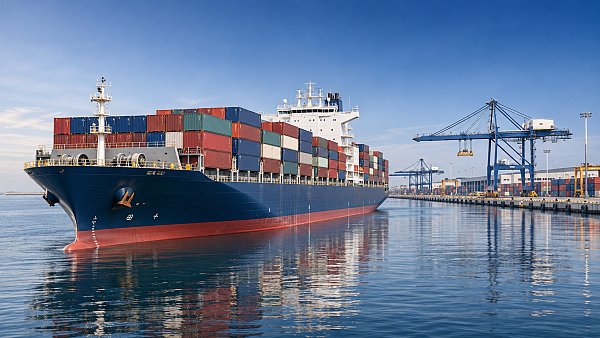
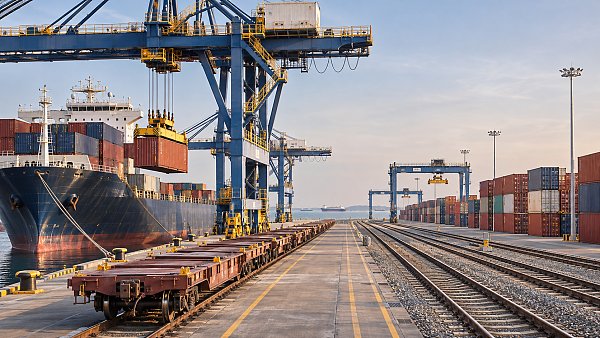
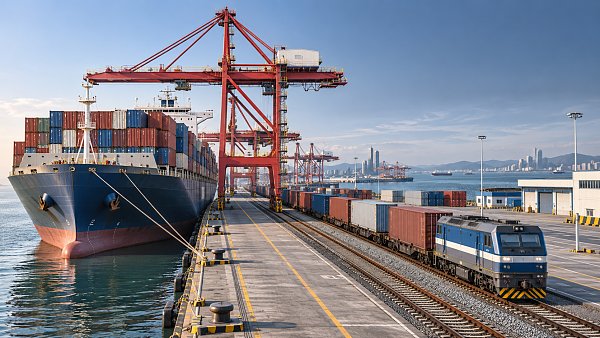
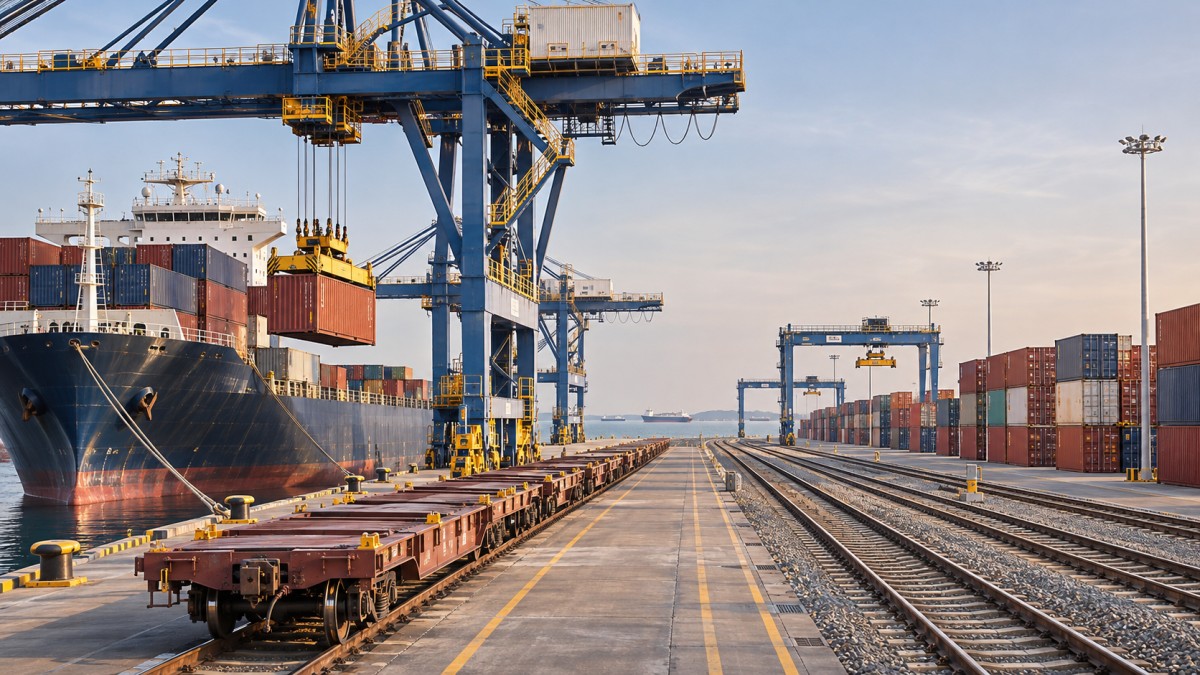
Smart intermodal transportation reduces transfer delays by matching the physical movement of cargo with reliable information about when it will be ready for the next mode. At a port-to-rail terminal, that means connecting vessel arrival forecasts, container discharge plans, terminal equipment availability, clearance status, and train departure windows early enough to change the plan when conditions shift.
The biggest improvement often comes from exposing a constraint before cargo reaches it. A container discharged on time can still miss its train because it is buried in a stack, held for inspection, or assigned to a train whose loading sequence has already closed. A useful digital coordination system makes those separate conditions visible against the same transfer plan, so that an arrival update leads to an operational decision rather than another status notification.
Track the transfer as a sequence of handoffs
A ship-to-rail movement is best represented as a chain of events: vessel berthing, container discharge, terminal transfer, storage, release, rail loading, and train departure. Each event has a planned time, an actual time once completed, and an accountable source. The difference between two events reveals where cargo waited; the reason for that wait reveals whether a schedule change would have helped.
For example, the interval between discharge and rail loading includes travel to the stack, storage, retrieval, and any clearance hold. Treating the entire interval as crane delay obscures the cause. A container available in the yard but inaccessible beneath other units calls for a different response from one that cannot legally be released. Similarly, a train that leaves late is not necessarily the source of a missed connection if cargo was unavailable before its loading cutoff.
Event definitions need to be precise. “Vessel arrived” could describe arrival at a pilot station, anchorage, or berth; each implies a different remaining time before discharge. “Container available” should distinguish physical availability from documentary release and rail eligibility. Without those distinctions, shared dashboards can make a transfer look ready when the next operation cannot actually begin.
Coordinate arrival predictions with usable capacity
An estimated arrival time is only valuable when it is connected to a resource decision. A revised vessel forecast should be compared with berth availability, the planned crane sequence, the location of rail-bound containers in the vessel stow, and the receiving terminal's rail-loading capacity. A ship arriving earlier does not automatically make its containers available earlier if the berth is occupied or the relevant bays are discharged late.
The same applies to a train slot. A departure time alone says little about whether a connection is feasible. The working window includes the time needed to position wagons, load containers, complete required checks, and release the train. Once loading has closed, cargo that arrives at the terminal before departure can still miss the service.
Useful coordination therefore compares a predicted cargo-ready time with the latest practical loading time, not merely a vessel ETA with a train departure. Cargo-ready time should include discharge, terminal movement, expected retrieval, and release conditions. The gap between those times is the connection margin. A shrinking margin is a prompt to examine alternatives while there is still time to act.
Use ranges when forecasts are uncertain
A single predicted time can conceal a fragile connection. If a vessel arrival estimate has a wide uncertainty range, planning every downstream activity around its most likely value can create queues or idle equipment. Sharing an expected window, the time of the latest update, and the source of the forecast makes the uncertainty actionable.
Early in the voyage, a broad arrival window may be sufficient for provisional rail capacity. Closer to port, berth confirmation and a more stable discharge sequence support firmer wagon and equipment assignments. An old forecast should not silently retain the same authority as a recent berth confirmation. When an update expires or its source is unavailable, the interface should expose that condition instead of presenting a stale time as current.
Make container-level data usable across systems
A port call or train service can appear on schedule while individual containers miss the connection. Container identifiers are therefore needed to link the vessel manifest, terminal inventory, release records, and rail booking. Each linked record should show the intended onward service, relevant handling restrictions, and the current physical location or location status.
That linkage is easily disrupted by mismatched identifiers, late booking changes, duplicate messages, or conflicting status updates. An integration layer should validate the identifiers, retain the source and timestamp of each event, and flag records that cannot be matched. Replacing a disputed value without preserving its history makes it harder to reconstruct why a container was routed to the wrong stack or excluded from a loading list.
Data exchange also needs agreed ownership. A terminal system can report a container's yard position, while a carrier or its agent supplies voyage information and a rail system reports train readiness. The shared view should make those sources visible rather than implying that every participant controls every status. Corrections must propagate to the parties using the plan, including when a train assignment is cancelled or a container is removed from a booking.
Integration does not require every participant to replace an existing operating system. Structured messages and application interfaces can exchange selected events between systems, provided that formats, update frequency, exception handling, and responsibility for corrections are agreed. A feed that delivers frequent but incomplete updates can be less useful than a dependable event sent at the point when a decision is still possible.
Turn an exception into a specific action
An alert should identify the affected cargo, the threatened connection, the reason, and the latest useful response time. “Vessel delayed” is too broad to direct a terminal intervention. “Rail-bound container predicted ready after loading cutoff” narrows the problem enough to examine a revised loading sequence, an alternative train, or a change in terminal handling.
Those choices have different consequences. Rehandling a container to make it accessible can protect a connection, but consumes equipment capacity and may interfere with other moves. Holding a train can preserve one transfer while disrupting a rail path or a later connection. Assigning the cargo to the next service avoids that disruption but requires space, booking confirmation, and a workable storage plan. A decision record should capture the selected action and its owner so that the yard, rail, and vessel plans do not diverge.
Rules should also account for the state of the operation. Before discharge, a revised sequence might be feasible if vessel stability, crane work, and the stow plan permit it. After a container is stacked, the relevant question becomes retrieval effort and equipment availability. Once a train has departed, the task changes to rebooking and updating onward commitments; continuing to display the original connection as active only creates noise.
Align the digital plan with terminal constraints
Yard capacity is not a single number. A terminal can have vacant ground slots while the appropriate rail-bound container remains difficult to retrieve. Stack depth, container weight, equipment reach, segregation requirements, and the order in which trains are loaded all influence whether a planned move is executable. A digital plan that ignores those constraints may promise a connection that the yard cannot deliver.
Pre-positioning containers for rail loading reduces retrieval work when the onward service and loading sequence are sufficiently stable. If train assignments change frequently, excessive pre-positioning can generate extra moves and consume space needed for discharge. The operating rule should therefore specify when an assignment becomes firm enough to justify moving cargo into a rail-ready position, and how late changes are handled.
Equipment availability deserves the same treatment. A planned move is not secured simply because a crane exists on the terminal map. Maintenance, competing vessel work, shift coverage, and travel between work areas affect available capacity. Where a shared equipment pool serves both quay and rail operations, dispatch decisions need to reflect the consequences for both queues.
Measure the delay that the system can actually influence
Average vessel turnaround or average train punctuality can hide missed transfers. A more useful view follows each booked connection from the first relevant forecast through cargo release and departure. It separates missed connections caused by late physical availability, clearance holds, terminal handling, unavailable rail capacity, and changes to the onward booking. Where several causes overlap, the record should preserve that overlap instead of forcing an unsupported single cause.
Compare planned and actual times at each handoff, but also record when the information became available. A delay discovered after the loading cutoff is different from a delay predicted in time to change the plan. Tracking forecast revisions and responses shows whether the system delivered actionable warning or merely documented an outcome.
Use a consistent population when comparing results. A period with different vessel sizes, cargo mixes, train frequencies, or inspection activity can change transfer times without any change in coordination quality. For a meaningful assessment, compare similar movements and examine individual exceptions alongside aggregate figures. Include extra yard moves and disrupted train services in the review so that a faster connection is not achieved by shifting delay elsewhere.
Introduce coordination in a controlled operating area
A practical starting point is one repeatable transfer corridor with identifiable vessel calls, rail services, and container movements. Map the events already recorded, compare their definitions, and identify the handoff where late information most often prevents a useful decision. Establish a baseline from existing records before changing dispatch rules; missing timestamps are themselves a limitation that should be recorded.
Run the shared prediction alongside the existing plan first. Compare its cargo-ready estimates with actual release and loading times, and investigate false alerts as well as missed warnings. Once the event feed is dependable, introduce a small number of agreed responses, such as reserving provisional rail capacity or escalating a container whose projected ready time crosses the loading cutoff.
Operational control remains with the systems and people responsible for safe movement. A prediction does not authorize a train movement, override an interlocking, release held cargo, or replace a terminal equipment control. If a feed fails, the fallback procedure should identify the last trusted information, the alternative communication channel, and who confirms the revised plan. The test is whether the transfer can still be coordinated without silently acting on outdated data.
Recommended News
 Nov 23, 2026Can an AI route optimization platform handle cross-border truck restrictions in Europe?AI route optimization platform Europe: Discover how to assess cross-border truck restrictions, validate compliant routes, and avoid costly routing errors.
 Nov 21, 2026How to assess carrier integration in an intermodal transportation platformEvaluate an intermodal transportation platform with a practical guide to carrier coverage, event accuracy, integration failures, security and acceptance testing.
 Nov 20, 2026How to identify which railway safety standards apply to a projectRailway safety standards guide: Learn how to identify applicable requirements, map interfaces and build a defensible compliance baseline for your project.
 Nov 19, 2026How to evaluate motion control application references for a new projectEvaluate engineering application references for motion control with confidence. Compare load cycles, safety, integration, and evidence to reduce project risk.
 Nov 18, 2026When does electric marine propulsion make sense for ferries?Electric marine propulsion technology can transform ferry operations. Explore when battery-electric or hybrid systems make sense for your routes, charging access, and costs.
 Nov 17, 2026How much does it cost to buy an ocean-going vessel?Ocean going vessel cost ranges from a few million to hundreds of millions of dollars. Explore purchase prices, hidden costs, and key factors before you buy.
 Nov 16, 2026How to verify solution provider references before signing a contractVerify solution provider references before signing. Learn what to ask, which evidence to check, and how to turn findings into stronger contract terms.
 Nov 14, 2026How does automatic train control affect metro train headways?Discover how automatic train control for metro systems can reduce headways, improve service consistency and support capacity planning without compromising safety.
 Nov 13, 2026How to assess the financial return on rail infrastructure investmentAssess rail infrastructure investment with confidence. Explore lifecycle costs, NPV, IRR and risk scenarios to make better-informed funding decisions.
 Nov 12, 2026How to assess an ocean vessel technology provider's integration capabilitiesAssess an ocean vessel technology provider with a practical guide to interfaces, cybersecurity, failure testing, and lifecycle support. Make a confident choice.
 Nov 10, 2026When is external supplier evaluation support worth the cost?Discover when supplier evaluation support is worth the cost, how to estimate its return, and where independent expertise can reduce sourcing risks.
 Nov 09, 2026How can evaluation support help component suppliers prepare for audits?Supplier evaluation support for component suppliers helps uncover audit gaps, strengthen traceability, and build a clear, risk-based preparation plan.
 Nov 07, 2026How smart intermodal transportation reduces transfer delaysDiscover how smart intermodal transportation reduces transfer delays through real-time coordination, cargo-ready forecasts, and faster decisions.
 Nov 06, 2026How to evaluate AI route optimization suppliers in North AmericaAI route optimization supplier North America: discover how to compare providers, validate savings, assess security and choose a solution that fits your operations.
 Nov 04, 2026Can LTE-M track rail assets in areas with limited coverage?LTE-M rail transit for asset tracking can bridge coverage gaps with offline data storage. Discover its limits and how to assess your routes.
 Nov 01, 2026When is rail freight cheaper than maritime shipping?Compare rail and maritime cost to discover when rail freight can save money on inland routes, inventory and delays. Learn how to assess the full door-to-door cost.
 Oct 31, 2026How an AI route optimization dashboard handles traffic delaysDiscover how an AI route optimization dashboard responds to traffic delays, compares feasible routes, updates ETAs, and helps operators make informed decisions.
 Oct 29, 2026How to assess an automatic train control manufacturer for retrofitsAssess an automatic train control manufacturer for your retrofit. Learn how to verify compatibility, safety assurance, migration plans, and long-term support before choosing a supplier.
 Oct 28, 2026Does technical selection support in Southeast Asia cover local codes?Explore technical selection support Southeast Asia projects need to address local codes, assess compliance evidence, and map approval pathways. Learn what to ask before procurement.
 Oct 26, 2026How a product information platform keeps product data consistentDiscover how a product information platform keeps data consistent with clear ownership, validation, and approved updates. Learn what to check before choosing a solution.
 Oct 23, 2026When is renting heavy mining equipment cheaper than buying?Renting heavy industry equipment for mining? Discover when it costs less than buying, compare hidden fees and break-even points, and make a smarter fleet investment.
 Oct 21, 2026Can absolute safety monitoring eliminate all operational risk?Can absolute safety monitoring eliminate all risk? Discover its limits, hidden failure points, and practical safeguards to strengthen protection and make smarter safety decisions.
 Oct 19, 2026How to vet a European railway safety technology supplier’s track recordSeeking a railway safety technology supplier Europe can trust? Learn how to verify project references, safety credentials, and lifecycle support to build a defensible shortlist.
 Oct 15, 2026How to size train traction systems for frequent-stop rail serviceSize train traction systems for frequent-stop rail service with practical guidance on power, adhesion, thermal loads, and braking. Learn how to meet timetables without costly oversizing.