Search News
Industry Portal
Popular Tags
How to assess the financial return on rail infrastructure investment
Author
Time
Click Count
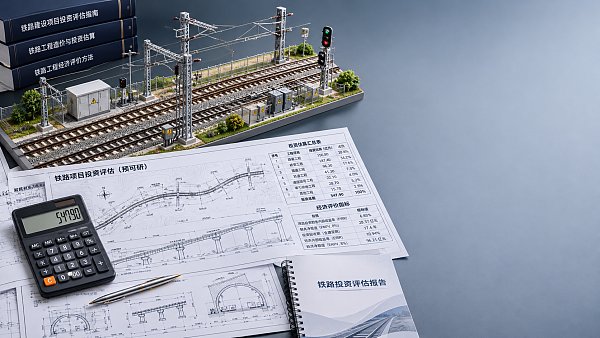
Assessing the financial return on rail infrastructure investment requires more than comparing construction costs with projected revenue. Financial approvers must weigh lifecycle expenditure, operating savings, demand forecasts, financing costs, and risks against measurable benefits over the asset’s useful life. This guide outlines how to evaluate cash flows, apply metrics such as net present value and internal rate of return, and test assumptions under different scenarios. It also considers how signalling, traction power, and braking system choices can influence long-term costs and asset performance.
Start with the decision, not the headline return
A new railway, a capacity upgrade and a signalling replacement may all compete for capital, but they do not create value in the same way. A new line may depend heavily on passenger or freight demand. A signalling upgrade may be justified by avoided renewal costs, improved reliability or the ability to operate more services. A safety-driven intervention may be necessary even when its direct commercial return is limited.
Before reviewing the model, establish whose return is being measured. The infrastructure owner, train operator, public authority and lender face different cash flows. An investment can reduce an operator’s costs without increasing the infrastructure owner’s income unless access charges or a contract transfer some of that benefit. Likewise, a project with a strong economic case for society is not necessarily able to repay debt from its own revenues.
The investment paper should therefore state the decision boundary, the evaluation period and the funding entity. It should also identify any mandatory safety, legal or asset-condition requirements. Those requirements shape the available choices; they should not be treated as optional benefits that can simply be traded away for a higher return.
Build the comparison around a credible baseline
The relevant question is not whether the proposed railway performs well in isolation. It is whether it performs better than the most credible alternative without the project. That alternative is rarely “do nothing” in the literal sense. Existing assets still require inspections, maintenance, renewals and, in some cases, operating restrictions.
For a control-system renewal, the baseline might include keeping the existing equipment in service through targeted repairs and eventual replacement. The investment option might involve earlier migration to a new system. Only the differences between those paths belong in the incremental return calculation: additional installation spending, avoided repairs, changed operating costs and any credible revenue effects.
Compare alternatives over the same period and to a consistent service level. If one option leaves major renewal work outside the model horizon while another includes it, the cheaper-looking option may simply have deferred costs. Where assets retain useful life beyond the appraisal period, include a defensible residual value and explain how it was calculated.
Map cash flows across the full asset life
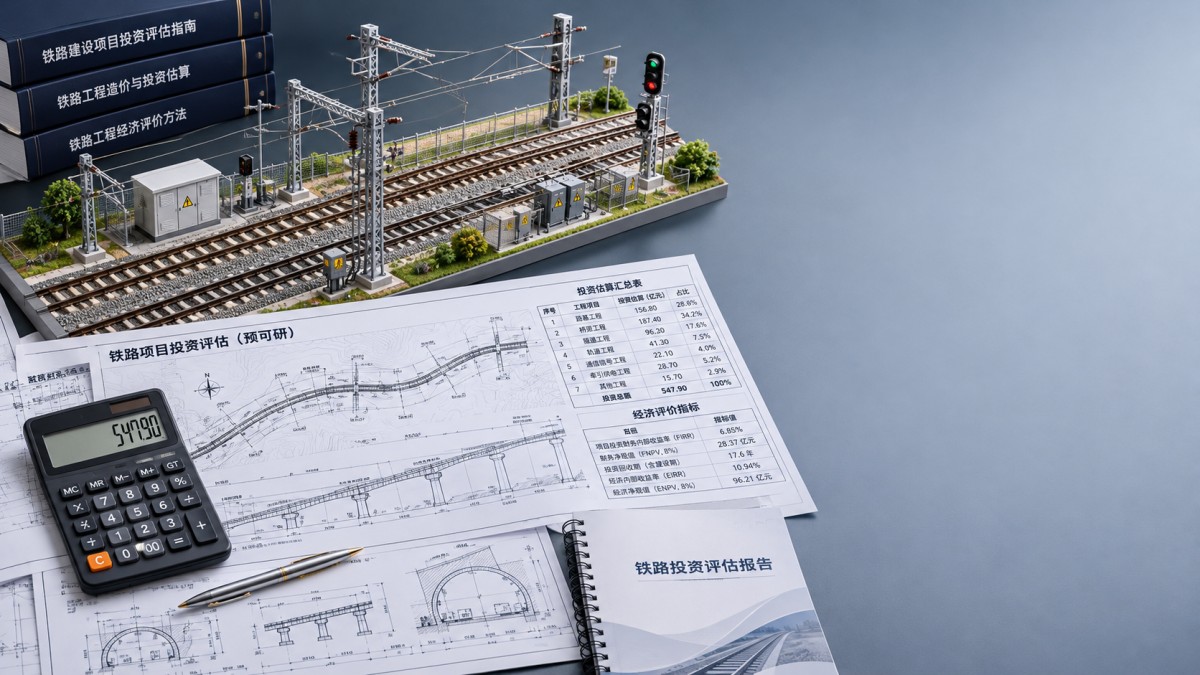
The construction budget is only the opening entry. A decision-grade model should show when money is spent, who pays it and which costs change between options. For rail projects, the items most likely to be missed are often found at the interfaces between engineering packages and operations.
- Development and delivery: design, surveys, land, utility diversions, approvals, testing, commissioning and project management.
- Implementation effects: possessions, temporary operating arrangements, service disruption, staff training and migration from legacy systems.
- Operations and maintenance: energy, inspections, software support, spare parts, specialist labour, access equipment and planned outages.
- Renewal and exit: component replacement, obsolescence management, decommissioning and residual asset value.
- Revenue and savings: incremental fares or freight income, access charges, avoided maintenance and other benefits that actually accrue to the entity being evaluated.
Separate base estimates from contingency and show the evidence behind both. Supplier quotations can support initial costs, but they may not cover infrastructure modifications, integration, future software releases or the operator’s internal workload. Ask engineering and operations teams to reconcile the scope with procurement and finance before treating a quotation as a lifecycle estimate.
Timing is equally important. A delay can increase construction expenditure, postpone revenue and extend the cost of operating legacy equipment. In a constrained network, work may have to be scheduled around passenger or freight services, so an apparently minor change in the possession plan can alter the cash-flow profile.
Use return metrics that answer different questions
Net present value (NPV) expresses the value today of future incremental cash flows after discounting. In a financial appraisal, it is calculated by discounting the project’s incremental inflows and outflows and summing them over the evaluation period. A positive NPV at the chosen hurdle rate indicates that the modeled return exceeds that rate; it does not establish that the assumptions are reliable.
Internal rate of return (IRR) is the discount rate at which NPV equals zero. It can be useful when comparing a proposal with a required rate of return, but it should not replace NPV. Projects with different scales, lives or cash-flow timing can rank differently under the two measures. Unusual cash-flow patterns can also produce multiple IRRs or no meaningful IRR.
Payback period shows how long it takes for cumulative cash inflows to recover the initial outlay. It is an accessible liquidity indicator, but conventional payback ignores cash flows after recovery and does not account for the time value of money. Discounted payback addresses the latter issue, not the former.
Choose a discount rate consistent with the cash flows. Use nominal rates with cash flows that include inflation, or real rates with cash flows expressed in constant prices. If evaluating project cash flows before financing, avoid deducting interest and principal again while also using a discount rate that reflects the cost of capital. A separate equity model can include debt drawdowns and repayments to assess the return to equity investors.
Keep financial and economic benefits separate
Travel-time savings, reduced road congestion, emissions changes and improved access may be central to a public investment decision. They are not automatically cash receipts. Show them in a separate economic appraisal, using the methodology and values applicable to the project’s jurisdiction, rather than adding them to fare income as if they were revenue.
Avoid counting the same effect twice. For example, if a reliability improvement attracts additional passengers, the associated incremental revenue may already reflect part of the commercial effect. The economic appraisal needs its own consistent treatment of passenger benefits, fares and operating costs. Grants and subsidies also need clear treatment: they may improve the recipient’s financial position without representing a net benefit to the wider public sector.
For an approval committee, the most useful presentation often contains both views: whether the project is financially fundable, and whether its wider benefits justify the use of public resources. A good result in one view should not conceal a shortfall in the other.
Connect engineering choices to measurable cash flows
Equipment selection matters financially when it changes the cost, timing or reliability of service delivery. The connection should be demonstrated, not assumed.
Signalling and control
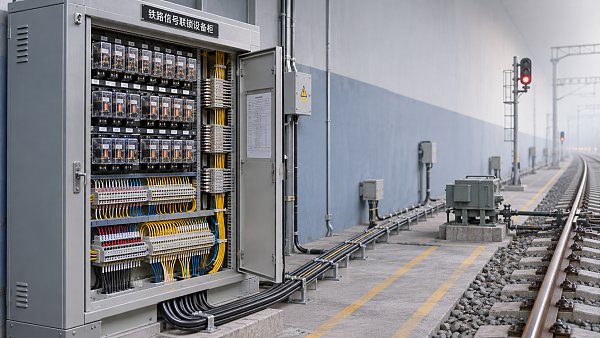
A modern signalling system may support more frequent services, but capacity gains depend on the timetable, stations, rolling stock, junctions and operating rules. Before including additional revenue, confirm that the rest of the network can use the capacity and that demand exists for the extra trains. Include integration, validation, training and transition arrangements in the cost estimate. For safety-related functions, verify the applicable safety integrity requirements against the project’s safety case rather than assuming a single rating applies to every component.
Traction power and pantographs
Power supply, overhead contact equipment and pantograph performance should be assessed as a system. A proposal that reduces wear or unplanned intervention may generate savings, but the model needs evidence about operating conditions, inspection intervals and replacement costs. Check whether additional train services require substations or other electrical upgrades; otherwise, expected capacity benefits may be overstated.
Braking and rolling-stock interfaces
Braking choices can affect maintenance intervals, component consumption and fleet availability. Regenerative braking may reduce purchased energy where vehicles, infrastructure and operating conditions allow energy to be recovered or used. It should not be valued as a guaranteed saving without a route-specific energy assessment. Compatibility testing and approval costs also belong in the comparison.
GTOT’s coverage of signalling, traction power and braking technologies can help frame the technical questions behind these assumptions. The investment model, however, should rely on project-specific engineering evidence, operating data and commercial terms.
Stress-test the assumptions that could change the decision
A single central forecast can hide a fragile investment case. Begin with sensitivity tests on construction cost, opening date, demand, energy prices, maintenance costs and renewal intervals. Then combine related risks into coherent scenarios. A delayed opening, for example, may coincide with higher financing costs and deferred revenue rather than occurring in isolation.
Demand deserves particular scrutiny. Distinguish between passenger numbers or freight volumes, revenue per user, service frequency and the capacity available to carry them. Ask whether forecasts account for competing routes, other transport modes and the time needed for users to change behaviour. Compare forecasts with relevant local operating evidence wherever it is available, and make the ramp-up period explicit.
A useful threshold test asks what must be true for NPV to reach zero: the minimum demand, maximum delivery cost or latest viable opening date. These break-even points give approvers something more actionable than a broad “high risk” label. They also reveal where additional design work or market research would have the greatest decision value.
Do not use an arbitrary increase in the discount rate as the sole treatment for every risk. Material risks should be identified in cash flows or scenarios where practicable, with ownership and mitigation recorded. Avoid adding the same risk allowance repeatedly through contingency, pessimistic forecasts and the discount rate.
Check fundability and delivery before approval
An attractive project NPV does not guarantee that funding will be available when invoices fall due. Review annual funding requirements, debt drawdown assumptions, repayment schedules, interest-rate exposure and any restrictions attached to grants. For debt-funded schemes, test whether projected cash available for debt service is sufficient under both the base case and a credible downside case.
Contract structure determines how much risk remains with the sponsor. Fixed-price provisions may reduce exposure to some cost increases, but exclusions, change mechanisms, interface responsibilities and contractor financial strength still matter. A warranty is valuable only if its coverage, duration and enforcement are understood. Similarly, a maintenance saving depends on who is contractually responsible for delivering it.
Before releasing major funding, request an integrated record of assumptions: the baseline, scope boundaries, cost estimate maturity, demand evidence, discount rate, risk allowances and sensitivity results. Assign an owner to each material benefit and agree how it will be measured after commissioning. If the decision depends on an unproven capacity gain or an unpriced system interface, resolve that uncertainty—or make the approval conditional on it—before treating the modeled return as a commitment.
Recommended News
 Nov 23, 2026Can an AI route optimization platform handle cross-border truck restrictions in Europe?AI route optimization platform Europe: Discover how to assess cross-border truck restrictions, validate compliant routes, and avoid costly routing errors.
 Nov 21, 2026How to assess carrier integration in an intermodal transportation platformEvaluate an intermodal transportation platform with a practical guide to carrier coverage, event accuracy, integration failures, security and acceptance testing.
 Nov 20, 2026How to identify which railway safety standards apply to a projectRailway safety standards guide: Learn how to identify applicable requirements, map interfaces and build a defensible compliance baseline for your project.
 Nov 19, 2026How to evaluate motion control application references for a new projectEvaluate engineering application references for motion control with confidence. Compare load cycles, safety, integration, and evidence to reduce project risk.
 Nov 18, 2026When does electric marine propulsion make sense for ferries?Electric marine propulsion technology can transform ferry operations. Explore when battery-electric or hybrid systems make sense for your routes, charging access, and costs.
 Nov 17, 2026How much does it cost to buy an ocean-going vessel?Ocean going vessel cost ranges from a few million to hundreds of millions of dollars. Explore purchase prices, hidden costs, and key factors before you buy.
 Nov 16, 2026How to verify solution provider references before signing a contractVerify solution provider references before signing. Learn what to ask, which evidence to check, and how to turn findings into stronger contract terms.
 Nov 14, 2026How does automatic train control affect metro train headways?Discover how automatic train control for metro systems can reduce headways, improve service consistency and support capacity planning without compromising safety.
 Nov 13, 2026How to assess the financial return on rail infrastructure investmentAssess rail infrastructure investment with confidence. Explore lifecycle costs, NPV, IRR and risk scenarios to make better-informed funding decisions.
 Nov 12, 2026How to assess an ocean vessel technology provider's integration capabilitiesAssess an ocean vessel technology provider with a practical guide to interfaces, cybersecurity, failure testing, and lifecycle support. Make a confident choice.
 Nov 10, 2026When is external supplier evaluation support worth the cost?Discover when supplier evaluation support is worth the cost, how to estimate its return, and where independent expertise can reduce sourcing risks.
 Nov 09, 2026How can evaluation support help component suppliers prepare for audits?Supplier evaluation support for component suppliers helps uncover audit gaps, strengthen traceability, and build a clear, risk-based preparation plan.
 Nov 07, 2026How smart intermodal transportation reduces transfer delaysDiscover how smart intermodal transportation reduces transfer delays through real-time coordination, cargo-ready forecasts, and faster decisions.
 Nov 06, 2026How to evaluate AI route optimization suppliers in North AmericaAI route optimization supplier North America: discover how to compare providers, validate savings, assess security and choose a solution that fits your operations.
 Nov 04, 2026Can LTE-M track rail assets in areas with limited coverage?LTE-M rail transit for asset tracking can bridge coverage gaps with offline data storage. Discover its limits and how to assess your routes.
 Nov 01, 2026When is rail freight cheaper than maritime shipping?Compare rail and maritime cost to discover when rail freight can save money on inland routes, inventory and delays. Learn how to assess the full door-to-door cost.
 Oct 31, 2026How an AI route optimization dashboard handles traffic delaysDiscover how an AI route optimization dashboard responds to traffic delays, compares feasible routes, updates ETAs, and helps operators make informed decisions.
 Oct 29, 2026How to assess an automatic train control manufacturer for retrofitsAssess an automatic train control manufacturer for your retrofit. Learn how to verify compatibility, safety assurance, migration plans, and long-term support before choosing a supplier.
 Oct 28, 2026Does technical selection support in Southeast Asia cover local codes?Explore technical selection support Southeast Asia projects need to address local codes, assess compliance evidence, and map approval pathways. Learn what to ask before procurement.
 Oct 26, 2026How a product information platform keeps product data consistentDiscover how a product information platform keeps data consistent with clear ownership, validation, and approved updates. Learn what to check before choosing a solution.
 Oct 23, 2026When is renting heavy mining equipment cheaper than buying?Renting heavy industry equipment for mining? Discover when it costs less than buying, compare hidden fees and break-even points, and make a smarter fleet investment.
 Oct 21, 2026Can absolute safety monitoring eliminate all operational risk?Can absolute safety monitoring eliminate all risk? Discover its limits, hidden failure points, and practical safeguards to strengthen protection and make smarter safety decisions.
 Oct 19, 2026How to vet a European railway safety technology supplier’s track recordSeeking a railway safety technology supplier Europe can trust? Learn how to verify project references, safety credentials, and lifecycle support to build a defensible shortlist.
 Oct 15, 2026How to size train traction systems for frequent-stop rail serviceSize train traction systems for frequent-stop rail service with practical guidance on power, adhesion, thermal loads, and braking. Learn how to meet timetables without costly oversizing.