Search News
Industry Portal
Popular Tags
How can evaluation support help component suppliers prepare for audits?

Author
Time
Click Count
Audit preparation becomes much more effective when a supplier can show how a specific component was made, inspected, released, and controlled after delivery. Supplier evaluation support for component suppliers helps build that picture before an auditor asks for it: it connects applicable requirements to working practices, tests whether records can be retrieved, and exposes gaps while there is still time to address them.
The result is not a guarantee of a successful audit. Its value is a clearer view of what the supplier can demonstrate, what still needs work, and which unresolved issues could affect product safety or delivery. For railway and maritime components, where a single part may sit within a larger safety or assurance case, that distinction matters.
Start with the audit scope, not a generic checklist
An evaluation is useful only if it reflects what the forthcoming audit will examine. A customer assessing a new source may focus on manufacturing capability and qualification. A surveillance audit may look more closely at changes, process stability, and previous corrective actions. An investigation after a field problem may concentrate on traceability and containment.
Before collecting evidence, define the products, sites, processes, and period covered. Include outsourced activities where they affect the component, such as special processing, calibration, inspection, or software development. Then identify the requirements that apply to that scope: customer specifications, drawings, contractual obligations, internal procedures, and any standards or approval conditions named in the agreement.
A requirements matrix makes this manageable. For each requirement, record its source and revision, the process that meets it, the evidence expected, and the person responsible. This prevents a common problem: presenting a well-organized quality manual that does not answer the auditor’s questions about the product being supplied.
For example, a pantograph supplier may need to demonstrate control over a specified material, inspection of a critical feature, and the status of a design change. A supplier of an electronic signalling component may need to connect hardware and software versions to verification results and release approvals. The evidence differs because the risks and contractual requirements differ.
Follow one component through the evidence
A practical evaluation follows a real order, batch, or serial number from receipt of materials through production and release. This reveals whether the records join up under normal working conditions, rather than merely existing in separate folders.

Choose a representative sample that reflects the audit scope. Where risk warrants it, include a component with a design change, an outsourced process, or a recorded nonconformance. The purpose is to see whether the supplier can make a coherent link between:
- The customer order, approved specification, drawing revision, and released configuration.
- Incoming material or purchased parts and the identification used in production.
- Manufacturing and inspection records, including relevant equipment or process status.
- Test results, acceptance decisions, concessions, and final release authorization.
- Delivery records and, where required, the destination of affected items.
Traceability should work in both directions. Starting with a delivered component, can the supplier identify the relevant material and process records? Starting with a suspect batch of material, can it identify the affected components and their disposition? The required level of detail depends on the component and agreement; the evaluation should test the level the supplier has committed to provide.
Pay attention to breaks between systems. A manufacturing record may use an internal batch number while a delivery certificate uses a customer part number. That is workable if the link is controlled and retrievable. It becomes an audit problem when the link exists only in an employee’s memory or an uncontrolled spreadsheet.
Check whether the evidence supports the claim
Having a test report is not the same as demonstrating that the supplied component meets its requirements. The report must be relevant to the product and configuration being assessed. An evaluation should compare the part identification and revision on the report with the released design, the test method and acceptance criteria, and the results recorded.
If a report covers a representative product rather than every delivered item, the supplier should be able to explain why it applies to the current configuration. If the design, material, manufacturing location, or process has changed, examine whether the existing evidence remains applicable and whether additional review or verification was required under the agreed controls.
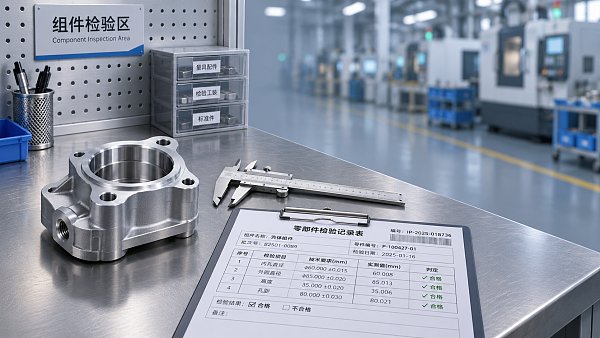
Inspection records also need context. A pass indication without an identifiable criterion may leave an auditor unable to judge what was accepted. Similarly, a measurement record is weaker if the instrument cannot be identified or its calibration status at the time of use cannot be established. The evaluation should trace a sample of measurements back to the relevant requirement and equipment records.
For safety-related components, review the assumptions that connect component evidence to the wider system. A supplier’s test may demonstrate performance under stated conditions, while the customer’s system-level assessment depends on installation, operating limits, interfaces, or maintenance practices. Those boundaries should be visible in the evidence package; a component report should not be presented as proof of the entire system’s safety.
Look beyond closed corrective actions
Auditors often examine how a supplier responds when controls fail. A corrective action record marked “closed” is only a starting point. Evaluation support should test whether the record explains the problem, the affected scope, the immediate containment, the cause, the action taken, and the basis for deciding that the action worked.
Consider a hypothetical brake component with repeated dimensional nonconformances. Sorting the current stock may protect the next shipment, but it does not explain why the process produced the defect. Re-training an operator may be appropriate in some circumstances, yet the review should also consider whether the work instruction, fixture, measurement method, or process setting contributed. The chosen action should follow the evidence about the cause.
Effectiveness checks need to match the problem. A completed training attendance sheet demonstrates that training occurred; it does not by itself demonstrate that the defect stopped recurring. Depending on the issue, a meaningful check might examine subsequent inspection results, process records, or a follow-up sample after the change has been in use.
Open actions deserve the same attention. For each significant issue, identify who owns it, what containment is in place, what remains to be done, and when progress will be reviewed. If the audit arrives before closure, a clear status and evidence of controlled risk are more useful than a premature closure supported by incomplete records.
Include changes and lower-tier suppliers in the review
Some of the most consequential audit gaps occur outside the final assembly area. A change in a sub-supplier, material source, production process, inspection method, or software version can affect the validity of existing approvals and records. The evaluation should follow the supplier’s change-control process from proposal through impact assessment, required approval, implementation, and updated documentation.
Check whether customer notification or approval was required by the relevant agreement and whether it occurred before the change was introduced. Also examine the transition: can the supplier distinguish stock made under the previous configuration from stock made under the new one? A change may be technically sound and still create a traceability problem if the cutover is poorly documented.
Lower-tier suppliers require attention where their work affects specified characteristics or safety-related functions. Evaluation support can review how they were selected, what requirements were passed down, how their performance is monitored, and how incoming evidence is checked. A certificate from a lower-tier supplier is useful only when it addresses the required material, process, or product and can be linked to the delivered item.
The depth of review should follow risk and contractual obligations. A routine consumable and a critical electronic assembly do not necessarily need the same evaluation. Where direct access to a lower-tier site is unavailable, the supplier may rely on other agreed controls, such as records review or inspection of incoming product; the limits of that approach should be clear.
Turn findings into an audit preparation plan
A finding list becomes useful when it separates evidence problems from control problems. A missing record may be recoverable from an authorized system. A record that was never created, or a process that was not performed as required, needs a different response. Recreating an unsupported record to make a file appear complete undermines the reliability of the entire package.
For each finding, record the requirement, the observed condition, the affected product or period, the potential consequence, and the evidence supporting the finding. Assign an owner and an action, then prioritize according to product and safety impact, audit scope, and the time needed to correct the issue. Where delivered product may be affected, the response may also require containment and communication through the established customer process.
Some gaps can be resolved before the audit; others require longer-term process changes. Keep the distinction visible. An action plan should show both immediate controls and the work needed to prevent recurrence, with a review of effectiveness where appropriate. Quality and safety personnel should agree on how unresolved issues are assessed, especially where a documentation gap could conceal a product or system risk.
A focused mock audit can then test readiness. Ask the people who perform the work to retrieve records and explain the process using an actual example. The reviewer should follow the evidence across departments and ask how exceptions are handled. This is more revealing than rehearsing a presentation, because the audit may move from a procedure to a production record, a nonconformance, and a release decision in a single trail.
Choose support that fits the decision you need to make
Evaluation support can range from an internal document review to an independent assessment involving interviews, record sampling, and a site visit. The appropriate depth depends on the stakes and on what is already known. A desktop review may be sufficient to organize a straightforward evidence package, but it cannot by itself establish that a production process is consistently followed on the shop floor.
Before engaging outside help, agree on the component and process scope, the requirements to be assessed, access to relevant records and personnel, and the expected deliverables. Ask how findings will be graded, how sensitive technical information will be handled, and whether the reviewer can distinguish contractual noncompliance from an improvement suggestion. The supplier retains responsibility for its processes and for the accuracy of the evidence it presents.
Independence also matters. If an external adviser helps prepare procedures or corrective actions, define who will assess their effectiveness and whether the eventual auditor has separate independence requirements. Preparation support is not a substitute for customer approval, certification, or an independent audit where those are required.
The most useful output is a traceable set of decisions: which requirements were reviewed, which evidence was sampled, what gaps were found, and who will resolve them. Start with one representative component and follow its records through release. If that trail is clear, repeat the exercise where changes, outsourced processes, or safety implications make the risk different.
Recommended News
 Nov 23, 2026Can an AI route optimization platform handle cross-border truck restrictions in Europe?AI route optimization platform Europe: Discover how to assess cross-border truck restrictions, validate compliant routes, and avoid costly routing errors.
 Nov 21, 2026How to assess carrier integration in an intermodal transportation platformEvaluate an intermodal transportation platform with a practical guide to carrier coverage, event accuracy, integration failures, security and acceptance testing.
 Nov 20, 2026How to identify which railway safety standards apply to a projectRailway safety standards guide: Learn how to identify applicable requirements, map interfaces and build a defensible compliance baseline for your project.
 Nov 19, 2026How to evaluate motion control application references for a new projectEvaluate engineering application references for motion control with confidence. Compare load cycles, safety, integration, and evidence to reduce project risk.
 Nov 18, 2026When does electric marine propulsion make sense for ferries?Electric marine propulsion technology can transform ferry operations. Explore when battery-electric or hybrid systems make sense for your routes, charging access, and costs.
 Nov 17, 2026How much does it cost to buy an ocean-going vessel?Ocean going vessel cost ranges from a few million to hundreds of millions of dollars. Explore purchase prices, hidden costs, and key factors before you buy.
 Nov 16, 2026How to verify solution provider references before signing a contractVerify solution provider references before signing. Learn what to ask, which evidence to check, and how to turn findings into stronger contract terms.
 Nov 14, 2026How does automatic train control affect metro train headways?Discover how automatic train control for metro systems can reduce headways, improve service consistency and support capacity planning without compromising safety.
 Nov 13, 2026How to assess the financial return on rail infrastructure investmentAssess rail infrastructure investment with confidence. Explore lifecycle costs, NPV, IRR and risk scenarios to make better-informed funding decisions.
 Nov 12, 2026How to assess an ocean vessel technology provider's integration capabilitiesAssess an ocean vessel technology provider with a practical guide to interfaces, cybersecurity, failure testing, and lifecycle support. Make a confident choice.
 Nov 10, 2026When is external supplier evaluation support worth the cost?Discover when supplier evaluation support is worth the cost, how to estimate its return, and where independent expertise can reduce sourcing risks.
 Nov 09, 2026How can evaluation support help component suppliers prepare for audits?Supplier evaluation support for component suppliers helps uncover audit gaps, strengthen traceability, and build a clear, risk-based preparation plan.
 Nov 07, 2026How smart intermodal transportation reduces transfer delaysDiscover how smart intermodal transportation reduces transfer delays through real-time coordination, cargo-ready forecasts, and faster decisions.
 Nov 06, 2026How to evaluate AI route optimization suppliers in North AmericaAI route optimization supplier North America: discover how to compare providers, validate savings, assess security and choose a solution that fits your operations.
 Nov 04, 2026Can LTE-M track rail assets in areas with limited coverage?LTE-M rail transit for asset tracking can bridge coverage gaps with offline data storage. Discover its limits and how to assess your routes.
 Nov 01, 2026When is rail freight cheaper than maritime shipping?Compare rail and maritime cost to discover when rail freight can save money on inland routes, inventory and delays. Learn how to assess the full door-to-door cost.
 Oct 31, 2026How an AI route optimization dashboard handles traffic delaysDiscover how an AI route optimization dashboard responds to traffic delays, compares feasible routes, updates ETAs, and helps operators make informed decisions.
 Oct 29, 2026How to assess an automatic train control manufacturer for retrofitsAssess an automatic train control manufacturer for your retrofit. Learn how to verify compatibility, safety assurance, migration plans, and long-term support before choosing a supplier.
 Oct 28, 2026Does technical selection support in Southeast Asia cover local codes?Explore technical selection support Southeast Asia projects need to address local codes, assess compliance evidence, and map approval pathways. Learn what to ask before procurement.
 Oct 26, 2026How a product information platform keeps product data consistentDiscover how a product information platform keeps data consistent with clear ownership, validation, and approved updates. Learn what to check before choosing a solution.
 Oct 23, 2026When is renting heavy mining equipment cheaper than buying?Renting heavy industry equipment for mining? Discover when it costs less than buying, compare hidden fees and break-even points, and make a smarter fleet investment.
 Oct 21, 2026Can absolute safety monitoring eliminate all operational risk?Can absolute safety monitoring eliminate all risk? Discover its limits, hidden failure points, and practical safeguards to strengthen protection and make smarter safety decisions.
 Oct 19, 2026How to vet a European railway safety technology supplier’s track recordSeeking a railway safety technology supplier Europe can trust? Learn how to verify project references, safety credentials, and lifecycle support to build a defensible shortlist.
 Oct 15, 2026How to size train traction systems for frequent-stop rail serviceSize train traction systems for frequent-stop rail service with practical guidance on power, adhesion, thermal loads, and braking. Learn how to meet timetables without costly oversizing.