Search News
Industry Portal
Popular Tags
Does technical selection support in Southeast Asia cover local codes?

Author
Time
Click Count
Does technical selection support in Southeast Asia cover local codes?
It should—but local-code coverage is not automatically included. Some technical selection services compare equipment against international standards and operating specifications only. Others also identify national requirements, operator acceptance criteria, and the evidence needed for project approval. For railway control systems, traction components, and marine equipment, that difference can determine whether a technically suitable option is actually deployable.
When evaluating technical selection support Southeast Asia projects require, ask for a defined compliance scope rather than a general assurance of “regional experience.” Effective support connects the selected configuration to applicable requirements, names the parties responsible for acceptance, and exposes documentation gaps before procurement. It does not promise that an international certificate will secure every local approval.
International conformity is a starting point, not an approval route
International standards provide a common technical language. They help evaluators compare safety processes, environmental testing, electrical performance, and system interfaces. However, a standard becomes relevant to a particular purchase through legislation, contract requirements, authority decisions, or the project’s agreed technical baseline. Those routes are not interchangeable.
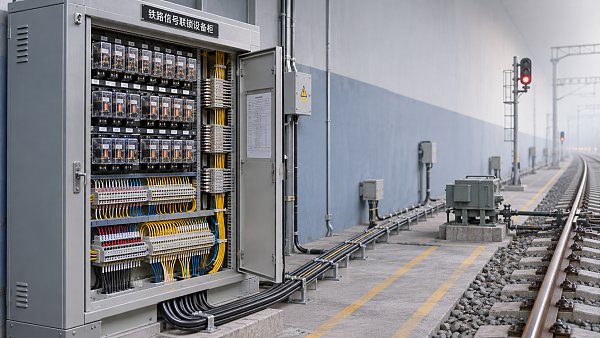
A railway signalling component may have evidence supporting its use in a SIL4 safety-related application, for example. That does not establish acceptance of the complete signalling installation. The project still needs to address application conditions, interfaces, installation arrangements, and system-level safety justification. The certificate’s scope and limitations matter as much as the headline safety integrity level.
Local requirements can also sit outside the component’s core performance specification. Radio-enabled equipment may raise spectrum or equipment-authorization questions. An electrical installation may need checks against applicable installation and fire requirements. These obligations depend on the destination, equipment category, and installation context; they should be investigated rather than assumed.
The useful question is not simply “Which standards does this meet?” It is “What must this exact configuration demonstrate, to whom, before it can enter service?”
“Southeast Asia” is not a single compliance jurisdiction
Regional experience is valuable, but it cannot replace a country-specific review. A supplier’s previous acceptance in Singapore does not establish acceptance in Indonesia, Malaysia, Thailand, Vietnam, or the Philippines. Even within one country, a new railway line, an existing operator’s replacement program, and a port installation can follow different acceptance processes.
Start by separating requirements into distinct layers. National legislation and regulations establish legal obligations. Authorities may issue approval conditions or technical directions. Infrastructure owners and operators define network interfaces, maintainability expectations, and operating rules. The contract then specifies deliverables, testing, and acceptance responsibilities. These layers can overlap, but an operator preference should not be described as national law.
This distinction affects selection decisions. A mandatory requirement may rule out an option unless an authorized alternative route exists. A contractual requirement may allow a documented deviation, subject to the relevant approval. An operator preference may require technical justification rather than product redesign. Treating all three as “local codes” hides the available choices and the associated risks.
Ask the support provider to identify the issuing organization, document revision, applicability, and acceptance owner for each requirement. Where interpretation remains uncertain, the output should record that uncertainty and the clarification needed—not quietly convert an assumption into a compliance claim.
Rail and maritime equipment need different compliance boundaries
Railway selection must reach beyond the component
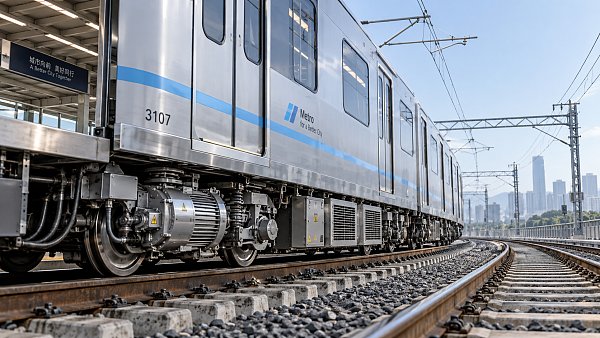
For signalling, braking, and traction equipment, local acceptance often depends on how the component behaves within the railway. A technically credible review therefore examines the installation and operating context alongside the product evidence.
Consider a pantograph. Current capacity and maximum operating speed are insufficient selection criteria on their own. Contact-wire geometry, contact force, dynamic interaction, electrical clearances, and compatibility with the overhead contact system also need attention. Environmental exposure and maintenance arrangements may further affect suitability. Support that compares catalogue ratings without checking these interfaces has not completed the technical evaluation, regardless of its standards list.
Braking equipment presents a similar issue. Component test results do not automatically establish train-level stopping performance under the intended load, gradient, adhesion, and duty cycle. Evaluators need to know which requirements are demonstrated by existing evidence and which require calculation, integration testing, or operational validation. The acceptance plan should identify who owns each remaining task.
Marine selection crosses jurisdictional boundaries
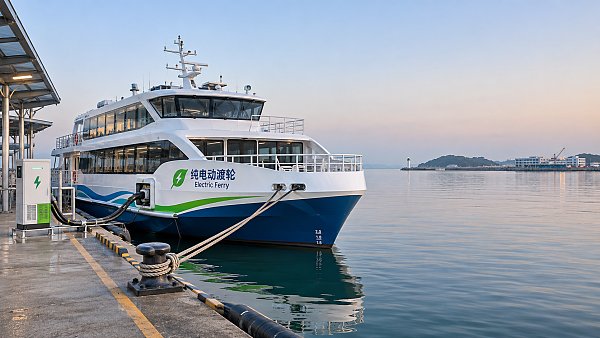
For shipboard equipment, “local” cannot mean only the country where the supplier or shipyard is located. The review may need to consider flag-state requirements, applicable international conventions and codes, classification rules, and port or terminal conditions. Classification approval and statutory compliance are related but distinct; a classification society may also perform delegated statutory work within its authorization.
On an LNG carrier, for instance, equipment selection may involve the applicable IGC Code requirements, class rules, hazardous-area suitability, materials compatibility, and installation-specific approval. LNG cargo containment and LNG fuel systems should not be treated as the same regulatory problem. The vessel’s design, service, and applicable regulatory framework determine the assessment boundary.
Likewise, smart container-ship connectivity involves more than the onboard device. Ship-to-shore interfaces, cybersecurity requirements, and permissions for shore-side communications may involve different stakeholders. A single product certificate rarely resolves that entire chain.
What meaningful local-code support should deliver
The most useful deliverable is a traceable requirements-and-evidence matrix. It should connect the project’s operating context to the applicable requirement, the proposed equipment configuration, the supporting evidence, and any unresolved action. A folder of certificates without this connection leaves the evaluator to perform the critical interpretation.

For a shortlisted item, the matrix should make the following visible:
- Requirement source: the regulation, authority document, operator specification, class rule, or contract clause, including its applicable revision.
- Applicability: why the requirement applies to this equipment, installation, or operating mode—and any exclusions.
- Evidence boundary: the models, hardware versions, software releases, accessories, and conditions covered by each report or certificate.
- Open action: the additional analysis, testing, submission, translation, or clarification still required.
- Acceptance responsibility: who prepares the evidence, who reviews it, and who has authority to accept it.
Status labels need discipline. “Compliant,” “conditionally compliant,” “not demonstrated,” and “not applicable” should mean different things. Missing evidence is not necessarily proof of noncompliance, but it is not grounds for an unconditional pass either.
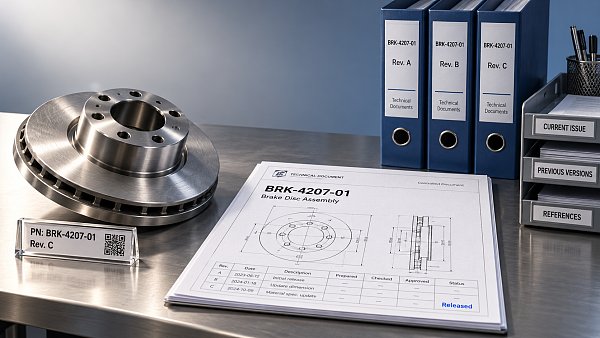
Configuration control deserves particular attention. A report covering one enclosure, firmware release, or interface arrangement may not cover the quoted variant. The support team should reconcile the evidence with the bill of materials and record how subsequent design changes will be reviewed.
How to compare support providers before committing
Rather than asking whether a provider “covers local regulations,” give each candidate the same bounded task: review one shortlisted component for a named country, installation, and operating application. Request a sample deliverable showing the requirement sources, assumptions, evidence gaps, and approval interfaces. This reveals more than a regional project list.
Clarify the service boundary in writing. Desktop standards mapping, detailed engineering review, local regulatory interpretation, and approval coordination are different services. A capable technical adviser may still need input from the operator, a locally qualified specialist, the relevant authority, or a recognized approval body. Explicit boundaries are a strength; vague promises are not.
Also ask how requirements are kept current. An early feasibility review may be overtaken by tender clarifications, design changes, or revised project documents. The provider should explain the review’s effective date and the triggers for reassessment. “Compliant at selection” is not a permanent status independent of configuration and project changes.
Commercial comparisons should include the work left outside the quotation. A lower-priced option may exclude local submissions, additional testing, installation verification, or responses to reviewer comments. Those exclusions do not automatically make it unsuitable, but they must be assigned an owner, allowance, and schedule before the options can be compared fairly.
Use the compliance review to shape the procurement decision
Not every unresolved point should stop a shortlist. The distinction is between a manageable evidence gap and a fundamental suitability problem. A missing translation may be straightforward to close. An unverified safety interface, unsuitable environmental rating, or unresolved approval route can alter the design or delivery schedule. Rank gaps by consequence and closure effort, not by document count.
This is where technical intelligence can support—not replace—formal engineering and approval work. The Global Transit & Ocean Tech (GTOT) focuses on railway signalling, pantographs, braking systems, smart container ships, and LNG carriers. Connecting developments across these sectors helps evaluators frame better questions about component performance, system integration, and the evidence behind supplier claims. Regulatory acceptance must still be confirmed through the responsible project parties.
Before releasing a purchase order, assemble a short decision package: the selected configuration, applicable requirements, evidence status, outstanding deviations, acceptance responsibilities, and hold points. Any unresolved requirement that could change the equipment design should remain visible to the procurement decision-maker.
So, does technical selection support in Southeast Asia cover local codes? Only when its scope and deliverables demonstrate that coverage. Ask for the requirement map and approval pathway before relying on the recommendation. A suitable product is one part of the decision; a credible route to acceptance is the other.
Recommended News
 Nov 23, 2026Can an AI route optimization platform handle cross-border truck restrictions in Europe?AI route optimization platform Europe: Discover how to assess cross-border truck restrictions, validate compliant routes, and avoid costly routing errors.
 Nov 21, 2026How to assess carrier integration in an intermodal transportation platformEvaluate an intermodal transportation platform with a practical guide to carrier coverage, event accuracy, integration failures, security and acceptance testing.
 Nov 20, 2026How to identify which railway safety standards apply to a projectRailway safety standards guide: Learn how to identify applicable requirements, map interfaces and build a defensible compliance baseline for your project.
 Nov 19, 2026How to evaluate motion control application references for a new projectEvaluate engineering application references for motion control with confidence. Compare load cycles, safety, integration, and evidence to reduce project risk.
 Nov 18, 2026When does electric marine propulsion make sense for ferries?Electric marine propulsion technology can transform ferry operations. Explore when battery-electric or hybrid systems make sense for your routes, charging access, and costs.
 Nov 17, 2026How much does it cost to buy an ocean-going vessel?Ocean going vessel cost ranges from a few million to hundreds of millions of dollars. Explore purchase prices, hidden costs, and key factors before you buy.
 Nov 16, 2026How to verify solution provider references before signing a contractVerify solution provider references before signing. Learn what to ask, which evidence to check, and how to turn findings into stronger contract terms.
 Nov 14, 2026How does automatic train control affect metro train headways?Discover how automatic train control for metro systems can reduce headways, improve service consistency and support capacity planning without compromising safety.
 Nov 13, 2026How to assess the financial return on rail infrastructure investmentAssess rail infrastructure investment with confidence. Explore lifecycle costs, NPV, IRR and risk scenarios to make better-informed funding decisions.
 Nov 12, 2026How to assess an ocean vessel technology provider's integration capabilitiesAssess an ocean vessel technology provider with a practical guide to interfaces, cybersecurity, failure testing, and lifecycle support. Make a confident choice.
 Nov 10, 2026When is external supplier evaluation support worth the cost?Discover when supplier evaluation support is worth the cost, how to estimate its return, and where independent expertise can reduce sourcing risks.
 Nov 09, 2026How can evaluation support help component suppliers prepare for audits?Supplier evaluation support for component suppliers helps uncover audit gaps, strengthen traceability, and build a clear, risk-based preparation plan.
 Nov 07, 2026How smart intermodal transportation reduces transfer delaysDiscover how smart intermodal transportation reduces transfer delays through real-time coordination, cargo-ready forecasts, and faster decisions.
 Nov 06, 2026How to evaluate AI route optimization suppliers in North AmericaAI route optimization supplier North America: discover how to compare providers, validate savings, assess security and choose a solution that fits your operations.
 Nov 04, 2026Can LTE-M track rail assets in areas with limited coverage?LTE-M rail transit for asset tracking can bridge coverage gaps with offline data storage. Discover its limits and how to assess your routes.
 Nov 01, 2026When is rail freight cheaper than maritime shipping?Compare rail and maritime cost to discover when rail freight can save money on inland routes, inventory and delays. Learn how to assess the full door-to-door cost.
 Oct 31, 2026How an AI route optimization dashboard handles traffic delaysDiscover how an AI route optimization dashboard responds to traffic delays, compares feasible routes, updates ETAs, and helps operators make informed decisions.
 Oct 29, 2026How to assess an automatic train control manufacturer for retrofitsAssess an automatic train control manufacturer for your retrofit. Learn how to verify compatibility, safety assurance, migration plans, and long-term support before choosing a supplier.
 Oct 28, 2026Does technical selection support in Southeast Asia cover local codes?Explore technical selection support Southeast Asia projects need to address local codes, assess compliance evidence, and map approval pathways. Learn what to ask before procurement.
 Oct 26, 2026How a product information platform keeps product data consistentDiscover how a product information platform keeps data consistent with clear ownership, validation, and approved updates. Learn what to check before choosing a solution.
 Oct 23, 2026When is renting heavy mining equipment cheaper than buying?Renting heavy industry equipment for mining? Discover when it costs less than buying, compare hidden fees and break-even points, and make a smarter fleet investment.
 Oct 21, 2026Can absolute safety monitoring eliminate all operational risk?Can absolute safety monitoring eliminate all risk? Discover its limits, hidden failure points, and practical safeguards to strengthen protection and make smarter safety decisions.
 Oct 19, 2026How to vet a European railway safety technology supplier’s track recordSeeking a railway safety technology supplier Europe can trust? Learn how to verify project references, safety credentials, and lifecycle support to build a defensible shortlist.
 Oct 15, 2026How to size train traction systems for frequent-stop rail serviceSize train traction systems for frequent-stop rail service with practical guidance on power, adhesion, thermal loads, and braking. Learn how to meet timetables without costly oversizing.