Search News
Industry Portal
Popular Tags
When is rail freight cheaper than maritime shipping?

Author
Time
Click Count
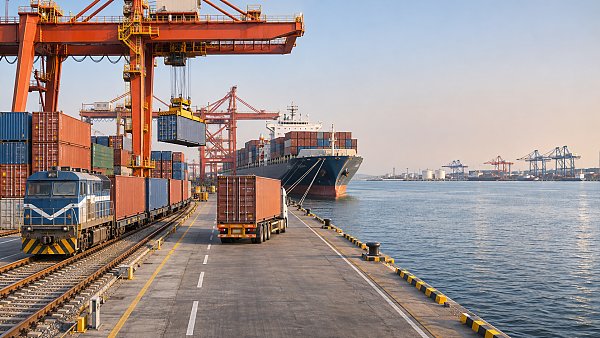
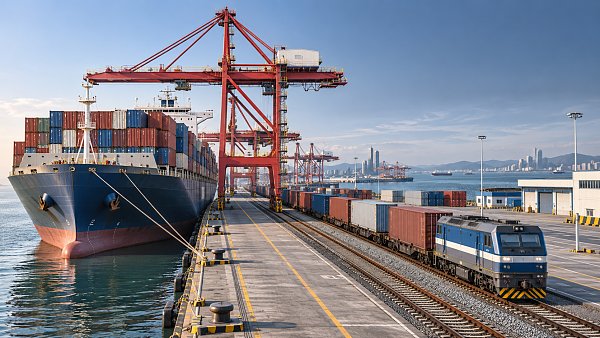
Rail freight can be cheaper than maritime shipping when both modes serve the same origin and destination and rail’s door-to-door savings outweigh any higher line-haul rate. That is most plausible on overland corridors where the shipper or consignee is far from a seaport, port handling is expensive, or faster rail delivery materially reduces inventory and disruption costs.
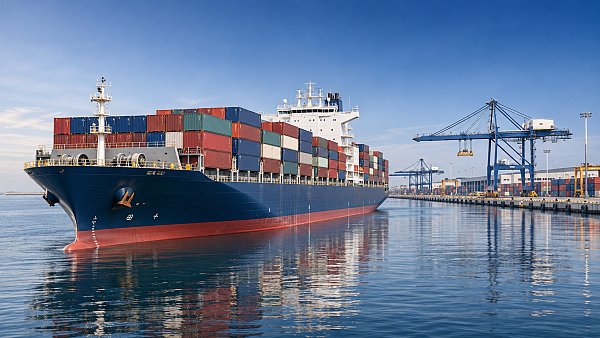
Ocean freight often retains the lower transport rate for large container volumes over long distances. A useful rail and maritime cost comparison therefore starts with a narrower question: for this shipment, on this route, under the delivery terms that apply, which option produces the lower total cost? The answer may change with the cargo’s value, the inland distance at each end, the service schedule and the price of holding stock.
Start with the complete door-to-door route
A quoted rail rate between two terminals is not directly comparable with an ocean rate between two ports. Both omit parts of the journey, and those omitted legs can determine the result. A factory close to a rail terminal and a customer in an inland distribution centre may have a very different comparison from two businesses located near major seaports.
Build each route from the same pickup point to the same delivery point. For the ocean option, that may include trucking or rail to the export port, terminal handling, ocean freight, destination port charges and onward delivery. For the rail option, it may include collection, origin terminal handling, the rail service, border or gauge-change handling where applicable, destination terminal charges and final delivery.
Then separate charges included in the quote from those that depend on events or operational choices. Fuel and security surcharges, container use, storage, documentation and customs-related services can appear in different places depending on the carrier and contract. Import duties and taxes should be included where relevant, but only as incremental differences between options if the same amounts apply to both.

For example, a lower ocean rate can be offset by two expensive inland legs and port handling. Conversely, rail can lose its apparent advantage once trucking to a distant terminal, transloading and delivery from the destination terminal are included. Neither outcome can be inferred from the main freight rate alone.
Where rail is most likely to win
Both ends connect efficiently to an overland corridor
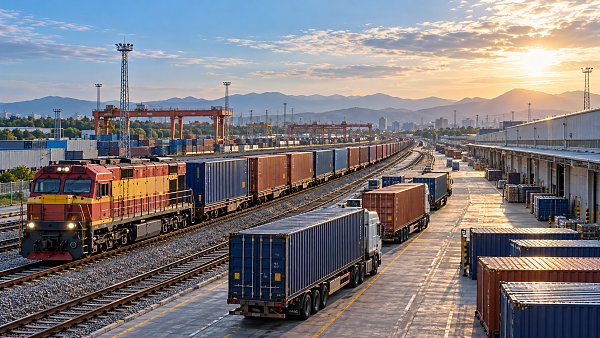
Rail has its strongest case when the origin and destination are inland, a viable rail service links their regions, and collection and delivery distances are manageable. Avoiding a detour through ports can reduce mileage and handling. A direct service is not essential, but every transfer adds a charge, a scheduling dependency or both.
Check the actual service pattern as well as the map. A rail terminal that looks close to the factory may offer infrequent departures or require cargo to be consolidated elsewhere. An apparently longer ocean route may have frequent sailings and efficient inland connections. The relevant comparison is the cost and schedule available for the shipment, not the theoretical shortest route.
Faster delivery releases enough working capital
If rail is faster, goods spend fewer days in transit. For cargo that the buyer owns during that period, lower average in-transit inventory can have a financial value. A faster service may also allow a business to hold less safety stock, although that saving depends on delivery reliability as well as average transit time.
A practical first estimate of the in-transit inventory benefit is:
Inventory saving = cargo value × annual carrying-cost rate × transit days saved ÷ 365.
Use the value and carrying-cost rate that reflect the business’s actual economics. The rate may include the cost of capital and other ownership costs, but only where they change with the time in transit. Avoid adding an estimated safety-stock saving to the same calculation unless it is calculated separately and does not count the same inventory twice.
For illustration, suppose a shipment is worth $500,000, the applicable annual carrying-cost rate is 12%, and rail reduces transit by 20 days. The estimated in-transit saving is about $3,288. If rail’s complete transport and handling cost is $2,000 higher, the saving would more than offset that premium, before considering other differences. These figures are assumptions for the calculation, not market rates.
The result is smaller for low-value goods or cargo whose ownership transfers only near delivery. It can also disappear if faster transit does not change payment timing, borrowing needs or inventory levels. Finance and procurement teams should agree on which benefit the business can actually capture.
Port-related costs or delays are material
Rail may be less expensive when a maritime route is exposed to port storage, congestion-related charges or expensive contingency arrangements. The comparison should distinguish charges already included in a quote from costs that arise only if a delay occurs.
For uncertain costs, estimate the expected exposure: the probability of the event multiplied by its financial impact. If a port delay has a 10% chance of causing $10,000 in incremental costs, its expected cost is $1,000. That figure is useful for comparing options, but it does not mean the shipment will incur a $1,000 charge. A business unable to tolerate the full $10,000 loss may reasonably give reliability greater weight than the average suggests.
Rail has its own disruption exposure, including terminal congestion, border processing and service interruptions. Apply the same method to both modes, and avoid treating a possible ocean delay as a certain expense while assuming rail will run exactly to schedule.
When the cheaper-looking rail option is not cheaper
Rail’s time advantage can be attractive without being financially decisive. For low-value, non-perishable commodities, a reduction in transit inventory may be too small to offset a higher freight rate. If the buyer already has sufficient stock and the delivery date has slack, faster arrival may provide little incremental benefit.
Ocean may also be the more economical choice when both ends have good port access, when a shipment can move on a competitive full-container service, or when the rail alternative requires multiple transfers and long truck journeys. The direction of the trade matters: equipment availability, capacity and commercial rates can differ between outbound and return movements.
Shipment size changes the comparison as well. A rail quote for a full container should not be compared with an ocean quote for only the space occupied by a smaller consignment without accounting for consolidation, handling, minimum charges and delivery terms. Equally, a consolidation service that appears cheap may add enough dwell time to erase part of rail’s inventory benefit.
Some cargo is unsuitable for one of the available services because of dimensions, weight, temperature-control requirements or restrictions on dangerous goods. A theoretical rate has little value until the provider confirms that the cargo can be accepted across every leg, including terminals and border crossings.
Calculate the premium rail can justify
Instead of asking whether rail is generally cheaper, calculate the maximum premium the business can pay for it on a particular flow. Start with the full door-to-door ocean cost, then add the measurable benefits of rail and subtract any rail-specific costs or risks not already included in its quote.
Maximum justified rail premium = inventory savings + other incremental benefits + avoided expected costs − additional rail-specific costs.
The rail option is cheaper on this basis if its door-to-door transport premium is below that amount. For instance, a premium may be justified by lower in-transit inventory and a reduced expected port-delay cost. It should not also receive a separate “faster delivery benefit” unless that benefit represents another identifiable saving, such as an avoided stockout cost that is not already embedded in the inventory calculation.
Keep the calculation within a consistent time period and shipment volume. A per-container rail quote cannot be compared directly with an annual inventory saving unless both are converted to the same basis. Where volumes vary, calculate a representative shipment and then test the annual result against expected frequency and seasonality.
The exercise works best with a range rather than a single precise answer. Test at least three assumptions: the transit-time difference, the rail premium and the cost of a delay. A rail decision that remains favourable across reasonable changes is more robust than one that depends on an unusually fast trip or a large, uncertain disruption saving.
Make competing quotes comparable
Before choosing a mode, ask providers to quote against the same shipment specification: pickup and delivery addresses, cargo description, weight and dimensions, equipment type, expected volume and required delivery window. State the applicable commercial delivery terms and identify who is responsible for each leg. Otherwise, a low quote may simply leave more work and cost with the buyer.
The details that most often change the comparison are:
- Scope: Are pickup, terminal handling, documentation, border services and final delivery included?
- Timing: Does the stated transit time include collection, terminal dwell, customs processing and delivery, or only the main transport leg?
- Equipment: Is the quoted container or other equipment available for the cargo and route, and are repositioning or return costs included?
- Variable charges: Which surcharges can change, and what storage, detention or demurrage charges could apply?
- Service commitment: Are departure frequency, booking deadlines, capacity and remedies for missed connections defined?
Insurance and liability also deserve consistent treatment. A lower freight price may come with different liability limits or exclusions; compare the cost of obtaining equivalent cover rather than assuming the freight provider accepts the same risk under both options. Customs requirements should be checked for the actual route and cargo, including any transit procedures through intermediate jurisdictions.
Finally, separate a one-off rate from an arrangement that can support the planned volume. A quote for a single available departure may not hold for a recurring flow, and a favourable annual commitment can introduce minimum-volume or cancellation obligations. The decision should reflect the cost of the service the business can realistically use.
Use the result as a route-specific decision
Rail is most likely to be the cheaper commercial choice when efficient inland access combines with a meaningful time or disruption benefit. Ocean is likely to remain competitive when port access is good, delivery time is flexible and the cargo’s carrying cost is modest. Between those cases, the result turns on the quoted route and the value the business assigns to time and uncertainty.
Document the assumptions alongside the decision: full route cost, transit time, cargo value, carrying-cost rate and the treatment of delay risk. Revisit them when rates, schedules, shipment values or delivery requirements change. A comparison that makes those inputs visible gives procurement a defensible basis for choosing either mode, and a clear threshold for reconsidering it.
Recommended News
 Nov 23, 2026Can an AI route optimization platform handle cross-border truck restrictions in Europe?AI route optimization platform Europe: Discover how to assess cross-border truck restrictions, validate compliant routes, and avoid costly routing errors.
 Nov 21, 2026How to assess carrier integration in an intermodal transportation platformEvaluate an intermodal transportation platform with a practical guide to carrier coverage, event accuracy, integration failures, security and acceptance testing.
 Nov 20, 2026How to identify which railway safety standards apply to a projectRailway safety standards guide: Learn how to identify applicable requirements, map interfaces and build a defensible compliance baseline for your project.
 Nov 19, 2026How to evaluate motion control application references for a new projectEvaluate engineering application references for motion control with confidence. Compare load cycles, safety, integration, and evidence to reduce project risk.
 Nov 18, 2026When does electric marine propulsion make sense for ferries?Electric marine propulsion technology can transform ferry operations. Explore when battery-electric or hybrid systems make sense for your routes, charging access, and costs.
 Nov 17, 2026How much does it cost to buy an ocean-going vessel?Ocean going vessel cost ranges from a few million to hundreds of millions of dollars. Explore purchase prices, hidden costs, and key factors before you buy.
 Nov 16, 2026How to verify solution provider references before signing a contractVerify solution provider references before signing. Learn what to ask, which evidence to check, and how to turn findings into stronger contract terms.
 Nov 14, 2026How does automatic train control affect metro train headways?Discover how automatic train control for metro systems can reduce headways, improve service consistency and support capacity planning without compromising safety.
 Nov 13, 2026How to assess the financial return on rail infrastructure investmentAssess rail infrastructure investment with confidence. Explore lifecycle costs, NPV, IRR and risk scenarios to make better-informed funding decisions.
 Nov 12, 2026How to assess an ocean vessel technology provider's integration capabilitiesAssess an ocean vessel technology provider with a practical guide to interfaces, cybersecurity, failure testing, and lifecycle support. Make a confident choice.
 Nov 10, 2026When is external supplier evaluation support worth the cost?Discover when supplier evaluation support is worth the cost, how to estimate its return, and where independent expertise can reduce sourcing risks.
 Nov 09, 2026How can evaluation support help component suppliers prepare for audits?Supplier evaluation support for component suppliers helps uncover audit gaps, strengthen traceability, and build a clear, risk-based preparation plan.
 Nov 07, 2026How smart intermodal transportation reduces transfer delaysDiscover how smart intermodal transportation reduces transfer delays through real-time coordination, cargo-ready forecasts, and faster decisions.
 Nov 06, 2026How to evaluate AI route optimization suppliers in North AmericaAI route optimization supplier North America: discover how to compare providers, validate savings, assess security and choose a solution that fits your operations.
 Nov 04, 2026Can LTE-M track rail assets in areas with limited coverage?LTE-M rail transit for asset tracking can bridge coverage gaps with offline data storage. Discover its limits and how to assess your routes.
 Nov 01, 2026When is rail freight cheaper than maritime shipping?Compare rail and maritime cost to discover when rail freight can save money on inland routes, inventory and delays. Learn how to assess the full door-to-door cost.
 Oct 31, 2026How an AI route optimization dashboard handles traffic delaysDiscover how an AI route optimization dashboard responds to traffic delays, compares feasible routes, updates ETAs, and helps operators make informed decisions.
 Oct 29, 2026How to assess an automatic train control manufacturer for retrofitsAssess an automatic train control manufacturer for your retrofit. Learn how to verify compatibility, safety assurance, migration plans, and long-term support before choosing a supplier.
 Oct 28, 2026Does technical selection support in Southeast Asia cover local codes?Explore technical selection support Southeast Asia projects need to address local codes, assess compliance evidence, and map approval pathways. Learn what to ask before procurement.
 Oct 26, 2026How a product information platform keeps product data consistentDiscover how a product information platform keeps data consistent with clear ownership, validation, and approved updates. Learn what to check before choosing a solution.
 Oct 23, 2026When is renting heavy mining equipment cheaper than buying?Renting heavy industry equipment for mining? Discover when it costs less than buying, compare hidden fees and break-even points, and make a smarter fleet investment.
 Oct 21, 2026Can absolute safety monitoring eliminate all operational risk?Can absolute safety monitoring eliminate all risk? Discover its limits, hidden failure points, and practical safeguards to strengthen protection and make smarter safety decisions.
 Oct 19, 2026How to vet a European railway safety technology supplier’s track recordSeeking a railway safety technology supplier Europe can trust? Learn how to verify project references, safety credentials, and lifecycle support to build a defensible shortlist.
 Oct 15, 2026How to size train traction systems for frequent-stop rail serviceSize train traction systems for frequent-stop rail service with practical guidance on power, adhesion, thermal loads, and braking. Learn how to meet timetables without costly oversizing.