Search News
Industry Portal
Popular Tags
How to identify which railway safety standards apply to a project

Author
Time
Click Count
The standards that apply to a railway project depend first on where and how the railway will operate, what is being changed, and who must authorize that change. A signalling upgrade on an existing metro, for example, may face a different approval route from a new mainline railway, even when both use similar electronic equipment.
Start by identifying the legal and contractual requirements for the complete project, then trace them to each subsystem and interface. This railway safety standards guide sets out a practical way to build that baseline, distinguish mandatory obligations from selected standards, and keep the evidence aligned with the project as it develops.
Start with the project boundaries and approval route
Before assembling a list of standards, write a short description of the railway and the proposed change. Include the country or countries of operation, the network involved, the intended service, the operating organization, and the assets within scope. Identify whether the project is a new railway, an extension, a replacement, a modification, or a maintenance activity.
These distinctions affect the questions an approval body will ask. A new line may require evidence for infrastructure, vehicles, control systems and operational arrangements. A replacement interlocking may leave much of the railway unchanged, but still require assessment of its connections to existing trackside equipment, operating rules and maintenance processes.
Record the intended operational conditions as well: passenger or freight service, automated or driver-operated trains, the proposed operating environment, and any connection to another railway. A component designed for one environment may require additional evidence before use in another. Cross-border operation can introduce separate national requirements and multiple parties with a role in authorization.
Use this initial scope to identify the relevant authorities, infrastructure manager, operator, asset owner and any independent assessment bodies. Ask each party what approval or acceptance decisions are needed, what submissions support those decisions, and when those submissions must be made. The answers should shape the project schedule before design choices become difficult to reverse.
Do not assume that every railway follows the same regulatory route. Mainline, urban transit, industrial and privately operated railways can be subject to different legal frameworks, even within one country. The applicable route depends on the jurisdiction and the railway’s legal and operational status.
Separate legal obligations from standards and contract requirements
A standards register is useful only if it explains why each document applies. A technical standard may be made mandatory by law, incorporated into a contract, required by an infrastructure manager, or selected by the project as a means of demonstrating that a safety requirement has been met. Those routes are different, and they affect how a proposed deviation is handled.
In the European Union, a project within the relevant scope may need to consider interoperability legislation, applicable Technical Specifications for Interoperability, national rules and the Common Safety Method for risk evaluation and assessment. Their relevance depends on the project and its legal context; an urban railway or a project outside that framework should not be assumed to follow the same route. Establish which requirements apply through the responsible authority and the project’s approval arrangements.
In other jurisdictions, the starting point may be national railway legislation, regulator-issued rules, infrastructure-owner requirements or a combination of these. International and regional standards can still be useful, but their publication alone does not make them law everywhere.
Also distinguish a standard from certification. Compliance with a named document does not automatically grant permission to operate, and a certificate for a product does not necessarily cover its installation or integration into a particular railway. Identify the actual decision required: product certification, independent assessment, network acceptance, authorization to place a subsystem into service, or another approval.
Map the standards to functions, assets and interfaces
Once the approval route is understood, break the project into functions and physical assets. For each one, identify the applicable requirements and the evidence needed to show compliance. The mapping should cover the complete system, including activities performed by people and the interfaces between organizations.
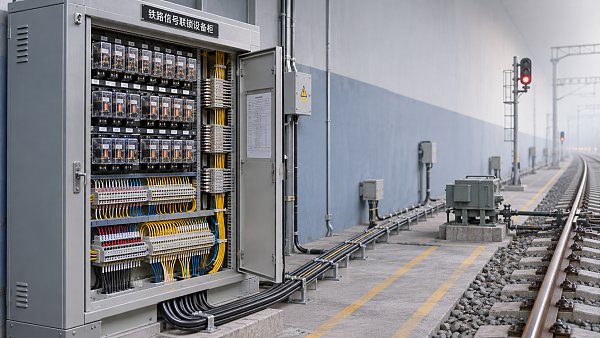
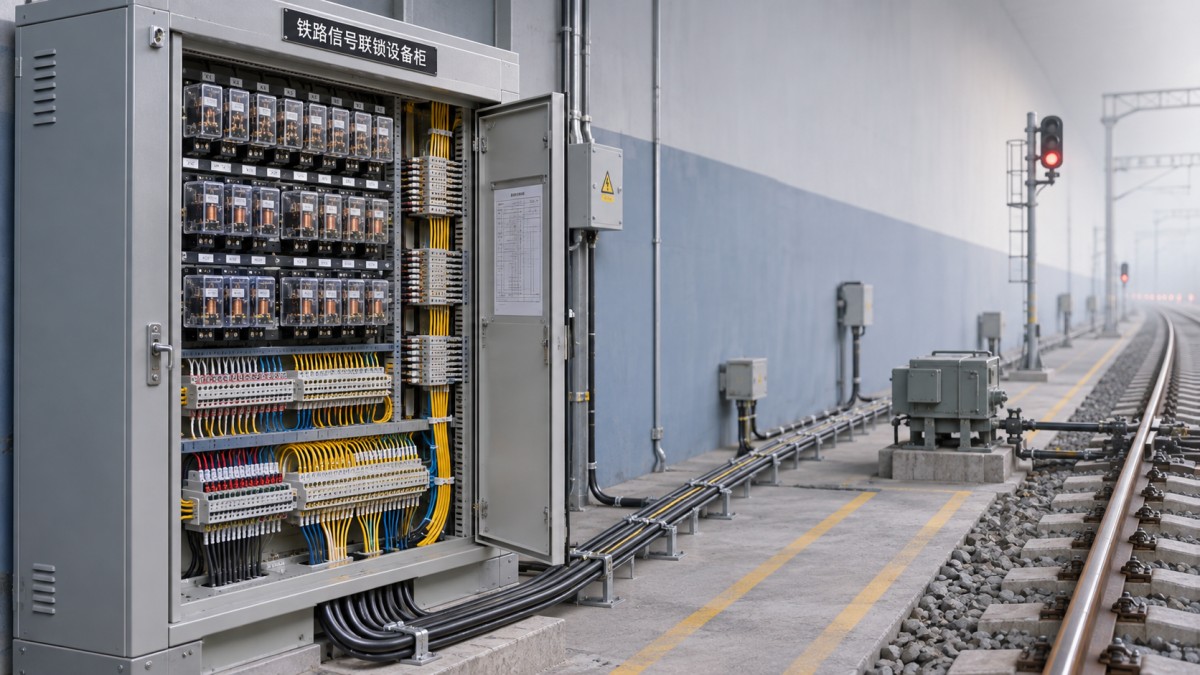
For a signalling project, the mapping may include train detection, interlocking, train control, communications, power supplies and the operator interface. For rolling stock, it may include braking, traction, doors, onboard control and the interaction between vehicle and track. Infrastructure work may introduce requirements for track, structures, electrification, stations and the operating environment.
Standards should be chosen for the function and scope they address. The EN 50126 series addresses the specification and demonstration of railway reliability, availability, maintainability and safety. EN 50129 concerns safety-related electronic systems for signalling. EN 50128 addresses software for railway control and protection systems; EN 50657 addresses software on board rolling stock. The IEC 62278 series addresses railway RAMS at an international level. Which documents, parts and editions apply depends on the project, the governing requirements and the standards’ stated scopes.
These examples are starting points, not a universal checklist. A project may also need requirements specific to a braking function, electromagnetic compatibility, fire protection, power supply or another subject. Conversely, a standard covering onboard software should not be assigned automatically to every software item without checking its scope and the system architecture.
Pay particular attention to interfaces. A new train protection system can meet its equipment specification and still create risk if its assumptions about train detection, braking performance or operating procedures do not match the railway. Define who owns each interface, the information each party must supply, and how compatibility will be demonstrated. Where existing equipment is involved, identify the available configuration records and any gaps in evidence early.
Safety integrity levels also need context. A SIL is associated with a safety function and its required integrity; it should follow the applicable hazard and risk assessment process. Specifying SIL 4 for an entire project or every component does not by itself establish that the railway is safe or that the correct standard has been applied.
Turn the list into a defensible compliance baseline
The output of this work should be a controlled requirements register, linked to the project’s hazard record and verification plan. A useful entry does more than name a standard: it tells an engineer what must be done, who owns it and what evidence will close it.
For each applicable requirement, capture:
- The source document, clause and specified edition, together with the reason it applies.
- The affected system, function, interface or project activity.
- The responsible organization and the party that will review or accept the evidence.
- The proposed demonstration method, such as analysis, inspection, test or assessment.
- The planned evidence, its status, and any assumptions, exclusions or agreed deviations.
Trace project requirements down to supplier specifications and back up to the system-level safety argument. A supplier may be responsible for a component’s design evidence, while the integrator remains responsible for demonstrating that the component is suitable for its intended installation and interfaces. Allocate those responsibilities explicitly in contracts and delivery plans.
The edition of a standard matters. A contract may specify one edition while a regulation or network rule points to another document or applies transitional provisions. Record the applicable references and dates at the baseline stage, and establish how the team will resolve conflicts. Do not silently replace an agreed edition with a newer one: assess the effect on legal obligations, design, evidence and approvals with the relevant parties.
Test the approach on a signalling renewal
Consider a project replacing a station interlocking while retaining existing signals and train detection equipment. The first question is whether the work is treated as a modification under the applicable regulatory framework and network rules, and what acceptance process follows. The answer determines the assessment and submission route; it cannot be inferred from the equipment name alone.
The project team then maps the new interlocking’s functions and interfaces: routes and conflicts, train detection inputs, signal outputs, operator commands, power supply, maintenance access and any connections to adjacent control areas. Existing operating rules and the condition and configuration of retained assets become part of the assessment.
For the new safety-related electronic system, the team considers the applicable signalling safety and software standards, alongside the project’s system-level RAMS requirements. It also identifies the evidence needed for integration: interface specifications, configuration records, verification results, installation and commissioning tests, and the safety argument required by the approval route.
A supplier’s existing product approval can inform this work, but the team must check its scope, conditions of use and assumptions against the intended application. If the approval covers a different configuration or operating context, additional assessment or evidence may be needed. The project should resolve that gap before treating the product as accepted for the railway.
Keep applicability under control when the project changes
Standards selection is an early decision, but it is not a one-time exercise. A change in operating concept, geographical scope, system architecture or supplier can alter both the requirements and the evidence needed to meet them. For example, adding an interface to an adjacent railway may bring another infrastructure manager’s rules into the project and change the integration test plan.
Put proposed changes through a review that includes engineering, safety, operations, commercial and approval responsibilities. Update the requirements register, hazard record and verification plan together. Where a change affects an established interpretation or an agreed deviation, take it back to the party responsible for acceptance.
Schedule these discussions around decisions the project must make: before fixing the architecture, placing major orders, freezing interfaces and beginning commissioning. A short, agreed applicability baseline at each stage gives the team a clearer basis for design and procurement, while leaving a traceable record of how the approval case developed.
Recommended News
 Nov 23, 2026Can an AI route optimization platform handle cross-border truck restrictions in Europe?AI route optimization platform Europe: Discover how to assess cross-border truck restrictions, validate compliant routes, and avoid costly routing errors.
 Nov 21, 2026How to assess carrier integration in an intermodal transportation platformEvaluate an intermodal transportation platform with a practical guide to carrier coverage, event accuracy, integration failures, security and acceptance testing.
 Nov 20, 2026How to identify which railway safety standards apply to a projectRailway safety standards guide: Learn how to identify applicable requirements, map interfaces and build a defensible compliance baseline for your project.
 Nov 19, 2026How to evaluate motion control application references for a new projectEvaluate engineering application references for motion control with confidence. Compare load cycles, safety, integration, and evidence to reduce project risk.
 Nov 18, 2026When does electric marine propulsion make sense for ferries?Electric marine propulsion technology can transform ferry operations. Explore when battery-electric or hybrid systems make sense for your routes, charging access, and costs.
 Nov 17, 2026How much does it cost to buy an ocean-going vessel?Ocean going vessel cost ranges from a few million to hundreds of millions of dollars. Explore purchase prices, hidden costs, and key factors before you buy.
 Nov 16, 2026How to verify solution provider references before signing a contractVerify solution provider references before signing. Learn what to ask, which evidence to check, and how to turn findings into stronger contract terms.
 Nov 14, 2026How does automatic train control affect metro train headways?Discover how automatic train control for metro systems can reduce headways, improve service consistency and support capacity planning without compromising safety.
 Nov 13, 2026How to assess the financial return on rail infrastructure investmentAssess rail infrastructure investment with confidence. Explore lifecycle costs, NPV, IRR and risk scenarios to make better-informed funding decisions.
 Nov 12, 2026How to assess an ocean vessel technology provider's integration capabilitiesAssess an ocean vessel technology provider with a practical guide to interfaces, cybersecurity, failure testing, and lifecycle support. Make a confident choice.
 Nov 10, 2026When is external supplier evaluation support worth the cost?Discover when supplier evaluation support is worth the cost, how to estimate its return, and where independent expertise can reduce sourcing risks.
 Nov 09, 2026How can evaluation support help component suppliers prepare for audits?Supplier evaluation support for component suppliers helps uncover audit gaps, strengthen traceability, and build a clear, risk-based preparation plan.
 Nov 07, 2026How smart intermodal transportation reduces transfer delaysDiscover how smart intermodal transportation reduces transfer delays through real-time coordination, cargo-ready forecasts, and faster decisions.
 Nov 06, 2026How to evaluate AI route optimization suppliers in North AmericaAI route optimization supplier North America: discover how to compare providers, validate savings, assess security and choose a solution that fits your operations.
 Nov 04, 2026Can LTE-M track rail assets in areas with limited coverage?LTE-M rail transit for asset tracking can bridge coverage gaps with offline data storage. Discover its limits and how to assess your routes.
 Nov 01, 2026When is rail freight cheaper than maritime shipping?Compare rail and maritime cost to discover when rail freight can save money on inland routes, inventory and delays. Learn how to assess the full door-to-door cost.
 Oct 31, 2026How an AI route optimization dashboard handles traffic delaysDiscover how an AI route optimization dashboard responds to traffic delays, compares feasible routes, updates ETAs, and helps operators make informed decisions.
 Oct 29, 2026How to assess an automatic train control manufacturer for retrofitsAssess an automatic train control manufacturer for your retrofit. Learn how to verify compatibility, safety assurance, migration plans, and long-term support before choosing a supplier.
 Oct 28, 2026Does technical selection support in Southeast Asia cover local codes?Explore technical selection support Southeast Asia projects need to address local codes, assess compliance evidence, and map approval pathways. Learn what to ask before procurement.
 Oct 26, 2026How a product information platform keeps product data consistentDiscover how a product information platform keeps data consistent with clear ownership, validation, and approved updates. Learn what to check before choosing a solution.
 Oct 23, 2026When is renting heavy mining equipment cheaper than buying?Renting heavy industry equipment for mining? Discover when it costs less than buying, compare hidden fees and break-even points, and make a smarter fleet investment.
 Oct 21, 2026Can absolute safety monitoring eliminate all operational risk?Can absolute safety monitoring eliminate all risk? Discover its limits, hidden failure points, and practical safeguards to strengthen protection and make smarter safety decisions.
 Oct 19, 2026How to vet a European railway safety technology supplier’s track recordSeeking a railway safety technology supplier Europe can trust? Learn how to verify project references, safety credentials, and lifecycle support to build a defensible shortlist.
 Oct 15, 2026How to size train traction systems for frequent-stop rail serviceSize train traction systems for frequent-stop rail service with practical guidance on power, adhesion, thermal loads, and braking. Learn how to meet timetables without costly oversizing.