



Search News
Industry Portal
Popular Tags
Heavy Industry Tech for Marine Systems: Key Factors for Reliable Integration
Author
Time
Click Count
Reliable integration at sea is rarely decided by a single component specification. In practice, heavy industry tech for marine systems succeeds only when equipment, controls, safety logic, and lifecycle demands fit the vessel as one operating environment.
That matters more now because smart ships, LNG carriers, and digitally managed fleets are under pressure to deliver efficiency, compliance, and uptime at the same time. Integration quality has become a strategic issue, not just an engineering task.
For platforms that track both rail and maritime technologies, such as GTOT, the pattern is familiar. High-speed rail control and advanced shipping share the same demand: systems must perform reliably under tightly managed risk.
Why integration defines marine system value
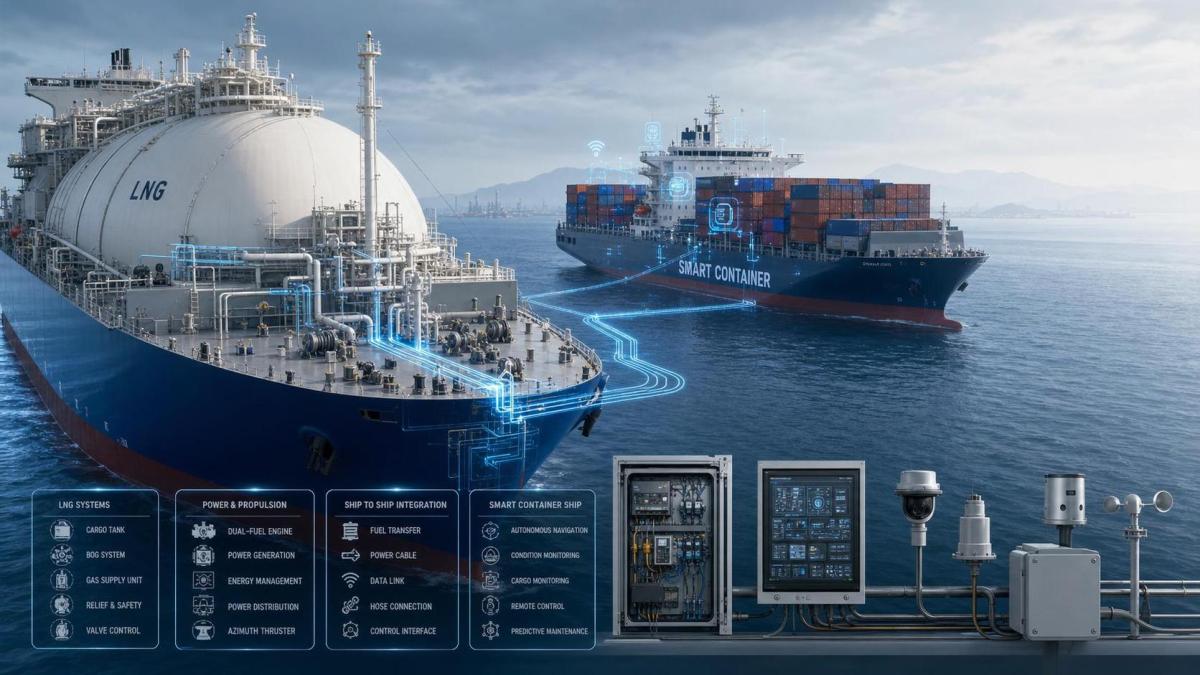
Marine assets operate in a harsher decision space than many land-based installations. Salt exposure, vibration, thermal cycling, shock loads, and long service intervals all influence whether integrated equipment remains dependable.
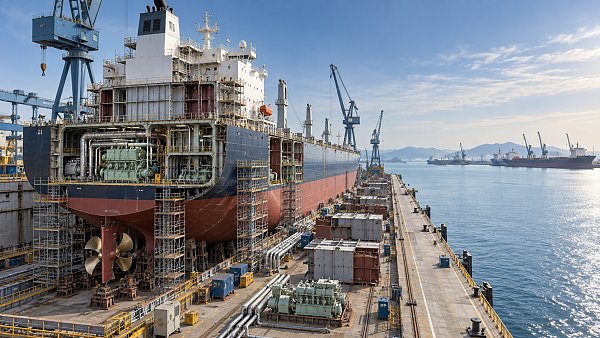
In that setting, heavy industry tech for marine systems includes propulsion support equipment, automation platforms, navigation-linked subsystems, cargo handling interfaces, power distribution, safety instrumentation, and condition monitoring tools.
The technical challenge is not only whether each element works. The real question is whether the entire chain works together without creating latency, blind spots, control conflict, or maintenance burden.
This is why integration reviews often reveal more risk than factory acceptance tests. Bench performance may look strong, while onboard interactions expose timing mismatches, incompatible protocols, or unstable operator handoffs.
The baseline: fit with vessel architecture and mission profile
A useful assessment begins with the vessel itself. Heavy industry tech for marine systems should be judged against hull type, cargo mission, power topology, route pattern, operating region, and redundancy philosophy.
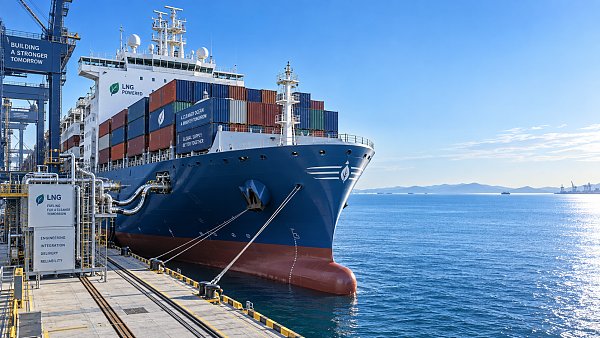
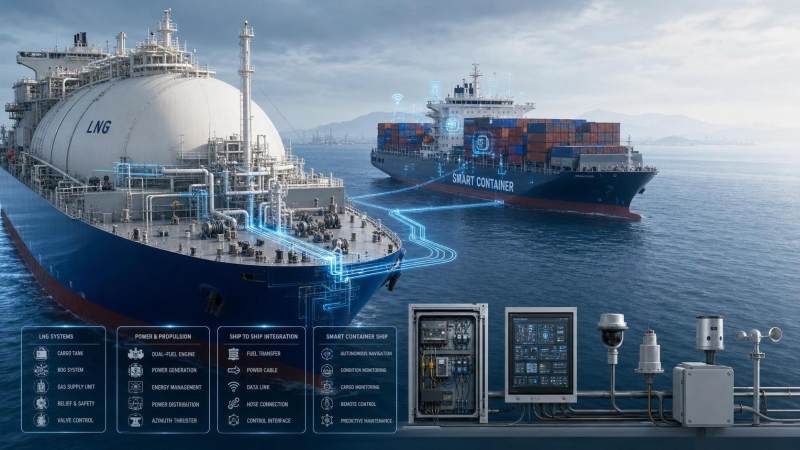
A smart container ship and an LNG carrier may both need advanced automation, but their integration priorities differ. One emphasizes logistics synchronization and route optimization. The other adds cryogenic containment, gas management, and fuel safety complexity.
Retrofit work raises additional constraints. Existing cable runs, cabinet footprints, software generations, and crew familiarity can limit what appears feasible on paper.
This is also where experience from adjacent transport sectors helps. GTOT’s cross-domain perspective shows that reliable control architecture, whether in rail signalling or marine automation, depends on disciplined interface definition from the start.
Questions that should be answered early
- What functions are mission-critical, safety-critical, or only operationally convenient?
- Which subsystems must exchange data in real time, and which can tolerate delay?
- How will the solution behave during degraded power, sensor failure, or network loss?
- Does the integration plan support future upgrades without major rework?
Control logic, interfaces, and data integrity
Much of the risk in heavy industry tech for marine systems sits at the interface layer. Hardware reliability is important, but control logic coordination often determines whether onboard performance remains stable in real operations.
Signal mapping, command priority, alarm handling, and fallback behavior need close review. If a propulsion-adjacent system, cargo platform, and bridge interface interpret the same condition differently, operators lose clarity exactly when speed matters.
Cybersecurity also belongs here. Increased connectivity improves monitoring and optimization, yet it expands the attack surface. Data pathways should be segmented, authenticated, and aligned with vessel risk management policies.
For digitally enabled fleets, integration quality also affects analytics credibility. Faulty timestamps, inconsistent data tags, or poor sensor calibration can distort maintenance forecasts and route decisions.
Compliance is part of engineering, not paperwork
Reliable integration must satisfy class rules, flag requirements, IMO frameworks, emissions obligations, and cargo-specific safety codes. In marine projects, compliance cannot be separated from system design decisions.
This is especially clear in LNG applications. Deep-cryogenic handling, membrane containment stress behavior, gas detection, and dual-fuel propulsion all require coordinated verification across equipment, structure, and automation.
A similar discipline appears in rail SIL4 logic, where failure pathways are engineered in detail. GTOT’s intelligence model is useful because it treats safety architecture as a system issue across transport sectors.
For heavy industry tech for marine systems, that means checking not only certificates, but also how compliance assumptions are preserved after integration, software revision, retrofit adaptation, and crew operating procedures.
Environmental loads and lifecycle reality
Marine integration often fails slowly before it fails visibly. Connectors corrode, enclosures breathe moisture, vibration loosens mountings, and thermal drift changes signal quality. None of these issues look dramatic at commissioning.
That is why lifecycle efficiency matters as much as technical fit. Heavy industry tech for marine systems should be evaluated for maintainability, spare parts strategy, diagnostic depth, and service accessibility in confined spaces.
Condition-based maintenance can add value, but only when the sensing architecture is stable and the failure modes are clearly understood. Otherwise, digital monitoring creates noise rather than insight.
Operators also need realistic support models. A technically elegant package loses value if software tools are proprietary, updates require long vessel downtime, or field troubleshooting depends on unavailable specialists.
Lifecycle indicators worth tracking
- Mean time between functional disturbances, not only component failures
- Time required to isolate faults at subsystem and interface levels
- Availability of validated software patches and backward compatibility
- Spare part commonality across vessel classes or fleet groups
Where the strongest business value appears
The value of heavy industry tech for marine systems becomes clearer when measured beyond installation. Better integration supports fuel efficiency, cleaner alarm management, safer cargo operations, reduced unplanned maintenance, and stronger tender credibility.
For smart container ships, the gains may come from route intelligence, ship-to-shore coordination, and more dependable cargo information flow. For LNG carriers, value often concentrates in containment assurance, propulsion stability, and thermal risk control.
In both cases, credible technical integration also affects commercial positioning. EPC teams, distributors, and vessel programs increasingly need evidence that systems will remain interoperable under strict contractual and regulatory review.
That is one reason strategic intelligence platforms matter. GTOT connects market timing with engineering substance, helping evaluation work stay grounded in real shipbuilding cycles, demand shifts, and technology maturity.
A practical way to assess the next project
A useful review process starts with system boundaries, then moves quickly into interface logic, compliance assumptions, environmental resilience, and service strategy. That sequence prevents procurement decisions from outrunning engineering reality.
It also helps to compare options using scenario-based testing. Harbor maneuvering, cargo transfer, degraded communications, power transition, and emergency override conditions often reveal weaknesses that datasheets hide.
For complex programs, the next step is not simply choosing the most advanced package. It is establishing a structured decision matrix for heavy industry tech for marine systems, then checking each option against vessel mission, control architecture, and lifecycle economics.
That approach creates a better foundation for design review, supplier comparison, and long-term fleet planning. In a market shaped by digitalization, decarbonization, and safety pressure, reliable integration is where technical judgment earns its full value.
Recommended News
 Sep 29, 2026What drives traction systems price differences between rail projects?Traction systems price differences explained: compare duty cycles, voltage compatibility, integration, localization, and lifecycle costs for smarter rail procurement.
 Sep 26, 2026What to assess before selecting an electric traction system manufacturerChoose an electric traction system manufacturer with confidence. Explore key criteria for performance, reliability, safety, integration, energy efficiency, and lifecycle support.
 Sep 25, 2026When do full digitalization systems justify the investment?Full digitalization systems: discover when rail and maritime operators can turn connected data into safer operations, higher availability, and measurable ROI.
 Sep 23, 2026What drives automatic train control systems cost on rail projects?Automatic train control systems cost depends on integration, migration, safety testing, communications, and lifecycle support. Explore the key budget drivers for rail projects.
 Sep 21, 2026How to assess an ocean going vessel builder’s delivery riskAssess an ocean going vessel builder’s delivery risk with proven checks for schedules, capacity, design maturity, critical equipment, quality, and project controls.
 Sep 20, 2026What drives rail safety technology costs over a project lifecycle?Rail safety technology cost goes beyond equipment—explore lifecycle drivers from integration and safety assurance to cybersecurity, commissioning, and obsolescence.
 Sep 16, 2026What to verify before choosing an advanced ocean-going vessels supplierAdvanced ocean-going vessels supplier checklist: verify design authority, build quality, digital systems, delivery reliability, and lifecycle support before you buy.
 Sep 15, 2026What rail safety technology best reduces level-crossing risks in Southeast Asia?Rail safety technology Southeast Asia: discover how fail-safe signalling, barriers, obstacle detection and remote monitoring reduce level-crossing risks.
 Sep 14, 2026How exporters can reduce customs delays in global trade logisticsGlobal trade logistics for exporters: reduce customs delays with accurate data, clearance-ready documents, early filing, and proactive exception management.
 Sep 13, 2026When do global transportation network systems reduce delivery delays?Global transportation network systems reduce delivery delays by improving rail-port-vessel coordination, real-time visibility, and proactive decisions across complex land-sea supply chains.
 Sep 09, 2026When should you choose a rail and maritime manufacturer with dual-sector capability?Rail and maritime manufacturer guide: learn when dual-sector capability reduces integration risk, improves lifecycle support, and strengthens rail-to-port operations.
 Sep 08, 2026What to verify before selecting a railway signalling equipment supplierRailway signalling equipment supplier checklist: verify safety evidence, integration, cybersecurity, delivery capability, and lifecycle support before award.
 Sep 07, 2026How to size a traction power transformer for railway load demandTraction power transformer sizing guide: model railway load demand, peak duty, voltage regulation, harmonics, and contingency capacity for reliable service.
 Sep 07, 2026How do customization options for industrial connectors affect lead times?Customization options for industrial connectors can impact lead times, cost, and compliance. Learn how to specify smarter for rail and marine projects.
 Sep 05, 2026What information should an industrial sourcing guide include?Industrial sourcing information procurement guide: evaluate suppliers, compliance, lifecycle costs, interfaces, and lead times for smarter rail and maritime purchasing decisions.
 Sep 01, 2026How to find reliable maritime tender information before biddingMaritime tender information: learn how to verify sources, define bid-ready scopes, check qualifications, and reduce risk before submitting competitive marine bids.
 Aug 30, 2026How to select railway automation equipment for depots with phased upgradesRailway automation equipment for depots: learn how to plan phased upgrades that improve safety, throughput, integration, and lifecycle control.
 Aug 27, 2026How industrial sourcing intelligence pricing data supports budget approvalIndustrial sourcing intelligence pricing data helps teams benchmark scope, assess supplier risk, and build defensible budget approvals for complex rail and maritime assets.
 Aug 26, 2026When does a marine fuel efficiency solution make financial sense in the Middle East?Marine fuel efficiency solution Middle East: learn when retrofit savings, compliance value, and vessel data align to deliver credible ROI and smarter shipping investment decisions.
 Aug 24, 2026When does maritime automation for tankers deliver a real payback?Maritime automation for tankers delivers real payback when it cuts fuel use, reduces cargo risk, and improves uptime. See how owners can time investment for stronger ROI.
 Aug 23, 2026When do maritime logistics systems in the Middle East justify the costMaritime logistics systems Middle East: discover when rising delays, manual coordination, and poor visibility make system investment the smarter move for regional operators.
 Aug 22, 2026What drives vessel navigation system price for commercial fleetsVessel navigation system price depends on integration, compliance, automation, and support—not just hardware. Learn what drives fleet costs and compare quotes with confidence.
 Aug 21, 2026How to assess shipbuilding maritime tenders before biddingShipbuilding maritime tenders require more than price checks. Learn how to assess technical scope, compliance, supply chain, and commercial risk before bidding with confidence.
 Aug 20, 2026When does working with an ocean-going vessels distributor reduce supply risk?Ocean-going vessels distributor: learn when this partner cuts supply risk through stronger compliance, faster response, and better sourcing resilience in complex maritime procurement.