



Search News
Industry Portal
Popular Tags
Technical Selection Support for Automation Systems: Key Fit Criteria
Author
Time
Click Count
Technical Selection Support for Automation Systems: Key Fit Criteria
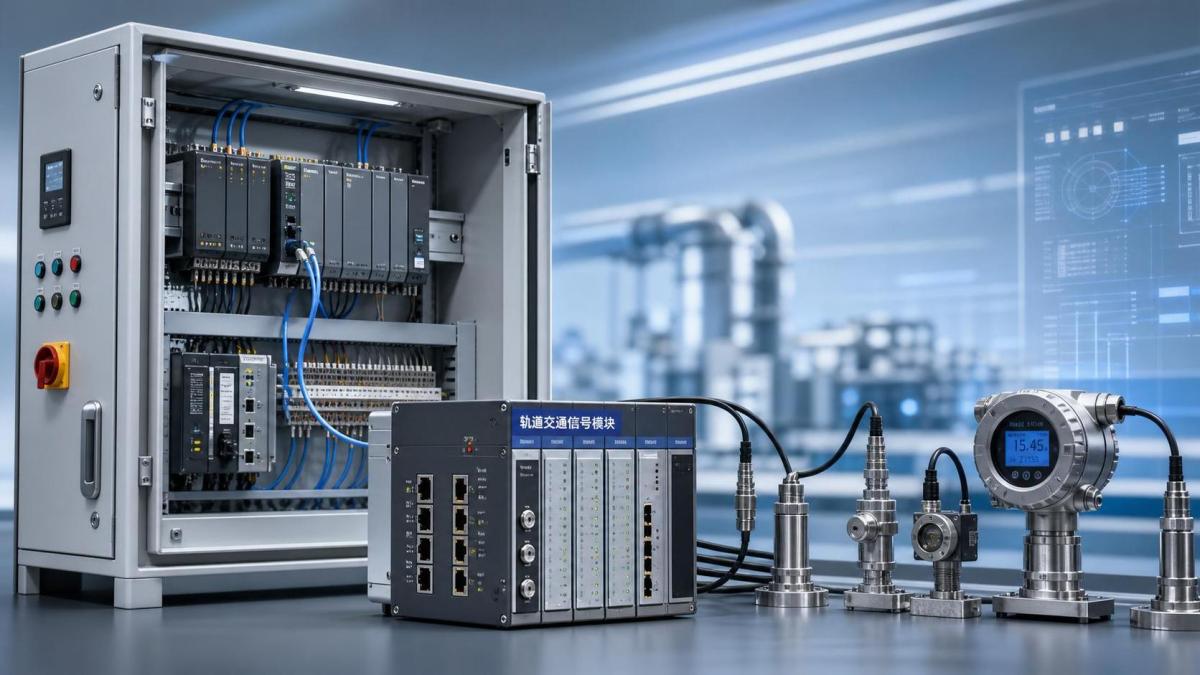
For complex transport and industrial assets, technical selection support for automation systems has become a board-level issue.
A poor fit can lock operators into safety gaps, integration delays, unstable performance, and rising lifecycle cost.
That matters even more in rail signalling, braking, pantograph monitoring, smart vessels, and LNG carrier operations.
In those environments, selection is not about choosing the most advanced product on paper.
It is about choosing the automation architecture that matches real operating conditions, compliance pressure, and long-term support needs.
From recent market changes, one signal is clear.
Technical selection support for automation systems now needs stronger evaluation logic, not broader vendor claims.
The best decisions usually come from a structured review of fit criteria before commercial ranking starts.
Why fit matters more than feature volume
Automation systems are often sold through feature lists, performance ranges, and software promises.
In practice, the problem is usually somewhere else.
The real question is whether the system can perform under the exact constraints of the asset.
For rail, that may mean SIL4 requirements, deterministic control, and fail-safe behavior during communication loss.
For maritime assets, it may mean route optimization, propulsion coordination, sensor fusion, and cyber resilience at sea.
For industrial plants, it may center on uptime, redundancy, legacy compatibility, and maintenance access.
This is why technical selection support for automation systems should begin with operating logic, not catalogs.
A smaller feature set with stronger fit often delivers better value over fifteen or twenty years.
The core criteria in technical selection support for automation systems
A useful evaluation model should be simple enough to apply, yet detailed enough to expose risk.
The following criteria usually separate a workable option from a costly mismatch.
1. Safety integrity and control reliability
This is the first gate in any technical selection support for automation systems review.
Check certification level, fault tolerance, response time, diagnostics, and behavior under degraded conditions.
For transport assets, failure mode analysis should carry more weight than nominal performance.
2. Interoperability with current and future systems
Automation rarely works in isolation.
The selected platform must communicate with SCADA, onboard controls, sensors, enterprise systems, and external interfaces.
Review protocol support, gateway dependence, data model openness, and upgrade flexibility.
3. Environmental and operational fit
This point is often underestimated.
High vibration, salinity, electromagnetic interference, heat, humidity, and shock can alter system behavior fast.
A robust technical selection support for automation systems process tests performance against the actual duty cycle.
4. Lifecycle cost and maintainability
Lowest purchase price rarely means lowest total cost.
Assess spare part lead times, software licensing, remote diagnostics, training demands, and obsolescence planning.
In long-life sectors, maintainability is often a stronger decision factor than initial CapEx.
5. Cybersecurity and data governance
As automation becomes more connected, cyber risk becomes operational risk.
Evaluate access control, logging, patch policy, network segmentation, and incident response capability.
This is now a standard part of technical selection support for automation systems, especially in critical infrastructure.
How to score options without losing practical judgment
A scoring matrix helps, but only when the weights reflect operational reality.
This is where many selection teams drift into spreadsheet comfort.
The better approach is to combine technical scoring with scenario testing.
Ask how each system behaves during communication delay, partial sensor failure, software rollback, and emergency override.
That moves technical selection support for automation systems from static comparison to decision-grade evidence.
- Set mandatory thresholds before scoring optional features.
- Weight safety, integration, and maintainability above cosmetic software extras.
- Use real operating scenarios from rail, marine, or plant environments.
- Score vendor support quality with evidence, not presentation style.
- Review upgrade paths over the expected asset life.
In actual projects, this method exposes hidden gaps faster than generic benchmarks.
Where selection errors usually happen
Most selection failures are not caused by weak technology alone.
They come from incomplete assumptions during evaluation.
That is why technical selection support for automation systems should include explicit risk checks.
More clearly now, selection quality depends on how early these issues are surfaced.
A sector-based view of technical selection support for automation systems
Different sectors share core logic, but the weighting changes.
That shift matters for any serious technical selection support for automation systems process.
Railway applications
Safety certification, deterministic response, and interoperability dominate the decision.
For signalling and braking, any uncertainty around fail-safe behavior should lower the ranking immediately.
Smart shipping and LNG vessels
Control stability in remote conditions becomes central.
The system must support navigation logic, propulsion coordination, and onboard energy efficiency without creating cyber exposure.
Cross-industry facilities
Here, maintainability, retrofit practicality, and operator usability often rank higher.
The solution still needs performance depth, but complexity must stay manageable.
A workable decision path
A consistent decision path keeps evaluation teams aligned and reduces late-stage reversals.
- Define the operating envelope, safety targets, and integration boundaries.
- Set non-negotiable criteria before vendor engagement deepens.
- Build a weighted matrix linked to real scenarios.
- Test shortlisted systems against degraded and future-state conditions.
- Review total ownership cost, support model, and upgrade viability.
- Document the technical rationale for procurement and future audits.
This structure keeps technical selection support for automation systems tied to measurable business value.
Final takeaway
The strongest automation decision is rarely the fastest one.
It comes from disciplined technical selection support for automation systems, grounded in fit, risk, and lifecycle logic.
When selection teams focus on safety, interoperability, environmental reality, maintainability, and cyber resilience, better outcomes follow.
That is especially true where rail, maritime, and industrial automation carry little tolerance for error.
Start with fit criteria, validate them through scenarios, and let the final choice reflect operational truth rather than brochure language.
Recommended News
 Sep 29, 2026What drives traction systems price differences between rail projects?Traction systems price differences explained: compare duty cycles, voltage compatibility, integration, localization, and lifecycle costs for smarter rail procurement.
 Sep 26, 2026What to assess before selecting an electric traction system manufacturerChoose an electric traction system manufacturer with confidence. Explore key criteria for performance, reliability, safety, integration, energy efficiency, and lifecycle support.
 Sep 25, 2026When do full digitalization systems justify the investment?Full digitalization systems: discover when rail and maritime operators can turn connected data into safer operations, higher availability, and measurable ROI.
 Sep 23, 2026What drives automatic train control systems cost on rail projects?Automatic train control systems cost depends on integration, migration, safety testing, communications, and lifecycle support. Explore the key budget drivers for rail projects.
 Sep 21, 2026How to assess an ocean going vessel builder’s delivery riskAssess an ocean going vessel builder’s delivery risk with proven checks for schedules, capacity, design maturity, critical equipment, quality, and project controls.
 Sep 20, 2026What drives rail safety technology costs over a project lifecycle?Rail safety technology cost goes beyond equipment—explore lifecycle drivers from integration and safety assurance to cybersecurity, commissioning, and obsolescence.
 Sep 16, 2026What to verify before choosing an advanced ocean-going vessels supplierAdvanced ocean-going vessels supplier checklist: verify design authority, build quality, digital systems, delivery reliability, and lifecycle support before you buy.
 Sep 15, 2026What rail safety technology best reduces level-crossing risks in Southeast Asia?Rail safety technology Southeast Asia: discover how fail-safe signalling, barriers, obstacle detection and remote monitoring reduce level-crossing risks.
 Sep 14, 2026How exporters can reduce customs delays in global trade logisticsGlobal trade logistics for exporters: reduce customs delays with accurate data, clearance-ready documents, early filing, and proactive exception management.
 Sep 13, 2026When do global transportation network systems reduce delivery delays?Global transportation network systems reduce delivery delays by improving rail-port-vessel coordination, real-time visibility, and proactive decisions across complex land-sea supply chains.
 Sep 09, 2026When should you choose a rail and maritime manufacturer with dual-sector capability?Rail and maritime manufacturer guide: learn when dual-sector capability reduces integration risk, improves lifecycle support, and strengthens rail-to-port operations.
 Sep 08, 2026What to verify before selecting a railway signalling equipment supplierRailway signalling equipment supplier checklist: verify safety evidence, integration, cybersecurity, delivery capability, and lifecycle support before award.
 Sep 07, 2026How to size a traction power transformer for railway load demandTraction power transformer sizing guide: model railway load demand, peak duty, voltage regulation, harmonics, and contingency capacity for reliable service.
 Sep 07, 2026How do customization options for industrial connectors affect lead times?Customization options for industrial connectors can impact lead times, cost, and compliance. Learn how to specify smarter for rail and marine projects.
 Sep 05, 2026What information should an industrial sourcing guide include?Industrial sourcing information procurement guide: evaluate suppliers, compliance, lifecycle costs, interfaces, and lead times for smarter rail and maritime purchasing decisions.
 Sep 01, 2026How to find reliable maritime tender information before biddingMaritime tender information: learn how to verify sources, define bid-ready scopes, check qualifications, and reduce risk before submitting competitive marine bids.
 Aug 30, 2026How to select railway automation equipment for depots with phased upgradesRailway automation equipment for depots: learn how to plan phased upgrades that improve safety, throughput, integration, and lifecycle control.
 Aug 27, 2026How industrial sourcing intelligence pricing data supports budget approvalIndustrial sourcing intelligence pricing data helps teams benchmark scope, assess supplier risk, and build defensible budget approvals for complex rail and maritime assets.
 Aug 26, 2026When does a marine fuel efficiency solution make financial sense in the Middle East?Marine fuel efficiency solution Middle East: learn when retrofit savings, compliance value, and vessel data align to deliver credible ROI and smarter shipping investment decisions.
 Aug 24, 2026When does maritime automation for tankers deliver a real payback?Maritime automation for tankers delivers real payback when it cuts fuel use, reduces cargo risk, and improves uptime. See how owners can time investment for stronger ROI.
 Aug 23, 2026When do maritime logistics systems in the Middle East justify the costMaritime logistics systems Middle East: discover when rising delays, manual coordination, and poor visibility make system investment the smarter move for regional operators.
 Aug 22, 2026What drives vessel navigation system price for commercial fleetsVessel navigation system price depends on integration, compliance, automation, and support—not just hardware. Learn what drives fleet costs and compare quotes with confidence.
 Aug 21, 2026How to assess shipbuilding maritime tenders before biddingShipbuilding maritime tenders require more than price checks. Learn how to assess technical scope, compliance, supply chain, and commercial risk before bidding with confidence.
 Aug 20, 2026When does working with an ocean-going vessels distributor reduce supply risk?Ocean-going vessels distributor: learn when this partner cuts supply risk through stronger compliance, faster response, and better sourcing resilience in complex maritime procurement.