



Search News
Industry Portal
Popular Tags
Land Sea Transport Providers: Cost and Delay Risks to Check
Author
Time
Click Count
Why do land sea transport providers create such different cost outcomes?
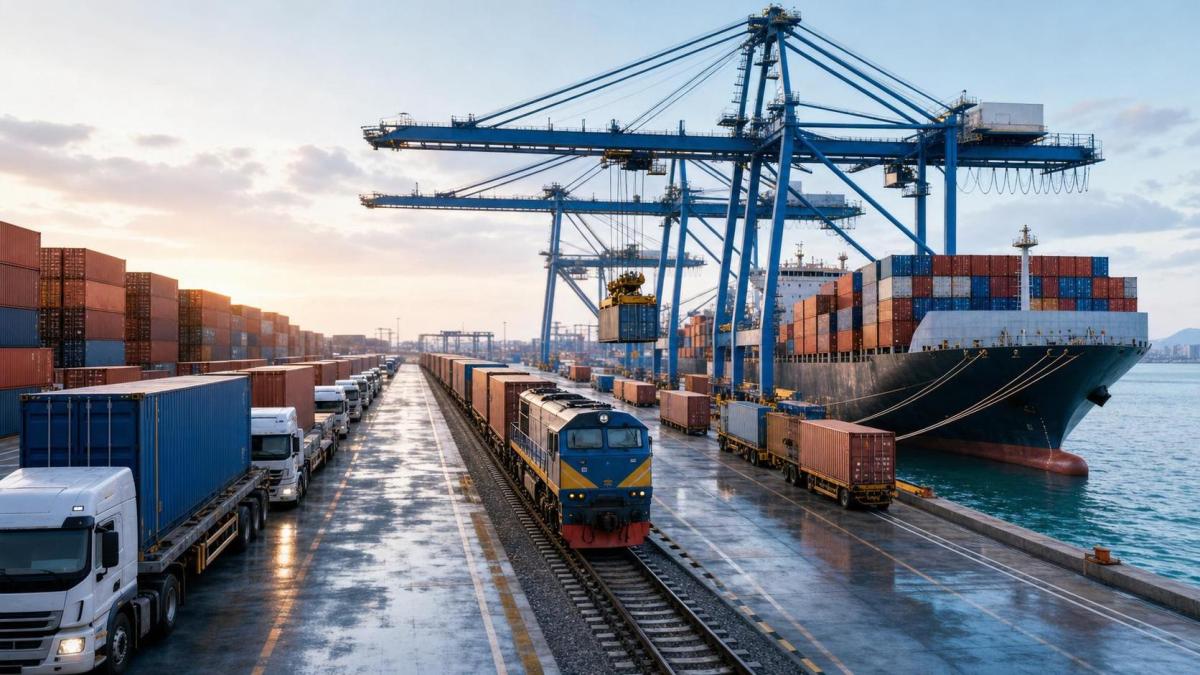
Choosing among land sea transport providers looks simple until freight invoices start expanding after booking. The headline rate rarely reflects the real landed cost.
In cross-border logistics, rail interfaces, port congestion, fuel swings, detention exposure, and customs timing often matter more than the quoted base charge.
That is why cost review should be treated as a risk review. A low bid can still become the highest-cost option after delays, rehandling, or contract exceptions.
For shipments linked to rail systems, traction equipment, smart vessels, or LNG-related projects, the margin for schedule error is even smaller.
GTOT follows this land-sea ecosystem closely because transport performance is tied to deeper operating realities, from railway control reliability to vessel efficiency and route intelligence.
In practical terms, the best land sea transport providers do not just move cargo. They control variance across nodes that usually create hidden cost.
When comparing land sea transport providers, what should be checked before price?
A useful first question is not price, but operating fit. Can the provider handle the cargo profile, route complexity, and timing sensitivity without adding extra transfer risk?
This matters especially when shipments involve controlled components, high-value assemblies, oversized units, or project cargo connected to rail or marine infrastructure.
More reliable evaluation usually includes these points:
- Network depth across inland terminals, ports, and final delivery zones.
- Track record on multimodal coordination, not single-leg transport only.
- Visibility tools for milestone tracking, exception alerts, and document status.
- Handling procedures for urgent rerouting, customs issues, or equipment shortages.
- Clarity on surcharges, free time, demurrage rules, and liability boundaries.
A provider that understands route engineering is usually stronger in execution. That is one reason intelligence-led platforms such as GTOT matter during screening.
They help connect freight decisions with infrastructure signals, vessel technology trends, and broader investment cycles that influence service stability.
A quick screening table for early comparison
Before moving into detailed bids, a short decision table can remove weak candidates quickly.
Where do delay risks usually hide in multimodal land-sea moves?
The biggest delays rarely begin in the middle of the voyage. They usually start at interfaces between transport modes, operators, and control systems.
For example, inland rail timing may slip because terminal windows were planned without enough buffer. Port cut-off then gets missed, and the ocean leg shifts automatically.
Another common issue is document mismatch. A shipment is physically ready, but customs, cargo coding, or consignee data are not aligned.
With advanced equipment, the impact becomes larger. Railway signal components, pantographs, brake systems, or marine control modules often cannot tolerate rough rehandling or storage drift.
This is where strong land sea transport providers stand out. They manage timing and technical handling together, rather than treating cargo as interchangeable volume.
More often than not, delay risk concentrates in five places:
- Terminal handoffs between truck, rail, and vessel operators.
- Port congestion and berth rescheduling.
- Incomplete customs or technical documentation.
- Special equipment shortages, including flat racks or reefer power support.
- Weak exception management after the first disruption appears.
A realistic review should ask how each provider manages those breakpoints, not just how often they promise on-time arrival.
Does a higher quote from land sea transport providers ever make better financial sense?
Yes, and this is often misunderstood. A higher initial quote can be cheaper over the full shipment cycle if it reduces delay penalties, stockout exposure, and emergency recovery costs.
Consider a route supporting rail modernization or vessel construction schedules. Missing one installation window may trigger labor idle time, crane rescheduling, or contract penalties.
In those cases, service reliability has a measurable value. Paying more for tighter coordination, stronger tracking, or better inland control can protect the larger budget.
A useful way to compare bids is to separate visible and invisible cost.
- Visible cost includes freight, fuel, terminal fees, insurance, and customs handling.
- Invisible cost includes waiting time, line stoppage, project delay, repacking, and claim administration.
The stronger land sea transport providers usually explain how their operating model lowers both categories, even if the base rate is not the lowest.
This thinking aligns with GTOT’s broader focus on asset value. In transport, speed and safety only matter when they remain stable under operational pressure.
What questions reveal whether a provider can really handle complex rail and maritime cargo?
Generic capability statements are easy to collect. Useful answers usually come from narrow, operational questions tied to actual shipment conditions.
Try asking about a recent move involving sensitive control systems, oversized transport modules, or high-value components passing through both inland and port networks.
The response should describe process detail, not marketing language.
Questions worth raising during evaluation
- Which route nodes are controlled directly, and which depend on subcontractors?
- How are delivery milestones updated when rail schedules or vessel windows change?
- What handling protections are used for vibration-sensitive or safety-critical equipment?
- What is the average response time when customs clearance stops unexpectedly?
- Can they show examples of cost variance between quoted and final invoice values?
In real review work, the quality of these answers often predicts execution quality better than brand size alone.
It also helps to compare their understanding of route intelligence. Providers familiar with smart shipping, railway operations, and infrastructure bottlenecks tend to make fewer planning assumptions.
How should the final decision be made without underestimating future risk?
The final step is to turn comparison into a weighted decision, not a simple rate ranking. Cost still matters, but cost must be read together with execution exposure.
A practical scoring model can include transit reliability, pricing clarity, technical cargo experience, disruption response, and documentation accuracy.
It is also smart to review external signals. Rail investment cycles, port capacity trends, smart container deployment, and vessel scheduling patterns can change provider performance quickly.
That broader market context is where GTOT offers useful perspective. Intelligence around rail signalling, braking systems, smart vessels, and LNG shipping helps explain why some routes become riskier before the invoice shows it.
Before signing, confirm three things:
- The full charge structure is documented, including exception fees.
- Delay ownership and communication rules are written into the service agreement.
- The route plan matches the actual cargo, timeline, and destination constraints.
Reliable land sea transport providers are rarely defined by one metric. They prove value by keeping cost predictable when conditions change.
The sensible next move is to map route requirements, build a risk checklist, and compare providers against final delivered cost rather than opening price alone.
Recommended News
 Sep 29, 2026What drives traction systems price differences between rail projects?Traction systems price differences explained: compare duty cycles, voltage compatibility, integration, localization, and lifecycle costs for smarter rail procurement.
 Sep 26, 2026What to assess before selecting an electric traction system manufacturerChoose an electric traction system manufacturer with confidence. Explore key criteria for performance, reliability, safety, integration, energy efficiency, and lifecycle support.
 Sep 25, 2026When do full digitalization systems justify the investment?Full digitalization systems: discover when rail and maritime operators can turn connected data into safer operations, higher availability, and measurable ROI.
 Sep 23, 2026What drives automatic train control systems cost on rail projects?Automatic train control systems cost depends on integration, migration, safety testing, communications, and lifecycle support. Explore the key budget drivers for rail projects.
 Sep 21, 2026How to assess an ocean going vessel builder’s delivery riskAssess an ocean going vessel builder’s delivery risk with proven checks for schedules, capacity, design maturity, critical equipment, quality, and project controls.
 Sep 20, 2026What drives rail safety technology costs over a project lifecycle?Rail safety technology cost goes beyond equipment—explore lifecycle drivers from integration and safety assurance to cybersecurity, commissioning, and obsolescence.
 Sep 16, 2026What to verify before choosing an advanced ocean-going vessels supplierAdvanced ocean-going vessels supplier checklist: verify design authority, build quality, digital systems, delivery reliability, and lifecycle support before you buy.
 Sep 15, 2026What rail safety technology best reduces level-crossing risks in Southeast Asia?Rail safety technology Southeast Asia: discover how fail-safe signalling, barriers, obstacle detection and remote monitoring reduce level-crossing risks.
 Sep 14, 2026How exporters can reduce customs delays in global trade logisticsGlobal trade logistics for exporters: reduce customs delays with accurate data, clearance-ready documents, early filing, and proactive exception management.
 Sep 13, 2026When do global transportation network systems reduce delivery delays?Global transportation network systems reduce delivery delays by improving rail-port-vessel coordination, real-time visibility, and proactive decisions across complex land-sea supply chains.
 Sep 09, 2026When should you choose a rail and maritime manufacturer with dual-sector capability?Rail and maritime manufacturer guide: learn when dual-sector capability reduces integration risk, improves lifecycle support, and strengthens rail-to-port operations.
 Sep 08, 2026What to verify before selecting a railway signalling equipment supplierRailway signalling equipment supplier checklist: verify safety evidence, integration, cybersecurity, delivery capability, and lifecycle support before award.
 Sep 07, 2026How to size a traction power transformer for railway load demandTraction power transformer sizing guide: model railway load demand, peak duty, voltage regulation, harmonics, and contingency capacity for reliable service.
 Sep 07, 2026How do customization options for industrial connectors affect lead times?Customization options for industrial connectors can impact lead times, cost, and compliance. Learn how to specify smarter for rail and marine projects.
 Sep 05, 2026What information should an industrial sourcing guide include?Industrial sourcing information procurement guide: evaluate suppliers, compliance, lifecycle costs, interfaces, and lead times for smarter rail and maritime purchasing decisions.
 Sep 01, 2026How to find reliable maritime tender information before biddingMaritime tender information: learn how to verify sources, define bid-ready scopes, check qualifications, and reduce risk before submitting competitive marine bids.
 Aug 30, 2026How to select railway automation equipment for depots with phased upgradesRailway automation equipment for depots: learn how to plan phased upgrades that improve safety, throughput, integration, and lifecycle control.
 Aug 27, 2026How industrial sourcing intelligence pricing data supports budget approvalIndustrial sourcing intelligence pricing data helps teams benchmark scope, assess supplier risk, and build defensible budget approvals for complex rail and maritime assets.
 Aug 26, 2026When does a marine fuel efficiency solution make financial sense in the Middle East?Marine fuel efficiency solution Middle East: learn when retrofit savings, compliance value, and vessel data align to deliver credible ROI and smarter shipping investment decisions.
 Aug 24, 2026When does maritime automation for tankers deliver a real payback?Maritime automation for tankers delivers real payback when it cuts fuel use, reduces cargo risk, and improves uptime. See how owners can time investment for stronger ROI.
 Aug 23, 2026When do maritime logistics systems in the Middle East justify the costMaritime logistics systems Middle East: discover when rising delays, manual coordination, and poor visibility make system investment the smarter move for regional operators.
 Aug 22, 2026What drives vessel navigation system price for commercial fleetsVessel navigation system price depends on integration, compliance, automation, and support—not just hardware. Learn what drives fleet costs and compare quotes with confidence.
 Aug 21, 2026How to assess shipbuilding maritime tenders before biddingShipbuilding maritime tenders require more than price checks. Learn how to assess technical scope, compliance, supply chain, and commercial risk before bidding with confidence.
 Aug 20, 2026When does working with an ocean-going vessels distributor reduce supply risk?Ocean-going vessels distributor: learn when this partner cuts supply risk through stronger compliance, faster response, and better sourcing resilience in complex maritime procurement.