



Search News
Industry Portal
Popular Tags
LTE-M Rail Transit: Where It Improves Coverage, Alerts, and Uptime
Author
Time
Click Count
Where LTE-M Rail Transit Starts Delivering Real Operational Value
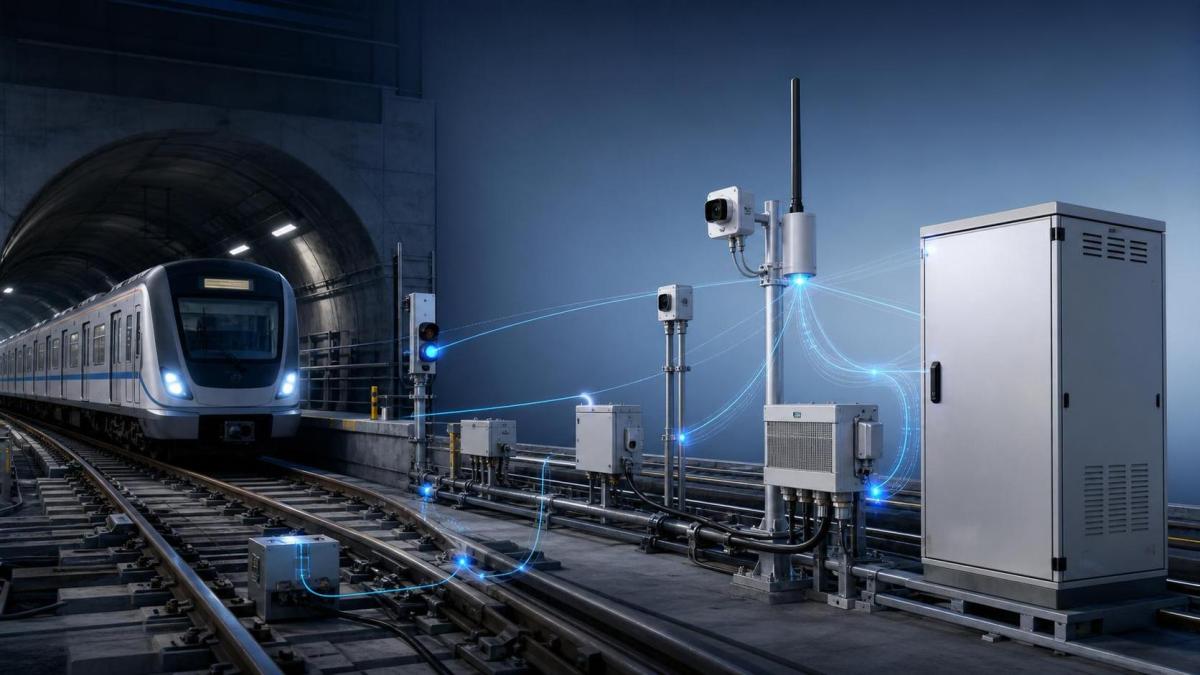
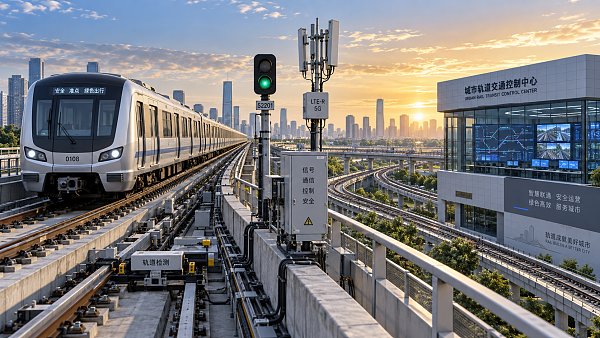
LTE-M rail transit matters most where missed data becomes operational delay. In rail systems, that usually means tunnels, station approaches, depots, and long trackside sections with uneven legacy coverage.
The practical appeal is not only broader connectivity. LTE-M rail transit also supports lower-power devices, faster field alerts, and steadier visibility into assets that directly affect service continuity.
For a sector closely watched by GTOT, this fits a wider shift. Rail signalling, traction power, braking reliability, and digital inspection are now judged together, not as isolated technical layers.
That is why LTE-M rail transit is increasingly assessed as an uptime tool. It helps connect field intelligence to safer operations, tighter maintenance cycles, and fewer unnoticed equipment failures.
Actual Deployment Decisions Change by Environment
Not every rail corridor asks the same thing from wireless infrastructure. A metro tunnel, an open freight line, and a high-density station throat face very different interference, mobility, and response requirements.
In actual use, the better question is not whether LTE-M rail transit works. The more useful question is where its coverage profile and device behavior match the operational risk being managed.
Some sites need dependable alarm delivery from remote cabinets. Others need battery-efficient monitoring on rolling stock components. Another group needs connectivity that survives difficult structural conditions without excessive retrofit complexity.
This is especially relevant in transport networks shaped by strict safety logic. When signalling assets, brake health signals, and power collection status feed broader decision systems, poor data continuity quickly becomes a reliability issue.
Tunnels and underground sections focus on coverage persistence
Underground environments often expose the strongest case for LTE-M rail transit. Conventional wireless options can struggle with penetration, handover consistency, or maintenance burden in enclosed infrastructure.
Here, the main value is not raw bandwidth. It is dependable delivery of alarms, status packets, and maintenance data from assets such as ventilation controls, access points, wayside boxes, and condition sensors.
A common mistake is treating tunnel coverage as a binary check. In reality, deployment quality depends on repeatability during peak operations, electromagnetic coexistence, and how quickly alerts surface during faults.
Stations and interlock zones care about response timing
Busy stations create a different pressure. There may be stronger network presence, yet more devices, more structural reflections, and more operational dependencies clustered into a smaller footprint.
In these areas, LTE-M rail transit is useful when alarms from platform equipment, passenger systems, point machines, and auxiliary cabinets must reach maintenance teams without blind spots or polling delays.
The judgement point is usually latency consistency under load. If a station already has connectivity, the issue becomes whether that connectivity is stable enough for exception handling and maintenance prioritization.
Rolling stock and onboard devices prioritize power and continuity
Onboard use cases often look attractive, but they need more careful filtering. LTE-M rail transit is a better fit for diagnostics, sensor reporting, and non-critical maintenance visibility than for bandwidth-heavy applications.
This matters for brake monitoring, door systems, battery health, HVAC status, and pantograph condition feedback. In these cases, power efficiency and connection persistence may matter more than transmission volume.
Where fleets operate across mixed corridors, the useful question is whether device behavior remains predictable during mobility events, depot idling, and route sections with uneven infrastructure density.
Different Rail Scenarios Do Not Share the Same Priorities
The differences become clearer when the operational focus is compared side by side. LTE-M rail transit creates value in each case, but the buying logic and technical checks are not identical.
This is where LTE-M rail transit becomes more than a connectivity topic. It becomes part of how operators decide where to reduce inspection burden and where to tighten fault response.
Trackside Monitoring Often Delivers the Fastest Return
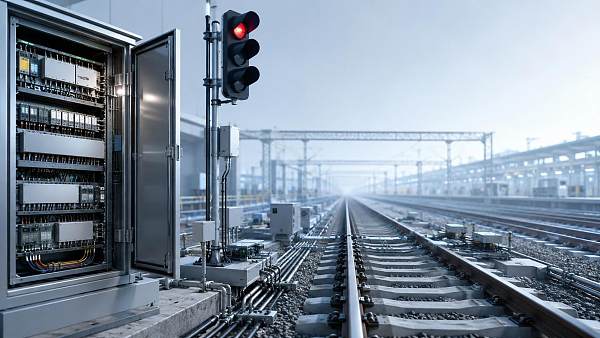
In many networks, the quickest operational gain comes from trackside assets that are critical but not continuously observed. These include switch heaters, signalling cabinets, power enclosures, crossings, and environmental sensors.
LTE-M rail transit works well here because the data packets are usually small, but the consequence of missing them is not small. An unnoticed temperature rise or voltage irregularity can create long downstream disruption.
A useful deployment pattern is to start with assets that already generate manual inspection cost or repeated service interruptions. That creates a clearer baseline for measuring alert quality and maintenance improvement.
For GTOT-style intelligence analysis, this also aligns with broader infrastructure trends. Railway control components are increasingly valued by how well they connect into predictive maintenance and service resilience frameworks.
What Often Gets Misjudged Before Rollout
One frequent misread is assuming LTE-M rail transit should replace every existing wireless layer. In practice, it usually works best as a selective fit for alarms, monitoring, diagnostics, and hard-to-wire assets.
Another issue is overvaluing datasheet coverage and undervaluing site behavior. Curves, metal density, tunnel geometry, power supply limitations, and cabinet placement can change results more than headline specifications suggest.
It is also easy to group similar rail environments together. A suburban station, a deep metro station, and a freight interchange may all appear connectivity-heavy, yet their alert urgency and interference patterns differ sharply.
Long-term maintenance is another blind spot. Device battery life, firmware management, SIM strategy, cybersecurity controls, and integration with existing signalling or maintenance platforms should be reviewed early.
- Check whether the asset needs instant alerts or periodic reporting.
- Confirm if the site has physical conditions that distort lab assumptions.
- Map integration points with maintenance, SCADA, or fleet systems.
- Compare lifecycle effort, not only initial deployment cost.
How to Match LTE-M Rail Transit to the Right Use Case
A practical evaluation starts with operational consequence. If data loss mainly affects reporting convenience, LTE-M rail transit may be optional. If data loss delays intervention, the business case becomes stronger.
The next step is to sort assets by message pattern. Low-frequency alarms, health signals, and condition updates are usually strong candidates. Continuous video or heavy data exchange is usually not.
It also helps to rank sites by retrofit difficulty. LTE-M rail transit often shows clear value where cabling is disruptive, access windows are short, or distributed assets create repeated field labor.
Where rail systems connect into wider land-sea logistics corridors, service continuity carries broader economic weight. That is one reason GTOT tracks technologies that make invisible infrastructure more measurable and more resilient.
The most reliable next move is to build a scenario matrix. List each asset group, note coverage constraints, define alert criticality, confirm integration needs, and compare lifecycle maintenance effort before scaling.
Used that way, LTE-M rail transit is not just another network option. It becomes a targeted method for improving coverage, speeding alerts, and protecting uptime where rail operations can least afford uncertainty.
Recommended News
 Sep 29, 2026What drives traction systems price differences between rail projects?Traction systems price differences explained: compare duty cycles, voltage compatibility, integration, localization, and lifecycle costs for smarter rail procurement.
 Sep 26, 2026What to assess before selecting an electric traction system manufacturerChoose an electric traction system manufacturer with confidence. Explore key criteria for performance, reliability, safety, integration, energy efficiency, and lifecycle support.
 Sep 25, 2026When do full digitalization systems justify the investment?Full digitalization systems: discover when rail and maritime operators can turn connected data into safer operations, higher availability, and measurable ROI.
 Sep 23, 2026What drives automatic train control systems cost on rail projects?Automatic train control systems cost depends on integration, migration, safety testing, communications, and lifecycle support. Explore the key budget drivers for rail projects.
 Sep 21, 2026How to assess an ocean going vessel builder’s delivery riskAssess an ocean going vessel builder’s delivery risk with proven checks for schedules, capacity, design maturity, critical equipment, quality, and project controls.
 Sep 20, 2026What drives rail safety technology costs over a project lifecycle?Rail safety technology cost goes beyond equipment—explore lifecycle drivers from integration and safety assurance to cybersecurity, commissioning, and obsolescence.
 Sep 16, 2026What to verify before choosing an advanced ocean-going vessels supplierAdvanced ocean-going vessels supplier checklist: verify design authority, build quality, digital systems, delivery reliability, and lifecycle support before you buy.
 Sep 15, 2026What rail safety technology best reduces level-crossing risks in Southeast Asia?Rail safety technology Southeast Asia: discover how fail-safe signalling, barriers, obstacle detection and remote monitoring reduce level-crossing risks.
 Sep 14, 2026How exporters can reduce customs delays in global trade logisticsGlobal trade logistics for exporters: reduce customs delays with accurate data, clearance-ready documents, early filing, and proactive exception management.
 Sep 13, 2026When do global transportation network systems reduce delivery delays?Global transportation network systems reduce delivery delays by improving rail-port-vessel coordination, real-time visibility, and proactive decisions across complex land-sea supply chains.
 Sep 09, 2026When should you choose a rail and maritime manufacturer with dual-sector capability?Rail and maritime manufacturer guide: learn when dual-sector capability reduces integration risk, improves lifecycle support, and strengthens rail-to-port operations.
 Sep 08, 2026What to verify before selecting a railway signalling equipment supplierRailway signalling equipment supplier checklist: verify safety evidence, integration, cybersecurity, delivery capability, and lifecycle support before award.
 Sep 07, 2026How to size a traction power transformer for railway load demandTraction power transformer sizing guide: model railway load demand, peak duty, voltage regulation, harmonics, and contingency capacity for reliable service.
 Sep 07, 2026How do customization options for industrial connectors affect lead times?Customization options for industrial connectors can impact lead times, cost, and compliance. Learn how to specify smarter for rail and marine projects.
 Sep 05, 2026What information should an industrial sourcing guide include?Industrial sourcing information procurement guide: evaluate suppliers, compliance, lifecycle costs, interfaces, and lead times for smarter rail and maritime purchasing decisions.
 Sep 01, 2026How to find reliable maritime tender information before biddingMaritime tender information: learn how to verify sources, define bid-ready scopes, check qualifications, and reduce risk before submitting competitive marine bids.
 Aug 30, 2026How to select railway automation equipment for depots with phased upgradesRailway automation equipment for depots: learn how to plan phased upgrades that improve safety, throughput, integration, and lifecycle control.
 Aug 27, 2026How industrial sourcing intelligence pricing data supports budget approvalIndustrial sourcing intelligence pricing data helps teams benchmark scope, assess supplier risk, and build defensible budget approvals for complex rail and maritime assets.
 Aug 26, 2026When does a marine fuel efficiency solution make financial sense in the Middle East?Marine fuel efficiency solution Middle East: learn when retrofit savings, compliance value, and vessel data align to deliver credible ROI and smarter shipping investment decisions.
 Aug 24, 2026When does maritime automation for tankers deliver a real payback?Maritime automation for tankers delivers real payback when it cuts fuel use, reduces cargo risk, and improves uptime. See how owners can time investment for stronger ROI.
 Aug 23, 2026When do maritime logistics systems in the Middle East justify the costMaritime logistics systems Middle East: discover when rising delays, manual coordination, and poor visibility make system investment the smarter move for regional operators.
 Aug 22, 2026What drives vessel navigation system price for commercial fleetsVessel navigation system price depends on integration, compliance, automation, and support—not just hardware. Learn what drives fleet costs and compare quotes with confidence.
 Aug 21, 2026How to assess shipbuilding maritime tenders before biddingShipbuilding maritime tenders require more than price checks. Learn how to assess technical scope, compliance, supply chain, and commercial risk before bidding with confidence.
 Aug 20, 2026When does working with an ocean-going vessels distributor reduce supply risk?Ocean-going vessels distributor: learn when this partner cuts supply risk through stronger compliance, faster response, and better sourcing resilience in complex maritime procurement.