



Search News
Industry Portal
Popular Tags
Electric Traction Systems for Metros: Key Factors in Retrofit Planning
Author
Time
Click Count
Electric Traction Systems for Metros: Key Factors in Retrofit Planning
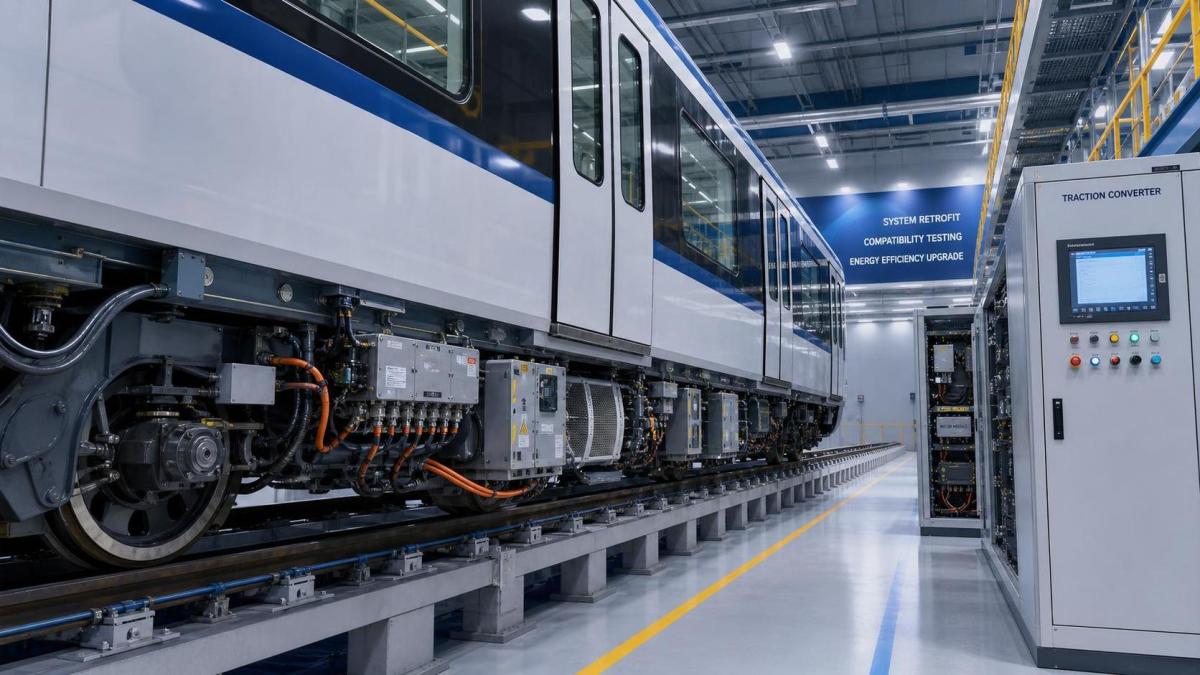
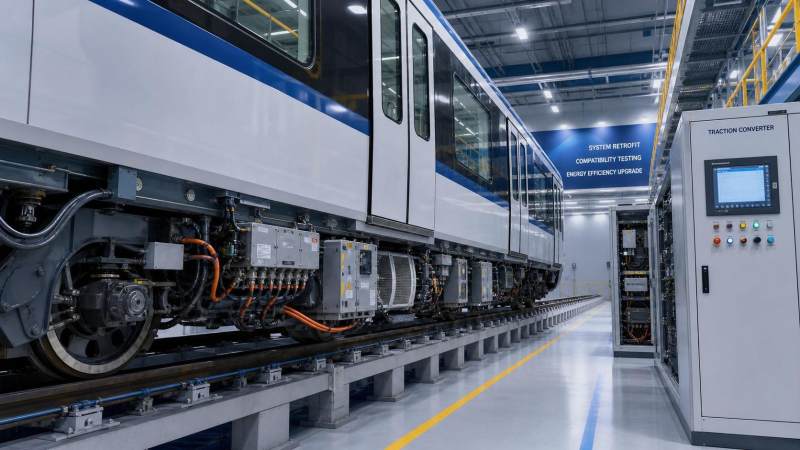
Retrofitting urban rail fleets demands more than component replacement. It calls for a system view of performance, safety, lifecycle cost, and service continuity.
For teams assessing electric traction systems for metros, the planning stage usually decides whether the project stays efficient or becomes disruptive.
A well-framed retrofit can extend fleet life, reduce energy waste, improve diagnostics, and support tighter timetable performance without rebuilding the whole platform.
That also means retrofit decisions should connect technical feasibility with operating realities, procurement limits, and future digital control ambitions.
Start with the Existing Operating Envelope
The first step in metro traction retrofit planning is understanding how the current fleet actually works in daily service.
Nameplate values are useful, but they rarely show the full picture. Real traction demand changes with gradients, passenger loading, stop spacing, and depot conditions.
Before selecting electric traction systems for metros, collect a baseline covering:
- Acceleration and deceleration curves
- Power consumption by line section
- Failure history of converters, motors, and cooling units
- Wheel slip behavior in wet or contaminated conditions
- Train availability, mean time between failures, and maintenance burden
This baseline helps separate a true traction bottleneck from issues caused by braking, signaling, ventilation, or poor maintenance discipline.
From recent projects, a clearer signal is this: fleets often need better controllability and diagnostics more than a headline increase in peak power.
Check Compatibility Beyond the Traction Package
One of the biggest retrofit risks is treating the traction package as a standalone upgrade. In practice, it touches almost every onboard system.
Electric traction systems for metros must align with the train control architecture, auxiliary power design, braking logic, and vehicle mechanical layout.
Compatibility checks should cover electrical, software, thermal, and structural interfaces. Missing one interface can create months of delay later.
Critical interface points
- Supply voltage range and transient tolerance
- Motor type, insulation condition, and torque curve matching
- Space and weight limits in underframe or roof zones
- Cooling airflow, heat rejection, and tunnel temperature exposure
- Communication protocols with TCMS, braking, and diagnostics platforms
- EMC behavior affecting signaling and onboard electronics
This is where disciplined engineering review matters. A compact converter that fits physically may still fail thermal duty or software integration tests.
In actual delivery work, the most resilient plans use interface control documents early, then freeze them before detailed procurement moves ahead.
Define Performance Targets That Support Operations
A retrofit should improve service outcomes, not just equipment specifications. That sounds obvious, but many traction programs still over-focus on component ratings.
For electric traction systems for metros, useful targets usually combine timetable performance, reliability, energy use, and maintainability.
Typical planning questions include:
- Does faster acceleration reduce headway pressure on crowded lines?
- Can regenerative braking recover meaningful energy under the local power network?
- Will new traction control improve adhesion in tunnels, curves, or wet seasons?
- How much maintenance labor can be removed through modular design and fault analytics?
These questions shift the discussion from equipment selection to operational value. That is usually where stronger business cases are built.
It also helps avoid oversizing. Higher-rated equipment may add cost, mass, and thermal complexity without producing measurable line-level benefits.
Prioritize Energy Efficiency and Lifecycle Economics
Energy savings are often a central reason to upgrade electric traction systems for metros, especially where power tariffs and service intensity are rising.
Still, energy should be measured across the full operating cycle, not estimated from converter efficiency alone.
Modern traction packages may improve efficiency through lighter equipment, better control algorithms, lower losses, and stronger regenerative braking response.
However, the return depends on substation receptivity, timetable density, and whether nearby trains can absorb regenerated power.
A practical lifecycle cost view should include
- Capital cost of traction equipment and integration work
- Installation labor and service outage impacts
- Energy savings under realistic operating scenarios
- Spare parts strategy and repair turnaround time
- Expected reliability improvement and fleet availability gains
- Obsolescence risk across semiconductors, software, and sensors
A lower purchase price can look attractive early, yet become expensive when proprietary spares or limited support windows appear later.
This is one reason leading retrofit teams now evaluate electric traction systems for metros through total asset value, not only tender price.
Treat Safety, Validation, and Cybersecurity as Core Scope
Retrofit work often happens under tight schedules, but compressed timelines should never push validation to the side.
Changes to electric traction systems for metros affect braking coordination, protection logic, fault handling, and emergency operating modes.
That makes formal verification essential, especially when legacy fleets have mixed documentation quality or undocumented field modifications.
Validation plans should include bench tests, static tests, dynamic tests, and fault scenario simulation before fleet-wide deployment.
Cybersecurity is now part of this conversation too. New traction controllers, remote diagnostics, and software tools expand the digital attack surface.
In practical terms, that means secure access control, software version governance, event logging, and controlled update procedures should be planned from day one.
Plan Around Service Continuity and Delivery Risk
Even the best technical solution can fail commercially if installation disrupts service too heavily. Metro networks rarely have generous maintenance windows.
So retrofit planning for electric traction systems for metros must include staging, fleet rotation, depot capacity, and fallback operating plans.
A phased approach is usually the most workable. Pilot one train or a small subset first, then adjust before broader rollout.
This reduces technical uncertainty and gives maintenance teams time to absorb new troubleshooting routines, tools, and spare part logic.
Delivery risks worth tracking early
- Long lead times for power electronics and control boards
- Late discovery of wiring or mounting deviations in old fleets
- Software integration delays with existing train systems
- Insufficient technician training before commissioning
- Weak documentation handover from supplier to operator
When these risks are visible early, schedule buffers and contractual responsibilities become much easier to define.
Use Data and Vendor Strategy to Future-Proof the Upgrade
The strongest retrofit programs do not end at commissioning. They create a platform for better asset intelligence over the next decade.
That is especially important as electric traction systems for metros become more software-driven, connected, and analytics-enabled.
Useful future-proofing measures include standardized data outputs, open diagnostic access, and clear ownership of software tools and update rights.
Vendor strategy matters here. A technically strong supplier is valuable, but long-term transparency and support discipline matter just as much.
GTOT follows this shift closely across rail control, traction power, and asset digitalization. The market is moving toward systems that combine efficiency with decision-grade data.
For retrofit buyers, that means asking sharper questions about data export, lifecycle support, training depth, and roadmap compatibility before award.
A Retrofit Checklist That Keeps Decisions Grounded
To keep planning focused, use a simple decision structure before freezing scope for electric traction systems for metros.
- Confirm the operational problem being solved.
- Measure actual fleet performance and failure patterns.
- Map every electrical, software, thermal, and mechanical interface.
- Set outcome-based performance targets tied to service needs.
- Build a lifecycle cost model using realistic duty cycles.
- Define validation, safety, and cybersecurity scope early.
- Phase delivery to protect service continuity.
- Secure long-term data access, spare support, and training.
That sequence keeps the retrofit grounded in operating value instead of specification chasing.
In the end, successful electric traction systems for metros are not defined only by newer hardware. They are defined by how well the upgrade fits the network, the fleet, and the next decade of operational demands.
When planning starts with interfaces, evidence, and lifecycle discipline, retrofit investment becomes easier to defend and much harder to regret.
Recommended News
 Sep 29, 2026What drives traction systems price differences between rail projects?Traction systems price differences explained: compare duty cycles, voltage compatibility, integration, localization, and lifecycle costs for smarter rail procurement.
 Sep 26, 2026What to assess before selecting an electric traction system manufacturerChoose an electric traction system manufacturer with confidence. Explore key criteria for performance, reliability, safety, integration, energy efficiency, and lifecycle support.
 Sep 25, 2026When do full digitalization systems justify the investment?Full digitalization systems: discover when rail and maritime operators can turn connected data into safer operations, higher availability, and measurable ROI.
 Sep 23, 2026What drives automatic train control systems cost on rail projects?Automatic train control systems cost depends on integration, migration, safety testing, communications, and lifecycle support. Explore the key budget drivers for rail projects.
 Sep 21, 2026How to assess an ocean going vessel builder’s delivery riskAssess an ocean going vessel builder’s delivery risk with proven checks for schedules, capacity, design maturity, critical equipment, quality, and project controls.
 Sep 20, 2026What drives rail safety technology costs over a project lifecycle?Rail safety technology cost goes beyond equipment—explore lifecycle drivers from integration and safety assurance to cybersecurity, commissioning, and obsolescence.
 Sep 16, 2026What to verify before choosing an advanced ocean-going vessels supplierAdvanced ocean-going vessels supplier checklist: verify design authority, build quality, digital systems, delivery reliability, and lifecycle support before you buy.
 Sep 15, 2026What rail safety technology best reduces level-crossing risks in Southeast Asia?Rail safety technology Southeast Asia: discover how fail-safe signalling, barriers, obstacle detection and remote monitoring reduce level-crossing risks.
 Sep 14, 2026How exporters can reduce customs delays in global trade logisticsGlobal trade logistics for exporters: reduce customs delays with accurate data, clearance-ready documents, early filing, and proactive exception management.
 Sep 13, 2026When do global transportation network systems reduce delivery delays?Global transportation network systems reduce delivery delays by improving rail-port-vessel coordination, real-time visibility, and proactive decisions across complex land-sea supply chains.
 Sep 09, 2026When should you choose a rail and maritime manufacturer with dual-sector capability?Rail and maritime manufacturer guide: learn when dual-sector capability reduces integration risk, improves lifecycle support, and strengthens rail-to-port operations.
 Sep 08, 2026What to verify before selecting a railway signalling equipment supplierRailway signalling equipment supplier checklist: verify safety evidence, integration, cybersecurity, delivery capability, and lifecycle support before award.
 Sep 07, 2026How to size a traction power transformer for railway load demandTraction power transformer sizing guide: model railway load demand, peak duty, voltage regulation, harmonics, and contingency capacity for reliable service.
 Sep 07, 2026How do customization options for industrial connectors affect lead times?Customization options for industrial connectors can impact lead times, cost, and compliance. Learn how to specify smarter for rail and marine projects.
 Sep 05, 2026What information should an industrial sourcing guide include?Industrial sourcing information procurement guide: evaluate suppliers, compliance, lifecycle costs, interfaces, and lead times for smarter rail and maritime purchasing decisions.
 Sep 01, 2026How to find reliable maritime tender information before biddingMaritime tender information: learn how to verify sources, define bid-ready scopes, check qualifications, and reduce risk before submitting competitive marine bids.
 Aug 30, 2026How to select railway automation equipment for depots with phased upgradesRailway automation equipment for depots: learn how to plan phased upgrades that improve safety, throughput, integration, and lifecycle control.
 Aug 27, 2026How industrial sourcing intelligence pricing data supports budget approvalIndustrial sourcing intelligence pricing data helps teams benchmark scope, assess supplier risk, and build defensible budget approvals for complex rail and maritime assets.
 Aug 26, 2026When does a marine fuel efficiency solution make financial sense in the Middle East?Marine fuel efficiency solution Middle East: learn when retrofit savings, compliance value, and vessel data align to deliver credible ROI and smarter shipping investment decisions.
 Aug 24, 2026When does maritime automation for tankers deliver a real payback?Maritime automation for tankers delivers real payback when it cuts fuel use, reduces cargo risk, and improves uptime. See how owners can time investment for stronger ROI.
 Aug 23, 2026When do maritime logistics systems in the Middle East justify the costMaritime logistics systems Middle East: discover when rising delays, manual coordination, and poor visibility make system investment the smarter move for regional operators.
 Aug 22, 2026What drives vessel navigation system price for commercial fleetsVessel navigation system price depends on integration, compliance, automation, and support—not just hardware. Learn what drives fleet costs and compare quotes with confidence.
 Aug 21, 2026How to assess shipbuilding maritime tenders before biddingShipbuilding maritime tenders require more than price checks. Learn how to assess technical scope, compliance, supply chain, and commercial risk before bidding with confidence.
 Aug 20, 2026When does working with an ocean-going vessels distributor reduce supply risk?Ocean-going vessels distributor: learn when this partner cuts supply risk through stronger compliance, faster response, and better sourcing resilience in complex maritime procurement.