



Search News
Industry Portal
Popular Tags
Intermodal Equipment Manufacturers: What to Compare Before Requesting Quotes
Author
Time
Click Count
Intermodal Equipment Manufacturers: What to Compare Before Requesting Quotes
Choosing among intermodal equipment manufacturers is not only a pricing exercise. The real decision affects uptime, compliance, replacement cycles, and exposure to supply chain disruption.
That is why early comparison matters. A weak shortlist often leads to attractive quotes that become expensive after delivery, installation, maintenance, or regulatory review.
In practice, strong procurement outcomes come from structured evaluation before the RFQ stage. This is especially true when equipment supports rail, port, vessel, or inland freight operations.
For buyers working across complex transport assets, the same principle applies everywhere. Engineering depth, operating reliability, and technical support usually matter more than the lowest opening price.
This guide explains what to compare before contacting intermodal equipment manufacturers. The goal is simple: request better quotes from suppliers that can actually perform.
Start with Fit, Not Price
Many sourcing teams begin with budget filters. That seems efficient, but it often removes the best intermodal equipment manufacturers too early.
A better first screen is operational fit. Ask whether the supplier understands your cargo profile, route conditions, handling equipment, loading cycles, and compliance environment.
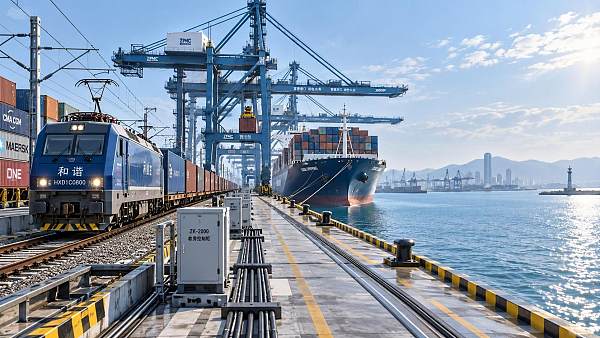
This matters even more when the equipment connects rail and marine systems. GTOT’s market view shows that buyers increasingly need suppliers fluent in both speed and endurance demands.
For example, a supplier may be strong in standard container solutions but weak in high-vibration rail applications, harsh salt-air conditions, or long service intervals.
Before requesting proposals, compare these fit indicators:
- Experience in your transport mode mix
- Reference projects with similar duty cycles
- Ability to meet regional certifications and inspection requirements
- Familiarity with port, terminal, rail yard, and fleet integration constraints
- Support for custom specifications rather than catalog-only supply
When intermodal equipment manufacturers cannot show that fit clearly, their quote comparison value drops fast.
Evaluate Engineering Capability and Design Control
Not every supplier controls its own engineering. Some assemble sourced components and rely on external design partners for modifications or problem resolution.
That model is not always wrong. Still, it creates delays when specifications change or field issues appear after commissioning.
When reviewing intermodal equipment manufacturers, ask how much of the design they control directly. Drawings, material selection, tolerance management, and validation processes should be traceable.
This is where advanced transport sectors offer a useful benchmark. In rail signalling, braking, and traction systems, design control is central because failure costs are severe.
The same discipline benefits intermodal equipment sourcing. Buyers should verify whether the manufacturer can support:
- Custom load and fatigue analysis
- Material compatibility for marine and rail environments
- Revision control for drawings and BOMs
- Prototype testing and documented validation
- Root-cause analysis for field failures
If the answers stay vague, expect risk to reappear later as delays, deviations, or change-order costs.
Check Quality Systems Beyond the Certificate
Most intermodal equipment manufacturers will mention ISO certifications. That is useful, but certificates alone do not prove process discipline on the shop floor.
The stronger signal is how the manufacturer manages variation. That includes incoming inspection, in-process controls, welding quality, dimensional verification, and final acceptance records.
For critical transport assets, documentation quality often predicts service reliability. Buyers should ask for sample inspection reports, nonconformance procedures, and corrective action timelines.
This is especially relevant when equipment faces continuous vibration, thermal cycling, corrosive air, or frequent lifting and locking operations.
The point is simple. Strong intermodal equipment manufacturers can explain quality with records, not slogans.
Compare Customization Limits Early
Customization is often where quote gaps begin. One supplier prices a standard build, while another includes redesign, interface adaptation, and compliance documentation.
Without careful comparison, the cheaper quote may simply exclude the difficult work. That can distort the whole procurement decision.
Ask intermodal equipment manufacturers to define exactly what can be customized, what triggers re-engineering, and what extends lead time.
Useful topics include interface dimensions, corrosion protection, locking systems, sensors, monitoring functions, and digital reporting options.
From a lifecycle view, modest customization can improve uptime and operating efficiency. Over-customization, however, may increase spare part complexity and future sourcing risk.
That tradeoff should be visible before RFQs go out.
Look Hard at Delivery Reliability
Lead time is now a strategic variable, not just a scheduling detail. Recent market shifts have made delivery reliability one of the clearest differentiators among intermodal equipment manufacturers.
Ask for more than a quoted number of weeks. Review capacity planning, key material sources, bottleneck processes, and contingency arrangements for disruptions.
This is where sophisticated suppliers stand out. They can explain what drives lead time and which items carry the highest delay risk.
For transport-related equipment, one late component can hold back an entire terminal expansion, vessel schedule, or rail fleet upgrade.
Before requesting quotes, compare:
- Average and peak production capacity
- On-time delivery performance over recent projects
- Dependency on single-source materials or components
- Packaging, export readiness, and shipping coordination ability
- Visibility tools for milestone tracking
Intermodal equipment manufacturers that hide schedule assumptions usually create trouble later.
Measure Total Cost, Not Just Quote Value
A low quote can still be the expensive option. Buyers should compare total cost across acquisition, installation, maintenance, downtime, parts consumption, and end-of-life replacement.
This becomes more obvious in heavy transport systems. High-performance components often cost more upfront because they reduce failures, inspections, and service interruptions later.
A practical review model for intermodal equipment manufacturers should include:
- Purchase price and included scope
- Freight, duties, and packaging costs
- Installation support and commissioning needs
- Expected maintenance intervals
- Spare parts pricing and availability
- Warranty coverage and response terms
- Estimated operational losses during failure events
This approach produces cleaner supplier comparisons and stronger negotiation positions.
Do Not Treat After-Sales Support as an Extra
Support quality often decides whether equipment problems stay manageable or become operational incidents. Yet many quote reviews still treat service as secondary.
That is a mistake. Good intermodal equipment manufacturers define response channels, spare parts plans, escalation procedures, and technical ownership after delivery.
Ask what happens when a fault appears in service. Who diagnoses it, who authorizes replacement, and how fast can critical parts move?
The strongest suppliers support long asset life with documentation, training, and revision updates. That matters for compliance-heavy operations and globally distributed fleets.
A quote without clear support terms is incomplete, even if the pricing looks competitive.
Build a Better RFQ Shortlist
Before contacting intermodal equipment manufacturers, create a comparison sheet with weighted decision criteria. This keeps technical fit and lifecycle value visible during supplier discussions.
A useful shortlist process usually follows four steps.
- Define mandatory technical and compliance requirements
- Screen suppliers for engineering and production capability
- Request evidence for quality, delivery, and service performance
- Issue RFQs only to suppliers that meet the minimum threshold
This tighter process saves time on both sides. It also produces more comparable bids because suppliers receive clearer technical boundaries.
In sectors shaped by rail precision and ocean-scale logistics, the message is consistent. Better sourcing decisions start before the first quote arrives.
Review intermodal equipment manufacturers through fit, engineering, quality, customization, delivery, total cost, and service. Then request proposals from the few suppliers that can support long-term performance, not just short-term price targets.
Recommended News
 Sep 29, 2026What drives traction systems price differences between rail projects?Traction systems price differences explained: compare duty cycles, voltage compatibility, integration, localization, and lifecycle costs for smarter rail procurement.
 Sep 26, 2026What to assess before selecting an electric traction system manufacturerChoose an electric traction system manufacturer with confidence. Explore key criteria for performance, reliability, safety, integration, energy efficiency, and lifecycle support.
 Sep 25, 2026When do full digitalization systems justify the investment?Full digitalization systems: discover when rail and maritime operators can turn connected data into safer operations, higher availability, and measurable ROI.
 Sep 23, 2026What drives automatic train control systems cost on rail projects?Automatic train control systems cost depends on integration, migration, safety testing, communications, and lifecycle support. Explore the key budget drivers for rail projects.
 Sep 21, 2026How to assess an ocean going vessel builder’s delivery riskAssess an ocean going vessel builder’s delivery risk with proven checks for schedules, capacity, design maturity, critical equipment, quality, and project controls.
 Sep 20, 2026What drives rail safety technology costs over a project lifecycle?Rail safety technology cost goes beyond equipment—explore lifecycle drivers from integration and safety assurance to cybersecurity, commissioning, and obsolescence.
 Sep 16, 2026What to verify before choosing an advanced ocean-going vessels supplierAdvanced ocean-going vessels supplier checklist: verify design authority, build quality, digital systems, delivery reliability, and lifecycle support before you buy.
 Sep 15, 2026What rail safety technology best reduces level-crossing risks in Southeast Asia?Rail safety technology Southeast Asia: discover how fail-safe signalling, barriers, obstacle detection and remote monitoring reduce level-crossing risks.
 Sep 14, 2026How exporters can reduce customs delays in global trade logisticsGlobal trade logistics for exporters: reduce customs delays with accurate data, clearance-ready documents, early filing, and proactive exception management.
 Sep 13, 2026When do global transportation network systems reduce delivery delays?Global transportation network systems reduce delivery delays by improving rail-port-vessel coordination, real-time visibility, and proactive decisions across complex land-sea supply chains.
 Sep 09, 2026When should you choose a rail and maritime manufacturer with dual-sector capability?Rail and maritime manufacturer guide: learn when dual-sector capability reduces integration risk, improves lifecycle support, and strengthens rail-to-port operations.
 Sep 08, 2026What to verify before selecting a railway signalling equipment supplierRailway signalling equipment supplier checklist: verify safety evidence, integration, cybersecurity, delivery capability, and lifecycle support before award.
 Sep 07, 2026How to size a traction power transformer for railway load demandTraction power transformer sizing guide: model railway load demand, peak duty, voltage regulation, harmonics, and contingency capacity for reliable service.
 Sep 07, 2026How do customization options for industrial connectors affect lead times?Customization options for industrial connectors can impact lead times, cost, and compliance. Learn how to specify smarter for rail and marine projects.
 Sep 05, 2026What information should an industrial sourcing guide include?Industrial sourcing information procurement guide: evaluate suppliers, compliance, lifecycle costs, interfaces, and lead times for smarter rail and maritime purchasing decisions.
 Sep 01, 2026How to find reliable maritime tender information before biddingMaritime tender information: learn how to verify sources, define bid-ready scopes, check qualifications, and reduce risk before submitting competitive marine bids.
 Aug 30, 2026How to select railway automation equipment for depots with phased upgradesRailway automation equipment for depots: learn how to plan phased upgrades that improve safety, throughput, integration, and lifecycle control.
 Aug 27, 2026How industrial sourcing intelligence pricing data supports budget approvalIndustrial sourcing intelligence pricing data helps teams benchmark scope, assess supplier risk, and build defensible budget approvals for complex rail and maritime assets.
 Aug 26, 2026When does a marine fuel efficiency solution make financial sense in the Middle East?Marine fuel efficiency solution Middle East: learn when retrofit savings, compliance value, and vessel data align to deliver credible ROI and smarter shipping investment decisions.
 Aug 24, 2026When does maritime automation for tankers deliver a real payback?Maritime automation for tankers delivers real payback when it cuts fuel use, reduces cargo risk, and improves uptime. See how owners can time investment for stronger ROI.
 Aug 23, 2026When do maritime logistics systems in the Middle East justify the costMaritime logistics systems Middle East: discover when rising delays, manual coordination, and poor visibility make system investment the smarter move for regional operators.
 Aug 22, 2026What drives vessel navigation system price for commercial fleetsVessel navigation system price depends on integration, compliance, automation, and support—not just hardware. Learn what drives fleet costs and compare quotes with confidence.
 Aug 21, 2026How to assess shipbuilding maritime tenders before biddingShipbuilding maritime tenders require more than price checks. Learn how to assess technical scope, compliance, supply chain, and commercial risk before bidding with confidence.
 Aug 20, 2026When does working with an ocean-going vessels distributor reduce supply risk?Ocean-going vessels distributor: learn when this partner cuts supply risk through stronger compliance, faster response, and better sourcing resilience in complex maritime procurement.