



Search News
Industry Portal
Popular Tags
International Voice Services: What to Check Before Choosing a Provider

Author
Time
Click Count
International Voice Services: What to Check Before Choosing a Provider
In global transport and maritime technology markets, a credible international voice is not built by translation alone.
It depends on whether a provider can carry technical meaning across borders, industries, and decision layers.
That matters even more in sectors shaped by safety standards, procurement scrutiny, and long sales cycles.
For platforms like GTOT, the stakes are high.
The subject is not generic consumer messaging.
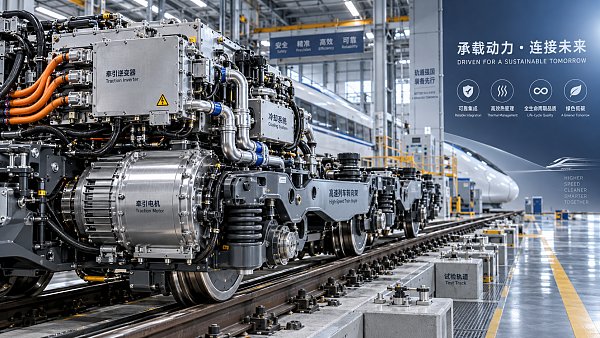
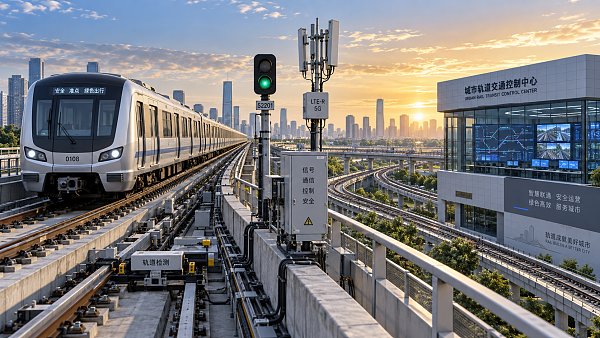
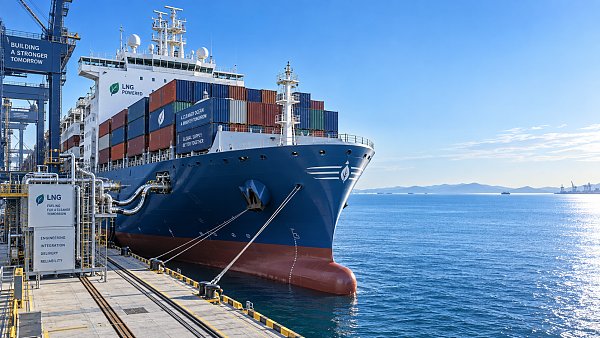
It is about railway signal control systems, pantographs, braking systems, smart container ships, and LNG carriers.
So when evaluating international voice services, the real question is simple.
Can the provider protect technical accuracy while improving global influence?
That is the standard worth using before any selection decision.
Why International Voice Matters in High-Spec Transport Markets

An international voice shapes how buyers, partners, and regulators understand a company’s technical authority.
In rail and ocean technology, that authority affects trust before formal bidding even starts.
From recent market shifts, one clearer signal stands out.
Global buyers now compare not only product capability, but also communication quality and strategic visibility.
That means international voice services now influence market entry, thought leadership, and tender readiness.
For GTOT, the challenge is especially complex.
Its content spans SIL4 rail safety logic, traction power systems, AI-enabled shipping, and cryogenic LNG engineering.
A weak provider may simplify too much.
A strong provider turns that complexity into a sharper international voice without losing credibility.
The First Check: Industry Understanding
Start with domain knowledge, not pricing.
An international voice provider should understand how technical markets actually make decisions.
In practice, this means fluency in terminology, compliance language, and procurement context.
Ask whether the provider can work with topics such as these:
- Railway signaling standards and automated control architecture.
- High-speed pantograph performance under vibration and wind resistance.
- Braking systems that combine aerodynamics and microelectronic control.
- Smart vessel operations, ship-to-shore connectivity, and route optimization.
- LNG shipping language around membrane containment and dual-fuel systems.
If they cannot discuss these areas clearly, they cannot strengthen your international voice.
They may produce content, but not sector-grade influence.
The Second Check: Technical Accuracy Across Languages
A strong international voice depends on precision.
This is where many providers look polished but fail in real business use.
Technical wording cannot be treated like general marketing copy.
One mistranslated phrase can weaken authority in front of engineers, EPC teams, or overseas distributors.
This also affects SEO performance.
Search visibility grows when the language matches how real buyers search, compare, and validate suppliers.
Before choosing a provider, request samples that show:
- Correct use of sector abbreviations and standard names.
- Clear distinction between technical explanation and sales messaging.
- Natural English that does not sound machine-made or over-translated.
- Consistent terminology across articles, reports, and solution pages.
If these basics are missing, your international voice will sound fragmented, even when the content volume is high.
The Third Check: Cross-Border Communication Capability
International voice services should do more than publish content.
They should help a company communicate with different stakeholders across regions.
That includes channel partners, project owners, media contacts, and technical committees.
For a platform like GTOT, communication needs are layered.
A trend report for railway investors should not sound like a procurement brief for LNG shipping.
A provider must adapt tone, structure, and proof points by audience and use case.
This is where cross-border communication becomes a selection factor.
The best providers can translate complex expertise into messages that travel well across markets.
That ability directly strengthens international voice in long-cycle industrial sectors.
The Fourth Check: SEO That Supports Decision-Making
Good SEO is not traffic for its own sake.
In this context, SEO should support discovery, comparison, and supplier confidence.
That means international voice services should connect content with real selection behavior.
Look for providers that can map keywords to business intent.
For example, buyers may search by application problem, compliance issue, upgrade path, or tender requirement.
A capable provider uses those search patterns to build an international voice that feels useful, not promotional.
More importantly, they should structure content around commercial questions.
- What risk does this technology solve?
- Which operating conditions matter most?
- How does the solution perform under global standards?
- What makes the supplier credible in restricted tenders?
That is how SEO and international voice start working together instead of pulling in different directions.
The Fifth Check: Process, Governance, and Review Depth
Selection quality often comes down to process discipline.
A provider may sound strategic, yet still lack a reliable operating model.
When evaluating international voice services, ask how content is planned, reviewed, and approved.
This matters because transport and maritime sectors carry high reputational and technical risk.
A useful provider should have a review chain that catches both factual and strategic errors.
A mature process makes international voice scalable, especially when topics become highly technical or politically sensitive.
Common Risks When Choosing International Voice Services
Several warning signs appear again and again during provider evaluation.
Spotting them early can save time, money, and market credibility.
- Overuse of generic B2B language with little technical substance.
- Strong writing samples, but no evidence of industrial sector experience.
- SEO focus without understanding engineering buying journeys.
- No clear review system for safety-related or compliance-heavy topics.
- Inconsistent terminology across rail, marine, and energy content.
These issues weaken international voice because they reduce trust at the exact moment trust should increase.
In actual projects, that often leads to poor engagement from the audiences that matter most.
A Practical Selection Framework
A simple framework can make provider comparison easier.
Use a weighted review based on business outcomes, not presentation quality alone.
- Score industry knowledge against your core sectors.
- Test technical accuracy with a sample brief.
- Review SEO strategy for decision-stage keywords.
- Check process rigor, reviewer roles, and revision logic.
- Assess whether the provider can build a lasting international voice, not just short-term output.
This approach works well for specialized platforms like GTOT.
It keeps the decision tied to strategic needs across rail infrastructure, shipping intelligence, and global supply chain communication.
It also makes internal alignment easier.
When everyone uses the same checkpoints, provider selection becomes more objective and easier to defend.
Final Takeaway
Choosing international voice services is really about choosing how your expertise will be understood globally.
In advanced transport and maritime sectors, that choice carries strategic weight.
The right provider should combine industry depth, technical precision, SEO judgment, and cross-border communication skill.
That combination helps build an international voice that earns attention and keeps credibility intact.
For businesses operating between land and sea systems, this is not a soft branding issue.
It is a practical part of market access, partner trust, and long-term technical authority.
Before making a final decision, ask one last question.
Will this provider help your knowledge travel clearly across borders, or simply add more noise?
That answer usually reveals the right path forward for any international voice strategy.
Recommended News
 Sep 29, 2026What drives traction systems price differences between rail projects?Traction systems price differences explained: compare duty cycles, voltage compatibility, integration, localization, and lifecycle costs for smarter rail procurement.
 Sep 26, 2026What to assess before selecting an electric traction system manufacturerChoose an electric traction system manufacturer with confidence. Explore key criteria for performance, reliability, safety, integration, energy efficiency, and lifecycle support.
 Sep 25, 2026When do full digitalization systems justify the investment?Full digitalization systems: discover when rail and maritime operators can turn connected data into safer operations, higher availability, and measurable ROI.
 Sep 23, 2026What drives automatic train control systems cost on rail projects?Automatic train control systems cost depends on integration, migration, safety testing, communications, and lifecycle support. Explore the key budget drivers for rail projects.
 Sep 21, 2026How to assess an ocean going vessel builder’s delivery riskAssess an ocean going vessel builder’s delivery risk with proven checks for schedules, capacity, design maturity, critical equipment, quality, and project controls.
 Sep 20, 2026What drives rail safety technology costs over a project lifecycle?Rail safety technology cost goes beyond equipment—explore lifecycle drivers from integration and safety assurance to cybersecurity, commissioning, and obsolescence.
 Sep 16, 2026What to verify before choosing an advanced ocean-going vessels supplierAdvanced ocean-going vessels supplier checklist: verify design authority, build quality, digital systems, delivery reliability, and lifecycle support before you buy.
 Sep 15, 2026What rail safety technology best reduces level-crossing risks in Southeast Asia?Rail safety technology Southeast Asia: discover how fail-safe signalling, barriers, obstacle detection and remote monitoring reduce level-crossing risks.
 Sep 14, 2026How exporters can reduce customs delays in global trade logisticsGlobal trade logistics for exporters: reduce customs delays with accurate data, clearance-ready documents, early filing, and proactive exception management.
 Sep 13, 2026When do global transportation network systems reduce delivery delays?Global transportation network systems reduce delivery delays by improving rail-port-vessel coordination, real-time visibility, and proactive decisions across complex land-sea supply chains.
 Sep 09, 2026When should you choose a rail and maritime manufacturer with dual-sector capability?Rail and maritime manufacturer guide: learn when dual-sector capability reduces integration risk, improves lifecycle support, and strengthens rail-to-port operations.
 Sep 08, 2026What to verify before selecting a railway signalling equipment supplierRailway signalling equipment supplier checklist: verify safety evidence, integration, cybersecurity, delivery capability, and lifecycle support before award.
 Sep 07, 2026How to size a traction power transformer for railway load demandTraction power transformer sizing guide: model railway load demand, peak duty, voltage regulation, harmonics, and contingency capacity for reliable service.
 Sep 07, 2026How do customization options for industrial connectors affect lead times?Customization options for industrial connectors can impact lead times, cost, and compliance. Learn how to specify smarter for rail and marine projects.
 Sep 05, 2026What information should an industrial sourcing guide include?Industrial sourcing information procurement guide: evaluate suppliers, compliance, lifecycle costs, interfaces, and lead times for smarter rail and maritime purchasing decisions.
 Sep 01, 2026How to find reliable maritime tender information before biddingMaritime tender information: learn how to verify sources, define bid-ready scopes, check qualifications, and reduce risk before submitting competitive marine bids.
 Aug 30, 2026How to select railway automation equipment for depots with phased upgradesRailway automation equipment for depots: learn how to plan phased upgrades that improve safety, throughput, integration, and lifecycle control.
 Aug 27, 2026How industrial sourcing intelligence pricing data supports budget approvalIndustrial sourcing intelligence pricing data helps teams benchmark scope, assess supplier risk, and build defensible budget approvals for complex rail and maritime assets.
 Aug 26, 2026When does a marine fuel efficiency solution make financial sense in the Middle East?Marine fuel efficiency solution Middle East: learn when retrofit savings, compliance value, and vessel data align to deliver credible ROI and smarter shipping investment decisions.
 Aug 24, 2026When does maritime automation for tankers deliver a real payback?Maritime automation for tankers delivers real payback when it cuts fuel use, reduces cargo risk, and improves uptime. See how owners can time investment for stronger ROI.
 Aug 23, 2026When do maritime logistics systems in the Middle East justify the costMaritime logistics systems Middle East: discover when rising delays, manual coordination, and poor visibility make system investment the smarter move for regional operators.
 Aug 22, 2026What drives vessel navigation system price for commercial fleetsVessel navigation system price depends on integration, compliance, automation, and support—not just hardware. Learn what drives fleet costs and compare quotes with confidence.
 Aug 21, 2026How to assess shipbuilding maritime tenders before biddingShipbuilding maritime tenders require more than price checks. Learn how to assess technical scope, compliance, supply chain, and commercial risk before bidding with confidence.
 Aug 20, 2026When does working with an ocean-going vessels distributor reduce supply risk?Ocean-going vessels distributor: learn when this partner cuts supply risk through stronger compliance, faster response, and better sourcing resilience in complex maritime procurement.