



Search News
Industry Portal
Popular Tags
How Global Supply Chain Shifts Are Reshaping Project Cost Control
Author
Time
Click Count
Why is the global supply chain suddenly a cost-control issue, not just a logistics topic?
Project budgets now move with freight rates, export controls, energy prices, and supplier concentration. That is why the global supply chain sits much closer to capital approval than before.
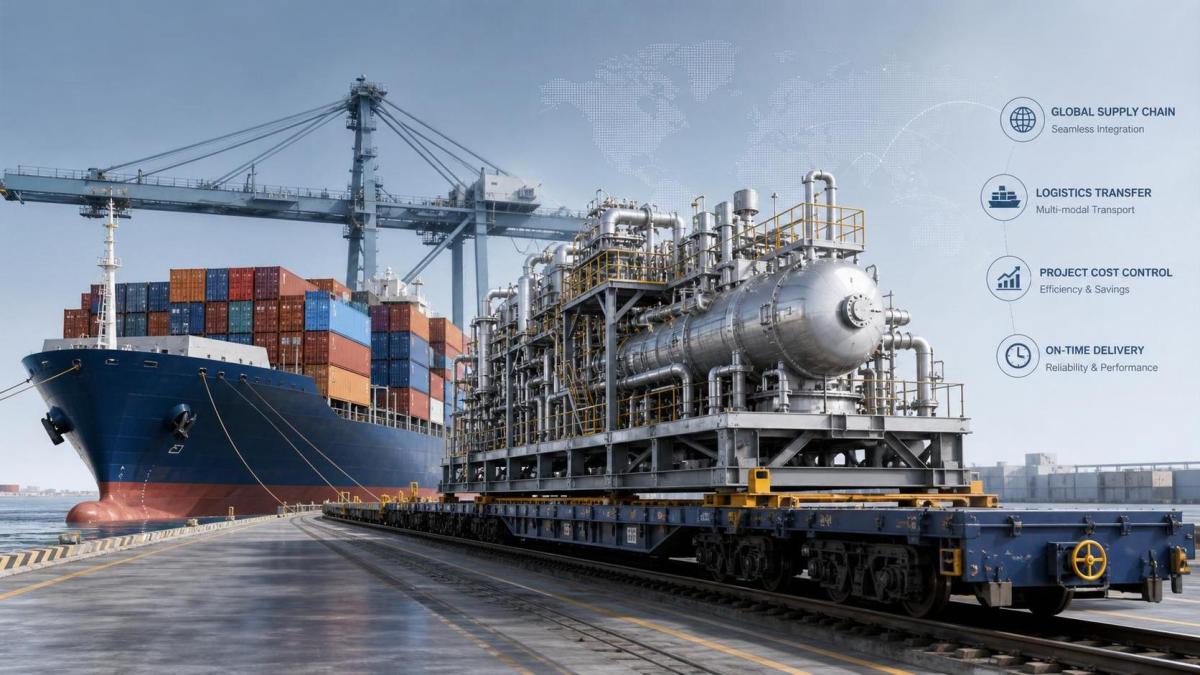
In rail systems, smart vessels, and LNG carrier programs, one delayed component can hold back testing, certification, and commissioning. The cost impact is rarely limited to the purchase order itself.
A signalling module with SIL4 requirements, a high-speed pantograph, or a cryogenic membrane-related part may have limited qualified sources. When routes shift, costs rise in layers.
Those layers often include expediting fees, redesign work, higher buffer stock, contract penalties, and delayed revenue recognition. On paper, unit cost may look stable. In practice, total cost moves.
This is where market intelligence becomes practical. GTOT tracks railway control systems, braking technologies, smart container ships, and LNG vessel developments because cost pressure usually starts upstream.
A supply chain change is not only a sourcing event. It is also a timing event, a compliance event, and sometimes a performance-risk event.
Which parts of project cost are changing the fastest?
Many teams still watch material price first. That matters, but it is no longer the only major variable in the global supply chain.
The faster-moving cost items are usually hidden in execution. Lead-time compression, substitute qualification, multimodal transport shifts, and insurance changes can reshape budget accuracy within weeks.
For complex transport equipment, technical dependencies make this sharper. A late braking subsystem can delay integration. A delayed LNG component can postpone cold testing. A late vessel automation package can disrupt sea trial planning.
A useful way to review exposure is to separate visible and invisible cost drivers.
This type of review helps separate routine procurement noise from structural risk in the global supply chain. It also gives cost control a more realistic baseline.
When does a cheaper supplier become the more expensive option?
This happens more often than many approval models assume. A lower quote can still produce a weaker project outcome if the surrounding conditions are unstable.
In actual applications, the risk is highest where performance tolerance is tight. Railway signal control systems, traction power interfaces, and LNG vessel systems are good examples.
If a new source lacks field history, local service support, or documentation quality, the savings can disappear during inspection, integration, or warranty handling.
A practical judgment usually considers more than price:
- How many qualified factories can deliver the same specification?
- How long is the approval path for an alternative source?
- Will substitution trigger retesting, software changes, or design revalidation?
- Can the supplier support urgent spare parts near the project site?
- Is the freight corridor stable enough for the promised lead time?
The global supply chain now rewards reliability, not only purchase efficiency. That is especially true for assets expected to run for decades.
GTOT’s industry coverage is useful here because it connects equipment performance, shipbuilding cycles, and infrastructure investment signals. Those signals often explain why one quote is cheap today but costly later.
How should cost control change for rail, smart shipping, and LNG projects?
The old method focused on budget lock, supplier negotiation, and delivery follow-up. That is still necessary, but it no longer covers the full cost picture.
A stronger approach builds cost control around critical-path components and lifecycle exposure. In other words, treat the global supply chain as part of technical governance.
For rail projects, the sensitive areas are often signalling, braking, and power collection. For smart container ships, attention shifts to automation stacks, propulsion support systems, and digital integration layers.
For LNG carriers, cryogenic containment, dual-fuel systems, and specialist materials deserve early cost-risk mapping. A late change there is rarely inexpensive.
More mature organizations now adjust cost control in four ways:
- They rank parts by replacement difficulty, not only by spend.
- They monitor shipping lanes and trade policy alongside supplier status.
- They reserve contingency for validation and schedule recovery, not just inflation.
- They compare total installed cost with total operating risk.
That shift is important because the global supply chain is no longer linear. It behaves like a network, and network risk spreads quickly.
What signals should be checked before approving cost-sensitive sourcing decisions?
A good approval process does not need hundreds of indicators. It needs a short list of signals that reveal whether cost assumptions are likely to hold.
The most useful signals usually combine market movement with technical dependency. Looking at only one side creates blind spots.
Needless caution can slow decisions, but weak diligence is more expensive. The right balance is structured, not bureaucratic.
This is also why sector-specific intelligence matters. Tracking LTE-M adoption in rail, brake material performance, or LNG containment stress trends helps interpret cost risk before it surfaces in claims.
What mistakes still undermine project cost control during global supply chain shifts?
One common mistake is treating all components as equally substitutable. They are not. Commodity items and mission-critical systems behave very differently under disruption.
Another mistake is freezing the budget too early. A fixed number can look disciplined while hiding unresolved exposure in freight, compliance, and technical validation.
Some projects also overlook lifecycle economics. A lower initial cost may increase energy use, maintenance downtime, or parts scarcity later, especially in long-life transport assets.
More subtle, but equally costly, is weak cross-functional timing. If sourcing, engineering, and commercial review move separately, the global supply chain risk appears too late to correct cheaply.
- Do not compare quotes without comparing qualification burden.
- Do not treat shipping volatility as a temporary side issue.
- Do not assume a backup supplier is project-ready.
- Do not ignore the revenue effect of delayed commissioning.
In high-value rail and maritime programs, cost control works best when schedule logic, technical criticality, and sourcing reality are reviewed together.
So what is the smartest next step when budgets face global supply chain pressure?
Start by identifying the components that can disrupt the entire project, not just the line items with the highest value. That single change improves cost visibility quickly.
Then test each critical item against three questions: How exposed is the source? How difficult is substitution? What is the lifecycle penalty of a poor choice?
For cross-border rail, smart shipping, and LNG projects, it also helps to use external intelligence as an early warning system. GTOT’s land-sea perspective is relevant because supply risk often crosses sectors before it becomes obvious in one tender.
The global supply chain will keep shifting. The practical goal is not to predict every shock. It is to approve budgets with clearer assumptions, better buffers, and stronger technical confidence.
A sensible next move is to build a short decision checklist, review critical-path parts, compare total delivered cost against lifecycle risk, and update contingency where lead times remain unstable.
That approach protects capital discipline without sacrificing resilience, which is now one of the most valuable outcomes in the global supply chain.
Recommended News
 Sep 29, 2026What drives traction systems price differences between rail projects?Traction systems price differences explained: compare duty cycles, voltage compatibility, integration, localization, and lifecycle costs for smarter rail procurement.
 Sep 26, 2026What to assess before selecting an electric traction system manufacturerChoose an electric traction system manufacturer with confidence. Explore key criteria for performance, reliability, safety, integration, energy efficiency, and lifecycle support.
 Sep 25, 2026When do full digitalization systems justify the investment?Full digitalization systems: discover when rail and maritime operators can turn connected data into safer operations, higher availability, and measurable ROI.
 Sep 23, 2026What drives automatic train control systems cost on rail projects?Automatic train control systems cost depends on integration, migration, safety testing, communications, and lifecycle support. Explore the key budget drivers for rail projects.
 Sep 21, 2026How to assess an ocean going vessel builder’s delivery riskAssess an ocean going vessel builder’s delivery risk with proven checks for schedules, capacity, design maturity, critical equipment, quality, and project controls.
 Sep 20, 2026What drives rail safety technology costs over a project lifecycle?Rail safety technology cost goes beyond equipment—explore lifecycle drivers from integration and safety assurance to cybersecurity, commissioning, and obsolescence.
 Sep 16, 2026What to verify before choosing an advanced ocean-going vessels supplierAdvanced ocean-going vessels supplier checklist: verify design authority, build quality, digital systems, delivery reliability, and lifecycle support before you buy.
 Sep 15, 2026What rail safety technology best reduces level-crossing risks in Southeast Asia?Rail safety technology Southeast Asia: discover how fail-safe signalling, barriers, obstacle detection and remote monitoring reduce level-crossing risks.
 Sep 14, 2026How exporters can reduce customs delays in global trade logisticsGlobal trade logistics for exporters: reduce customs delays with accurate data, clearance-ready documents, early filing, and proactive exception management.
 Sep 13, 2026When do global transportation network systems reduce delivery delays?Global transportation network systems reduce delivery delays by improving rail-port-vessel coordination, real-time visibility, and proactive decisions across complex land-sea supply chains.
 Sep 09, 2026When should you choose a rail and maritime manufacturer with dual-sector capability?Rail and maritime manufacturer guide: learn when dual-sector capability reduces integration risk, improves lifecycle support, and strengthens rail-to-port operations.
 Sep 08, 2026What to verify before selecting a railway signalling equipment supplierRailway signalling equipment supplier checklist: verify safety evidence, integration, cybersecurity, delivery capability, and lifecycle support before award.
 Sep 07, 2026How to size a traction power transformer for railway load demandTraction power transformer sizing guide: model railway load demand, peak duty, voltage regulation, harmonics, and contingency capacity for reliable service.
 Sep 07, 2026How do customization options for industrial connectors affect lead times?Customization options for industrial connectors can impact lead times, cost, and compliance. Learn how to specify smarter for rail and marine projects.
 Sep 05, 2026What information should an industrial sourcing guide include?Industrial sourcing information procurement guide: evaluate suppliers, compliance, lifecycle costs, interfaces, and lead times for smarter rail and maritime purchasing decisions.
 Sep 01, 2026How to find reliable maritime tender information before biddingMaritime tender information: learn how to verify sources, define bid-ready scopes, check qualifications, and reduce risk before submitting competitive marine bids.
 Aug 30, 2026How to select railway automation equipment for depots with phased upgradesRailway automation equipment for depots: learn how to plan phased upgrades that improve safety, throughput, integration, and lifecycle control.
 Aug 27, 2026How industrial sourcing intelligence pricing data supports budget approvalIndustrial sourcing intelligence pricing data helps teams benchmark scope, assess supplier risk, and build defensible budget approvals for complex rail and maritime assets.
 Aug 26, 2026When does a marine fuel efficiency solution make financial sense in the Middle East?Marine fuel efficiency solution Middle East: learn when retrofit savings, compliance value, and vessel data align to deliver credible ROI and smarter shipping investment decisions.
 Aug 24, 2026When does maritime automation for tankers deliver a real payback?Maritime automation for tankers delivers real payback when it cuts fuel use, reduces cargo risk, and improves uptime. See how owners can time investment for stronger ROI.
 Aug 23, 2026When do maritime logistics systems in the Middle East justify the costMaritime logistics systems Middle East: discover when rising delays, manual coordination, and poor visibility make system investment the smarter move for regional operators.
 Aug 22, 2026What drives vessel navigation system price for commercial fleetsVessel navigation system price depends on integration, compliance, automation, and support—not just hardware. Learn what drives fleet costs and compare quotes with confidence.
 Aug 21, 2026How to assess shipbuilding maritime tenders before biddingShipbuilding maritime tenders require more than price checks. Learn how to assess technical scope, compliance, supply chain, and commercial risk before bidding with confidence.
 Aug 20, 2026When does working with an ocean-going vessels distributor reduce supply risk?Ocean-going vessels distributor: learn when this partner cuts supply risk through stronger compliance, faster response, and better sourcing resilience in complex maritime procurement.