



Search News
Industry Portal
Popular Tags
Compact Rail Traction Technology: Fit, Limits, and Use Cases
Author
Time
Click Count
Compact rail traction technology is moving into the center of rolling stock discussions because space, weight, energy use, and maintainability are now tightly linked. What matters is not only whether a compact package can deliver power, but whether it can do so reliably across heat, vibration, duty cycles, and service constraints. In a transport landscape shaped by electrification, digital control, and stricter lifecycle economics, compact rail traction technology deserves to be judged as a system decision rather than a component trend.
Why compact traction is attracting attention now
Modern fleets are being asked to carry more passengers, accelerate faster, consume less energy, and stay available for longer intervals between major interventions.
That pressure is especially visible in metro upgrades, regional EMUs, battery-hybrid platforms, and export programs with tight carbody envelopes.
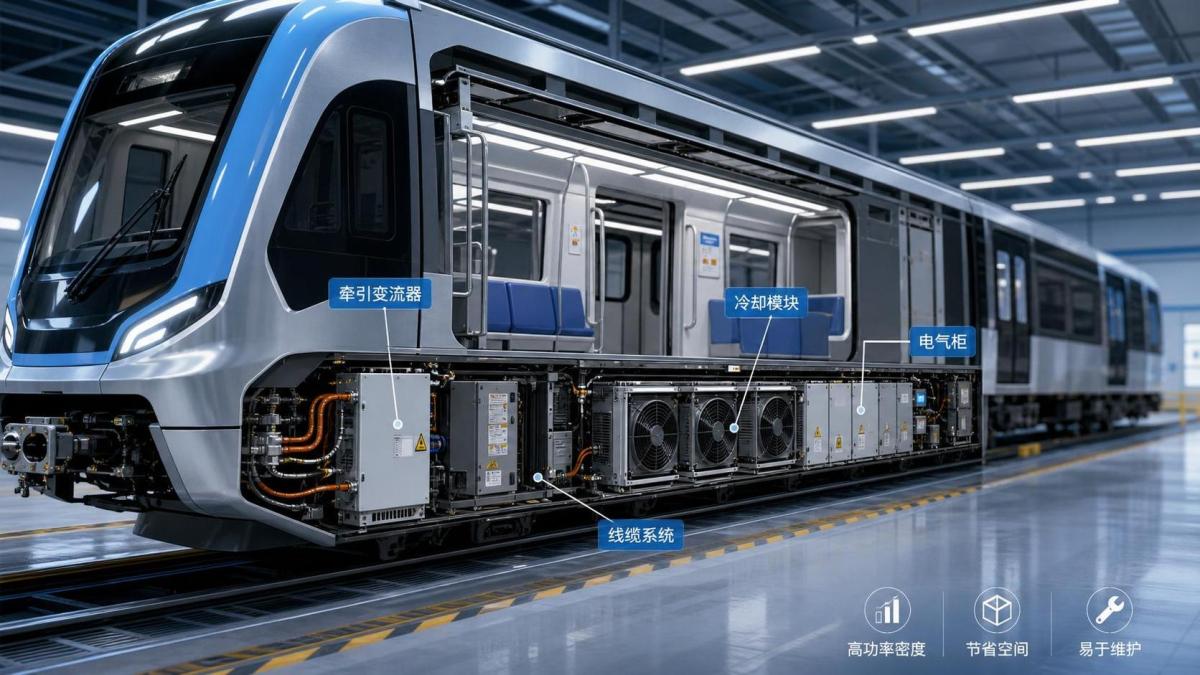
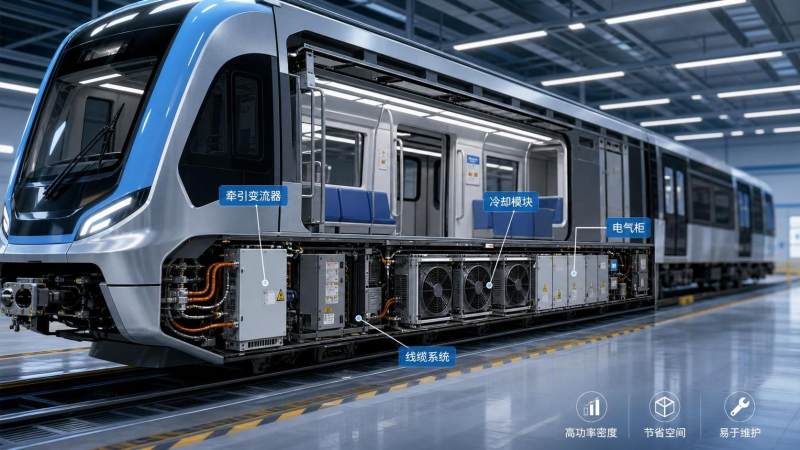
The appeal of compact rail traction technology comes from higher power density and cleaner integration. It can reduce equipment room demands, simplify cable runs, and support more flexible trainset layouts.
GTOT’s broader view of rail control, braking, pantographs, and transport intelligence makes this trend easier to read. Traction does not stand alone. Its packaging affects thermal behavior, brake blending, onboard diagnostics, and even the economics of fleet planning.
What compact rail traction technology actually includes
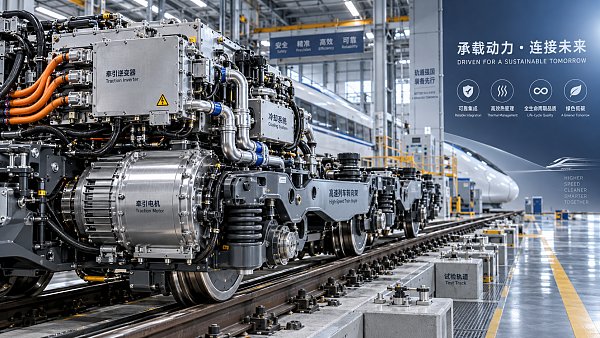
The term usually refers to traction converters, auxiliary converters, cooling assemblies, transformers in some architectures, control electronics, and mechanical packaging designed for minimum footprint.
It also includes the software and monitoring layer that allows dense hardware to operate safely under changing load conditions.
In practical terms, compact rail traction technology often relies on several design choices:
- Integrated power modules with higher switching efficiency
- Smaller cooling circuits with tighter thermal management
- Reduced cabinet count or underfloor equipment consolidation
- Digital control for fault detection and load balancing
- Modular replacement logic for faster depot intervention
This means compactness is not just about shrinking hardware. It is about balancing electrical performance, thermal margins, serviceability, and installation discipline.
The fit depends on the whole train architecture
A compact traction package may look attractive on paper, yet fit poorly if the train platform has difficult airflow paths or limited maintenance access.
The right evaluation starts with interface mapping. That includes voltage range, axle load targets, braking strategy, roof and underfloor space, and expected duty profile.
Compact rail traction technology tends to fit best when the vehicle program values one or more of the following:
- Space recovery for passenger capacity or onboard systems
- Lower mass for acceleration and energy efficiency
- Modular fleet platforms with shared subsystems
- High diagnostic transparency for condition-based maintenance
- Retrofit cases where larger legacy cabinets are impractical
Where these drivers are absent, the value case becomes weaker. A larger, less dense system can still be preferable if it offers wider thermal headroom and easier field repair.
Where the limits usually appear
The main limits of compact rail traction technology are rarely hidden. They usually show up in heat rejection, maintenance ergonomics, and sensitivity to harsh operating environments.
When power electronics are packed tightly, thermal design stops being a secondary topic. Dust ingress, clogged filters, degraded fans, or coolant issues can create disproportionate performance penalties.
There is also a tradeoff in repair philosophy. Dense integration can shorten assembly time in manufacturing, yet increase replacement cost if a failure forces module-level swap instead of board-level service.
Another limit concerns duty severity. Heavy-haul, extreme ambient heat, long tunnel routes, or repeated high-torque cycles may challenge compact systems more than standard suburban service.
This does not make the concept unsuitable. It means the evaluation must test worst-case thermal, electrical, and mechanical conditions rather than average operation.
A useful comparison frame
Use cases where the value is strongest
Urban rail is one of the clearest fits. Frequent acceleration, limited carbody space, and availability targets make compact rail traction technology especially relevant there.
Regional and intercity EMUs are another strong case, particularly where operators want lighter trainsets and lower energy consumption without sacrificing timetable recovery.
Battery-electric and hybrid rail platforms also benefit. Compact architecture creates room for storage systems, power management equipment, and safety separation.
Retrofit programs deserve attention as well. Replacing bulky legacy traction cabinets with compact rail traction technology can extend platform life when structural space is limited.
High-speed applications are more selective. Compactness matters, but integration with pantograph behavior, braking coordination, and strict thermal reliability becomes more demanding.
That is where a system-level intelligence approach, like the one GTOT applies across traction, braking, and control domains, becomes valuable. The decision is rarely isolated.
What to check before calling it a good solution
A compact package should be tested against operating reality, not only datasheet efficiency.
Several points usually separate a sound selection from a risky one:
- Thermal margin under summer peak load and degraded cooling conditions
- Compatibility with train control, braking logic, and network voltage variation
- Ease of module exchange in depot conditions
- Diagnostic depth, fault logging, and remote monitoring capability
- Spare strategy, supplier support, and software lifecycle commitments
- Performance in vibration, humidity, contamination, and tunnel heat environments
This is also where decarbonization claims should be examined carefully. Smaller equipment may support efficiency goals, but real savings depend on route profile, regenerative braking capture, and fleet maintenance quality.
Signals that deserve extra scrutiny
Watch for proposals that emphasize compact dimensions while leaving cooling redundancy, service access, or fault isolation unclear.
Also question any lifecycle model built on ideal operating assumptions. Railway traction earns credibility through consistency in difficult conditions, not only in controlled demonstrations.
How to frame the next decision
Compact rail traction technology should be evaluated as part of a wider transport performance chain. Space savings matter, but they only create value when they improve train availability, efficiency, maintainability, or platform flexibility.
A practical next step is to build a comparison matrix around route duty, ambient conditions, maintenance model, and interface complexity. That makes it easier to separate true fit from fashionable specification.
For organizations tracking broader rail and logistics shifts, the strongest insight often comes from connecting traction choices with control systems, braking behavior, and infrastructure investment patterns. That is the level where compact rail traction technology becomes a strategic decision, rather than a packaging upgrade.
When those criteria are made explicit, the next conversation becomes clearer: not whether compactness is good in principle, but where it delivers durable operational value and where conventional architecture still has the stronger case.
Recommended News
 Sep 29, 2026What drives traction systems price differences between rail projects?Traction systems price differences explained: compare duty cycles, voltage compatibility, integration, localization, and lifecycle costs for smarter rail procurement.
 Sep 26, 2026What to assess before selecting an electric traction system manufacturerChoose an electric traction system manufacturer with confidence. Explore key criteria for performance, reliability, safety, integration, energy efficiency, and lifecycle support.
 Sep 25, 2026When do full digitalization systems justify the investment?Full digitalization systems: discover when rail and maritime operators can turn connected data into safer operations, higher availability, and measurable ROI.
 Sep 23, 2026What drives automatic train control systems cost on rail projects?Automatic train control systems cost depends on integration, migration, safety testing, communications, and lifecycle support. Explore the key budget drivers for rail projects.
 Sep 21, 2026How to assess an ocean going vessel builder’s delivery riskAssess an ocean going vessel builder’s delivery risk with proven checks for schedules, capacity, design maturity, critical equipment, quality, and project controls.
 Sep 20, 2026What drives rail safety technology costs over a project lifecycle?Rail safety technology cost goes beyond equipment—explore lifecycle drivers from integration and safety assurance to cybersecurity, commissioning, and obsolescence.
 Sep 16, 2026What to verify before choosing an advanced ocean-going vessels supplierAdvanced ocean-going vessels supplier checklist: verify design authority, build quality, digital systems, delivery reliability, and lifecycle support before you buy.
 Sep 15, 2026What rail safety technology best reduces level-crossing risks in Southeast Asia?Rail safety technology Southeast Asia: discover how fail-safe signalling, barriers, obstacle detection and remote monitoring reduce level-crossing risks.
 Sep 14, 2026How exporters can reduce customs delays in global trade logisticsGlobal trade logistics for exporters: reduce customs delays with accurate data, clearance-ready documents, early filing, and proactive exception management.
 Sep 13, 2026When do global transportation network systems reduce delivery delays?Global transportation network systems reduce delivery delays by improving rail-port-vessel coordination, real-time visibility, and proactive decisions across complex land-sea supply chains.
 Sep 09, 2026When should you choose a rail and maritime manufacturer with dual-sector capability?Rail and maritime manufacturer guide: learn when dual-sector capability reduces integration risk, improves lifecycle support, and strengthens rail-to-port operations.
 Sep 08, 2026What to verify before selecting a railway signalling equipment supplierRailway signalling equipment supplier checklist: verify safety evidence, integration, cybersecurity, delivery capability, and lifecycle support before award.
 Sep 07, 2026How to size a traction power transformer for railway load demandTraction power transformer sizing guide: model railway load demand, peak duty, voltage regulation, harmonics, and contingency capacity for reliable service.
 Sep 07, 2026How do customization options for industrial connectors affect lead times?Customization options for industrial connectors can impact lead times, cost, and compliance. Learn how to specify smarter for rail and marine projects.
 Sep 05, 2026What information should an industrial sourcing guide include?Industrial sourcing information procurement guide: evaluate suppliers, compliance, lifecycle costs, interfaces, and lead times for smarter rail and maritime purchasing decisions.
 Sep 01, 2026How to find reliable maritime tender information before biddingMaritime tender information: learn how to verify sources, define bid-ready scopes, check qualifications, and reduce risk before submitting competitive marine bids.
 Aug 30, 2026How to select railway automation equipment for depots with phased upgradesRailway automation equipment for depots: learn how to plan phased upgrades that improve safety, throughput, integration, and lifecycle control.
 Aug 27, 2026How industrial sourcing intelligence pricing data supports budget approvalIndustrial sourcing intelligence pricing data helps teams benchmark scope, assess supplier risk, and build defensible budget approvals for complex rail and maritime assets.
 Aug 26, 2026When does a marine fuel efficiency solution make financial sense in the Middle East?Marine fuel efficiency solution Middle East: learn when retrofit savings, compliance value, and vessel data align to deliver credible ROI and smarter shipping investment decisions.
 Aug 24, 2026When does maritime automation for tankers deliver a real payback?Maritime automation for tankers delivers real payback when it cuts fuel use, reduces cargo risk, and improves uptime. See how owners can time investment for stronger ROI.
 Aug 23, 2026When do maritime logistics systems in the Middle East justify the costMaritime logistics systems Middle East: discover when rising delays, manual coordination, and poor visibility make system investment the smarter move for regional operators.
 Aug 22, 2026What drives vessel navigation system price for commercial fleetsVessel navigation system price depends on integration, compliance, automation, and support—not just hardware. Learn what drives fleet costs and compare quotes with confidence.
 Aug 21, 2026How to assess shipbuilding maritime tenders before biddingShipbuilding maritime tenders require more than price checks. Learn how to assess technical scope, compliance, supply chain, and commercial risk before bidding with confidence.
 Aug 20, 2026When does working with an ocean-going vessels distributor reduce supply risk?Ocean-going vessels distributor: learn when this partner cuts supply risk through stronger compliance, faster response, and better sourcing resilience in complex maritime procurement.