



Search News
Industry Portal
Popular Tags
Energy Efficient Transport Equipment: What Lowers Total Operating Cost in 2026
Author
Time
Click Count
Why does energy efficient transport equipment matter more in 2026?
Purchase price still matters, but it no longer explains real transport cost. The larger cost story sits in fuel, power draw, downtime, maintenance, crewing pressure, and asset life.
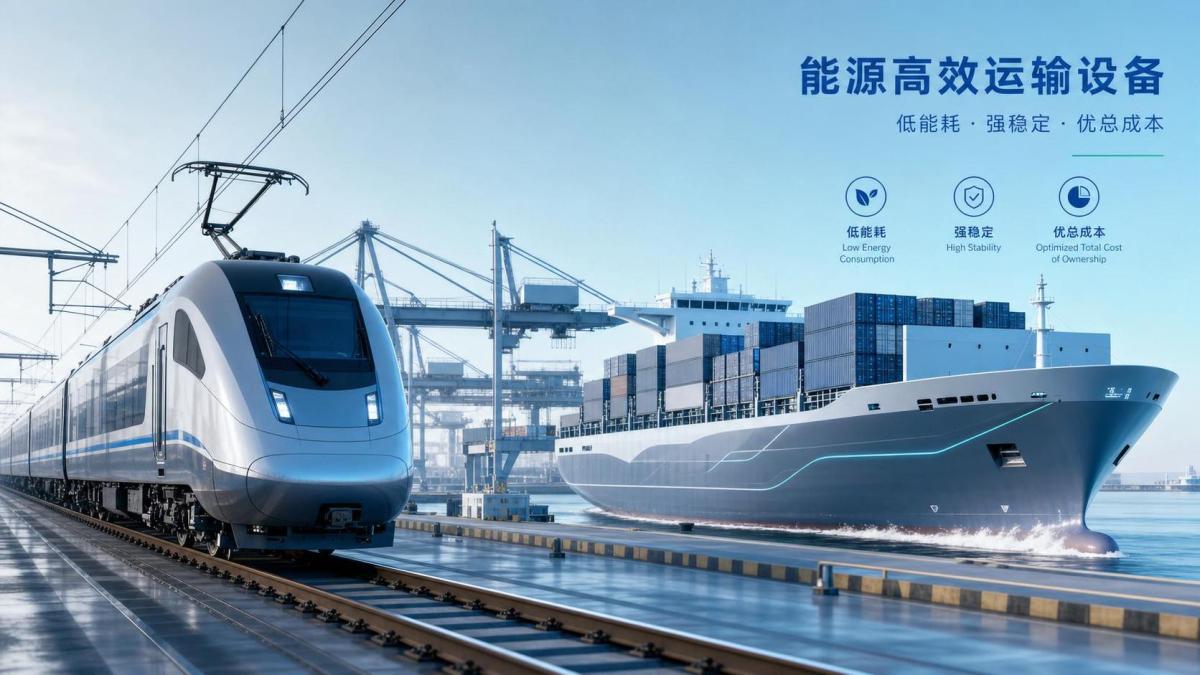
That is why energy efficient transport equipment has moved from an engineering preference to a board-level cost question across rail and maritime operations.
In practical terms, the best-performing assets now reduce cost in several layers at once. They use less energy, create fewer unplanned stops, and maintain efficiency under demanding duty cycles.
This is especially visible in high-speed rail, urban rail, smart container ships, and LNG carriers, where small efficiency gains scale quickly across long routes and intensive schedules.
GTOT follows this shift closely because cost performance no longer depends on one isolated component. It depends on how control systems, traction, braking, routing, and vessel intelligence work together.
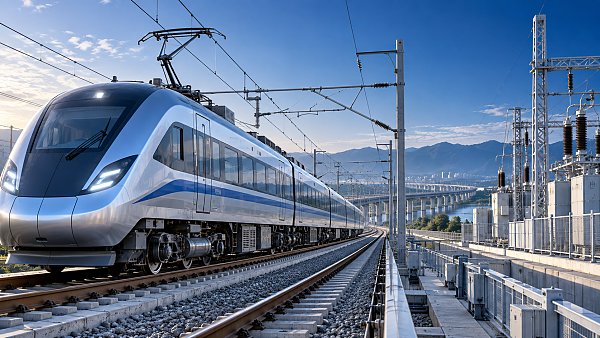
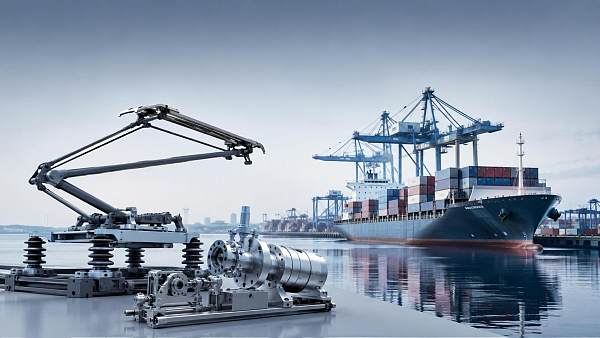
A pantograph that stabilizes power collection at high speed, a braking system that manages thermal fade better, or a route engine that trims idle fuel time can all change total operating cost.
So the real question is not whether energy efficient transport equipment is worth considering. The better question is which upgrades actually return measurable savings, and under what operating profile.
What actually lowers total operating cost: fuel savings alone, or a broader system effect?
Fuel and electricity savings are the easiest numbers to notice, but they rarely tell the full story. The strongest business case usually comes from combined operational effects.
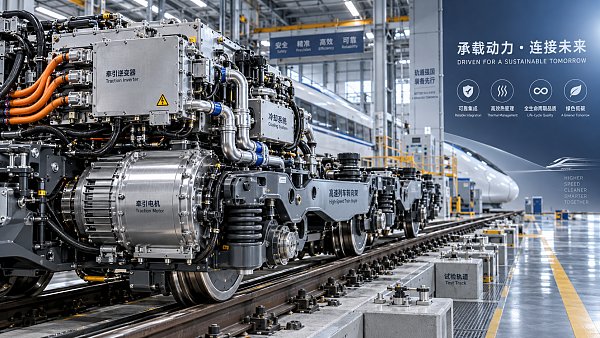
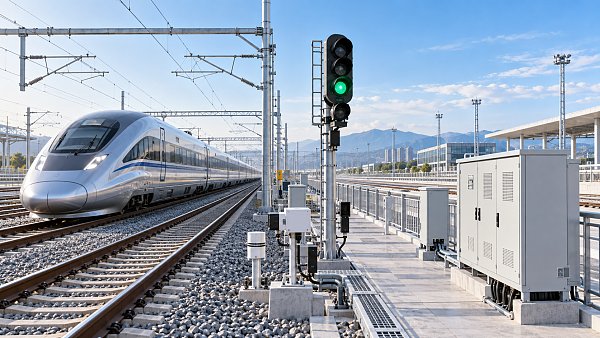
For rail assets, energy efficient transport equipment often cuts cost through smoother power transfer, more accurate signalling logic, regenerative braking support, and fewer wear-related interventions.
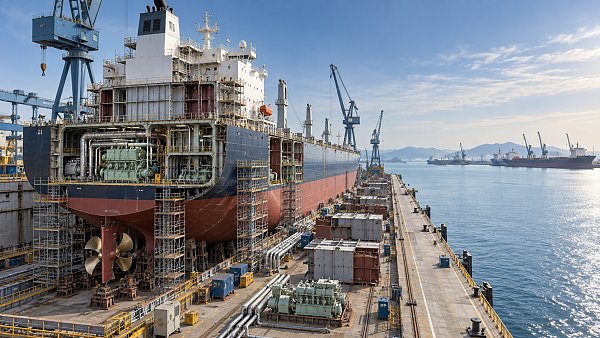
For ships, the gain may come from AI route optimization, hull and propulsion efficiency, lower auxiliary loads, and better voyage planning tied to port windows.
Another overlooked driver is maintenance timing. Equipment with strong sensing and control layers can flag degradation early, which avoids expensive reactive repairs and secondary component damage.
Service life also matters. When efficient systems reduce thermal stress, vibration, or power instability, the result is not just lower monthly energy spend. It can mean slower asset deterioration.
The table below helps separate visible savings from hidden cost impact.
When evaluating energy efficient transport equipment, the more useful model is total cost per operating hour, per voyage, or per seat-kilometer, not only acquisition price.
Which technologies usually produce the fastest payback?
The fastest payback often comes from upgrades that improve both efficiency and control quality. Pure hardware swaps help, but hardware plus data usually performs better.
In rail, four areas stand out. Advanced signalling, stable pantograph systems, efficient braking packages, and traction-side monitoring can all shorten the path to cost reduction.
A SIL4-capable control environment, for example, is usually discussed in safety terms. Yet it also supports denser and more predictable operations, which improves capacity economics.
Pantographs are another example. When contact quality remains stable above 350 km/h, power losses and wear events fall, which supports both efficiency and maintenance control.
Braking systems matter for cost as well. Better microelectronic control and stronger thermal behavior can reduce component replacement frequency and improve stopping precision under repeated duty.
At sea, the quicker wins usually come from smart routing, propulsion optimization, onboard energy management, and cargo-voyage coordination.
For smart container ships, route engines that align weather, current, and berth timing can avoid unnecessary speed-up and waiting. That cuts bunker consumption without weakening schedule discipline.
For LNG carriers, dual-fuel propulsion efficiency and better containment performance deserve attention. Even modest thermal or fuel-management gains can become meaningful over long-haul service.
- Shorter payback tends to appear where utilization is high and operating cycles are repetitive.
- Mid-range payback is common when upgrades require integration across control, training, and spare parts planning.
- Longer payback is more likely when benefits depend on future regulation rather than present operating pressure.
How can you tell whether new equipment is efficient enough for your actual operating profile?
This is where many evaluations become too generic. Equipment may test well on paper but deliver weaker returns when route length, climate, load pattern, or maintenance practice differ.
A better approach is to match energy efficient transport equipment against actual duty conditions, not average brochure conditions.
For rail systems, check acceleration cycles, headway density, contact stability, brake heat load, and network automation level. For vessels, examine route volatility, port delay exposure, cargo sensitivity, and fuel strategy.
GTOT’s value in this kind of assessment is context. A component rarely performs in isolation, and intelligence is more useful when it connects signalling logic, traction behavior, maritime routing, and service constraints.
The most common decision filters are fairly practical:
- Can the equipment maintain efficiency at peak load, not only nominal load?
- Does it reduce unplanned intervention hours across a full year?
- Will it integrate with current control architecture and data systems?
- Are spare parts, diagnostics, and training aligned with the rollout plan?
- Can the savings be measured through auditable operating metrics?
If those answers are unclear, the asset may still be technically strong, but the business case is not mature enough for approval.
Where do buyers misread the cost case for energy efficient transport equipment?
The first mistake is treating efficiency as a fuel-only story. That narrows the analysis and hides the impact of uptime, reliability, and residual asset value.
The second mistake is ignoring integration cost. A high-efficiency subsystem can underperform if control software, crew procedures, or maintenance schedules remain unchanged.
Another risk is overestimating vendor projections without route-specific validation. Savings modeled for one corridor or sea lane may not transfer cleanly to another.
In rail, this often appears when braking, signalling, and traction are reviewed separately. In shipping, it appears when propulsion upgrades are assessed without voyage and port data.
One more blind spot is regulatory timing. Decarbonization pressure is important, but an investment should still stand up on operational economics before future compliance benefits are added.
A disciplined review usually asks two hard questions. What happens if energy prices soften? And what happens if planned utilization drops below target?
If the project still protects cost under those conditions, the case is more resilient.
What should be on the shortlist before approving an upgrade or new purchase?
The best shortlist is compact and measurable. It should turn a broad efficiency claim into a decision structure that can survive technical and financial review.
In the end, energy efficient transport equipment should be approved because it improves operating economics under realistic conditions, not because it sounds advanced.
A sensible next step is to build one comparison sheet across rail or maritime options, using the same cost horizon, utilization assumptions, and reliability metrics.
That makes it easier to compare signalling systems, pantographs, braking packages, smart vessel technologies, or LNG carrier efficiency upgrades on equal terms.
In 2026, the strongest decisions will come from linking engineering detail to operating cash impact. That is exactly where the energy efficient transport equipment conversation becomes most valuable.
Recommended News
 Sep 29, 2026What drives traction systems price differences between rail projects?Traction systems price differences explained: compare duty cycles, voltage compatibility, integration, localization, and lifecycle costs for smarter rail procurement.
 Sep 26, 2026What to assess before selecting an electric traction system manufacturerChoose an electric traction system manufacturer with confidence. Explore key criteria for performance, reliability, safety, integration, energy efficiency, and lifecycle support.
 Sep 25, 2026When do full digitalization systems justify the investment?Full digitalization systems: discover when rail and maritime operators can turn connected data into safer operations, higher availability, and measurable ROI.
 Sep 23, 2026What drives automatic train control systems cost on rail projects?Automatic train control systems cost depends on integration, migration, safety testing, communications, and lifecycle support. Explore the key budget drivers for rail projects.
 Sep 21, 2026How to assess an ocean going vessel builder’s delivery riskAssess an ocean going vessel builder’s delivery risk with proven checks for schedules, capacity, design maturity, critical equipment, quality, and project controls.
 Sep 20, 2026What drives rail safety technology costs over a project lifecycle?Rail safety technology cost goes beyond equipment—explore lifecycle drivers from integration and safety assurance to cybersecurity, commissioning, and obsolescence.
 Sep 16, 2026What to verify before choosing an advanced ocean-going vessels supplierAdvanced ocean-going vessels supplier checklist: verify design authority, build quality, digital systems, delivery reliability, and lifecycle support before you buy.
 Sep 15, 2026What rail safety technology best reduces level-crossing risks in Southeast Asia?Rail safety technology Southeast Asia: discover how fail-safe signalling, barriers, obstacle detection and remote monitoring reduce level-crossing risks.
 Sep 14, 2026How exporters can reduce customs delays in global trade logisticsGlobal trade logistics for exporters: reduce customs delays with accurate data, clearance-ready documents, early filing, and proactive exception management.
 Sep 13, 2026When do global transportation network systems reduce delivery delays?Global transportation network systems reduce delivery delays by improving rail-port-vessel coordination, real-time visibility, and proactive decisions across complex land-sea supply chains.
 Sep 09, 2026When should you choose a rail and maritime manufacturer with dual-sector capability?Rail and maritime manufacturer guide: learn when dual-sector capability reduces integration risk, improves lifecycle support, and strengthens rail-to-port operations.
 Sep 08, 2026What to verify before selecting a railway signalling equipment supplierRailway signalling equipment supplier checklist: verify safety evidence, integration, cybersecurity, delivery capability, and lifecycle support before award.
 Sep 07, 2026How to size a traction power transformer for railway load demandTraction power transformer sizing guide: model railway load demand, peak duty, voltage regulation, harmonics, and contingency capacity for reliable service.
 Sep 07, 2026How do customization options for industrial connectors affect lead times?Customization options for industrial connectors can impact lead times, cost, and compliance. Learn how to specify smarter for rail and marine projects.
 Sep 05, 2026What information should an industrial sourcing guide include?Industrial sourcing information procurement guide: evaluate suppliers, compliance, lifecycle costs, interfaces, and lead times for smarter rail and maritime purchasing decisions.
 Sep 01, 2026How to find reliable maritime tender information before biddingMaritime tender information: learn how to verify sources, define bid-ready scopes, check qualifications, and reduce risk before submitting competitive marine bids.
 Aug 30, 2026How to select railway automation equipment for depots with phased upgradesRailway automation equipment for depots: learn how to plan phased upgrades that improve safety, throughput, integration, and lifecycle control.
 Aug 27, 2026How industrial sourcing intelligence pricing data supports budget approvalIndustrial sourcing intelligence pricing data helps teams benchmark scope, assess supplier risk, and build defensible budget approvals for complex rail and maritime assets.
 Aug 26, 2026When does a marine fuel efficiency solution make financial sense in the Middle East?Marine fuel efficiency solution Middle East: learn when retrofit savings, compliance value, and vessel data align to deliver credible ROI and smarter shipping investment decisions.
 Aug 24, 2026When does maritime automation for tankers deliver a real payback?Maritime automation for tankers delivers real payback when it cuts fuel use, reduces cargo risk, and improves uptime. See how owners can time investment for stronger ROI.
 Aug 23, 2026When do maritime logistics systems in the Middle East justify the costMaritime logistics systems Middle East: discover when rising delays, manual coordination, and poor visibility make system investment the smarter move for regional operators.
 Aug 22, 2026What drives vessel navigation system price for commercial fleetsVessel navigation system price depends on integration, compliance, automation, and support—not just hardware. Learn what drives fleet costs and compare quotes with confidence.
 Aug 21, 2026How to assess shipbuilding maritime tenders before biddingShipbuilding maritime tenders require more than price checks. Learn how to assess technical scope, compliance, supply chain, and commercial risk before bidding with confidence.
 Aug 20, 2026When does working with an ocean-going vessels distributor reduce supply risk?Ocean-going vessels distributor: learn when this partner cuts supply risk through stronger compliance, faster response, and better sourcing resilience in complex maritime procurement.