



Search News
Industry Portal
Popular Tags
Electric Traction Systems: Key Factors for Efficiency and Lifecycle Cost
Author
Time
Click Count
Why do electric traction systems deserve closer cost scrutiny?
Electric traction systems sit at the center of rail performance, yet purchase price rarely tells the full story.
What usually matters more is how efficiently the system converts power, handles duty cycles, and avoids avoidable downtime over years of operation.
In practical terms, a lower upfront quote can become expensive when energy losses, spare parts demand, and service interruptions begin to accumulate.
That is why electric traction systems are often evaluated through lifecycle cost, not just initial capital expenditure.
For rail programs linked to broader freight corridors and intercontinental transport, the impact reaches beyond one fleet.
It affects schedule resilience, grid interaction, depot planning, and the credibility of larger infrastructure investments.
This is also where GTOT’s industry perspective becomes useful.
Its coverage of signalling, pantographs, braking, smart ships, and LNG carriers reflects one consistent principle: asset value depends on system integration, not isolated component claims.
So when comparing electric traction systems, the real question is not simply which unit is efficient on paper.
It is which solution keeps performance stable across load variation, route complexity, maintenance windows, and long operating cycles.
What should be included when people talk about efficiency?
Efficiency in electric traction systems is broader than motor output efficiency alone.
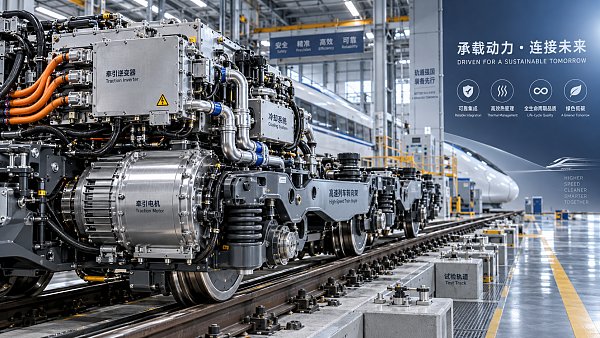
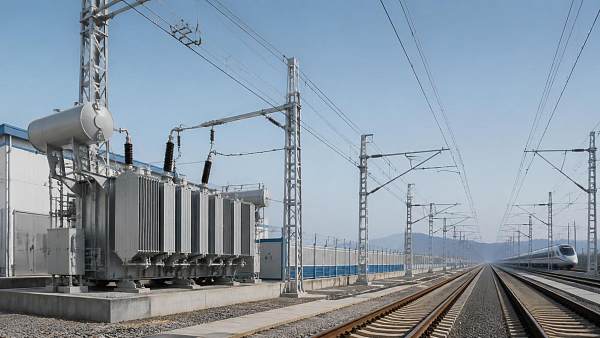
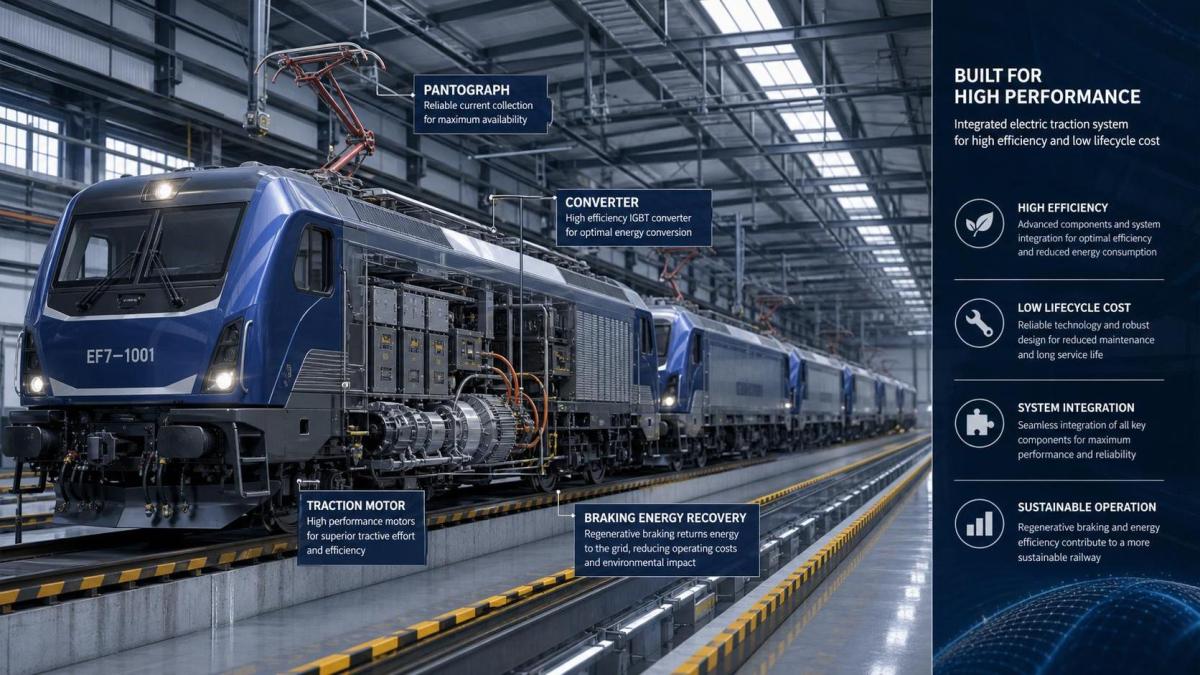
A useful evaluation starts with the whole traction chain: transformer, converter, inverter, traction motor, cooling, software logic, and braking energy recovery.
One common mistake is to compare headline efficiency numbers taken from steady laboratory conditions.
Rail vehicles do not run in steady conditions for long.
They accelerate, brake, climb grades, idle, restart, and operate under weather and voltage variation.
A better comparison asks how electric traction systems behave under the real duty profile of the line.
- Converter and inverter losses across partial load ranges
- Traction motor efficiency at repeated stop-start operation
- Regenerative braking capture under actual grid or onboard limits
- Cooling power demand during hot climate operation
- Software control quality during adhesion changes and peak demand
In urban rail, frequent acceleration may shift value toward fast response and regenerative effectiveness.
In high-speed service, aerodynamic load and thermal management may dominate the efficiency picture.
That distinction matters because the same electric traction systems may perform very differently across applications.
Which specifications actually predict lifecycle cost?
The most reliable predictors usually combine technical durability with maintenance behavior.
A traction package that saves a small percentage of energy but requires frequent overhauls may still lose on total cost.
The table below helps separate marketing claims from lifecycle indicators that deserve closer checking.
These checks are especially important in fleets expected to operate within tightly scheduled corridors.
A traction failure can ripple into signalling capacity, depot throughput, and timetable stability.
That systems view is familiar in GTOT’s reporting across rail and maritime assets, where reliability failures rarely stay local.
How do application conditions change the best choice?
There is no single best electric traction system for every rail environment.
What works for metro operations may not fit regional rail, freight haulage, or high-speed platforms.
The route profile changes thermal stress, acceleration demand, and braking recovery potential.
Climate also matters more than many buyers expect.
Dust, salt, humidity, and temperature swings can reshape maintenance intervals and enclosure requirements.
This is not very different from marine engineering logic.
Just as LNG carriers or smart container ships must be judged against real operating conditions, electric traction systems should be checked against route-specific stress.
A practical fit check often includes:
- Line voltage stability and grid compatibility
- Maximum gradients and station spacing
- Expected passenger or freight load variation
- Tunnel, coastal, desert, or cold-region exposure
- Compatibility with pantograph, braking, and onboard control systems
If these factors are not mapped early, later efficiency comparisons can become misleading.
The best decision usually comes from matching electric traction systems to route reality before discussing fine price differences.
Where do buyers most often underestimate risk?
The most frequent error is treating electric traction systems as standalone equipment.
In operation, traction interacts continuously with signalling logic, braking coordination, current collection, and digital diagnostics.
A system may look competitive until interface complexity starts to delay commissioning or raise validation costs.
Another overlooked risk is spare parts dependence.
If key semiconductors, cooling assemblies, or proprietary software tools come from narrow sources, future serviceability may become fragile.
It is also worth checking whether diagnostic data is open enough to support long-term fleet management.
When access is limited, operators can become tied to expensive service structures.
Risk signals that deserve early attention
- High efficiency claims without route-based test evidence
- Weak references in similar climate or duty conditions
- Long lead times for converters or traction motors
- Closed maintenance software and unclear data ownership
- Limited integration proof with braking and signalling subsystems
In other words, efficient electric traction systems should not only save energy.
They should also reduce commissioning surprises, simplify maintenance planning, and preserve technical flexibility over time.
What is the most useful way to compare suppliers before commitment?
A strong comparison process combines engineering detail with commercial discipline.
Rather than asking only for price and nominal efficiency, ask suppliers to respond to one common operating scenario.
That scenario should include route profile, ambient temperature range, service frequency, expected annual mileage, and maintenance assumptions.
This makes electric traction systems easier to compare on equal ground.
It also exposes who can support claims with verifiable data.
A concise decision checklist
- Request duty-cycle energy models, not headline figures alone
- Compare overhaul intervals and consumable replacement schedules
- Check integration evidence with pantographs, brakes, and train control
- Review fault data access, remote diagnostics, and software update policy
- Stress-test lead times, parts localization, and long-term support capacity
This is where intelligence-led platforms such as GTOT can help frame better questions.
Its cross-sector perspective is relevant because rail equipment value increasingly depends on digitalization, decarbonization, and system-level reliability.
Those themes now shape both railway tenders and advanced maritime projects.
When the evaluation is done well, electric traction systems become more than a propulsion choice.
They become a long-term asset strategy.
The next practical step is to define route conditions, lifecycle assumptions, and interface requirements before shortlisting options.
Once those criteria are fixed, comparing electric traction systems becomes clearer, faster, and far more defensible.
Recommended News
 Sep 29, 2026What drives traction systems price differences between rail projects?Traction systems price differences explained: compare duty cycles, voltage compatibility, integration, localization, and lifecycle costs for smarter rail procurement.
 Sep 26, 2026What to assess before selecting an electric traction system manufacturerChoose an electric traction system manufacturer with confidence. Explore key criteria for performance, reliability, safety, integration, energy efficiency, and lifecycle support.
 Sep 25, 2026When do full digitalization systems justify the investment?Full digitalization systems: discover when rail and maritime operators can turn connected data into safer operations, higher availability, and measurable ROI.
 Sep 23, 2026What drives automatic train control systems cost on rail projects?Automatic train control systems cost depends on integration, migration, safety testing, communications, and lifecycle support. Explore the key budget drivers for rail projects.
 Sep 21, 2026How to assess an ocean going vessel builder’s delivery riskAssess an ocean going vessel builder’s delivery risk with proven checks for schedules, capacity, design maturity, critical equipment, quality, and project controls.
 Sep 20, 2026What drives rail safety technology costs over a project lifecycle?Rail safety technology cost goes beyond equipment—explore lifecycle drivers from integration and safety assurance to cybersecurity, commissioning, and obsolescence.
 Sep 16, 2026What to verify before choosing an advanced ocean-going vessels supplierAdvanced ocean-going vessels supplier checklist: verify design authority, build quality, digital systems, delivery reliability, and lifecycle support before you buy.
 Sep 15, 2026What rail safety technology best reduces level-crossing risks in Southeast Asia?Rail safety technology Southeast Asia: discover how fail-safe signalling, barriers, obstacle detection and remote monitoring reduce level-crossing risks.
 Sep 14, 2026How exporters can reduce customs delays in global trade logisticsGlobal trade logistics for exporters: reduce customs delays with accurate data, clearance-ready documents, early filing, and proactive exception management.
 Sep 13, 2026When do global transportation network systems reduce delivery delays?Global transportation network systems reduce delivery delays by improving rail-port-vessel coordination, real-time visibility, and proactive decisions across complex land-sea supply chains.
 Sep 09, 2026When should you choose a rail and maritime manufacturer with dual-sector capability?Rail and maritime manufacturer guide: learn when dual-sector capability reduces integration risk, improves lifecycle support, and strengthens rail-to-port operations.
 Sep 08, 2026What to verify before selecting a railway signalling equipment supplierRailway signalling equipment supplier checklist: verify safety evidence, integration, cybersecurity, delivery capability, and lifecycle support before award.
 Sep 07, 2026How to size a traction power transformer for railway load demandTraction power transformer sizing guide: model railway load demand, peak duty, voltage regulation, harmonics, and contingency capacity for reliable service.
 Sep 07, 2026How do customization options for industrial connectors affect lead times?Customization options for industrial connectors can impact lead times, cost, and compliance. Learn how to specify smarter for rail and marine projects.
 Sep 05, 2026What information should an industrial sourcing guide include?Industrial sourcing information procurement guide: evaluate suppliers, compliance, lifecycle costs, interfaces, and lead times for smarter rail and maritime purchasing decisions.
 Sep 01, 2026How to find reliable maritime tender information before biddingMaritime tender information: learn how to verify sources, define bid-ready scopes, check qualifications, and reduce risk before submitting competitive marine bids.
 Aug 30, 2026How to select railway automation equipment for depots with phased upgradesRailway automation equipment for depots: learn how to plan phased upgrades that improve safety, throughput, integration, and lifecycle control.
 Aug 27, 2026How industrial sourcing intelligence pricing data supports budget approvalIndustrial sourcing intelligence pricing data helps teams benchmark scope, assess supplier risk, and build defensible budget approvals for complex rail and maritime assets.
 Aug 26, 2026When does a marine fuel efficiency solution make financial sense in the Middle East?Marine fuel efficiency solution Middle East: learn when retrofit savings, compliance value, and vessel data align to deliver credible ROI and smarter shipping investment decisions.
 Aug 24, 2026When does maritime automation for tankers deliver a real payback?Maritime automation for tankers delivers real payback when it cuts fuel use, reduces cargo risk, and improves uptime. See how owners can time investment for stronger ROI.
 Aug 23, 2026When do maritime logistics systems in the Middle East justify the costMaritime logistics systems Middle East: discover when rising delays, manual coordination, and poor visibility make system investment the smarter move for regional operators.
 Aug 22, 2026What drives vessel navigation system price for commercial fleetsVessel navigation system price depends on integration, compliance, automation, and support—not just hardware. Learn what drives fleet costs and compare quotes with confidence.
 Aug 21, 2026How to assess shipbuilding maritime tenders before biddingShipbuilding maritime tenders require more than price checks. Learn how to assess technical scope, compliance, supply chain, and commercial risk before bidding with confidence.
 Aug 20, 2026When does working with an ocean-going vessels distributor reduce supply risk?Ocean-going vessels distributor: learn when this partner cuts supply risk through stronger compliance, faster response, and better sourcing resilience in complex maritime procurement.