



Search News
Industry Portal
Popular Tags
How Traction Power Design Affects Energy Loss, Reliability, and Uptime
Author
Time
Click Count
How Traction Power Design Affects Energy Loss, Reliability, and Uptime
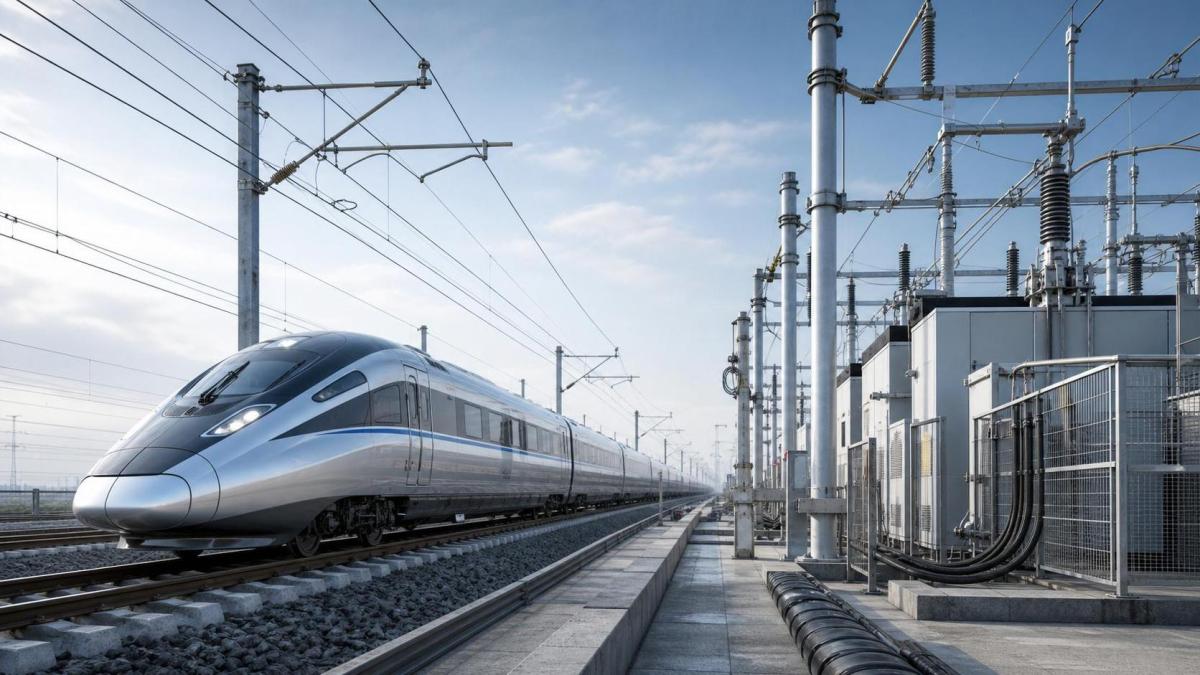
Traction power design decides how efficiently a railway turns grid energy into usable motion.
It also influences fault frequency, thermal loading, voltage stability, and service continuity.
That link becomes more visible in dense metros, heavy-haul corridors, and high-speed lines.
When traction power is poorly matched to operating conditions, losses rise quietly before outages appear.
In practice, that means higher electricity bills, shorter component life, and more maintenance windows.
A better design does the opposite.
It limits conversion loss, keeps voltage within acceptable bands, and reduces stress across the system.
That is why traction power is not just an electrical topic. It is an asset-performance decision.
Why Energy Loss Starts at the Architecture Level
Energy loss in traction power rarely comes from one device alone.
It usually begins with architecture choices made early in system design.
Substation spacing, feeder arrangement, return current path, and transformer sizing all matter.
If these elements are mismatched, conductors run hotter and voltage drop increases under peak demand.
That extra heat is not harmless overhead. It is wasted energy and accelerated aging.
From recent project trends, the strongest signal is load variability.
Modern rolling stock creates sharper demand swings through rapid acceleration and regenerative braking cycles.
A traction power network that cannot absorb those swings loses efficiency quickly.
Losses typically appear in several places:
- Resistive loss in cables, rails, busbars, and overhead contact systems.
- Conversion loss in rectifiers, inverters, transformers, and auxiliary power equipment.
- Harmonic-related loss caused by non-linear loads and poor filtering.
- Braking energy loss when regeneration cannot be captured or redistributed.
This is where traction power design becomes a lifecycle cost issue, not just a compliance exercise.
The best evaluations compare nominal efficiency with actual duty-cycle behavior across the full operating day.
Voltage Stability and Its Direct Impact on Reliability
Reliable rail service depends on stable voltage at the train, not only at the substation.
That distinction matters because many traction power problems emerge far from the source.
If voltage dips during acceleration, onboard converters work harder and protective events become more frequent.
If voltage rises unexpectedly during braking, equipment stress and control instability can follow.
In both cases, traction power quality directly affects reliability.
This also means that design margins should reflect real service patterns.
Timetables with tight headways create coincident peaks that can stress even robust networks.
A traction power study should therefore examine simultaneous train demand, route gradients, dwell times, and seasonal temperature.
Where voltage performance is weak, common outcomes include nuisance trips, delayed acceleration, and reduced timetable resilience.
Over time, those issues appear as reliability losses even when no major asset has failed.
Key Design Levers That Improve Stability
- Optimize substation location against real train density rather than ideal spacing rules alone.
- Select conductor sections that support peak current without excessive thermal rise.
- Use energy storage or reversible substations where regenerative peaks are difficult to absorb.
- Control harmonics through coordinated filtering and converter strategy.
- Model degraded modes, including one substation offline or one feeder isolated.
Thermal Stress Is the Hidden Driver of Failure
Many traction power failures look sudden but develop through accumulated thermal stress.
Connections loosen, insulation ages, and semiconductor performance drifts long before alarms appear.
That pattern is especially common where traction power equipment operates near its thermal ceiling.
Repeated overload cycles create fatigue in transformers, switchgear, rectifier assemblies, and cable terminations.
The risk grows when ventilation, enclosure layout, or ambient assumptions are too optimistic.
In real projects, thermal headroom often gets consumed by service expansions.
More trains, longer consists, or revised acceleration targets can push a once-stable system into chronic stress.
This is why traction power design should include future operating envelopes, not only current schedules.
A small reserve in thermal capacity often protects uptime more effectively than a reactive maintenance plan.
What to Check During Technical Review
- Load curves across normal, peak, and degraded operations.
- Thermal modeling assumptions for tunnels, depots, and outdoor cabinets.
- Cooling redundancy for power electronics and transformer compartments.
- Alarm thresholds that identify stress before protective trips occur.
- Maintenance access to high-heat components and vulnerable interfaces.
How Traction Power Design Shapes Uptime
Uptime is not only about avoiding catastrophic failures.
It also depends on how fast the system absorbs disturbances and returns to normal service.
That is where redundancy, sectionalization, and fault isolation become decisive.
A resilient traction power scheme prevents one local issue from becoming a corridor-wide interruption.
For example, selective protection can keep healthy sections online while operators clear a faulted zone.
Remote monitoring adds another layer of uptime value.
When traction power assets provide usable condition data, maintenance becomes better timed and less disruptive.
This also reduces the risk of unnecessary interventions, which can introduce new faults.
In other words, a good traction power design supports uptime both electrically and operationally.
Typical Uptime Risks Linked to Weak Design
Standards, Data, and Decision Criteria That Matter
A technical review of traction power should go beyond brochure efficiency figures.
What matters is documented performance under realistic operating and fault conditions.
Relevant standards help frame the review, but they should not replace engineering judgment.
For traction power, useful evidence usually includes simulation models, thermal calculations, protection studies, and maintainability plans.
The stronger signal is consistency between design assumptions and the actual service concept.
This is especially important when evaluating upgrades, mixed fleets, or future capacity expansion.
In practical terms, useful decision questions include:
- Does the traction power design maintain acceptable voltage under the worst traffic scenario?
- Can regenerative energy be reused, stored, or exported efficiently?
- Are failure modes localized, detectable, and recoverable within target service times?
- Do thermal margins remain valid after planned service growth?
- Is the maintenance strategy supported by accessible design and real diagnostic data?
These questions help separate a compliant traction power package from a truly resilient one.
A Practical Way to Judge Lifecycle Value
The most useful traction power assessment connects design choices to measurable operating outcomes.
Energy loss, reliability, and uptime should be reviewed together, not as separate topics.
That is because one weakness often drives all three.
Excessive voltage drop increases heat.
Heat accelerates wear.
Wear reduces reliability.
Reliability losses eventually reduce uptime.
That chain is simple, but it is often missed during early evaluation.
A practical review therefore starts with the operating profile, then checks whether the traction power design supports it with margin.
Next, compare energy pathways, degraded-mode behavior, thermal reserve, and maintenance exposure.
Finally, test whether the design still performs after traffic growth, asset aging, and single-point failures.
That approach gives a clearer view of lifecycle value than headline efficiency numbers alone.
When traction power is engineered with realistic loads, thermal margin, and fault resilience, the result is lower loss, higher reliability, and stronger uptime across the entire rail system.
Recommended News
 Sep 29, 2026What drives traction systems price differences between rail projects?Traction systems price differences explained: compare duty cycles, voltage compatibility, integration, localization, and lifecycle costs for smarter rail procurement.
 Sep 26, 2026What to assess before selecting an electric traction system manufacturerChoose an electric traction system manufacturer with confidence. Explore key criteria for performance, reliability, safety, integration, energy efficiency, and lifecycle support.
 Sep 25, 2026When do full digitalization systems justify the investment?Full digitalization systems: discover when rail and maritime operators can turn connected data into safer operations, higher availability, and measurable ROI.
 Sep 23, 2026What drives automatic train control systems cost on rail projects?Automatic train control systems cost depends on integration, migration, safety testing, communications, and lifecycle support. Explore the key budget drivers for rail projects.
 Sep 21, 2026How to assess an ocean going vessel builder’s delivery riskAssess an ocean going vessel builder’s delivery risk with proven checks for schedules, capacity, design maturity, critical equipment, quality, and project controls.
 Sep 20, 2026What drives rail safety technology costs over a project lifecycle?Rail safety technology cost goes beyond equipment—explore lifecycle drivers from integration and safety assurance to cybersecurity, commissioning, and obsolescence.
 Sep 16, 2026What to verify before choosing an advanced ocean-going vessels supplierAdvanced ocean-going vessels supplier checklist: verify design authority, build quality, digital systems, delivery reliability, and lifecycle support before you buy.
 Sep 15, 2026What rail safety technology best reduces level-crossing risks in Southeast Asia?Rail safety technology Southeast Asia: discover how fail-safe signalling, barriers, obstacle detection and remote monitoring reduce level-crossing risks.
 Sep 14, 2026How exporters can reduce customs delays in global trade logisticsGlobal trade logistics for exporters: reduce customs delays with accurate data, clearance-ready documents, early filing, and proactive exception management.
 Sep 13, 2026When do global transportation network systems reduce delivery delays?Global transportation network systems reduce delivery delays by improving rail-port-vessel coordination, real-time visibility, and proactive decisions across complex land-sea supply chains.
 Sep 09, 2026When should you choose a rail and maritime manufacturer with dual-sector capability?Rail and maritime manufacturer guide: learn when dual-sector capability reduces integration risk, improves lifecycle support, and strengthens rail-to-port operations.
 Sep 08, 2026What to verify before selecting a railway signalling equipment supplierRailway signalling equipment supplier checklist: verify safety evidence, integration, cybersecurity, delivery capability, and lifecycle support before award.
 Sep 07, 2026How to size a traction power transformer for railway load demandTraction power transformer sizing guide: model railway load demand, peak duty, voltage regulation, harmonics, and contingency capacity for reliable service.
 Sep 07, 2026How do customization options for industrial connectors affect lead times?Customization options for industrial connectors can impact lead times, cost, and compliance. Learn how to specify smarter for rail and marine projects.
 Sep 05, 2026What information should an industrial sourcing guide include?Industrial sourcing information procurement guide: evaluate suppliers, compliance, lifecycle costs, interfaces, and lead times for smarter rail and maritime purchasing decisions.
 Sep 01, 2026How to find reliable maritime tender information before biddingMaritime tender information: learn how to verify sources, define bid-ready scopes, check qualifications, and reduce risk before submitting competitive marine bids.
 Aug 30, 2026How to select railway automation equipment for depots with phased upgradesRailway automation equipment for depots: learn how to plan phased upgrades that improve safety, throughput, integration, and lifecycle control.
 Aug 27, 2026How industrial sourcing intelligence pricing data supports budget approvalIndustrial sourcing intelligence pricing data helps teams benchmark scope, assess supplier risk, and build defensible budget approvals for complex rail and maritime assets.
 Aug 26, 2026When does a marine fuel efficiency solution make financial sense in the Middle East?Marine fuel efficiency solution Middle East: learn when retrofit savings, compliance value, and vessel data align to deliver credible ROI and smarter shipping investment decisions.
 Aug 24, 2026When does maritime automation for tankers deliver a real payback?Maritime automation for tankers delivers real payback when it cuts fuel use, reduces cargo risk, and improves uptime. See how owners can time investment for stronger ROI.
 Aug 23, 2026When do maritime logistics systems in the Middle East justify the costMaritime logistics systems Middle East: discover when rising delays, manual coordination, and poor visibility make system investment the smarter move for regional operators.
 Aug 22, 2026What drives vessel navigation system price for commercial fleetsVessel navigation system price depends on integration, compliance, automation, and support—not just hardware. Learn what drives fleet costs and compare quotes with confidence.
 Aug 21, 2026How to assess shipbuilding maritime tenders before biddingShipbuilding maritime tenders require more than price checks. Learn how to assess technical scope, compliance, supply chain, and commercial risk before bidding with confidence.
 Aug 20, 2026When does working with an ocean-going vessels distributor reduce supply risk?Ocean-going vessels distributor: learn when this partner cuts supply risk through stronger compliance, faster response, and better sourcing resilience in complex maritime procurement.