



Search News
Industry Portal
Popular Tags
REACH Compliance in Product Selection: Key Risk Checks Before You Decide

Author
Time
Click Count
In complex transport supply chains, product selection is rarely only a technical match. It is also a compliance decision. For rail control assemblies, traction interfaces, braking materials, smart vessel systems, and LNG ship components, REACH compliance often determines whether a promising item can move smoothly into qualification, export, and long-term service.
That is why compliance-aware product selection REACH compliance should be treated as an early screening discipline, not a late paperwork task. A missed substance risk can trigger redesign, delayed approvals, blocked shipments, or difficult supplier disputes after specification work is already complete.
Why REACH matters before technical selection is locked
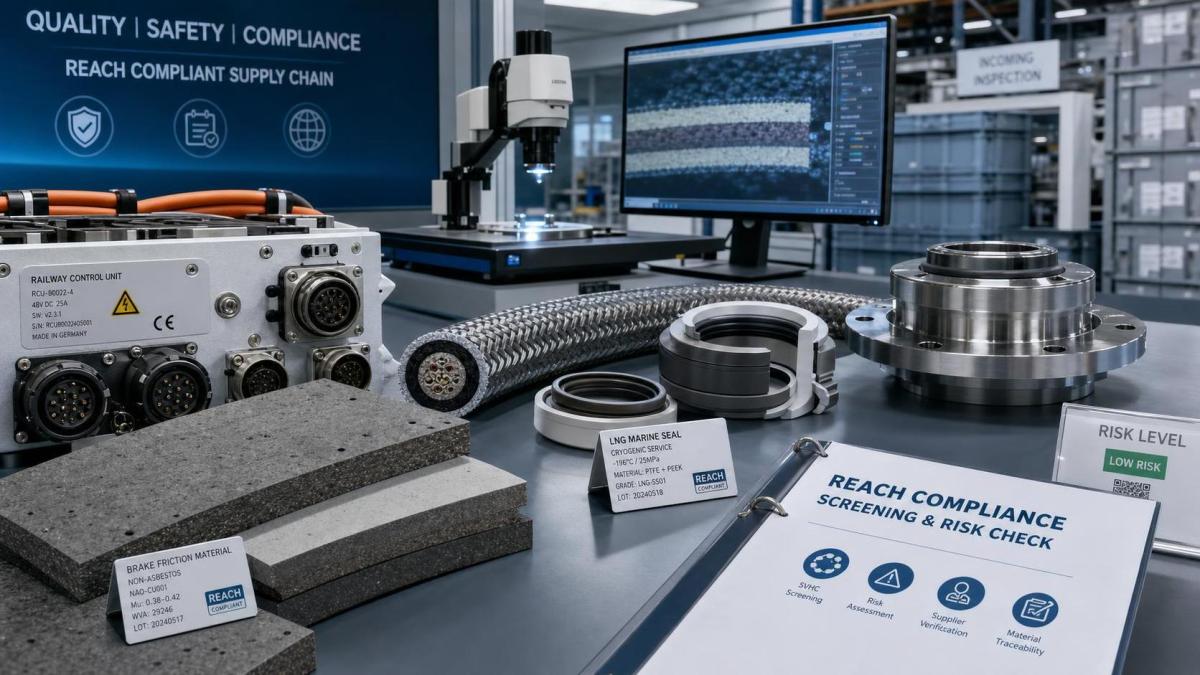
REACH is the European Union framework covering the registration, evaluation, authorisation, and restriction of chemical substances. In practice, it affects far more than raw chemicals.
It reaches into coatings, polymer housings, cable compounds, elastomer seals, adhesives, friction materials, insulation systems, lubricants, and treated metal parts. Many high-value transport products contain several of these layers at once.
For sectors followed by GTOT, the risk is amplified by system criticality. A signaling unit, pantograph contact assembly, brake subcomponent, cargo monitoring interface, or cryogenic sealing material cannot be swapped casually once testing has begun.
This makes compliance-aware product selection REACH compliance a decision filter tied to market access, safety assurance, supplier resilience, and lifecycle cost control.
What REACH compliance really changes in procurement decisions
The common mistake is to view REACH as a binary label. Either the supplier says compliant, or not. Real evaluation is more nuanced.
A part may meet current customer requirements yet still carry exposure through restricted substances, incomplete declarations, unstable sub-tier sourcing, or future substitution pressure. That gap is where selection risk sits.
In rail and marine projects, qualification windows are tight. Tender requirements are also becoming stricter, especially when projects involve European routes, European financing, multinational EPC structures, or export-controlled documentation chains.
The result is simple. REACH status affects not only whether a component can be bought today, but whether it remains defensible throughout audits, fleet expansion, retrofit programs, and after-sales support.
Five commercial effects often underestimated
- Bid credibility can weaken if declarations are generic or outdated.
- Cross-border delivery may slow when customs or customers request deeper substance evidence.
- Qualification cost rises if late material changes force repeated validation.
- Service inventory becomes harder to manage when replacement parts use different formulations.
- Supplier concentration risk grows when few vendors can prove stable compliance.
Key risk checks before you decide
A practical review should focus on evidence quality, substance exposure, and change risk. The table below shows where the strongest signals usually appear.
1. Check the article, not only the supplier statement
A certificate headline is rarely enough. Complex assemblies may contain adhesives, tapes, sealants, fillers, and molded inserts from different sources.
For compliance-aware product selection REACH compliance, the useful question is whether the declaration covers the actual delivered article and its current bill of materials.
2. Look for SVHC exposure in hidden material layers
Substances of Very High Concern often sit in places that are easy to miss during technical screening. Cable jackets, anti-corrosion coatings, resin systems, gaskets, and friction compounds deserve special attention.
This matters in transport applications because hidden layers can still affect declaration duties, downstream communication, and future redesign obligations.
3. Test supplier maturity, not only document availability
A reliable supplier can explain data origin, update cadence, escalation path, and sub-supplier control. A weak supplier forwards a one-page template without substance traceability.
In GTOT-covered sectors, where qualification cycles are costly, supplier maturity is often a better predictor of future compliance stability than a single declaration file.
Where the pressure is highest across rail and marine applications
REACH checks are relevant everywhere, but some categories carry more decision pressure because technical substitution is difficult and operational consequences are serious.
Railway signal control systems
Signal housings, connectors, printed assemblies, potting compounds, and insulation materials may all require careful material tracing. Once system approval starts, formulation changes become expensive.
Pantographs and high-speed current collection parts
Carbon strips, coatings, elastomer supports, and wear-related components operate under heat, vibration, and environmental stress. A compliant substitute must preserve electrical and mechanical performance.
Rail braking systems
Brake linings, friction layers, binders, and surface treatments often sit at the intersection of compliance, thermal behavior, and lifetime consistency. This is a classic area for hidden substitution risk.
Smart container ships and LNG carriers
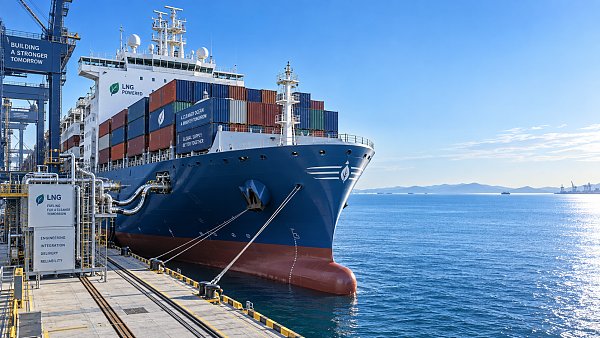
Marine equipment adds coatings, cryogenic materials, sealing systems, cable packages, and exposed outdoor components. Cross-border trade routes also increase the importance of defensible documentation.
For LNG-related systems, material behavior under extreme low temperatures can narrow substitution options, making early REACH review even more important.
How to apply compliance-aware selection in real workflows
The best approach is to move REACH review closer to technical gatekeeping. That means screening before supplier nomination is fixed, not after contract release.
A useful workflow often includes three layers.
- Preselection: identify material-sensitive categories and high-risk applications.
- Comparative review: compare suppliers on evidence depth, update discipline, and substitution resilience.
- Release control: tie approved parts to change notification and document refresh rules.
This is where compliance-aware product selection REACH compliance becomes operational rather than theoretical. It turns compliance into a measurable selection criterion alongside cost, reliability, and performance.
Questions worth asking before final approval
- Does the declaration reflect the exact part number and revision?
- Are coatings, adhesives, and consumable layers included?
- What is the supplier process when the SVHC list changes?
- Can the supplier show control of compounders and treatment vendors?
- Would a compliant substitute alter validation, durability, or safety margins?
A sharper next step for better decisions
REACH compliance is most useful when treated as an early design and sourcing signal. It helps narrow risk before documentation pressure arrives and before qualification costs are locked in.
For organizations navigating rail and marine supply chains, a stronger decision basis usually starts with a simple move: map high-risk material categories, compare evidence quality across shortlisted options, and flag parts that could become vulnerable when regulations or formulations shift.
That discipline aligns well with the GTOT view of land-sea equipment intelligence. In complex systems, the better choice is rarely the one that only performs today. It is the one that stays technically credible, commercially usable, and compliance-stable through the full operating lifecycle.
Recommended News
 Sep 29, 2026What drives traction systems price differences between rail projects?Traction systems price differences explained: compare duty cycles, voltage compatibility, integration, localization, and lifecycle costs for smarter rail procurement.
 Sep 26, 2026What to assess before selecting an electric traction system manufacturerChoose an electric traction system manufacturer with confidence. Explore key criteria for performance, reliability, safety, integration, energy efficiency, and lifecycle support.
 Sep 25, 2026When do full digitalization systems justify the investment?Full digitalization systems: discover when rail and maritime operators can turn connected data into safer operations, higher availability, and measurable ROI.
 Sep 23, 2026What drives automatic train control systems cost on rail projects?Automatic train control systems cost depends on integration, migration, safety testing, communications, and lifecycle support. Explore the key budget drivers for rail projects.
 Sep 21, 2026How to assess an ocean going vessel builder’s delivery riskAssess an ocean going vessel builder’s delivery risk with proven checks for schedules, capacity, design maturity, critical equipment, quality, and project controls.
 Sep 20, 2026What drives rail safety technology costs over a project lifecycle?Rail safety technology cost goes beyond equipment—explore lifecycle drivers from integration and safety assurance to cybersecurity, commissioning, and obsolescence.
 Sep 16, 2026What to verify before choosing an advanced ocean-going vessels supplierAdvanced ocean-going vessels supplier checklist: verify design authority, build quality, digital systems, delivery reliability, and lifecycle support before you buy.
 Sep 15, 2026What rail safety technology best reduces level-crossing risks in Southeast Asia?Rail safety technology Southeast Asia: discover how fail-safe signalling, barriers, obstacle detection and remote monitoring reduce level-crossing risks.
 Sep 14, 2026How exporters can reduce customs delays in global trade logisticsGlobal trade logistics for exporters: reduce customs delays with accurate data, clearance-ready documents, early filing, and proactive exception management.
 Sep 13, 2026When do global transportation network systems reduce delivery delays?Global transportation network systems reduce delivery delays by improving rail-port-vessel coordination, real-time visibility, and proactive decisions across complex land-sea supply chains.
 Sep 09, 2026When should you choose a rail and maritime manufacturer with dual-sector capability?Rail and maritime manufacturer guide: learn when dual-sector capability reduces integration risk, improves lifecycle support, and strengthens rail-to-port operations.
 Sep 08, 2026What to verify before selecting a railway signalling equipment supplierRailway signalling equipment supplier checklist: verify safety evidence, integration, cybersecurity, delivery capability, and lifecycle support before award.
 Sep 07, 2026How to size a traction power transformer for railway load demandTraction power transformer sizing guide: model railway load demand, peak duty, voltage regulation, harmonics, and contingency capacity for reliable service.
 Sep 07, 2026How do customization options for industrial connectors affect lead times?Customization options for industrial connectors can impact lead times, cost, and compliance. Learn how to specify smarter for rail and marine projects.
 Sep 05, 2026What information should an industrial sourcing guide include?Industrial sourcing information procurement guide: evaluate suppliers, compliance, lifecycle costs, interfaces, and lead times for smarter rail and maritime purchasing decisions.
 Sep 01, 2026How to find reliable maritime tender information before biddingMaritime tender information: learn how to verify sources, define bid-ready scopes, check qualifications, and reduce risk before submitting competitive marine bids.
 Aug 30, 2026How to select railway automation equipment for depots with phased upgradesRailway automation equipment for depots: learn how to plan phased upgrades that improve safety, throughput, integration, and lifecycle control.
 Aug 27, 2026How industrial sourcing intelligence pricing data supports budget approvalIndustrial sourcing intelligence pricing data helps teams benchmark scope, assess supplier risk, and build defensible budget approvals for complex rail and maritime assets.
 Aug 26, 2026When does a marine fuel efficiency solution make financial sense in the Middle East?Marine fuel efficiency solution Middle East: learn when retrofit savings, compliance value, and vessel data align to deliver credible ROI and smarter shipping investment decisions.
 Aug 24, 2026When does maritime automation for tankers deliver a real payback?Maritime automation for tankers delivers real payback when it cuts fuel use, reduces cargo risk, and improves uptime. See how owners can time investment for stronger ROI.
 Aug 23, 2026When do maritime logistics systems in the Middle East justify the costMaritime logistics systems Middle East: discover when rising delays, manual coordination, and poor visibility make system investment the smarter move for regional operators.
 Aug 22, 2026What drives vessel navigation system price for commercial fleetsVessel navigation system price depends on integration, compliance, automation, and support—not just hardware. Learn what drives fleet costs and compare quotes with confidence.
 Aug 21, 2026How to assess shipbuilding maritime tenders before biddingShipbuilding maritime tenders require more than price checks. Learn how to assess technical scope, compliance, supply chain, and commercial risk before bidding with confidence.
 Aug 20, 2026When does working with an ocean-going vessels distributor reduce supply risk?Ocean-going vessels distributor: learn when this partner cuts supply risk through stronger compliance, faster response, and better sourcing resilience in complex maritime procurement.