



Search News
Industry Portal
Popular Tags
Control Panel Customization Options: What Matters for Fit, Safety, and Maintenance
Author
Time
Click Count
Control Panel Customization Options: What Matters for Fit, Safety, and Maintenance
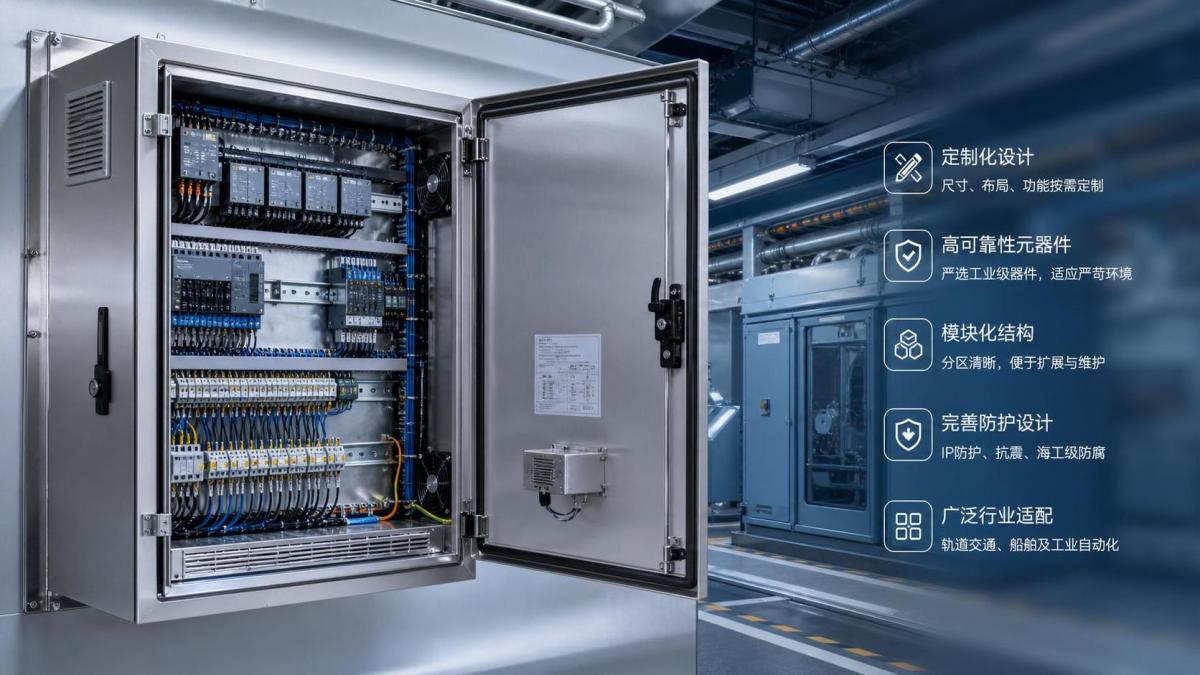
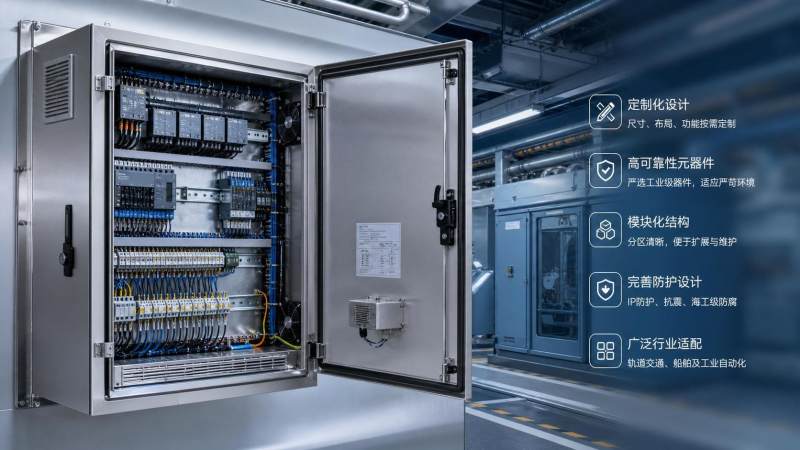
For complex transport and industrial systems, control panels are never just boxes with switches. They shape installation speed, operator confidence, service access, and long-term operating cost.
That is why customization options for control panels deserve early attention. Small specification choices often decide whether a panel fits cleanly, protects people, and stays maintainable under pressure.
This matters even more in rail, marine, and heavy-duty environments. Space is limited, vibration is constant, and downtime usually carries a high commercial penalty.
In practical terms, the best customization options for control panels support three outcomes. They improve physical fit, reduce safety risk, and simplify maintenance over the full asset lifecycle.
The key is to evaluate options as a system decision, not as a list of isolated features. Dimensions, access, cooling, interface layout, and protection ratings all interact.
Why fit should be specified before features
One common mistake is choosing interface functions first and checking fit later. In real projects, that sequence often creates rework, cable congestion, and poor access clearances.
The first layer of customization options for control panels should address enclosure geometry. Height, depth, door swing, mounting method, and internal component spacing all need site-level validation.
Rail vehicles, equipment rooms, and shipboard spaces rarely offer ideal layouts. Existing beams, ducts, cable trays, and escape paths can quickly turn a standard panel into a poor fit.
A better approach is to define the panel around the installation envelope. That means measuring maintenance access zones, lifting routes, and cable entry directions before finalizing the structure.
- Wall-mounted or floor-standing configuration
- Front-only or front-and-rear maintenance access
- Top, bottom, or side cable entry
- Single-door, double-door, or split-compartment layout
- Modular expansion space for future I/O or power needs
These are not cosmetic decisions. They directly influence installation time, cable bend radius, heat distribution, and technician movement during inspection or repair.
From a selection perspective, good customization options for control panels should also allow tolerance for project change. Late-stage additions are common, especially in phased infrastructure programs.
Safety customization options that reduce operational risk
Safety is usually discussed in terms of compliance, but field performance matters just as much. A compliant panel can still create unnecessary risk if the layout ignores real operator behavior.
For that reason, customization options for control panels should cover both electrical protection and human interaction. The right design lowers the chance of accidental action, exposure, and delayed response.
Start with enclosure protection. In marine, railside, or washdown areas, ingress protection, corrosion resistance, and sealing quality are basic requirements, not premium extras.
Then review internal separation. Segregating control circuits, power sections, and communication modules improves safety and usually makes troubleshooting more reliable.
Interface layout deserves equal attention. Emergency stops, alarms, reset controls, and status indicators should follow logic that is obvious under stress.
- Use guarded controls for high-consequence actions.
- Separate routine controls from emergency functions.
- Keep labeling clear in low-light and noisy environments.
- Specify lockable access where unauthorized operation is possible.
- Match materials to salt spray, vibration, heat, and cleaning chemicals.
This is where customization options for control panels become strategically useful. They allow a panel to reflect the actual risk profile of the application instead of relying on generic assumptions.
For example, on a smart container ship, service teams may need fast fault recognition in rolling conditions. In a rail signaling room, unauthorized access and interface discipline may be the bigger concern.
Maintenance efficiency starts with service access
Maintenance is often underestimated during panel selection. Yet over time, service labor, spare handling, and downtime response can cost more than the original enclosure itself.
The most valuable customization options for control panels are often the ones that make inspection and replacement easier. Better access means faster recovery and fewer secondary faults.
Look closely at door opening angles, removable gland plates, terminal accessibility, and swing frames. These details may seem minor during procurement, but they define field efficiency later.
Cable management is another major factor. Poor routing increases heat, blocks visual inspection, and makes future modifications harder than they need to be.
A maintainable panel usually includes structured wire channels, spare terminal capacity, clear device tagging, and enough free space for safe hand access.
In selection meetings, maintenance teams should review these points early. Their insight often reveals hidden access problems long before commissioning begins.
Environmental and application-specific factors
Not every panel faces the same operating stress. That sounds obvious, but many specifications still rely on generic environmental assumptions.
Strong customization options for control panels should reflect real exposure conditions. Temperature swings, condensation, shock, EMC demands, and airborne contaminants all affect performance.
For coastal terminals and vessels, corrosion resistance is critical. For rail traction or signaling applications, vibration endurance and electromagnetic compatibility usually rise to the top.
This also affects material choice. Stainless steel, coated steel, aluminum, and engineered polymers each bring different tradeoffs in weight, durability, and lifecycle cost.
Thermal management should be reviewed with the same discipline. Passive ventilation may work in one enclosure, while filtered fans, heat exchangers, or air conditioning are necessary elsewhere.
In actual operations, poor thermal design can shorten component life faster than most teams expect. It also increases nuisance faults that are hard to diagnose.
That is why customization options for control panels should be assessed alongside duty cycle, load variation, and maintenance interval. The enclosure cannot be separated from the operating profile.
How to compare customization options for control panels during procurement
A useful procurement process turns design preferences into measurable selection criteria. Without that step, suppliers may respond with very different interpretations of the same request.
Begin with a structured review matrix. Score customization options for control panels against installation fit, safety performance, serviceability, environmental durability, and change capacity.
Then ask suppliers for evidence, not just claims. Drawings, access studies, thermal calculations, material details, and reference applications provide a better basis for decision-making.
- Request dimensional layouts with maintenance clearances shown.
- Verify standards relevant to the intended environment.
- Check spare capacity for terminals, power, and communication ports.
- Review access time for routine inspection items.
- Confirm how modifications can be handled after installation.
It also helps to define what failure looks like. If a panel cannot be serviced safely in place, cannot dissipate heat, or blocks later expansion, the option is weak even if the purchase price looks attractive.
In this context, the best customization options for control panels are the ones that protect uptime and reduce lifecycle friction, not just the ones that add visible features.
What a stronger specification should include
A stronger specification is usually simpler than expected. It clearly states the operating environment, access assumptions, safety priorities, and expected maintenance model.
From there, customization options for control panels can be judged against practical outcomes. Will the panel fit without compromise? Can operators use it safely? Will technicians maintain it efficiently for years?
That framing is especially valuable in rail and marine projects, where reliability expectations are high and operating disruptions spread quickly across the wider system.
A sound next step is to convert site constraints into a short decision checklist before supplier discussions begin. That keeps the evaluation grounded and prevents avoidable specification gaps.
When customization options for control panels are reviewed through fit, safety, and maintenance together, the final choice is usually clearer, faster, and more defensible.
Recommended News
 Sep 29, 2026What drives traction systems price differences between rail projects?Traction systems price differences explained: compare duty cycles, voltage compatibility, integration, localization, and lifecycle costs for smarter rail procurement.
 Sep 26, 2026What to assess before selecting an electric traction system manufacturerChoose an electric traction system manufacturer with confidence. Explore key criteria for performance, reliability, safety, integration, energy efficiency, and lifecycle support.
 Sep 25, 2026When do full digitalization systems justify the investment?Full digitalization systems: discover when rail and maritime operators can turn connected data into safer operations, higher availability, and measurable ROI.
 Sep 23, 2026What drives automatic train control systems cost on rail projects?Automatic train control systems cost depends on integration, migration, safety testing, communications, and lifecycle support. Explore the key budget drivers for rail projects.
 Sep 21, 2026How to assess an ocean going vessel builder’s delivery riskAssess an ocean going vessel builder’s delivery risk with proven checks for schedules, capacity, design maturity, critical equipment, quality, and project controls.
 Sep 20, 2026What drives rail safety technology costs over a project lifecycle?Rail safety technology cost goes beyond equipment—explore lifecycle drivers from integration and safety assurance to cybersecurity, commissioning, and obsolescence.
 Sep 16, 2026What to verify before choosing an advanced ocean-going vessels supplierAdvanced ocean-going vessels supplier checklist: verify design authority, build quality, digital systems, delivery reliability, and lifecycle support before you buy.
 Sep 15, 2026What rail safety technology best reduces level-crossing risks in Southeast Asia?Rail safety technology Southeast Asia: discover how fail-safe signalling, barriers, obstacle detection and remote monitoring reduce level-crossing risks.
 Sep 14, 2026How exporters can reduce customs delays in global trade logisticsGlobal trade logistics for exporters: reduce customs delays with accurate data, clearance-ready documents, early filing, and proactive exception management.
 Sep 13, 2026When do global transportation network systems reduce delivery delays?Global transportation network systems reduce delivery delays by improving rail-port-vessel coordination, real-time visibility, and proactive decisions across complex land-sea supply chains.
 Sep 09, 2026When should you choose a rail and maritime manufacturer with dual-sector capability?Rail and maritime manufacturer guide: learn when dual-sector capability reduces integration risk, improves lifecycle support, and strengthens rail-to-port operations.
 Sep 08, 2026What to verify before selecting a railway signalling equipment supplierRailway signalling equipment supplier checklist: verify safety evidence, integration, cybersecurity, delivery capability, and lifecycle support before award.
 Sep 07, 2026How to size a traction power transformer for railway load demandTraction power transformer sizing guide: model railway load demand, peak duty, voltage regulation, harmonics, and contingency capacity for reliable service.
 Sep 07, 2026How do customization options for industrial connectors affect lead times?Customization options for industrial connectors can impact lead times, cost, and compliance. Learn how to specify smarter for rail and marine projects.
 Sep 05, 2026What information should an industrial sourcing guide include?Industrial sourcing information procurement guide: evaluate suppliers, compliance, lifecycle costs, interfaces, and lead times for smarter rail and maritime purchasing decisions.
 Sep 01, 2026How to find reliable maritime tender information before biddingMaritime tender information: learn how to verify sources, define bid-ready scopes, check qualifications, and reduce risk before submitting competitive marine bids.
 Aug 30, 2026How to select railway automation equipment for depots with phased upgradesRailway automation equipment for depots: learn how to plan phased upgrades that improve safety, throughput, integration, and lifecycle control.
 Aug 27, 2026How industrial sourcing intelligence pricing data supports budget approvalIndustrial sourcing intelligence pricing data helps teams benchmark scope, assess supplier risk, and build defensible budget approvals for complex rail and maritime assets.
 Aug 26, 2026When does a marine fuel efficiency solution make financial sense in the Middle East?Marine fuel efficiency solution Middle East: learn when retrofit savings, compliance value, and vessel data align to deliver credible ROI and smarter shipping investment decisions.
 Aug 24, 2026When does maritime automation for tankers deliver a real payback?Maritime automation for tankers delivers real payback when it cuts fuel use, reduces cargo risk, and improves uptime. See how owners can time investment for stronger ROI.
 Aug 23, 2026When do maritime logistics systems in the Middle East justify the costMaritime logistics systems Middle East: discover when rising delays, manual coordination, and poor visibility make system investment the smarter move for regional operators.
 Aug 22, 2026What drives vessel navigation system price for commercial fleetsVessel navigation system price depends on integration, compliance, automation, and support—not just hardware. Learn what drives fleet costs and compare quotes with confidence.
 Aug 21, 2026How to assess shipbuilding maritime tenders before biddingShipbuilding maritime tenders require more than price checks. Learn how to assess technical scope, compliance, supply chain, and commercial risk before bidding with confidence.
 Aug 20, 2026When does working with an ocean-going vessels distributor reduce supply risk?Ocean-going vessels distributor: learn when this partner cuts supply risk through stronger compliance, faster response, and better sourcing resilience in complex maritime procurement.