



Search News
Industry Portal
Popular Tags
How to Build a Decarbonization Strategy That Balances Cost and Compliance
Author
Time
Click Count
Why does a decarbonization strategy now sit next to cost control and compliance?
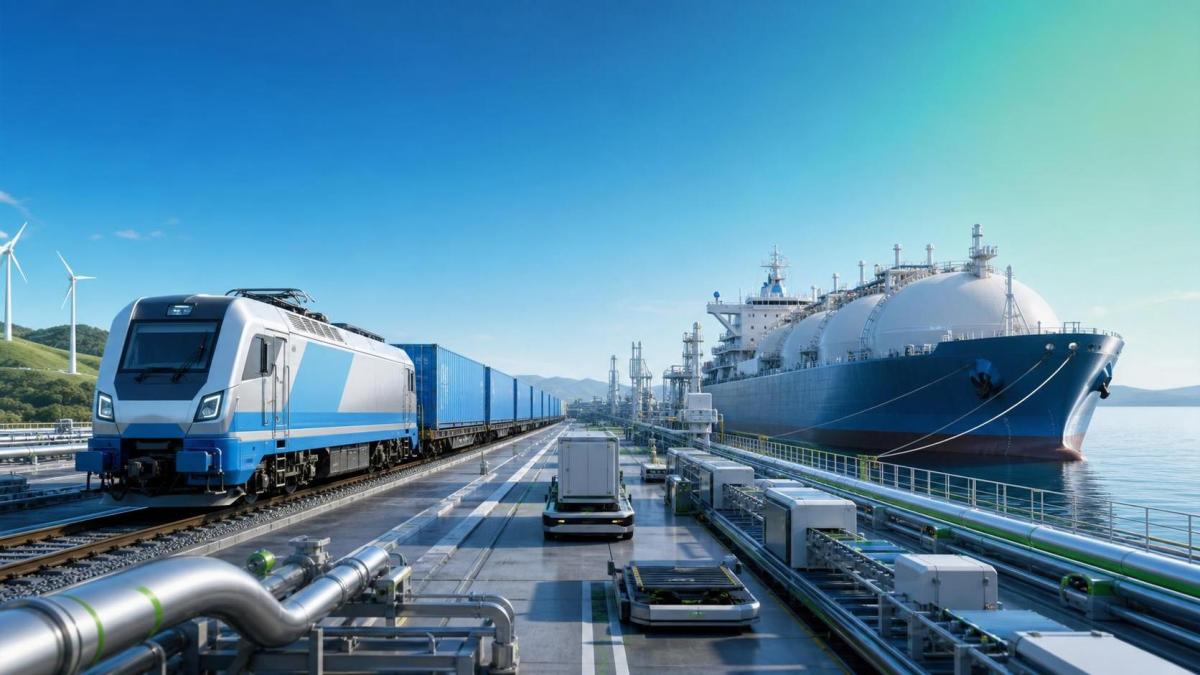
A workable decarbonization strategy is no longer a side program. It affects fuel spend, financing terms, tender eligibility, and exposure to regulatory penalties.
That is especially true in rail, shipping, logistics, and heavy equipment supply chains, where assets stay in service for years.
The practical question is not whether to decarbonize. It is how to do it without locking capital into weak projects.
In real operations, cost and compliance move together. A poor emissions plan can increase maintenance, weaken uptime, and still miss reporting thresholds.
A stronger decarbonization strategy starts with operating reality. Energy intensity, route patterns, safety standards, equipment age, and procurement timing all matter.
This is where sector intelligence becomes useful. GTOT tracks rail control systems, pantographs, braking systems, smart container ships, and LNG carriers through both technical and commercial lenses.
That broader view helps connect emissions goals with asset performance, international tender requirements, and the changing economics of transport infrastructure.
What should a decarbonization strategy actually include?
At minimum, it should define the emissions baseline, the compliance map, the project sequence, and the financial test for each investment.
Many plans fail because they begin with technology selection before clarifying the operating constraints behind the emissions profile.
A useful structure usually includes four layers:
- Baseline measurement across fuel, electricity, route efficiency, idle time, and maintenance-related losses.
- Regulatory mapping for local disclosure rules, maritime carbon measures, rail electrification standards, and customer procurement clauses.
- Operational projects such as power optimization, braking energy recovery, voyage routing improvement, and equipment retrofits.
- Capital governance using payback period, total cost of ownership, carbon impact, and technical risk.
In transport-heavy industries, the best decarbonization strategy often starts with efficiency. That reduces emissions while protecting margins faster than headline projects.
For example, smarter signaling can improve network flow. Better pantograph performance can stabilize power collection. Ship routing software can reduce fuel burn without replacing the vessel.
These are not cosmetic changes. They directly shape energy use, service reliability, and future compliance readiness.
Where do companies usually overspend when building a decarbonization strategy?
Overspending usually happens when investment timing and asset logic are disconnected. New technology is added before operators know which emissions source is most expensive.
Another common mistake is treating all assets equally. A high-speed rail subsystem and an LNG carrier do not share the same decarbonization curve.
The table below helps sort decisions before money is committed.
In other words, a decarbonization strategy should not reward the biggest project. It should reward the clearest business case under realistic operating conditions.
How do you compare compliance-driven projects with efficiency-driven projects?
This is where many internal debates stall. Compliance projects protect market access, while efficiency projects protect cash flow. Both are necessary, but they should not be judged the same way.
A simple way to compare them is to separate mandatory value from economic value.
Compliance-driven projects
These include emissions reporting systems, fuel transition steps required by regulation, and upgrades needed for access to restricted markets or funded infrastructure programs.
Their value is often defensive. They reduce legal exposure, support certifications, and protect eligibility in tightly controlled rail and maritime tenders.
Efficiency-driven projects
These include route optimization, traction power improvements, digital maintenance, lightweight component upgrades, and energy recovery systems.
Their value is easier to measure through fuel savings, lower downtime, and improved asset utilization.
The more mature decarbonization strategy combines both categories in phases. That keeps regulatory exposure under control while funding later projects through early savings.
GTOT’s sector coverage is useful here because technical detail changes the answer. A signaling upgrade, a composite brake component, and a smart vessel control layer each create different savings patterns.
The point is not to force one framework on every asset. The point is to compare projects using the right engineering and commercial context.
What warning signs suggest a decarbonization strategy is too risky?
Some risks are easy to miss because the proposal looks attractive on paper. In practice, weak assumptions usually appear in the same places.
- The emissions baseline is estimated from outdated averages rather than actual operating data.
- The plan assumes fuel availability that does not match route geography or port infrastructure.
- Compliance deadlines are treated as fixed, but reporting systems are still fragmented.
- Lifecycle maintenance is ignored, especially for specialized traction, braking, or cryogenic systems.
- Savings models do not include downtime, training, software integration, or spare parts exposure.
In rail and maritime applications, technical compatibility matters as much as emissions performance. A cleaner subsystem that disrupts safety validation or service reliability may create a worse total outcome.
That is why a decarbonization strategy should be stress-tested against real operating windows, not just annual carbon targets.
What does a practical first 12 months look like?
A realistic first year is usually about building control, not chasing symbolic targets.
Most organizations move faster when the roadmap is broken into measurable steps:
- Map the top emissions and energy cost drivers by asset type, route, and site.
- Screen current and upcoming compliance obligations across all relevant markets.
- Prioritize no-regret efficiency projects with clear payback and low integration risk.
- Create a reporting structure that can support audits, financing, and customer reviews.
- Use the resulting data to decide on larger retrofits, fuel shifts, or fleet renewal.
This sequence keeps the decarbonization strategy grounded. It also avoids making long-term equipment choices before the operating evidence is ready.
For companies active across land-sea transport chains, the advantage of following sector intelligence is timing. Regulatory moves, shipbuilding cycles, rail investment programs, and technology maturity do not move at the same speed.
A practical strategy watches those signals together. That is often the difference between paying for compliance and using compliance to build a stronger position.
So how should you decide what to do next?
The best next step is usually not a broad pledge. It is a narrower decision framework.
Start by identifying which emissions sources create the highest combined pressure from cost, regulation, and customer requirements.
Then compare projects through three filters: compliance necessity, operational impact, and full lifecycle economics.
A durable decarbonization strategy should help reduce carbon intensity, but it should also improve resilience in tenders, maintenance planning, and capital allocation.
In sectors shaped by high-value equipment and long asset lives, that balance matters more than ambitious language.
The most reliable path is to build from verified data, compare projects on real operating conditions, and keep adjusting as regulations and technology economics evolve.
That is the point where a decarbonization strategy stops being a reporting exercise and becomes a disciplined business tool.
Recommended News
 Sep 29, 2026What drives traction systems price differences between rail projects?Traction systems price differences explained: compare duty cycles, voltage compatibility, integration, localization, and lifecycle costs for smarter rail procurement.
 Sep 26, 2026What to assess before selecting an electric traction system manufacturerChoose an electric traction system manufacturer with confidence. Explore key criteria for performance, reliability, safety, integration, energy efficiency, and lifecycle support.
 Sep 25, 2026When do full digitalization systems justify the investment?Full digitalization systems: discover when rail and maritime operators can turn connected data into safer operations, higher availability, and measurable ROI.
 Sep 23, 2026What drives automatic train control systems cost on rail projects?Automatic train control systems cost depends on integration, migration, safety testing, communications, and lifecycle support. Explore the key budget drivers for rail projects.
 Sep 21, 2026How to assess an ocean going vessel builder’s delivery riskAssess an ocean going vessel builder’s delivery risk with proven checks for schedules, capacity, design maturity, critical equipment, quality, and project controls.
 Sep 20, 2026What drives rail safety technology costs over a project lifecycle?Rail safety technology cost goes beyond equipment—explore lifecycle drivers from integration and safety assurance to cybersecurity, commissioning, and obsolescence.
 Sep 16, 2026What to verify before choosing an advanced ocean-going vessels supplierAdvanced ocean-going vessels supplier checklist: verify design authority, build quality, digital systems, delivery reliability, and lifecycle support before you buy.
 Sep 15, 2026What rail safety technology best reduces level-crossing risks in Southeast Asia?Rail safety technology Southeast Asia: discover how fail-safe signalling, barriers, obstacle detection and remote monitoring reduce level-crossing risks.
 Sep 14, 2026How exporters can reduce customs delays in global trade logisticsGlobal trade logistics for exporters: reduce customs delays with accurate data, clearance-ready documents, early filing, and proactive exception management.
 Sep 13, 2026When do global transportation network systems reduce delivery delays?Global transportation network systems reduce delivery delays by improving rail-port-vessel coordination, real-time visibility, and proactive decisions across complex land-sea supply chains.
 Sep 09, 2026When should you choose a rail and maritime manufacturer with dual-sector capability?Rail and maritime manufacturer guide: learn when dual-sector capability reduces integration risk, improves lifecycle support, and strengthens rail-to-port operations.
 Sep 08, 2026What to verify before selecting a railway signalling equipment supplierRailway signalling equipment supplier checklist: verify safety evidence, integration, cybersecurity, delivery capability, and lifecycle support before award.
 Sep 07, 2026How to size a traction power transformer for railway load demandTraction power transformer sizing guide: model railway load demand, peak duty, voltage regulation, harmonics, and contingency capacity for reliable service.
 Sep 07, 2026How do customization options for industrial connectors affect lead times?Customization options for industrial connectors can impact lead times, cost, and compliance. Learn how to specify smarter for rail and marine projects.
 Sep 05, 2026What information should an industrial sourcing guide include?Industrial sourcing information procurement guide: evaluate suppliers, compliance, lifecycle costs, interfaces, and lead times for smarter rail and maritime purchasing decisions.
 Sep 01, 2026How to find reliable maritime tender information before biddingMaritime tender information: learn how to verify sources, define bid-ready scopes, check qualifications, and reduce risk before submitting competitive marine bids.
 Aug 30, 2026How to select railway automation equipment for depots with phased upgradesRailway automation equipment for depots: learn how to plan phased upgrades that improve safety, throughput, integration, and lifecycle control.
 Aug 27, 2026How industrial sourcing intelligence pricing data supports budget approvalIndustrial sourcing intelligence pricing data helps teams benchmark scope, assess supplier risk, and build defensible budget approvals for complex rail and maritime assets.
 Aug 26, 2026When does a marine fuel efficiency solution make financial sense in the Middle East?Marine fuel efficiency solution Middle East: learn when retrofit savings, compliance value, and vessel data align to deliver credible ROI and smarter shipping investment decisions.
 Aug 24, 2026When does maritime automation for tankers deliver a real payback?Maritime automation for tankers delivers real payback when it cuts fuel use, reduces cargo risk, and improves uptime. See how owners can time investment for stronger ROI.
 Aug 23, 2026When do maritime logistics systems in the Middle East justify the costMaritime logistics systems Middle East: discover when rising delays, manual coordination, and poor visibility make system investment the smarter move for regional operators.
 Aug 22, 2026What drives vessel navigation system price for commercial fleetsVessel navigation system price depends on integration, compliance, automation, and support—not just hardware. Learn what drives fleet costs and compare quotes with confidence.
 Aug 21, 2026How to assess shipbuilding maritime tenders before biddingShipbuilding maritime tenders require more than price checks. Learn how to assess technical scope, compliance, supply chain, and commercial risk before bidding with confidence.
 Aug 20, 2026When does working with an ocean-going vessels distributor reduce supply risk?Ocean-going vessels distributor: learn when this partner cuts supply risk through stronger compliance, faster response, and better sourcing resilience in complex maritime procurement.