



Search News
Industry Portal
Popular Tags
Industrial Sourcing Intelligence: How to Benchmark Component Costs
Author
Time
Click Count
Industrial Sourcing Intelligence: How to Benchmark Component Costs
For procurement teams in rail and maritime sectors, price alone is rarely the real story.
Industrial sourcing intelligence helps turn scattered quotes into a reliable cost benchmark.
That matters even more for signalling units, pantographs, brake assemblies, vessel electronics, and LNG ship systems.
In these categories, technical compliance, lifecycle risk, and delivery discipline can outweigh a lower unit price.
A useful benchmark compares component costs in context, not in isolation.
This article outlines a practical way to benchmark costs with better sourcing confidence.
Why Industrial Sourcing Intelligence Matters First
Many buyers still benchmark by collecting three quotations and averaging them.
That approach is fast, but it often misses hidden cost drivers.
Industrial sourcing intelligence adds supplier history, engineering complexity, capacity signals, and compliance burden.
It also clarifies whether a price gap reflects efficiency, under-scoping, or serious execution risk.
In railway control systems, SIL4 validation can change cost structure dramatically.
For LNG carrier equipment, cryogenic material standards and testing scope can push quotes far apart.
A smart benchmark asks what is included, what is excluded, and what could fail later.
That is where industrial sourcing intelligence becomes a decision tool, not just a reporting exercise.
Define the Right Cost Benchmark Before Comparing Quotes
Good benchmarking starts with a clean cost baseline.
If specifications differ, the benchmark becomes noisy and misleading.
Start by grouping components into comparable technical families.
- Functional scope: control, traction, braking, navigation, insulation, or automation.
- Performance level: speed range, load profile, safety grade, or thermal resistance.
- Certification needs: SIL, IEC, marine class, fire resistance, or cryogenic approval.
- Supply terms: testing, packaging, documentation, spare parts, and commissioning support.
Then define the cost view you want to benchmark.
Sometimes ex-works price is enough for a quick market scan.
In most cases, total landed and usable cost is more valuable.
That should include logistics, customs, validation, installation constraints, and probable warranty exposure.
Without this step, industrial sourcing intelligence may still collect data, but it will not improve decisions.
Break Component Costs Into Comparable Layers
The most practical benchmark separates price into cost layers.
This makes it easier to spot where one supplier is truly different.
- Material inputs: metals, composites, electronics, insulation media, and special alloys.
- Manufacturing effort: machining, winding, assembly, calibration, welding, and finishing.
- Engineering overhead: design adaptation, software logic, drawings, and integration work.
- Testing and certification: factory tests, validation protocols, third-party review, and class approvals.
- Commercial terms: payment conditions, tooling amortization, warranty, and delivery penalties.
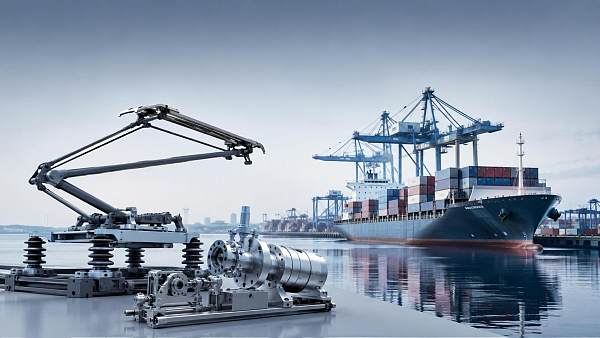
Take a pantograph as an example.
Two offers may look similar on total value.
Yet one may include aerodynamic validation and high-speed vibration testing, while the other excludes both.
That difference should reset the benchmark immediately.
Industrial sourcing intelligence works best when cost layers are tied to technical evidence.
Use Market Signals to Test Whether a Quote Is Realistic
A benchmark should reflect current market conditions, not last year’s assumptions.
From recent shifts, the clearer signal is volatility across both transport sectors.
Rail modernization projects affect demand for control electronics and braking modules.
Shipbuilding cycles influence lead times for automation packages, valves, sensors, and containment components.
This means industrial sourcing intelligence should monitor more than supplier quotations.
Useful external signals include:
- Raw material movement for copper, aluminum, stainless steel, and specialty polymers.
- Regional labor cost shifts in key manufacturing hubs.
- Freight and port conditions affecting heavy or oversized equipment.
- Tender activity in rail, LNG, and smart vessel programs.
- Regulatory changes that add testing, documentation, or cybersecurity work.
When one quote falls sharply below the market pattern, pause before celebrating.
It may indicate weak scope alignment, unstable sourcing, or margin recovery later through change orders.
A realistic benchmark protects both budget and delivery reliability.
Score Suppliers Beyond Price to Benchmark Component Costs Better
Price benchmarking becomes stronger when paired with supplier scoring.
This is especially true for complex and safety-critical components.
This method helps explain why the cheapest source is not always the most competitive source.
In actual sourcing work, that distinction matters more than ever.
Industrial sourcing intelligence should convert these factors into a weighted score beside each cost benchmark.
That gives decision makers a defensible view when internal pressure focuses too narrowly on unit price.
Common Benchmarking Mistakes in Rail and Maritime Procurement
Several mistakes weaken otherwise solid sourcing work.
- Comparing prototype-level quotes with serial production pricing.
- Ignoring software, firmware, or interface adaptation cost.
- Treating compliance testing as optional when it is contract-critical.
- Missing spare strategy for long-life assets such as trains and LNG carriers.
- Overlooking export controls, localization rules, or class society approvals.
The result is usually a benchmark that looks neat but fails under project conditions.
A better approach is to review the full use case.
For example, brake systems should be assessed for stopping performance, pad wear, thermal fade, and maintenance intervals.
A lower purchase price can disappear quickly if replacement cycles shorten.
Industrial sourcing intelligence keeps the benchmark anchored to operational reality.
A Practical Framework for Ongoing Cost Benchmarking
A one-time exercise is useful, but ongoing benchmarking is much stronger.
The process can stay simple if it is structured well.
- Standardize component families and technical descriptors.
- Capture every quote in the same cost template.
- Tag deviations in testing, scope, and commercial terms.
- Update market indicators quarterly or by tender cycle.
- Review benchmark results with engineering and quality teams.
- Use post-award delivery data to refine the next sourcing round.
This creates a more intelligent sourcing loop.
Over time, industrial sourcing intelligence becomes a living reference, not a static spreadsheet.
That also improves negotiation quality.
You can challenge price increases with evidence, while still recognizing justified cost movement.
More importantly, it supports better supplier selection across long-cycle transport programs.
When component costs are benchmarked properly, sourcing decisions become faster, clearer, and easier to defend.
That is the real value of industrial sourcing intelligence in complex rail and maritime procurement.
Recommended News
 Sep 29, 2026What drives traction systems price differences between rail projects?Traction systems price differences explained: compare duty cycles, voltage compatibility, integration, localization, and lifecycle costs for smarter rail procurement.
 Sep 26, 2026What to assess before selecting an electric traction system manufacturerChoose an electric traction system manufacturer with confidence. Explore key criteria for performance, reliability, safety, integration, energy efficiency, and lifecycle support.
 Sep 25, 2026When do full digitalization systems justify the investment?Full digitalization systems: discover when rail and maritime operators can turn connected data into safer operations, higher availability, and measurable ROI.
 Sep 23, 2026What drives automatic train control systems cost on rail projects?Automatic train control systems cost depends on integration, migration, safety testing, communications, and lifecycle support. Explore the key budget drivers for rail projects.
 Sep 21, 2026How to assess an ocean going vessel builder’s delivery riskAssess an ocean going vessel builder’s delivery risk with proven checks for schedules, capacity, design maturity, critical equipment, quality, and project controls.
 Sep 20, 2026What drives rail safety technology costs over a project lifecycle?Rail safety technology cost goes beyond equipment—explore lifecycle drivers from integration and safety assurance to cybersecurity, commissioning, and obsolescence.
 Sep 16, 2026What to verify before choosing an advanced ocean-going vessels supplierAdvanced ocean-going vessels supplier checklist: verify design authority, build quality, digital systems, delivery reliability, and lifecycle support before you buy.
 Sep 15, 2026What rail safety technology best reduces level-crossing risks in Southeast Asia?Rail safety technology Southeast Asia: discover how fail-safe signalling, barriers, obstacle detection and remote monitoring reduce level-crossing risks.
 Sep 14, 2026How exporters can reduce customs delays in global trade logisticsGlobal trade logistics for exporters: reduce customs delays with accurate data, clearance-ready documents, early filing, and proactive exception management.
 Sep 13, 2026When do global transportation network systems reduce delivery delays?Global transportation network systems reduce delivery delays by improving rail-port-vessel coordination, real-time visibility, and proactive decisions across complex land-sea supply chains.
 Sep 09, 2026When should you choose a rail and maritime manufacturer with dual-sector capability?Rail and maritime manufacturer guide: learn when dual-sector capability reduces integration risk, improves lifecycle support, and strengthens rail-to-port operations.
 Sep 08, 2026What to verify before selecting a railway signalling equipment supplierRailway signalling equipment supplier checklist: verify safety evidence, integration, cybersecurity, delivery capability, and lifecycle support before award.
 Sep 07, 2026How to size a traction power transformer for railway load demandTraction power transformer sizing guide: model railway load demand, peak duty, voltage regulation, harmonics, and contingency capacity for reliable service.
 Sep 07, 2026How do customization options for industrial connectors affect lead times?Customization options for industrial connectors can impact lead times, cost, and compliance. Learn how to specify smarter for rail and marine projects.
 Sep 05, 2026What information should an industrial sourcing guide include?Industrial sourcing information procurement guide: evaluate suppliers, compliance, lifecycle costs, interfaces, and lead times for smarter rail and maritime purchasing decisions.
 Sep 01, 2026How to find reliable maritime tender information before biddingMaritime tender information: learn how to verify sources, define bid-ready scopes, check qualifications, and reduce risk before submitting competitive marine bids.
 Aug 30, 2026How to select railway automation equipment for depots with phased upgradesRailway automation equipment for depots: learn how to plan phased upgrades that improve safety, throughput, integration, and lifecycle control.
 Aug 27, 2026How industrial sourcing intelligence pricing data supports budget approvalIndustrial sourcing intelligence pricing data helps teams benchmark scope, assess supplier risk, and build defensible budget approvals for complex rail and maritime assets.
 Aug 26, 2026When does a marine fuel efficiency solution make financial sense in the Middle East?Marine fuel efficiency solution Middle East: learn when retrofit savings, compliance value, and vessel data align to deliver credible ROI and smarter shipping investment decisions.
 Aug 24, 2026When does maritime automation for tankers deliver a real payback?Maritime automation for tankers delivers real payback when it cuts fuel use, reduces cargo risk, and improves uptime. See how owners can time investment for stronger ROI.
 Aug 23, 2026When do maritime logistics systems in the Middle East justify the costMaritime logistics systems Middle East: discover when rising delays, manual coordination, and poor visibility make system investment the smarter move for regional operators.
 Aug 22, 2026What drives vessel navigation system price for commercial fleetsVessel navigation system price depends on integration, compliance, automation, and support—not just hardware. Learn what drives fleet costs and compare quotes with confidence.
 Aug 21, 2026How to assess shipbuilding maritime tenders before biddingShipbuilding maritime tenders require more than price checks. Learn how to assess technical scope, compliance, supply chain, and commercial risk before bidding with confidence.
 Aug 20, 2026When does working with an ocean-going vessels distributor reduce supply risk?Ocean-going vessels distributor: learn when this partner cuts supply risk through stronger compliance, faster response, and better sourcing resilience in complex maritime procurement.