



Search News
Industry Portal
Popular Tags
What Drives SIL4 Signalling Equipment Price in New Rail Projects
Author
Time
Click Count
Why does SIL4 signalling equipment price vary so much in new rail projects?
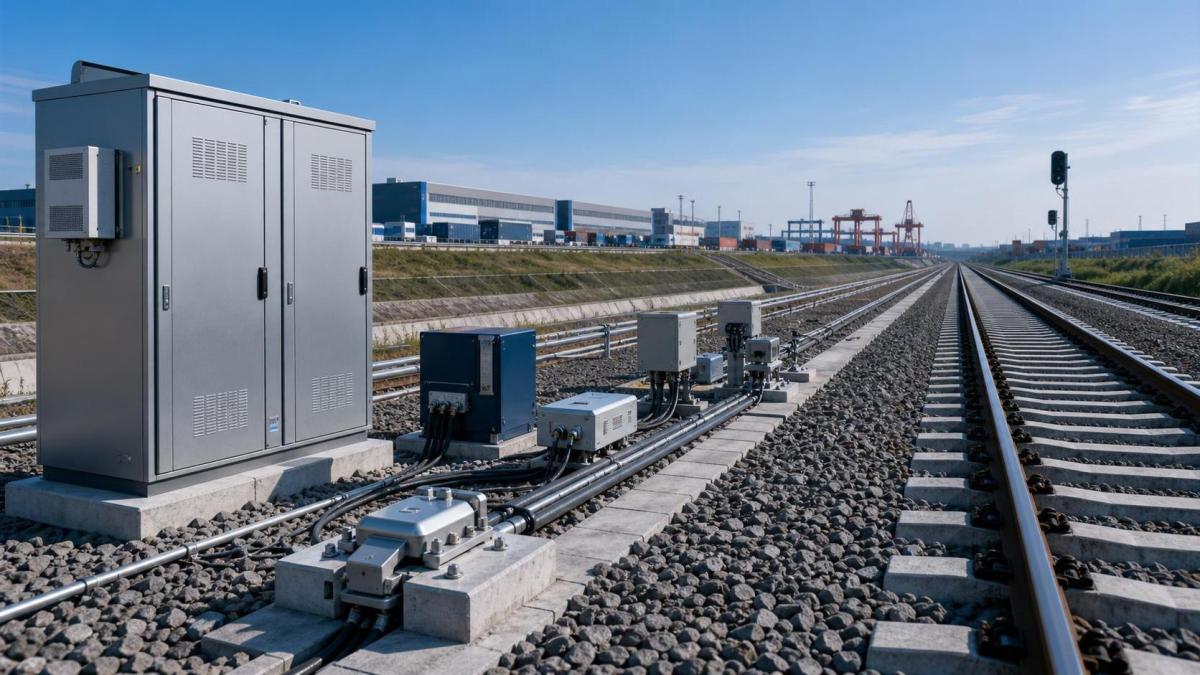
SIL4 signalling equipment price rarely comes from one line item alone.
In new rail construction, the budget reflects safety integrity, integration depth, testing effort, and long operating life.
That is why two projects with similar route length can produce very different numbers.
A basic comparison of cabinets or onboard modules often misses the real cost drivers.
More relevant questions are about interfaces, redundancy, local standards, and future maintenance obligations.
For organizations reviewing capital approval, the practical issue is not only initial spend.
It is whether the selected SIL4 architecture protects operations without creating avoidable lifecycle cost.
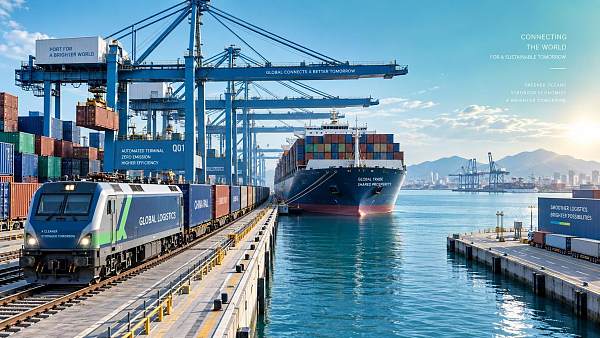
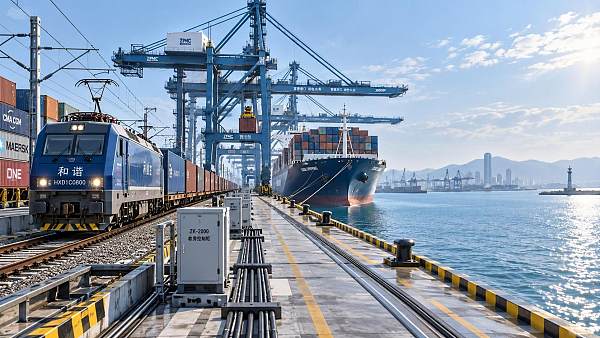
This matters even more in global transport networks, where rail reliability affects ports, logistics corridors, and industrial throughput.
That broader systems view is also why GTOT tracks railway control alongside traction, braking, and maritime assets.
When land and sea supply chains become more connected, signalling decisions carry wider commercial consequences.
What is usually included in SIL4 signalling equipment price?
Many approvals begin with a simple assumption: price equals hardware.
In reality, SIL4 signalling equipment price usually includes several layers of engineering and assurance.
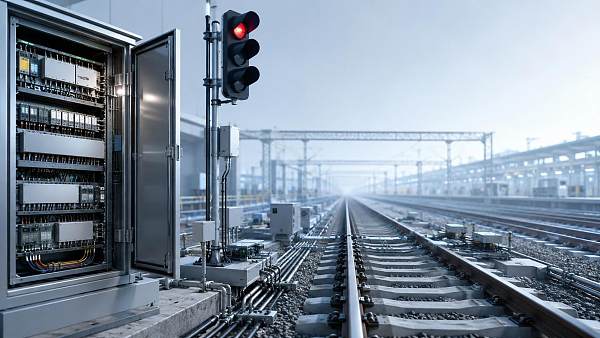
The visible equipment may cover interlockings, axle counters, balises, wayside interfaces, onboard units, control workstations, and communication gateways.
But the hidden part is often just as large.
- Safety case development and independent assessment
- Software configuration and application engineering
- Factory acceptance and site acceptance testing
- Integration with telecom, power, platform systems, and rolling stock
- Spare parts packages and maintenance documentation
- Training, cybersecurity controls, and diagnostics tools
A lower bid can therefore be misleading if key validation work sits outside the quoted package.
A better reading of SIL4 signalling equipment price separates supply scope from total project obligation.
That distinction becomes critical when comparing greenfield metro, high-speed rail, and mixed-traffic corridors.
Which project conditions push the price up fastest?
The fastest cost increases usually come from complexity, not from unit quantity alone.
A long route with standard interfaces may be easier to price than a shorter line with difficult integration.
In practice, these conditions have the strongest influence on SIL4 signalling equipment price.
This is where many budget reviews become sharper.
Instead of debating average market price, it is more useful to test which project variables are still unstable.
Unfrozen interfaces can change the final SIL4 signalling equipment price more than inflation or freight.
Is certification the main reason SIL4 signalling equipment costs more?
Certification is important, but it is not the whole story.
SIL4 represents the highest functional safety requirement used in railway signalling.
Reaching that level requires disciplined design, proven processes, traceable software, and rigorous verification.
Those obligations clearly raise engineering cost.
Still, the bigger cost jump often appears when certified products must be adapted to a specific route.
A certified core platform does not remove the need for site-specific logic, hazard analysis, and interface evidence.
That is why a mature platform can still produce a high SIL4 signalling equipment price in a complicated deployment.
Need to watch one common misunderstanding.
Some proposals highlight certification status while downplaying configuration risk.
The approval question should be broader: how much of the system is standard, and how much still needs project-specific proof?
That answer usually predicts schedule stability better than the certificate alone.
How should you compare suppliers when the quotes look difficult to align?
This is where many evaluations lose clarity.
Two vendors may both reference SIL4 signalling equipment price, yet include very different commercial boundaries.
A useful comparison starts by normalizing the assumptions.
- Map every interface included in the base quote
- Separate product price from application engineering price
- Check whether independent safety assessment is included
- Confirm spare parts horizon and software support period
- Review assumptions for localization, taxes, transport, and site services
- Test exposure to proprietary tools and long-term vendor lock-in
A comparison also needs context from adjacent systems.
GTOT often frames rail controls within a wider infrastructure picture, not as isolated equipment islands.
That perspective helps because signalling performance interacts with traction power quality, braking response, and corridor operating density.
When a line connects ports, freight yards, or industrial clusters, those interactions become economically visible.
So the best quote is not always the lowest one.
It is the one with the clearest path to reliable commissioning and controllable lifecycle burden.
What hidden costs are most often missed during approval?
Hidden cost usually appears after contract award, not before.
Several items are repeatedly underestimated in SIL4 projects.
Integration drift
If third-party interfaces change late, software updates and regression testing can expand quickly.
Operational cutover constraints
Night possessions, staged migration, and parallel running can add labor, temporary hardware, and schedule pressure.
Cybersecurity and obsolescence
Modern signalling needs secure remote access, patch governance, and replacement planning for long service lives.
Local support readiness
A low upfront SIL4 signalling equipment price can become expensive when spare logistics or fault response depend on overseas teams.
A practical approval test is simple.
Ask which costs would still exist if the route opened one year late.
The answers usually reveal the true exposure better than a compressed capex summary.
So what is the smarter way to judge SIL4 signalling equipment price?
A smart review treats SIL4 signalling equipment price as a risk-weighted system cost, not a catalog price.
The right question is whether the project is buying certainty, or simply postponing complexity.
In most cases, stronger value comes from four checks.
- Freeze interfaces before final commercial comparison
- Model lifecycle support for at least ten to fifteen years
- Challenge every exclusion in testing, safety assurance, and localization
- Compare schedule confidence, not only equipment totals
That approach fits the current transport environment, where rail control, port efficiency, and supply chain resilience are increasingly linked.
GTOT follows this wider intelligence picture because infrastructure value now depends on cross-system reliability, not isolated procurement wins.
If a new rail project is entering approval, the next step is to build a comparison sheet around scope, assurance, integration, and support.
That is usually the fastest way to judge whether the quoted SIL4 signalling equipment price is lean, realistic, or deceptively incomplete.
Recommended News
 Sep 29, 2026What drives traction systems price differences between rail projects?Traction systems price differences explained: compare duty cycles, voltage compatibility, integration, localization, and lifecycle costs for smarter rail procurement.
 Sep 26, 2026What to assess before selecting an electric traction system manufacturerChoose an electric traction system manufacturer with confidence. Explore key criteria for performance, reliability, safety, integration, energy efficiency, and lifecycle support.
 Sep 25, 2026When do full digitalization systems justify the investment?Full digitalization systems: discover when rail and maritime operators can turn connected data into safer operations, higher availability, and measurable ROI.
 Sep 23, 2026What drives automatic train control systems cost on rail projects?Automatic train control systems cost depends on integration, migration, safety testing, communications, and lifecycle support. Explore the key budget drivers for rail projects.
 Sep 21, 2026How to assess an ocean going vessel builder’s delivery riskAssess an ocean going vessel builder’s delivery risk with proven checks for schedules, capacity, design maturity, critical equipment, quality, and project controls.
 Sep 20, 2026What drives rail safety technology costs over a project lifecycle?Rail safety technology cost goes beyond equipment—explore lifecycle drivers from integration and safety assurance to cybersecurity, commissioning, and obsolescence.
 Sep 16, 2026What to verify before choosing an advanced ocean-going vessels supplierAdvanced ocean-going vessels supplier checklist: verify design authority, build quality, digital systems, delivery reliability, and lifecycle support before you buy.
 Sep 15, 2026What rail safety technology best reduces level-crossing risks in Southeast Asia?Rail safety technology Southeast Asia: discover how fail-safe signalling, barriers, obstacle detection and remote monitoring reduce level-crossing risks.
 Sep 14, 2026How exporters can reduce customs delays in global trade logisticsGlobal trade logistics for exporters: reduce customs delays with accurate data, clearance-ready documents, early filing, and proactive exception management.
 Sep 13, 2026When do global transportation network systems reduce delivery delays?Global transportation network systems reduce delivery delays by improving rail-port-vessel coordination, real-time visibility, and proactive decisions across complex land-sea supply chains.
 Sep 09, 2026When should you choose a rail and maritime manufacturer with dual-sector capability?Rail and maritime manufacturer guide: learn when dual-sector capability reduces integration risk, improves lifecycle support, and strengthens rail-to-port operations.
 Sep 08, 2026What to verify before selecting a railway signalling equipment supplierRailway signalling equipment supplier checklist: verify safety evidence, integration, cybersecurity, delivery capability, and lifecycle support before award.
 Sep 07, 2026How to size a traction power transformer for railway load demandTraction power transformer sizing guide: model railway load demand, peak duty, voltage regulation, harmonics, and contingency capacity for reliable service.
 Sep 07, 2026How do customization options for industrial connectors affect lead times?Customization options for industrial connectors can impact lead times, cost, and compliance. Learn how to specify smarter for rail and marine projects.
 Sep 05, 2026What information should an industrial sourcing guide include?Industrial sourcing information procurement guide: evaluate suppliers, compliance, lifecycle costs, interfaces, and lead times for smarter rail and maritime purchasing decisions.
 Sep 01, 2026How to find reliable maritime tender information before biddingMaritime tender information: learn how to verify sources, define bid-ready scopes, check qualifications, and reduce risk before submitting competitive marine bids.
 Aug 30, 2026How to select railway automation equipment for depots with phased upgradesRailway automation equipment for depots: learn how to plan phased upgrades that improve safety, throughput, integration, and lifecycle control.
 Aug 27, 2026How industrial sourcing intelligence pricing data supports budget approvalIndustrial sourcing intelligence pricing data helps teams benchmark scope, assess supplier risk, and build defensible budget approvals for complex rail and maritime assets.
 Aug 26, 2026When does a marine fuel efficiency solution make financial sense in the Middle East?Marine fuel efficiency solution Middle East: learn when retrofit savings, compliance value, and vessel data align to deliver credible ROI and smarter shipping investment decisions.
 Aug 24, 2026When does maritime automation for tankers deliver a real payback?Maritime automation for tankers delivers real payback when it cuts fuel use, reduces cargo risk, and improves uptime. See how owners can time investment for stronger ROI.
 Aug 23, 2026When do maritime logistics systems in the Middle East justify the costMaritime logistics systems Middle East: discover when rising delays, manual coordination, and poor visibility make system investment the smarter move for regional operators.
 Aug 22, 2026What drives vessel navigation system price for commercial fleetsVessel navigation system price depends on integration, compliance, automation, and support—not just hardware. Learn what drives fleet costs and compare quotes with confidence.
 Aug 21, 2026How to assess shipbuilding maritime tenders before biddingShipbuilding maritime tenders require more than price checks. Learn how to assess technical scope, compliance, supply chain, and commercial risk before bidding with confidence.
 Aug 20, 2026When does working with an ocean-going vessels distributor reduce supply risk?Ocean-going vessels distributor: learn when this partner cuts supply risk through stronger compliance, faster response, and better sourcing resilience in complex maritime procurement.