



Search News
Industry Portal
Popular Tags
Supplier Evaluation Support for Component Suppliers: Key Criteria That Matter
Author
Time
Click Count
Supplier evaluation support for component suppliers has become a control point for quality, safety, and continuity across rail and marine operations. When a signal relay fails, a pantograph loses stability, a brake subsystem drifts from tolerance, or an LNG containment component underperforms, the issue rarely stays inside procurement. It moves quickly into compliance exposure, downtime risk, lifecycle cost, and reputation. That is why supplier evaluation support for component suppliers now needs to be structured around technical evidence, process discipline, and the realities of mission-critical transport assets.
Why evaluation criteria now matter more
Across land-sea transportation, component performance is being tested by tighter safety standards, faster operating speeds, digital integration, and more volatile supply chains. The acceptable margin for error is getting smaller.
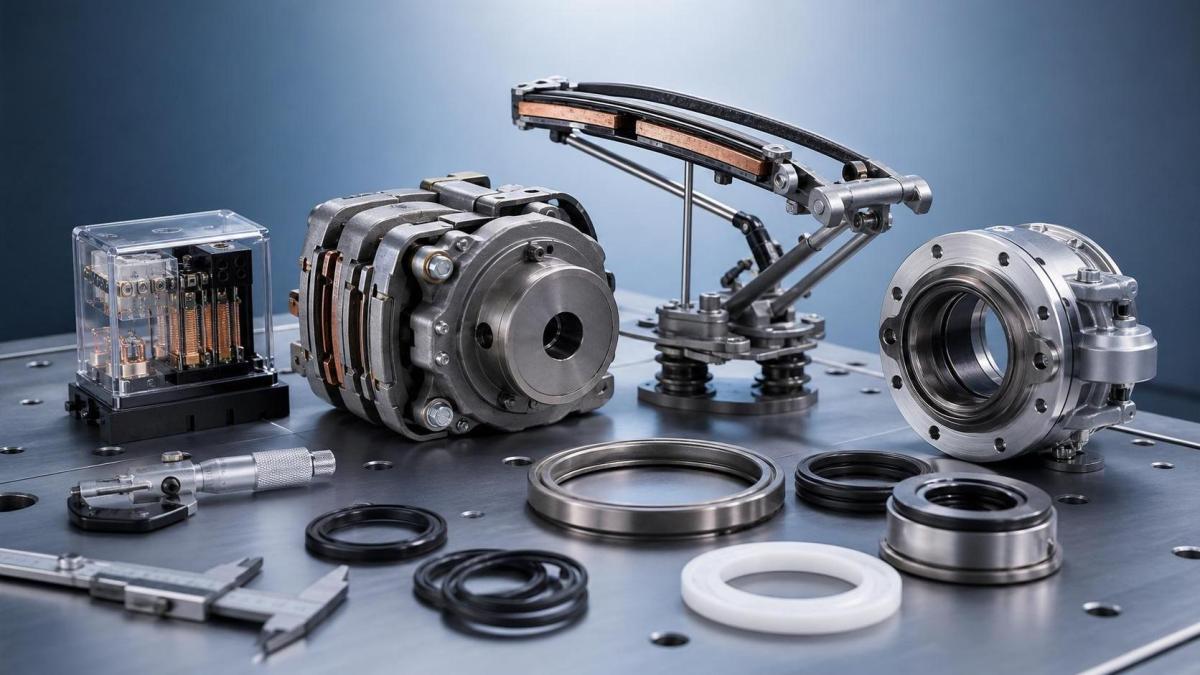
In railway signalling, SIL4 expectations leave little room for inconsistent manufacturing or weak change control. In braking systems, thermal behavior and response consistency directly shape stopping safety.
For pantographs, vibration resistance, wear patterns, and current collection stability can determine service reliability at very high speeds. In LNG carriers, cryogenic performance and containment integrity are inseparable from operational safety.
This is where supplier evaluation support for component suppliers becomes practical rather than administrative. It helps separate suppliers that can present durable capability from those that only pass a document review.
What supplier evaluation support should really cover
At a basic level, supplier evaluation support for component suppliers is a structured method for judging whether a supplier can consistently deliver parts that meet technical, regulatory, and operational expectations.
That sounds simple, but the scope is broader than factory qualification. It usually includes capability validation, process review, compliance checks, risk scoring, traceability assessment, and follow-up monitoring.
A strong evaluation model also asks a harder question: can this supplier keep performing when production scales, materials change, logistics tighten, or end-use conditions become more demanding?
This broader view aligns with how GTOT tracks rail infrastructure investment, shipbuilding cycles, and technical evolution. Supplier strength has to be judged within market pressure, engineering complexity, and long-asset service life.
The criteria that deserve close attention
Not every criterion carries equal weight. For critical components, several areas tend to matter most.
Technical capability and process control
A supplier should demonstrate repeatable manufacturing, not one-time sample success. Look for validated process windows, equipment calibration, control plans, and clear reaction procedures when variation appears.
For high-risk components, test capability matters as much as production capability. If a supplier cannot verify performance under realistic vibration, thermal, electrical, or cryogenic conditions, confidence remains incomplete.
Quality management maturity
Certificates are useful, but they are not the final answer. The deeper signal is how nonconformities are contained, how root causes are proven, and how corrective actions are sustained over time.
A mature supplier usually shows disciplined incoming inspection, in-process verification, final release control, and measurable improvement performance.
Traceability and change management
For rail and marine applications, undocumented changes create hidden risk. Materials, sub-tier sources, software revisions, tooling updates, and process relocation all need formal control.
Good supplier evaluation support for component suppliers pays close attention to batch traceability, serial-level records where needed, retention periods, and engineering change notification discipline.
Compliance and safety alignment
A supplier may be technically capable but still misaligned with required standards. Depending on the component, relevant frameworks can include IRIS, ISO 9001, ISO 22163, IEC-related safety expectations, marine class requirements, and sector-specific testing rules.
The key point is not paperwork volume. It is whether compliance is embedded in design review, production release, and field feedback loops.
Supply resilience
Capacity, lead-time realism, raw material exposure, and sub-supplier dependence all affect delivery reliability. In long-cycle industries, a technically qualified supplier can still become a weak link if continuity planning is poor.
How the criteria shift by component type
The right evaluation framework depends on failure mode, service environment, and asset criticality. A common checklist is useful, but it should not flatten technical differences.
Railway signal control components
Here, software control, functional safety evidence, configuration discipline, and validation depth often carry more weight. Small undocumented deviations can become system-level hazards.
Pantograph and traction interfaces
Mechanical fatigue, conductive material consistency, aerodynamic behavior, and wear resistance move to the front. Supplier evaluation support for component suppliers should examine both lab performance and field durability.
Braking system parts
Friction stability, heat tolerance, electronic control precision, and failure containment become decisive. Review should include process drift sensitivity and evidence from endurance testing.
Smart vessel and LNG carrier components
Marine electronics add cybersecurity and integration concerns. Cryogenic components require closer attention to low-temperature material behavior, insulation reliability, and class-related approval pathways.
Common gaps that weaken evaluation results
Many evaluations fail because they stop at surface indicators. A polished presentation can hide weak execution.
- Treating certification as proof of process stability.
- Using the same scoring model for low-risk and high-risk parts.
- Ignoring sub-tier dependence and material substitution risk.
- Reviewing quality history without checking response effectiveness.
- Missing engineering change discipline after initial approval.
- Overlooking field feedback, warranty patterns, and service data.
These gaps matter because transport assets stay in service for years, sometimes decades. Weak evaluation decisions can remain hidden until operating stress exposes them.
Turning evaluation into an ongoing control process
The strongest supplier evaluation support for component suppliers does not end after onboarding. It becomes part of ongoing supplier governance.
That means linking audit outcomes, incoming inspection trends, delivery performance, deviation rates, and field incidents into one view. It also means reviewing the supplier again when operating conditions or design assumptions change.
GTOT’s intelligence perspective is useful here. Market shifts, infrastructure expansion, new vessel requirements, and evolving technical standards all change what “acceptable supplier risk” looks like.
A supplier that was sufficient for yesterday’s specification may be underqualified for tomorrow’s automated railway system or digitally integrated vessel platform.
A practical next step
A useful starting point is to group components by safety impact, operating severity, and traceability need. Then align evaluation depth to that risk profile instead of applying one universal checklist.
From there, review whether current supplier evaluation support for component suppliers captures actual process evidence, change control behavior, and lifecycle reliability signals. If those elements are thin, the evaluation model is probably too shallow.
The better path is to build a decision framework that reflects real transport conditions across signalling, braking, traction, smart shipping, and LNG systems. That creates clearer supplier comparisons, stronger audit priorities, and more defensible quality and safety decisions over time.
Recommended News
 Sep 29, 2026What drives traction systems price differences between rail projects?Traction systems price differences explained: compare duty cycles, voltage compatibility, integration, localization, and lifecycle costs for smarter rail procurement.
 Sep 26, 2026What to assess before selecting an electric traction system manufacturerChoose an electric traction system manufacturer with confidence. Explore key criteria for performance, reliability, safety, integration, energy efficiency, and lifecycle support.
 Sep 25, 2026When do full digitalization systems justify the investment?Full digitalization systems: discover when rail and maritime operators can turn connected data into safer operations, higher availability, and measurable ROI.
 Sep 23, 2026What drives automatic train control systems cost on rail projects?Automatic train control systems cost depends on integration, migration, safety testing, communications, and lifecycle support. Explore the key budget drivers for rail projects.
 Sep 21, 2026How to assess an ocean going vessel builder’s delivery riskAssess an ocean going vessel builder’s delivery risk with proven checks for schedules, capacity, design maturity, critical equipment, quality, and project controls.
 Sep 20, 2026What drives rail safety technology costs over a project lifecycle?Rail safety technology cost goes beyond equipment—explore lifecycle drivers from integration and safety assurance to cybersecurity, commissioning, and obsolescence.
 Sep 16, 2026What to verify before choosing an advanced ocean-going vessels supplierAdvanced ocean-going vessels supplier checklist: verify design authority, build quality, digital systems, delivery reliability, and lifecycle support before you buy.
 Sep 15, 2026What rail safety technology best reduces level-crossing risks in Southeast Asia?Rail safety technology Southeast Asia: discover how fail-safe signalling, barriers, obstacle detection and remote monitoring reduce level-crossing risks.
 Sep 14, 2026How exporters can reduce customs delays in global trade logisticsGlobal trade logistics for exporters: reduce customs delays with accurate data, clearance-ready documents, early filing, and proactive exception management.
 Sep 13, 2026When do global transportation network systems reduce delivery delays?Global transportation network systems reduce delivery delays by improving rail-port-vessel coordination, real-time visibility, and proactive decisions across complex land-sea supply chains.
 Sep 09, 2026When should you choose a rail and maritime manufacturer with dual-sector capability?Rail and maritime manufacturer guide: learn when dual-sector capability reduces integration risk, improves lifecycle support, and strengthens rail-to-port operations.
 Sep 08, 2026What to verify before selecting a railway signalling equipment supplierRailway signalling equipment supplier checklist: verify safety evidence, integration, cybersecurity, delivery capability, and lifecycle support before award.
 Sep 07, 2026How to size a traction power transformer for railway load demandTraction power transformer sizing guide: model railway load demand, peak duty, voltage regulation, harmonics, and contingency capacity for reliable service.
 Sep 07, 2026How do customization options for industrial connectors affect lead times?Customization options for industrial connectors can impact lead times, cost, and compliance. Learn how to specify smarter for rail and marine projects.
 Sep 05, 2026What information should an industrial sourcing guide include?Industrial sourcing information procurement guide: evaluate suppliers, compliance, lifecycle costs, interfaces, and lead times for smarter rail and maritime purchasing decisions.
 Sep 01, 2026How to find reliable maritime tender information before biddingMaritime tender information: learn how to verify sources, define bid-ready scopes, check qualifications, and reduce risk before submitting competitive marine bids.
 Aug 30, 2026How to select railway automation equipment for depots with phased upgradesRailway automation equipment for depots: learn how to plan phased upgrades that improve safety, throughput, integration, and lifecycle control.
 Aug 27, 2026How industrial sourcing intelligence pricing data supports budget approvalIndustrial sourcing intelligence pricing data helps teams benchmark scope, assess supplier risk, and build defensible budget approvals for complex rail and maritime assets.
 Aug 26, 2026When does a marine fuel efficiency solution make financial sense in the Middle East?Marine fuel efficiency solution Middle East: learn when retrofit savings, compliance value, and vessel data align to deliver credible ROI and smarter shipping investment decisions.
 Aug 24, 2026When does maritime automation for tankers deliver a real payback?Maritime automation for tankers delivers real payback when it cuts fuel use, reduces cargo risk, and improves uptime. See how owners can time investment for stronger ROI.
 Aug 23, 2026When do maritime logistics systems in the Middle East justify the costMaritime logistics systems Middle East: discover when rising delays, manual coordination, and poor visibility make system investment the smarter move for regional operators.
 Aug 22, 2026What drives vessel navigation system price for commercial fleetsVessel navigation system price depends on integration, compliance, automation, and support—not just hardware. Learn what drives fleet costs and compare quotes with confidence.
 Aug 21, 2026How to assess shipbuilding maritime tenders before biddingShipbuilding maritime tenders require more than price checks. Learn how to assess technical scope, compliance, supply chain, and commercial risk before bidding with confidence.
 Aug 20, 2026When does working with an ocean-going vessels distributor reduce supply risk?Ocean-going vessels distributor: learn when this partner cuts supply risk through stronger compliance, faster response, and better sourcing resilience in complex maritime procurement.