Search News
Industry Portal
Popular Tags
How to Compare EPC Contractors for Transit Infrastructure Projects
Author
Time
Click Count
How to Compare EPC Contractors for Transit Infrastructure Projects
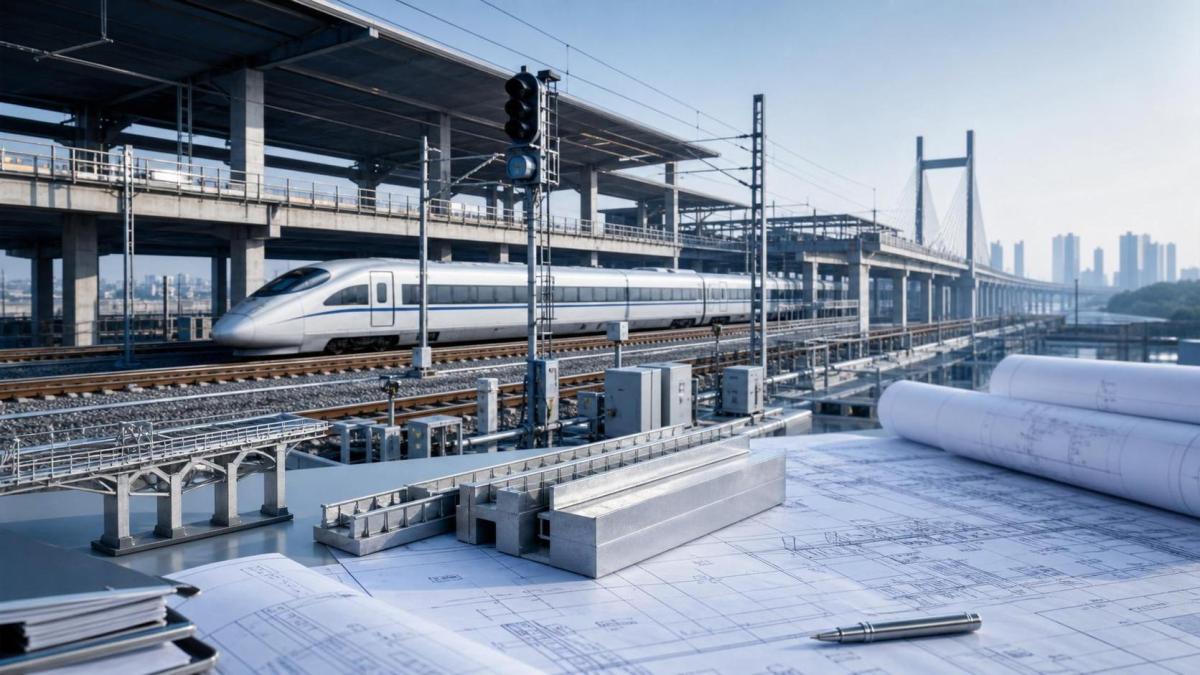
Choosing among EPC contractors for transportation infrastructure can shape every project outcome.
Schedule, safety, systems compatibility, and lifetime cost all depend on the right comparison process.
In rail and multimodal transit, the stakes are even higher.
A contractor may look competitive on price, yet struggle with signalling interfaces, traction coordination, or phased commissioning.
That is why comparing EPC contractors for transportation infrastructure needs a wider lens.
You need to assess engineering depth, integration capability, procurement discipline, and risk ownership together.
This becomes especially important where projects involve signalling, braking, power collection, rolling stock interfaces, or port-linked logistics.
GTOT closely tracks these technical layers because they define real delivery performance, not just bid presentation quality.
Start with project fit, not headline price
The first filter should be fit with your project type.
Not all EPC contractors for transportation infrastructure are strong across urban rail, intercity rail, depots, bridges, stations, and marine-linked corridors.
Some firms excel in civil packages but rely heavily on partners for rail systems.
Others are technically strong in systems engineering but weaker in local permitting or subcontractor control.
Begin by matching contractor history to your exact delivery profile.
- Compare project size, route complexity, and interface density.
- Check whether they handled live-traffic environments or greenfield delivery.
- Review experience with signalling, pantographs, braking systems, and depot integration.
- Look at climate, terrain, and geotechnical similarity.
This simple step removes attractive bids that are not truly aligned with operational reality.
Check technical integration capability early
For transit projects, integration is where many risks appear.
A contractor can deliver structures on time and still fail during testing because systems do not communicate properly.
That is why EPC contractors for transportation infrastructure should be evaluated on interface management, not just engineering manpower.
Ask how they control interfaces between civil works, power supply, signalling, telecom, platform systems, and operations software.
More specifically, request evidence from previous commissioning stages.
- Interface registers and ownership matrices.
- Systems assurance plans tied to SIL targets.
- Integration test procedures and defect closeout cycles.
- Lessons learned from mixed-vendor environments.
In actual projects, this evidence tells you more than polished capability decks.
GTOT often sees stronger delivery outcomes where contractors understand both component behavior and system-level consequences.
That matters when evaluating railway signal control systems, high-speed traction assets, and safety-critical braking performance.
Assess procurement strength and supply chain visibility
Procurement is no longer a back-office function.
For EPC contractors for transportation infrastructure, supply chain control can decide whether the schedule survives market shocks.
Long-lead components often include signalling hardware, switchgear, traction power equipment, brake subsystems, and digital control modules.
If contractor visibility stops at purchase order placement, delivery risk remains high.
A stronger contractor can show how it qualifies suppliers, manages alternates, and protects factory slots.
This is also where market intelligence helps.
GTOT’s sector tracking is useful because equipment availability increasingly links to global rail investment cycles and maritime logistics pressure.
Compare risk allocation, not just contract value
A lower price can hide a weaker risk position.
When reviewing EPC contractors for transportation infrastructure, study how each bidder defines exclusions, assumptions, and relief events.
Small wording differences can become major cost disputes later.
Look closely at utility conflicts, land access, third-party approvals, integration testing delays, and performance guarantee boundaries.
A useful method is to score contractors against probable risk events.
- List the ten most likely project disruptions.
- Check who owns each risk contractually.
- Review mitigation actions already priced into the bid.
- Estimate impact if the risk becomes real.
This gives a more realistic view of commercial value.
In many transit programs, the best contractor is not the cheapest one.
It is the one that reduces expensive uncertainty.
Review delivery teams, governance, and decision speed
Contractors do not deliver projects. Teams do.
That is why EPC contractors for transportation infrastructure should be compared at team level, not only corporate level.
Ask for the proposed project director, engineering lead, systems integration manager, construction lead, and commissioning authority.
Then verify whether these people are confirmed or only illustrative.
Decision speed is another overlooked factor.
If every technical issue must escalate across regions or joint venture layers, response time will slow down field progress.
- Review reporting lines and approval limits.
- Check how design changes are authorized.
- Ask how issues are resolved during test and commissioning windows.
- Confirm resource continuity for the full project term.
A responsive governance model often creates more schedule protection than aggressive baseline promises.
Measure lifecycle value and operational readiness
The comparison should not stop at handover.
The strongest EPC contractors for transportation infrastructure think beyond construction completion.
They consider maintainability, spare parts strategy, energy performance, diagnostics, staff training, and asset data quality.
This is critical for projects using advanced railway control components or digitally managed fleets.
For example, a slightly higher upfront solution may reduce downtime, fault isolation time, and maintenance labor over years.
That changes the real business case.
From a broader market view, GTOT sees lifecycle credibility becoming a stronger differentiator in both rail and sea-connected transport infrastructure.
Owners increasingly value digitalization, decarbonization, and asset resilience together.
Build a practical contractor comparison framework
A practical framework keeps evaluation grounded and fair.
When comparing EPC contractors for transportation infrastructure, a weighted matrix works best if it reflects project priorities.
Typical categories include technical fit, interface capability, procurement resilience, risk allocation, team strength, and lifecycle value.
However, scoring alone is not enough.
You should also test each bidder through workshops, clarification rounds, and scenario-based discussions.
- Run a live interface-risk workshop.
- Ask bidders to respond to a schedule disruption scenario.
- Review how they would recover a delayed critical component.
- Test their commissioning logic for a constrained operating window.
These exercises reveal how the contractor actually thinks.
They also expose whether the bidder truly understands the transit operating environment.
Make the final decision with a long-view mindset
The final choice should balance certainty, technical quality, and future performance.
The best EPC contractors for transportation infrastructure are rarely defined by one metric.
They stand out because they can integrate complex systems, manage supply chain volatility, and deliver an asset that performs after handover.
That is the decision lens worth using.
In a market shaped by automation, decarbonization, and tighter performance expectations, deeper evaluation leads to better outcomes.
If your next review process needs stronger technical intelligence, use market insight and equipment-level understanding to sharpen the shortlist early.
That approach makes contractor selection more confident, more defendable, and far more useful over the life of the project.
Recommended News
 Sep 29, 2026What drives traction systems price differences between rail projects?Traction systems price differences explained: compare duty cycles, voltage compatibility, integration, localization, and lifecycle costs for smarter rail procurement.
 Sep 26, 2026What to assess before selecting an electric traction system manufacturerChoose an electric traction system manufacturer with confidence. Explore key criteria for performance, reliability, safety, integration, energy efficiency, and lifecycle support.
 Sep 25, 2026When do full digitalization systems justify the investment?Full digitalization systems: discover when rail and maritime operators can turn connected data into safer operations, higher availability, and measurable ROI.
 Sep 23, 2026What drives automatic train control systems cost on rail projects?Automatic train control systems cost depends on integration, migration, safety testing, communications, and lifecycle support. Explore the key budget drivers for rail projects.
 Sep 21, 2026How to assess an ocean going vessel builder’s delivery riskAssess an ocean going vessel builder’s delivery risk with proven checks for schedules, capacity, design maturity, critical equipment, quality, and project controls.
 Sep 20, 2026What drives rail safety technology costs over a project lifecycle?Rail safety technology cost goes beyond equipment—explore lifecycle drivers from integration and safety assurance to cybersecurity, commissioning, and obsolescence.
 Sep 16, 2026What to verify before choosing an advanced ocean-going vessels supplierAdvanced ocean-going vessels supplier checklist: verify design authority, build quality, digital systems, delivery reliability, and lifecycle support before you buy.
 Sep 15, 2026What rail safety technology best reduces level-crossing risks in Southeast Asia?Rail safety technology Southeast Asia: discover how fail-safe signalling, barriers, obstacle detection and remote monitoring reduce level-crossing risks.
 Sep 14, 2026How exporters can reduce customs delays in global trade logisticsGlobal trade logistics for exporters: reduce customs delays with accurate data, clearance-ready documents, early filing, and proactive exception management.
 Sep 13, 2026When do global transportation network systems reduce delivery delays?Global transportation network systems reduce delivery delays by improving rail-port-vessel coordination, real-time visibility, and proactive decisions across complex land-sea supply chains.
 Sep 09, 2026When should you choose a rail and maritime manufacturer with dual-sector capability?Rail and maritime manufacturer guide: learn when dual-sector capability reduces integration risk, improves lifecycle support, and strengthens rail-to-port operations.
 Sep 08, 2026What to verify before selecting a railway signalling equipment supplierRailway signalling equipment supplier checklist: verify safety evidence, integration, cybersecurity, delivery capability, and lifecycle support before award.
 Sep 07, 2026How to size a traction power transformer for railway load demandTraction power transformer sizing guide: model railway load demand, peak duty, voltage regulation, harmonics, and contingency capacity for reliable service.
 Sep 07, 2026How do customization options for industrial connectors affect lead times?Customization options for industrial connectors can impact lead times, cost, and compliance. Learn how to specify smarter for rail and marine projects.
 Sep 05, 2026What information should an industrial sourcing guide include?Industrial sourcing information procurement guide: evaluate suppliers, compliance, lifecycle costs, interfaces, and lead times for smarter rail and maritime purchasing decisions.
 Sep 01, 2026How to find reliable maritime tender information before biddingMaritime tender information: learn how to verify sources, define bid-ready scopes, check qualifications, and reduce risk before submitting competitive marine bids.
 Aug 30, 2026How to select railway automation equipment for depots with phased upgradesRailway automation equipment for depots: learn how to plan phased upgrades that improve safety, throughput, integration, and lifecycle control.
 Aug 27, 2026How industrial sourcing intelligence pricing data supports budget approvalIndustrial sourcing intelligence pricing data helps teams benchmark scope, assess supplier risk, and build defensible budget approvals for complex rail and maritime assets.
 Aug 26, 2026When does a marine fuel efficiency solution make financial sense in the Middle East?Marine fuel efficiency solution Middle East: learn when retrofit savings, compliance value, and vessel data align to deliver credible ROI and smarter shipping investment decisions.
 Aug 24, 2026When does maritime automation for tankers deliver a real payback?Maritime automation for tankers delivers real payback when it cuts fuel use, reduces cargo risk, and improves uptime. See how owners can time investment for stronger ROI.
 Aug 23, 2026When do maritime logistics systems in the Middle East justify the costMaritime logistics systems Middle East: discover when rising delays, manual coordination, and poor visibility make system investment the smarter move for regional operators.
 Aug 22, 2026What drives vessel navigation system price for commercial fleetsVessel navigation system price depends on integration, compliance, automation, and support—not just hardware. Learn what drives fleet costs and compare quotes with confidence.
 Aug 21, 2026How to assess shipbuilding maritime tenders before biddingShipbuilding maritime tenders require more than price checks. Learn how to assess technical scope, compliance, supply chain, and commercial risk before bidding with confidence.
 Aug 20, 2026When does working with an ocean-going vessels distributor reduce supply risk?Ocean-going vessels distributor: learn when this partner cuts supply risk through stronger compliance, faster response, and better sourcing resilience in complex maritime procurement.