



Search News
Industry Portal
Popular Tags
How to Compare Land Sea Transport Solutions by Transit Time, Cost, and Cargo Risk
Author
Time
Click Count
What Actually Matters When Comparing Land Sea Transport Solutions
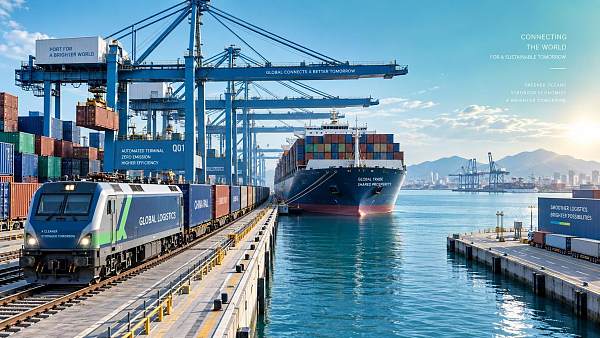
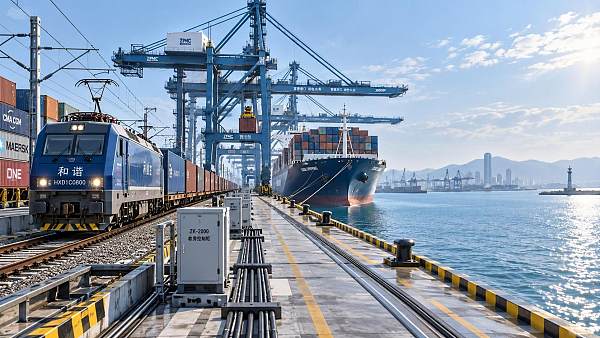
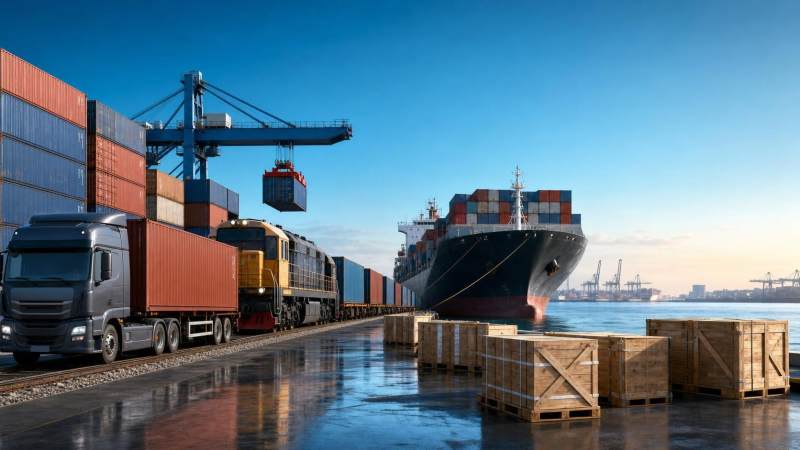
Choosing among land sea transport solutions usually goes wrong at the point where people compare only the quoted freight rate. On paper, one route looks cheaper, another looks faster, and a third appears safer because it uses a well-known carrier. In practice, those labels are not enough. The real comparison sits in the interaction between transit time variability, all-in landed cost, and cargo exposure across every handoff between inland transport, port operations, ocean passage, customs processing, and final delivery.
That is why experienced evaluators rarely ask, “Which mode is cheapest?” They ask narrower and more useful questions: How much schedule deviation can the business absorb? Which cost items are fixed and which are likely to move? Where does the cargo become most vulnerable to delay, damage, theft, contamination, or documentation error? A land-sea chain is not one movement. It is a sequence of operational interfaces, and most failures happen at those interfaces rather than during the long middle leg.
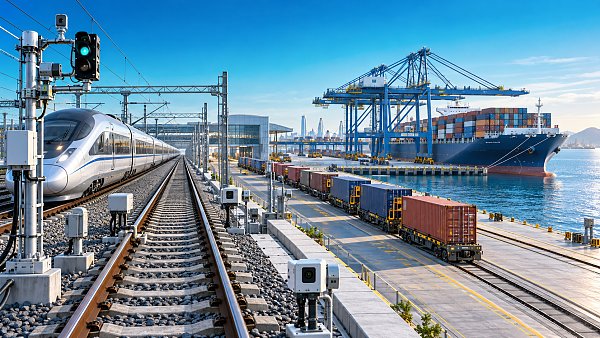
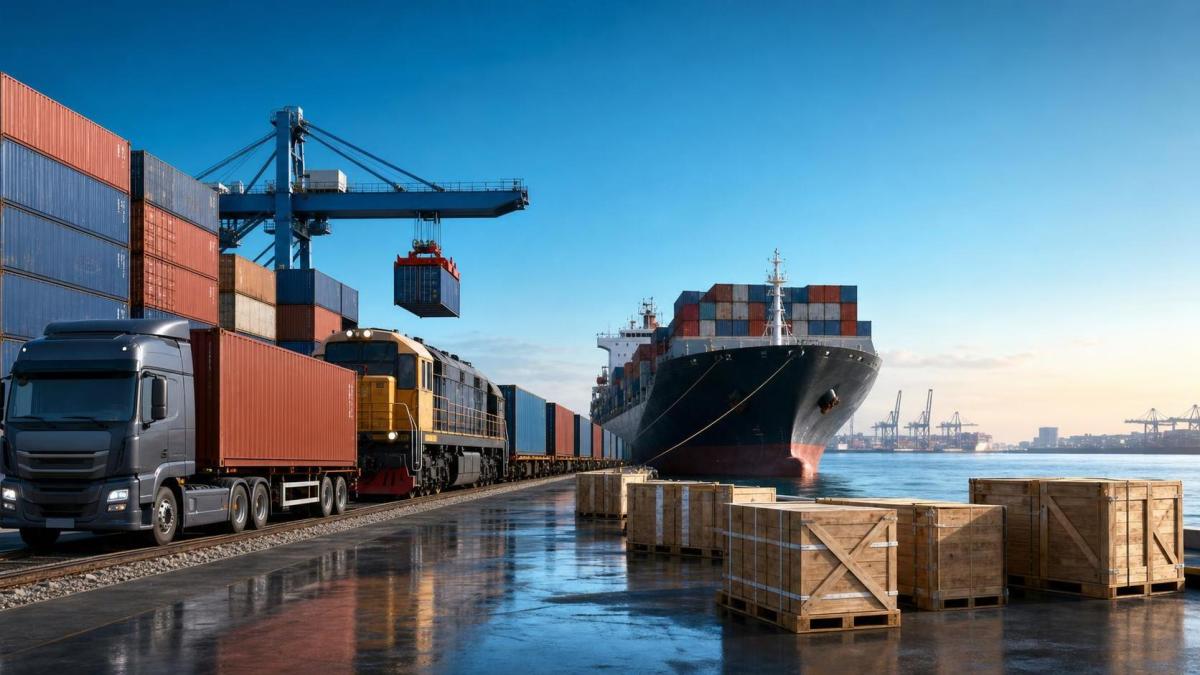
For companies moving industrial equipment, controlled components, project cargo, or high-value assemblies, this distinction is especially important. A rail-connected port solution may reduce truck dependency and improve linehaul predictability, but only if terminal dwell time is under control. A faster ocean service may still underperform if the inland drayage window is unstable. The transport plan has to be read as a system, not a list of rates.
Transit Time Is Not Just Speed
The first misunderstanding is treating transit time as a single number. Suppliers often quote door-to-door estimates in days, but those estimates can hide very different reliability profiles. A 22-day route with a tight delivery distribution may be more valuable than an 18-day route that regularly slips by four or five days. For procurement and supply planning, consistency often matters more than absolute velocity.
A useful evaluation separates transit time into components: inland pickup, terminal receiving, port dwell, vessel or linehaul movement, transshipment if any, destination clearance, and last-mile delivery. Each component has different causes of delay. Weather affects ocean schedules. Rail congestion affects inland block train timing. Port labor disruption, customs inspection, and missing commercial documents can add days even when the main carriage performs exactly as planned.
This is where route design starts to matter. Direct sailings are not automatically better than transshipment services, and rail-linked inland corridors are not automatically more reliable than road-first options. In some trade lanes, a transshipment hub with frequent sailings can outperform a direct service with limited weekly departures because missed cut-off risk is lower. Likewise, a truck-to-port model may be more resilient than rail in regions where rail slots are constrained or service recovery is slow.
When comparing options, ask for more than the advertised lead time. Ask for cut-off schedules, sailing frequency, typical dwell assumptions, and how schedule reliability is measured internally. If the provider cannot explain where time is spent, the headline transit figure is not a decision-grade metric.
Cost Comparison Fails When It Stops at Freight
The second mistake is comparing cost only at the base transport quote level. Land sea transport solutions should be evaluated on total landed cost logic, even if the final purchase decision is made inside logistics or sourcing rather than finance. The freight line item is only one portion of the economic picture. Depending on the cargo and lane, the larger cost difference may come from inventory carrying time, port storage, demurrage and detention, special handling, packaging reinforcement, insurance, customs brokerage, or destination delivery constraints.
A slower route may look inexpensive until it ties up working capital or misses a project installation window. A low ocean rate can become expensive if the cargo regularly incurs destination storage because inland pickup capacity is not synchronized. For oversized or sensitive equipment, the cheaper option may require additional crating, lashing, shock protection, or climate control, which shifts cost back into the shipment even before it moves.
This is one reason high-value industrial shippers often evaluate transport in scenario bands rather than single-price comparisons. They look at baseline cost, likely exception cost, and severe disruption cost. That approach is more realistic because transport spend is not driven only by normal operations. It is also shaped by what happens when a container misses a connection, when a rail wagon is rolled, or when cargo cannot be cleared immediately on arrival.
A disciplined comparison usually includes these cost layers:
- Main carriage: inland haulage, ocean freight, rail linehaul, feeder legs.
- Node costs: terminal handling, port charges, lift-on or lift-off, storage, scanning, inspection handling.
- Cargo preparation: packing, blocking and bracing, moisture control, hazardous or special cargo compliance if applicable.
- Financial impact: inventory in transit, buffer stock requirement, stockout exposure, project delay cost.
- Exception management: rebooking, demurrage, detention, cargo survey, claims administration, emergency trucking.
Without that wider view, “lowest cost” often means only “lowest visible cost.” Those are not the same thing.
Cargo Risk Needs to Be Broken Down, Not Generalized
Cargo risk is frequently discussed too vaguely. Decision makers may hear that ocean transport has more weather risk, or that road legs have more theft exposure, or that rail is gentler for certain cargo types. None of those statements is universally wrong, but none is precise enough to support a sourcing decision. Risk has to be tied to the cargo itself, the packaging standard, the number of touches, the control environment, and the consequences of failure.
For example, high-value control components, traction electronics, or vessel systems may be less sensitive to pure transit duration than to humidity, vibration, shock, and handling quality. Large fabricated assemblies may tolerate a longer route but become difficult to protect once repeated terminal lifts are involved. Temperature-sensitive material introduces a different profile again, where monitoring and intervention capability matter more than advertised speed.
A practical cargo risk review usually considers four categories:
This is also where mode integration becomes relevant. A land-sea solution with one responsible lead provider may reduce handoff ambiguity, but only if operational control is real and not just contractual. A fragmented chain with separate trucker, terminal operator, ocean carrier, and local forwarder can still work well if escalation paths, milestone visibility, and cargo instructions are tightly managed.
The Best Option Depends on the Consequence of Being Wrong
The cleanest way to compare land sea transport solutions is to start with consequence, not mode preference. What happens if the cargo arrives three days late? What happens if one crate is damaged but the shipment is still delivered on time? What happens if customs holds the shipment because the supporting documents do not align with the packing list or tariff classification? Those questions reveal what the transport plan must protect.
If the commercial consequence of delay is severe, evaluators may favor routes with tighter schedule control even at a higher base rate. If the cargo is robust but storage costs are high at destination, service frequency and inland synchronization may outrank pure sailing time. If the goods are technically complex and difficult to replace, the route with fewer handling events and stronger condition monitoring may be justified even when transit is longer.
This is especially relevant for sectors tied to rail systems, marine engineering, energy infrastructure, and other project-based supply chains. A missed component can idle expensive assets or postpone commissioning. In that environment, transport is not simply a logistics purchase. It is part of asset readiness and execution risk.
What to Ask Before You Approve a Transport Option
A useful evaluation does not require perfect data, but it does require the right questions. Before approving a route, ask the provider where the schedule is most likely to fail, which charges are most likely to sit outside the quote, how many times the cargo will be physically handled, and what documentation must be correct before cargo acceptance. If the shipment is specialized, ask how similar cargo is packed, secured, inspected, and traced through exceptions.
It also helps to separate strategic and operational fit. Strategically, the route should align with the business priority: speed, cost discipline, resilience, or cargo protection. Operationally, it should match the shipment reality: dimensions, sensitivity, origin infrastructure, destination constraints, and import process. A route can be attractive on network theory and still fail because the destination warehouse has limited unloading capability or because the inland leg depends on scarce chassis, rail slots, or escort arrangements.
One more caution: historical familiarity can distort judgment. Teams often stay with a known lane because it feels controllable, even when service patterns have changed. On the other hand, newer integrated corridors can be overrated if the provider has not demonstrated exception management discipline. The comparison should rely on current execution logic, not only on habit or branding.
A Decision Framework That Holds Up Under Pressure
A solid choice among land sea transport solutions usually comes from scoring each option against three things at once: time reliability, full economic impact, and cargo-specific risk. Not every shipment needs a formal matrix, but most business-critical moves benefit from one. The point is not administrative neatness. It is to make tradeoffs visible before disruption forces them into the open.
When evaluators do this well, they stop looking for a universally best route. They look for the route that fails least badly under the conditions they are most likely to face. That is a more realistic standard, and for complex cross-border supply chains it is usually the one that protects both budget and execution.
If a proposed solution cannot explain its transit assumptions, cannot show where non-freight costs may surface, or cannot identify the main cargo risk points, it is not ready for approval yet. A transport option worth selecting should be intelligible at the operational level, not just attractive at the quotation level.
Recommended News
 Sep 29, 2026What drives traction systems price differences between rail projects?Traction systems price differences explained: compare duty cycles, voltage compatibility, integration, localization, and lifecycle costs for smarter rail procurement.
 Sep 26, 2026What to assess before selecting an electric traction system manufacturerChoose an electric traction system manufacturer with confidence. Explore key criteria for performance, reliability, safety, integration, energy efficiency, and lifecycle support.
 Sep 25, 2026When do full digitalization systems justify the investment?Full digitalization systems: discover when rail and maritime operators can turn connected data into safer operations, higher availability, and measurable ROI.
 Sep 23, 2026What drives automatic train control systems cost on rail projects?Automatic train control systems cost depends on integration, migration, safety testing, communications, and lifecycle support. Explore the key budget drivers for rail projects.
 Sep 21, 2026How to assess an ocean going vessel builder’s delivery riskAssess an ocean going vessel builder’s delivery risk with proven checks for schedules, capacity, design maturity, critical equipment, quality, and project controls.
 Sep 20, 2026What drives rail safety technology costs over a project lifecycle?Rail safety technology cost goes beyond equipment—explore lifecycle drivers from integration and safety assurance to cybersecurity, commissioning, and obsolescence.
 Sep 16, 2026What to verify before choosing an advanced ocean-going vessels supplierAdvanced ocean-going vessels supplier checklist: verify design authority, build quality, digital systems, delivery reliability, and lifecycle support before you buy.
 Sep 15, 2026What rail safety technology best reduces level-crossing risks in Southeast Asia?Rail safety technology Southeast Asia: discover how fail-safe signalling, barriers, obstacle detection and remote monitoring reduce level-crossing risks.
 Sep 14, 2026How exporters can reduce customs delays in global trade logisticsGlobal trade logistics for exporters: reduce customs delays with accurate data, clearance-ready documents, early filing, and proactive exception management.
 Sep 13, 2026When do global transportation network systems reduce delivery delays?Global transportation network systems reduce delivery delays by improving rail-port-vessel coordination, real-time visibility, and proactive decisions across complex land-sea supply chains.
 Sep 09, 2026When should you choose a rail and maritime manufacturer with dual-sector capability?Rail and maritime manufacturer guide: learn when dual-sector capability reduces integration risk, improves lifecycle support, and strengthens rail-to-port operations.
 Sep 08, 2026What to verify before selecting a railway signalling equipment supplierRailway signalling equipment supplier checklist: verify safety evidence, integration, cybersecurity, delivery capability, and lifecycle support before award.
 Sep 07, 2026How to size a traction power transformer for railway load demandTraction power transformer sizing guide: model railway load demand, peak duty, voltage regulation, harmonics, and contingency capacity for reliable service.
 Sep 07, 2026How do customization options for industrial connectors affect lead times?Customization options for industrial connectors can impact lead times, cost, and compliance. Learn how to specify smarter for rail and marine projects.
 Sep 05, 2026What information should an industrial sourcing guide include?Industrial sourcing information procurement guide: evaluate suppliers, compliance, lifecycle costs, interfaces, and lead times for smarter rail and maritime purchasing decisions.
 Sep 01, 2026How to find reliable maritime tender information before biddingMaritime tender information: learn how to verify sources, define bid-ready scopes, check qualifications, and reduce risk before submitting competitive marine bids.
 Aug 30, 2026How to select railway automation equipment for depots with phased upgradesRailway automation equipment for depots: learn how to plan phased upgrades that improve safety, throughput, integration, and lifecycle control.
 Aug 27, 2026How industrial sourcing intelligence pricing data supports budget approvalIndustrial sourcing intelligence pricing data helps teams benchmark scope, assess supplier risk, and build defensible budget approvals for complex rail and maritime assets.
 Aug 26, 2026When does a marine fuel efficiency solution make financial sense in the Middle East?Marine fuel efficiency solution Middle East: learn when retrofit savings, compliance value, and vessel data align to deliver credible ROI and smarter shipping investment decisions.
 Aug 24, 2026When does maritime automation for tankers deliver a real payback?Maritime automation for tankers delivers real payback when it cuts fuel use, reduces cargo risk, and improves uptime. See how owners can time investment for stronger ROI.
 Aug 23, 2026When do maritime logistics systems in the Middle East justify the costMaritime logistics systems Middle East: discover when rising delays, manual coordination, and poor visibility make system investment the smarter move for regional operators.
 Aug 22, 2026What drives vessel navigation system price for commercial fleetsVessel navigation system price depends on integration, compliance, automation, and support—not just hardware. Learn what drives fleet costs and compare quotes with confidence.
 Aug 21, 2026How to assess shipbuilding maritime tenders before biddingShipbuilding maritime tenders require more than price checks. Learn how to assess technical scope, compliance, supply chain, and commercial risk before bidding with confidence.
 Aug 20, 2026When does working with an ocean-going vessels distributor reduce supply risk?Ocean-going vessels distributor: learn when this partner cuts supply risk through stronger compliance, faster response, and better sourcing resilience in complex maritime procurement.