



Search News
Industry Portal
Popular Tags
How do customization options for industrial connectors affect lead times?
Author
Time
Click Count
Customization options for industrial connectors affect lead times because each non-standard choice can introduce work that a catalog part does not require: engineering review, component sourcing, tooling checks, sample approval, assembly changes, testing, documentation, or a new production schedule. The practical question is not whether customization adds time. It is which requested changes create a controlled variation of an existing product, and which turn the order into a new engineered configuration.
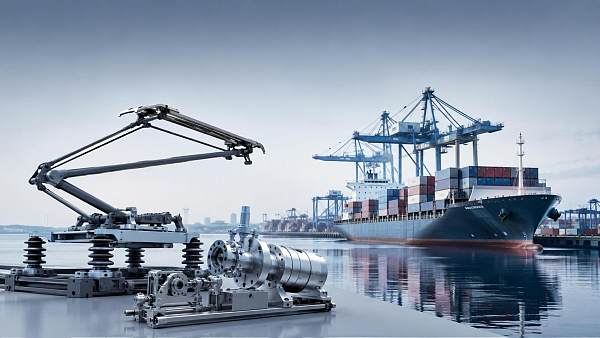
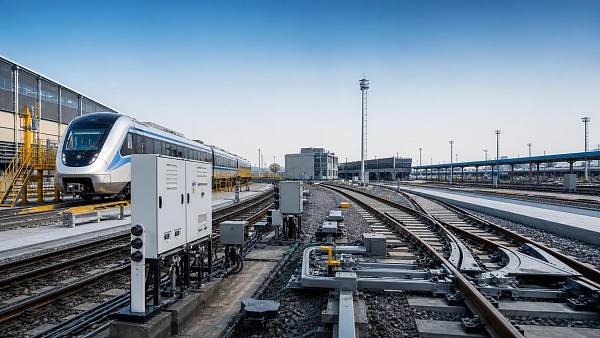
That distinction matters in rail control cabinets, traction equipment, onboard ship systems, deck machinery, container-vessel communications, and LNG-related installations. A connector may be physically small, but a late connector can hold up cable harness completion, panel wiring, equipment testing, or delivery of a larger subsystem. The lowest unit price is not always the lowest project cost when a late or incorrectly specified connector creates rework downstream.
Not all customization options create the same delay
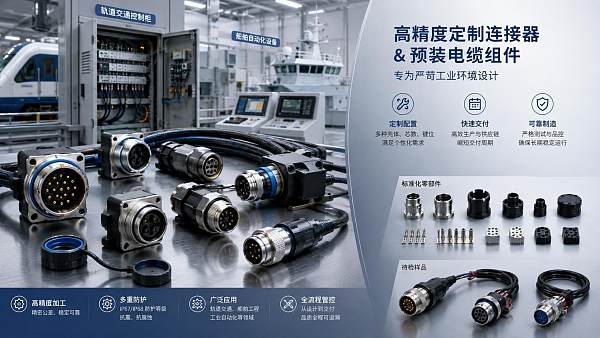
Industrial connector suppliers commonly offer configurable housings, contact counts, contact plating, coding, cable glands, backshells, sealing parts, labels, and assembled cable solutions. Some selections can be made from stocked modular parts. Others require parts that are purchased or manufactured specifically for the order.
A useful purchasing rule is to separate requests into three categories:
A standard connector family with a different keying position or an approved gland size may remain a configured item. A connector with a unique pin layout, special housing geometry, mixed power-and-signal contact arrangement, or unusual environmental requirement can cross into engineering territory. Buyers should not assume that a part number built from selectable options is automatically available on the same schedule as a fully stocked connector.
The options most likely to extend delivery
Contact arrangement and electrical changes
Pin count is only part of the issue. Changing the contact arrangement can affect the insert, mating interface, termination method, current capacity, clearance between circuits, and the availability of mating components. Mixed arrangements are especially sensitive: power, control, data, shielding, coaxial, fiber, or high-current contacts may require a dedicated insert rather than a general-purpose one.
For equipment that combines safety-related control signals with power circuits, a request for “one connector instead of two” can appear economical at first. It may reduce installation points, but it can also introduce a less common insert, a more complex assembly process, and a longer validation path. Separate standardized connectors may cost more in hardware and installation space while providing a more reliable supply route. The correct choice depends on whether the integration benefit outweighs the schedule and replacement-part risk.
Contact material, plating, and termination
Special contact materials and plating are often specified for corrosion resistance, high mating cycles, low-level signals, high current, or harsh temperature exposure. These choices can be necessary, but they may not be routinely stocked in every contact size and termination style.
Termination adds another decision point. Crimp, solder, screw, and PCB contacts have different supply and production implications. A crimp contact may be readily available while the specified wire size, plating, or seal combination is not. For pre-terminated cable assemblies, the supplier must also confirm wire procurement, stripping, crimping, inspection, labeling, continuity testing, and packaging. An assembled harness is not simply a connector with a cable attached; it is a manufactured product with its own bill of materials and quality controls.
Sealing, corrosion protection, and marine exposure
Sealed industrial connectors commonly need compatible housings, inserts, gaskets, cable glands, backshells, and caps. Selecting an environmental rating is therefore not a single-line requirement. The final protection level depends on the complete mated and installed assembly, including cable diameter, gland tightening, unused cavity sealing, and cap selection.
Marine applications often add concerns about salt exposure, vibration, washdown, condensation, and long service intervals. A request for enhanced corrosion resistance can affect plating, housing finish, fasteners, sealing materials, and documentation. These are reasonable requirements for exposed equipment, but they should be tied to the actual installation condition. Applying the most severe protection requirement to every internal cabinet connection can reduce supply flexibility and raise cost without improving the system where it is used.
Custom cable assemblies and overmolding
Cable assemblies are among the most common causes of underestimated lead time. They combine several supply chains: connector components, cable, shielding materials, glands or backshells, protective conduit, labels, and sometimes molded strain relief. The assembly must then be built to a controlled drawing or wiring schedule.
Overmolding may improve sealing, strain relief, and handling, particularly where frequent motion or water ingress is a concern. It can also introduce mold selection, material compatibility checks, curing or production capacity constraints, and prototype approval. A molded solution makes sense when the application and volume justify it. It is less attractive when the equipment design is still changing, the cable route is uncertain, or rapid field replacement is more valuable than an integrated construction.
Compliance and documentation can take longer than fabrication
In controlled transport and marine projects, the connector itself may be available while the requested documentation is not yet complete. Requirements can include material declarations, traceability records, test reports, inspection records, certificates of conformity, controlled drawings, marking requirements, or project-specific quality documentation. Each request should be defined early and included in the quotation scope.
This is particularly important when a connector is used in a railway signalling enclosure, traction-power interface, braking control system, shipboard automation cabinet, or cryogenic-adjacent installation. The buyer may need evidence that the supplied configuration matches the approved design. A vendor’s general data sheet may describe the product family but not prove the exact combination of contacts, seals, cable, and markings delivered under the order.
A frequent error is to request “all available certificates” after an order has been released. Some records can be provided quickly; others depend on traceable components, witnessed checks, or specific production controls. Documentation should be treated as a deliverable with a defined format and lead time, not as an administrative afterthought.
Why small changes become major schedule risks
Connector lead time is shaped by the slowest required element. A supplier may have housings in stock but be waiting for a specific insert, contact finish, cable type, sealing accessory, or approved label material. The quoted lead time can also change if the requested quantity exceeds available stock or if demand for the same specialized component is shared across other projects.
Engineering ambiguity creates a second form of delay. A request that says “marine-grade connector,” “high-vibration connector,” or “railway compliant connector” does not provide enough information to build and quote a repeatable configuration. The supplier may need to clarify installation location, exposure, voltage and current, cable construction, shielding, mating cycle expectations, locking method, temperature conditions, and relevant customer specifications. Every clarification cycle consumes calendar time before manufacturing begins.
Design changes after sample approval are more expensive than changes made during quotation. They may invalidate assembled harnesses, completed labels, inspection plans, or purchased components. This is why an early technical review is often more valuable than pushing for an aggressive delivery promise based on incomplete requirements.
Use a lead-time review before comparing unit prices
When comparing quotations, a lower priced custom connector may not be comparable to a faster standard configuration. The offers may differ in scope, qualification assumptions, inspection content, documentation, cable supply, or inclusion of mating parts. A meaningful comparison requires the same technical baseline.
Before releasing an order, build a short configuration record that answers the following questions:
- Is there an existing, approved connector family that can meet the duty without a new design?
- Which elements are standard factory options, and which require engineering approval?
- Are both plug and receptacle, contacts, seals, backshells, caps, and mating accessories included?
- Does the quoted delivery date include assembly, testing, labeling, and documentation?
- Will the required cable, contact finish, and sealing components be available for the full quantity?
- Is a first article, sample, or drawing approval required before series production?
- What parts should be held as spares for field repair and future maintenance?
The last point deserves attention. A connector design optimized only for the initial build can create a costly maintenance problem years later. A highly customized insert or proprietary cable assembly may be suitable for a stable, high-value system with controlled lifecycle support. It is less suitable for locations where maintenance teams need interchangeable repair parts and fast access to standard tooling.
Choose customization according to project maturity
At the concept or prototype stage, use standard interfaces where practical. This keeps options open while cabinet layouts, cable routes, and equipment boundaries are still moving. It also reduces the risk of approving a connector arrangement before the full electrical and mechanical interface is understood.
During detailed design, customization should be used to solve a defined problem: preventing mismating, improving sealing at an exposed interface, separating circuits, supporting a specific cable construction, or meeting a documented installation constraint. Each special option should have a clear reason. “Preferred by the last project” is not always sufficient, especially when it causes a long replenishment cycle.
For repetitive production, a custom configuration may become more attractive. Once the design is stable, the cost of engineering and validation can be distributed across planned demand. Forecasts, framework agreements, and planned call-offs can also help suppliers reserve components or prepare assembly capacity. That does not eliminate supply risk, but it is more effective than placing repeated urgent orders for a configuration that was never intended to be stocked.
Rail and marine projects need interface discipline
High-consequence applications often involve multiple organizations: equipment designers, panel builders, cable-harness suppliers, installers, shipyards, rail integrators, and maintenance teams. A connector specification that is technically correct in one subsystem can become difficult to source or service when transferred across those boundaries.
For rail and ocean-going equipment, GTOT’s coverage of signalling, traction, braking, smart shipping, and LNG vessel systems highlights a recurring procurement issue: connector decisions should be reviewed as interfaces, not isolated components. A connector must work with the mating half, cable route, enclosure entry, maintenance process, and documentation package. Procurement schedules become more reliable when those parties agree on the complete interface before an order is placed.
For example, keying may protect against incorrect connections in a dense cabinet or exposed service point, but it must remain compatible with replacement procedures. A special backshell may protect a cable screen, yet it may require a cable diameter that conflicts with the harness design. A high-grade seal may be appropriate at an outdoor or deck-mounted interface but unnecessary inside a protected enclosure. These decisions affect both the first delivery and the total cost of ownership.
A practical way to control cost without weakening the specification
Do not remove customization simply to shorten the lead time. Removing a needed seal, coding feature, shielding arrangement, or contact rating can shift risk from purchasing to commissioning or service. Instead, challenge requirements that do not have a direct functional purpose and protect the ones that do.
The most effective approach is usually to standardize the underlying connector family while limiting special features to the points where the application genuinely needs them. Standardize common contact sizes, crimp tooling, accessory families, and mating interfaces across equipment where possible. Reserve bespoke designs for interfaces with unusual environmental, electrical, mechanical, or safety constraints.
Ask suppliers to identify the critical-path item in each configuration. That request is more useful than a single overall lead-time statement because it reveals whether the real constraint is a contact, insert, cable, sealing component, documentation step, or engineering release. It also gives the project team a chance to consider an approved alternative before the schedule becomes urgent.
Questions that deserve a direct answer
Can a custom connector be faster than a standard catalog part?
It can be, when the supplier has an established configuration, the required components are available, and the requested quantity fits existing production capacity. A nominally standard part can be slower when its stock has been allocated or when accessories needed for a complete assembly are unavailable.
Should a buyer approve an alternative connector to avoid a delay?
Only when the alternative is reviewed as a complete interface. Confirm mating compatibility, electrical duty, environmental protection, cable termination, mechanical fit, documentation, installation tooling, and spare-part consequences. A substitute that fits physically but changes maintenance or system behavior may cost more than the delay it avoids.
Are pre-assembled connector cables always the better choice?
They can reduce site assembly work and improve consistency, especially for repeatable builds. They are less flexible when cable lengths remain uncertain, routes are adjusted late, or field repair needs are frequent. The preferred option depends on design maturity and installation control.
The best lead-time decision is rarely “standard versus custom” in absolute terms. It is a controlled choice between performance, availability, validation effort, and lifecycle support. Define the full connector interface early, distinguish required customization from preference, and compare quotations against the same technical and documentation scope. That discipline reduces both delivery surprises and the hidden cost of solving connector problems after the rest of the equipment is ready.
Recommended News
 Sep 29, 2026What drives traction systems price differences between rail projects?Traction systems price differences explained: compare duty cycles, voltage compatibility, integration, localization, and lifecycle costs for smarter rail procurement.
 Sep 26, 2026What to assess before selecting an electric traction system manufacturerChoose an electric traction system manufacturer with confidence. Explore key criteria for performance, reliability, safety, integration, energy efficiency, and lifecycle support.
 Sep 25, 2026When do full digitalization systems justify the investment?Full digitalization systems: discover when rail and maritime operators can turn connected data into safer operations, higher availability, and measurable ROI.
 Sep 23, 2026What drives automatic train control systems cost on rail projects?Automatic train control systems cost depends on integration, migration, safety testing, communications, and lifecycle support. Explore the key budget drivers for rail projects.
 Sep 21, 2026How to assess an ocean going vessel builder’s delivery riskAssess an ocean going vessel builder’s delivery risk with proven checks for schedules, capacity, design maturity, critical equipment, quality, and project controls.
 Sep 20, 2026What drives rail safety technology costs over a project lifecycle?Rail safety technology cost goes beyond equipment—explore lifecycle drivers from integration and safety assurance to cybersecurity, commissioning, and obsolescence.
 Sep 16, 2026What to verify before choosing an advanced ocean-going vessels supplierAdvanced ocean-going vessels supplier checklist: verify design authority, build quality, digital systems, delivery reliability, and lifecycle support before you buy.
 Sep 15, 2026What rail safety technology best reduces level-crossing risks in Southeast Asia?Rail safety technology Southeast Asia: discover how fail-safe signalling, barriers, obstacle detection and remote monitoring reduce level-crossing risks.
 Sep 14, 2026How exporters can reduce customs delays in global trade logisticsGlobal trade logistics for exporters: reduce customs delays with accurate data, clearance-ready documents, early filing, and proactive exception management.
 Sep 13, 2026When do global transportation network systems reduce delivery delays?Global transportation network systems reduce delivery delays by improving rail-port-vessel coordination, real-time visibility, and proactive decisions across complex land-sea supply chains.
 Sep 09, 2026When should you choose a rail and maritime manufacturer with dual-sector capability?Rail and maritime manufacturer guide: learn when dual-sector capability reduces integration risk, improves lifecycle support, and strengthens rail-to-port operations.
 Sep 08, 2026What to verify before selecting a railway signalling equipment supplierRailway signalling equipment supplier checklist: verify safety evidence, integration, cybersecurity, delivery capability, and lifecycle support before award.
 Sep 07, 2026How to size a traction power transformer for railway load demandTraction power transformer sizing guide: model railway load demand, peak duty, voltage regulation, harmonics, and contingency capacity for reliable service.
 Sep 07, 2026How do customization options for industrial connectors affect lead times?Customization options for industrial connectors can impact lead times, cost, and compliance. Learn how to specify smarter for rail and marine projects.
 Sep 05, 2026What information should an industrial sourcing guide include?Industrial sourcing information procurement guide: evaluate suppliers, compliance, lifecycle costs, interfaces, and lead times for smarter rail and maritime purchasing decisions.
 Sep 01, 2026How to find reliable maritime tender information before biddingMaritime tender information: learn how to verify sources, define bid-ready scopes, check qualifications, and reduce risk before submitting competitive marine bids.
 Aug 30, 2026How to select railway automation equipment for depots with phased upgradesRailway automation equipment for depots: learn how to plan phased upgrades that improve safety, throughput, integration, and lifecycle control.
 Aug 27, 2026How industrial sourcing intelligence pricing data supports budget approvalIndustrial sourcing intelligence pricing data helps teams benchmark scope, assess supplier risk, and build defensible budget approvals for complex rail and maritime assets.
 Aug 26, 2026When does a marine fuel efficiency solution make financial sense in the Middle East?Marine fuel efficiency solution Middle East: learn when retrofit savings, compliance value, and vessel data align to deliver credible ROI and smarter shipping investment decisions.
 Aug 24, 2026When does maritime automation for tankers deliver a real payback?Maritime automation for tankers delivers real payback when it cuts fuel use, reduces cargo risk, and improves uptime. See how owners can time investment for stronger ROI.
 Aug 23, 2026When do maritime logistics systems in the Middle East justify the costMaritime logistics systems Middle East: discover when rising delays, manual coordination, and poor visibility make system investment the smarter move for regional operators.
 Aug 22, 2026What drives vessel navigation system price for commercial fleetsVessel navigation system price depends on integration, compliance, automation, and support—not just hardware. Learn what drives fleet costs and compare quotes with confidence.
 Aug 21, 2026How to assess shipbuilding maritime tenders before biddingShipbuilding maritime tenders require more than price checks. Learn how to assess technical scope, compliance, supply chain, and commercial risk before bidding with confidence.
 Aug 20, 2026When does working with an ocean-going vessels distributor reduce supply risk?Ocean-going vessels distributor: learn when this partner cuts supply risk through stronger compliance, faster response, and better sourcing resilience in complex maritime procurement.