



Search News
Industry Portal
Popular Tags
When does maritime automation for tankers deliver a real payback?
Author
Time
Click Count
For tanker operators and maritime investors, the key question is no longer whether digitalization matters, but when maritime automation for tankers begins to generate measurable returns. From fuel savings and route optimization to safer cargo handling and reduced crew workload, real payback depends on vessel profile, trade patterns, and integration depth. This article examines where automation creates genuine commercial value and how decision-makers can assess investment timing with greater confidence.
In procurement discussions, automation is often framed too broadly. A tanker does not become commercially better simply because more functions are digitized. Payback appears only when automation removes a specific operational bottleneck, reduces a recurring cost, or lowers a risk that would otherwise be expensive to insure, investigate, or absorb. That is why two owners can buy similar systems and see very different financial outcomes.
For decision-makers, the practical issue is not “how advanced is the system?” but “which automations move earnings, opex, risk exposure, or asset competitiveness within our actual trading pattern?”
Where tanker automation usually creates the earliest returns
Among all shipping segments, tankers have a distinctive automation logic. Voyage economics matter, but so do cargo safety, terminal interface discipline, emissions compliance, and the cost of operational error. The strongest early payback tends to come from areas where decisions are repeated frequently and where small inefficiencies accumulate over long trading cycles.
The first area is fuel and voyage performance. Automated route advisory, weather integration, trim optimization, and engine performance monitoring can improve bunker efficiency, especially on vessels with predictable trade routes or operators disciplined enough to act on the recommendations. The gain is rarely just from software. It comes from software plus bridge acceptance, shore-side monitoring, and a process for turning recommendations into speed and routing decisions.
The second area is cargo handling and tank operations. On crude, product, chemical, or LNG-related tanker workflows, automated monitoring of tank levels, cargo temperatures, inert gas parameters, pump performance, and valve sequencing can reduce delays, prevent quality incidents, and support more consistent terminal turnaround. In tanker shipping, avoided loss events often matter more than headline efficiency claims. One cargo contamination issue, overfill event, or transfer deviation can erase years of “digital savings” if controls are weak.
The third area is machinery and maintenance. Condition monitoring, alarm rationalization, and predictive diagnostics can reduce unplanned downtime, improve maintenance planning, and support spares purchasing with better timing. The business value is clearest in fleets where technical managers already have strong maintenance discipline. Automation does not fix weak management; it amplifies good processes.
The fourth area is compliance and reporting. Automated capture of voyage, engine, and emissions-related data helps reduce administrative workload and improves consistency in reporting to charterers, class, flag, and relevant regulatory frameworks. Exact reporting requirements vary by vessel type, trading geography, and regulation, so buyers should verify applicability case by case. Still, the trend is clear: data quality is becoming part of commercial credibility.
Why some tanker automation projects disappoint
The main reason is not bad technology. It is poor investment framing.
Many buyers approve maritime automation for tankers under a generic modernization budget, then expect a fleet-wide return profile. But tanker operations are not uniform. A modern MR product tanker on tightly scheduled regional trades has different automation economics from an aging Aframax in volatile spot employment. Even within the same fleet, return depends on charter structure, port rotation, crew model, onboard digital maturity, and whether the owner controls operations closely enough to use the new data.
Another common problem is buying isolated tools instead of decision systems. A vessel may have performance dashboards, cargo sensors, maintenance software, and satellite connectivity, yet no integrated workflow for voyage optimization, exception management, or shore-vessel coordination. In that case, data volumes rise but action quality does not. Procurement teams should be skeptical of systems that promise visibility without clearly defining who will act, how fast, and under what thresholds.
There is also a timing issue. Retrofitting advanced automation onto older tonnage nearing commercial or regulatory obsolescence often produces weak returns unless the investment directly supports charterability, compliance continuity, or a known life-extension strategy. For some ships, the better decision is selective automation rather than full digital upgrade.
Payback depends heavily on vessel profile and trade pattern
For executives comparing investment cases, automation should be evaluated by operational archetype rather than by vendor category.
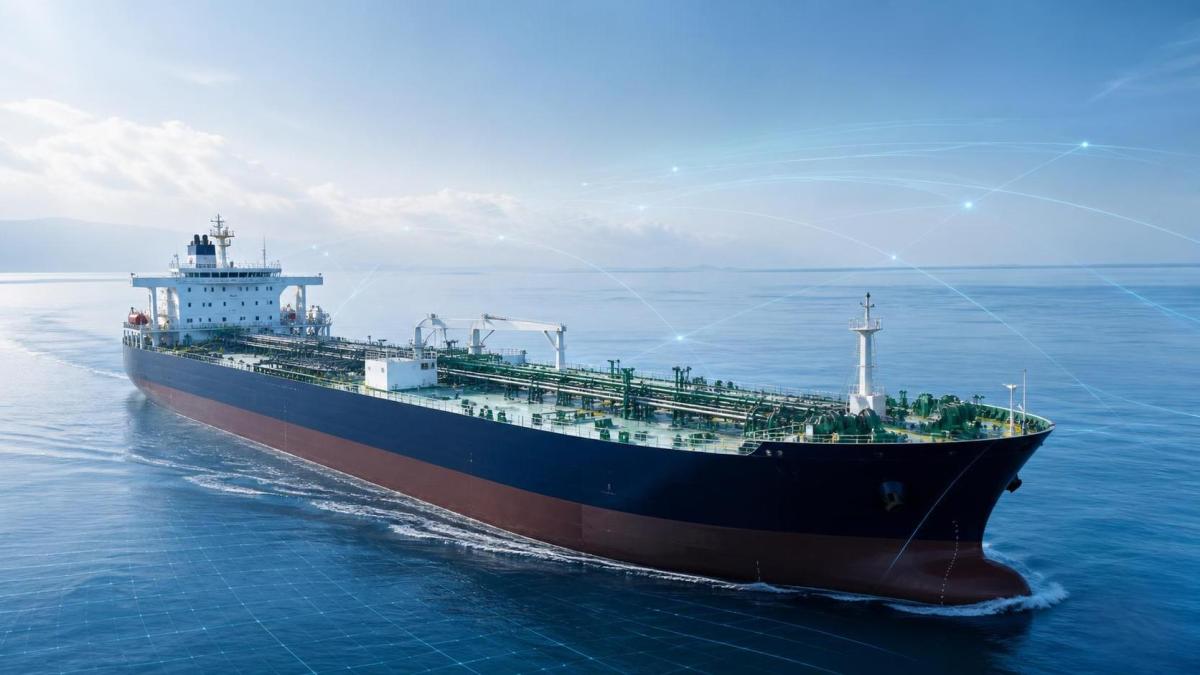
Large crude tankers on long-haul routes tend to benefit most from voyage optimization, performance analytics, fuel management, and machinery health monitoring. Their scale means even modest percentage gains can translate into meaningful annual savings. But the gains depend on weather routing discipline and charter-party realities. If commercial commitments regularly override optimized speed profiles, theoretical savings will not fully materialize.
Product tankers on frequent port calls often see stronger returns from port turnaround support, cargo operation monitoring, digital checklists, and workflow standardization. Here, labor efficiency and operational consistency can matter as much as fuel. Repetition favors automation.
Chemical tankers may justify automation through error reduction more than through simple fuel economics. Segregation complexity, cargo sensitivity, cleaning demands, and documentation intensity increase the value of systems that improve procedural compliance and cargo integrity.
Shuttle tankers and specialized offshore-linked operations can often support higher automation intensity because uptime, positioning accuracy, redundancy, and safety case requirements are commercially central. In these cases, automation is less a cost-saving tool than an availability and risk-management tool.
Older spot-trading vessels present the hardest case. If deployment is volatile and remaining asset life is uncertain, buyers should focus on lower-capex modules with short implementation cycles: engine monitoring, digital reporting, or targeted cargo safety upgrades. Full-stack automation may not clear the hurdle.
The cost side is broader than capex
Procurement decisions often underestimate the hidden denominator in return calculations. The purchase price of hardware and software is only the visible layer.
Total cost should include integration engineering, class and approval implications where relevant, installation downtime, crew training, cyber hardening, satellite bandwidth needs, software subscription structure, shoreside staffing, and ongoing support. If a system creates a new dependency on high-quality connectivity or specialized vendor intervention, that dependency should be priced into the business case from the start.
Cybersecurity deserves particular attention. As automation deepens, especially across navigation support, cargo systems, and machinery data pathways, cyber risk becomes an operational procurement issue, not an IT side topic. Buyers should examine architecture segmentation, update management, access control, incident response support, and alignment with maritime cyber expectations from class, flag, and company safety management procedures. Specific compliance pathways should be verified against the owner’s operating framework and the latest applicable guidance.
A second hidden cost is organizational adoption. If shore teams lack the capacity to review alerts, benchmark vessel performance, or intervene when anomalies appear, the system’s value drops sharply. Decision-makers should ask a simple question before approving investment: do we have the management bandwidth to use this output consistently?
When the payback is real: four decision tests
A useful procurement filter is to test whether the proposed automation passes four commercial thresholds.
1. It addresses a recurring, measurable problem.
If the owner cannot quantify the baseline pain—fuel variance, cargo delays, alarm overload, maintenance overrun, claims exposure—the return story is probably too vague. Good automation investments solve known leakage points.
2. It fits the vessel’s remaining earning life.
A five- to seven-year return horizon may suit a newbuild or young eco-tonnage, but not an older ship facing uncertain utilization or looming retrofit decisions in other areas. Payback timing must match asset strategy.
3. It changes decisions, not just reporting.
If no one will alter speed, maintenance timing, cargo handling practice, or shore instructions based on the system output, then the investment is closer to digital decoration than operational improvement.
4. It strengthens commercial positioning.
In some cases, the return is not purely internal cost reduction. Better data transparency, safety assurance, emissions tracking, or operating consistency can support charterer confidence and fleet differentiation. The commercial value may be indirect but still real.
Short payback versus strategic payback
Not all returns should be judged on the same timeline.
Some automation modules can justify themselves within a relatively short period through fuel savings, reduced man-hours, or lower maintenance inefficiency. Others create strategic payback by preserving relevance in a market moving toward tighter reporting, more connected fleets, and stronger charterer scrutiny.
This distinction matters. Executives sometimes reject investments because they cannot prove a near-term numeric ROI with precision. But in tanker markets, there are cases where the strategic cost of not investing becomes significant: weaker data quality in chartering discussions, less confidence from oil majors or sophisticated cargo interests, slower incident analysis, or reduced ability to benchmark fleet performance. These effects are harder to model, but they influence competitiveness.
That said, “strategic value” should not become an excuse for weak discipline. Buyers should separate core infrastructure investments from optional digital layers. A vessel may need a data backbone, sensor reliability, and secure connectivity before advanced analytics or semi-automated optimization tools make sense.
Newbuilds and retrofits should not be evaluated the same way
On newbuild tankers, the economics of automation are usually stronger because systems can be designed into the vessel architecture from the beginning. Integration is cleaner, interfaces are planned earlier, and the owner can align automation with long-term operating philosophy. In these cases, the question is often about selecting the right level of automation, avoiding overcomplexity, and preserving interoperability.
Retrofits require harsher scrutiny. Legacy control systems, mixed equipment generations, documentation gaps, and installation windows can all erode business value. A retrofit proposal that looks attractive in vendor slides may become much less compelling once commissioning risks and vessel off-hire are included.
For retrofits, phased investment usually works better than all-at-once automation. Owners can start with high-confidence modules—performance monitoring, fuel analytics, remote diagnostics, cargo data visibility—and expand only after verifying onboard use and shore-side response quality.
What buyers should ask suppliers before committing
Supplier evaluation should go beyond feature comparison.
Decision-makers should ask for evidence by vessel class and use case: where has the solution produced documented savings or incident reduction on comparable tanker operations? What assumptions were required? What level of crew intervention was still necessary? How much integration work fell on the owner? How are updates handled at sea? What happens if communications are degraded? Which class, flag, terminal, or owner approval constraints typically affect deployment? If the vendor cannot answer in operational terms, the risk is higher than the brochure suggests.
It is also worth asking whether the system remains useful when crews rotate, when charter patterns change, or when shore teams are overloaded. The best maritime automation for tankers is not the most sophisticated package. It is the one that remains usable under normal industry friction.
The investment timing that usually makes sense
In practice, automation tends to deliver real payback under three timing conditions.
One is during newbuild specification, when architecture choices are still flexible and lifecycle economics can be optimized from day one.
Another is during major retrofit or special survey windows, when installation and commissioning can be bundled with existing yard time and the marginal disruption is lower.
The third is when a company has already identified a fleet-wide operating issue that can be measured and corrected at scale. In that situation, automation is supporting a management agenda, not trying to invent one.
By contrast, the weakest timing is often reactive spending driven by fear of falling behind competitors, without a clear baseline, internal owner, or vessel prioritization logic.
What a disciplined procurement decision looks like
A sound decision usually begins with segmentation, not technology selection. Separate the fleet by age, trade pattern, charter model, cargo complexity, and remaining strategic relevance. Identify where cost leakage or risk concentration is highest. Build the case around a narrow set of high-value use cases. Then test vendor claims against your own operating data, implementation capacity, and asset horizon.
That approach often leads to an uncomfortable but useful conclusion: not every tanker in the fleet should receive the same level of automation, and not every automation category deserves immediate investment.
For tanker operators, real payback comes when automation is treated as an operational economics tool rather than a digital branding exercise. The gains are strongest where data leads to repeatable action, where risk reduction prevents expensive incidents, and where vessel strategy is clear enough to support the investment horizon. In other words, the answer to when maritime automation for tankers pays back is not “as soon as it is installed.” It is when the technology is matched to the right vessel, the right workflow, and the right management discipline.
Recommended News
 Sep 29, 2026What drives traction systems price differences between rail projects?Traction systems price differences explained: compare duty cycles, voltage compatibility, integration, localization, and lifecycle costs for smarter rail procurement.
 Sep 26, 2026What to assess before selecting an electric traction system manufacturerChoose an electric traction system manufacturer with confidence. Explore key criteria for performance, reliability, safety, integration, energy efficiency, and lifecycle support.
 Sep 25, 2026When do full digitalization systems justify the investment?Full digitalization systems: discover when rail and maritime operators can turn connected data into safer operations, higher availability, and measurable ROI.
 Sep 23, 2026What drives automatic train control systems cost on rail projects?Automatic train control systems cost depends on integration, migration, safety testing, communications, and lifecycle support. Explore the key budget drivers for rail projects.
 Sep 21, 2026How to assess an ocean going vessel builder’s delivery riskAssess an ocean going vessel builder’s delivery risk with proven checks for schedules, capacity, design maturity, critical equipment, quality, and project controls.
 Sep 20, 2026What drives rail safety technology costs over a project lifecycle?Rail safety technology cost goes beyond equipment—explore lifecycle drivers from integration and safety assurance to cybersecurity, commissioning, and obsolescence.
 Sep 16, 2026What to verify before choosing an advanced ocean-going vessels supplierAdvanced ocean-going vessels supplier checklist: verify design authority, build quality, digital systems, delivery reliability, and lifecycle support before you buy.
 Sep 15, 2026What rail safety technology best reduces level-crossing risks in Southeast Asia?Rail safety technology Southeast Asia: discover how fail-safe signalling, barriers, obstacle detection and remote monitoring reduce level-crossing risks.
 Sep 14, 2026How exporters can reduce customs delays in global trade logisticsGlobal trade logistics for exporters: reduce customs delays with accurate data, clearance-ready documents, early filing, and proactive exception management.
 Sep 13, 2026When do global transportation network systems reduce delivery delays?Global transportation network systems reduce delivery delays by improving rail-port-vessel coordination, real-time visibility, and proactive decisions across complex land-sea supply chains.
 Sep 09, 2026When should you choose a rail and maritime manufacturer with dual-sector capability?Rail and maritime manufacturer guide: learn when dual-sector capability reduces integration risk, improves lifecycle support, and strengthens rail-to-port operations.
 Sep 08, 2026What to verify before selecting a railway signalling equipment supplierRailway signalling equipment supplier checklist: verify safety evidence, integration, cybersecurity, delivery capability, and lifecycle support before award.
 Sep 07, 2026How to size a traction power transformer for railway load demandTraction power transformer sizing guide: model railway load demand, peak duty, voltage regulation, harmonics, and contingency capacity for reliable service.
 Sep 07, 2026How do customization options for industrial connectors affect lead times?Customization options for industrial connectors can impact lead times, cost, and compliance. Learn how to specify smarter for rail and marine projects.
 Sep 05, 2026What information should an industrial sourcing guide include?Industrial sourcing information procurement guide: evaluate suppliers, compliance, lifecycle costs, interfaces, and lead times for smarter rail and maritime purchasing decisions.
 Sep 01, 2026How to find reliable maritime tender information before biddingMaritime tender information: learn how to verify sources, define bid-ready scopes, check qualifications, and reduce risk before submitting competitive marine bids.
 Aug 30, 2026How to select railway automation equipment for depots with phased upgradesRailway automation equipment for depots: learn how to plan phased upgrades that improve safety, throughput, integration, and lifecycle control.
 Aug 27, 2026How industrial sourcing intelligence pricing data supports budget approvalIndustrial sourcing intelligence pricing data helps teams benchmark scope, assess supplier risk, and build defensible budget approvals for complex rail and maritime assets.
 Aug 26, 2026When does a marine fuel efficiency solution make financial sense in the Middle East?Marine fuel efficiency solution Middle East: learn when retrofit savings, compliance value, and vessel data align to deliver credible ROI and smarter shipping investment decisions.
 Aug 24, 2026When does maritime automation for tankers deliver a real payback?Maritime automation for tankers delivers real payback when it cuts fuel use, reduces cargo risk, and improves uptime. See how owners can time investment for stronger ROI.
 Aug 23, 2026When do maritime logistics systems in the Middle East justify the costMaritime logistics systems Middle East: discover when rising delays, manual coordination, and poor visibility make system investment the smarter move for regional operators.
 Aug 22, 2026What drives vessel navigation system price for commercial fleetsVessel navigation system price depends on integration, compliance, automation, and support—not just hardware. Learn what drives fleet costs and compare quotes with confidence.
 Aug 21, 2026How to assess shipbuilding maritime tenders before biddingShipbuilding maritime tenders require more than price checks. Learn how to assess technical scope, compliance, supply chain, and commercial risk before bidding with confidence.
 Aug 20, 2026When does working with an ocean-going vessels distributor reduce supply risk?Ocean-going vessels distributor: learn when this partner cuts supply risk through stronger compliance, faster response, and better sourcing resilience in complex maritime procurement.