



Search News
Industry Portal
Popular Tags
How to assess shipbuilding maritime tenders before bidding
Author
Time
Click Count
How to assess shipbuilding maritime tenders before bidding
Before committing engineering time, bid security, and internal management attention, a shipbuilding tender needs to be treated as a business case, not just a commercial opportunity. That sounds obvious, yet many bid teams still get drawn in by vessel size, contract value, or the reputation of the owner, only to discover later that the technical baseline is unstable, the compliance burden is underestimated, or the yard’s delivery assumptions are unrealistic.
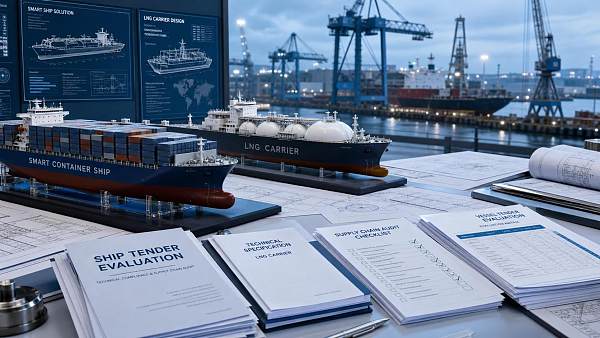
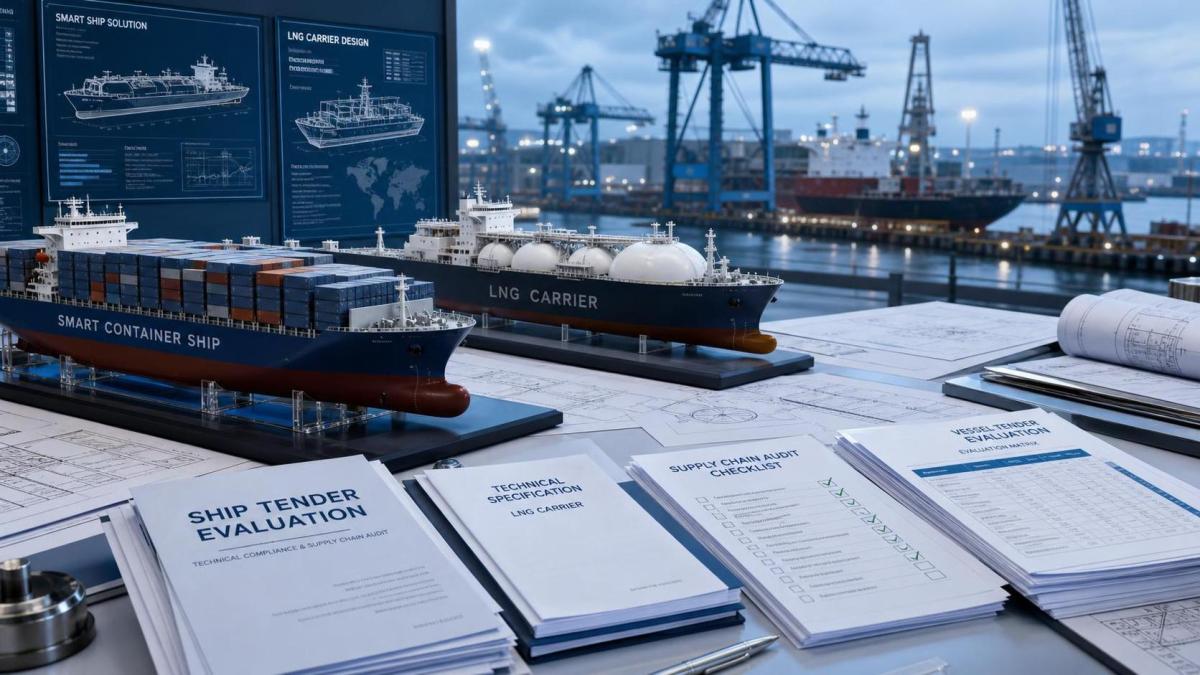
For business evaluators, the real question is not simply whether a tender is attractive. It is whether the opportunity is winnable, executable, financeable, and strategically sensible. In shipbuilding maritime tenders, those four tests rarely align by accident. They have to be checked deliberately, especially in segments such as smart container ships and LNG carriers, where digital integration, fuel transition, and class approval can quickly turn a promising bid into a difficult project.
A useful assessment framework starts with one discipline: separate headline value from delivery reality. The tender documents may describe scope in broad terms, but hidden risk usually sits in the interfaces—between hull and propulsion, automation and cybersecurity, cargo system and containment, owner standards and class requirements, shipyard planning and supplier lead times.
Start with the vessel concept, not the price sheet
Early bid reviews often jump too fast to commercial math. That is a mistake. The first pass should ask whether the vessel concept itself is coherent. What type of ship is being procured? Is the specification mature enough for firm pricing, or is it still at a feasibility stage dressed up as a procurement package?
This matters because different vessel categories carry very different tender risk profiles. A conventional build with familiar machinery and established classification pathways is one thing. A smart vessel package involving AI-assisted routing, integrated ship-to-shore data links, emissions monitoring, and remote diagnostics is another. LNG carriers go further still, because cargo containment design, boil-off management, cryogenic systems, and dual-fuel propulsion create layers of technical dependency that are not easy to price loosely.
If the owner’s specification mixes ambitious performance claims with incomplete engineering assumptions, evaluators should flag that immediately. A tender may still be worth pursuing, but only if the bid strategy includes clarifications, exclusions, or staged technical assumptions.
Check whether the technical scope is actually bid-ready
In practical terms, a bid-ready shipbuilding tender should let your team answer basic questions without guessing too much. Are principal dimensions, deadweight or TEU expectations, propulsion philosophy, fuel choice, speed targets, endurance, cargo handling logic, and automation level clearly stated? Are class rules identified? Are flag-state requirements known, or at least indicated? Has the owner specified preferred makers, approved vendor lists, or restricted countries of origin?
When documents leave too many of these points open, the commercial risk shifts to the bidder. That does not always kill the opportunity, but it changes how the opportunity should be scored. A vague scope may justify a higher contingency, a limited-validity quotation from sub-suppliers, or a decision not to bid at all.
One useful internal test is this: can your engineering, sourcing, legal, and project teams all explain the same scope in the same words? If not, the tender is not yet under control.
Compliance is not a box-ticking exercise
A surprising number of bids look viable until the compliance review begins. In maritime tenders, that review often needs to cover classification society rules, IMO-driven requirements, flag-state expectations, environmental performance clauses, export controls, sanctions screening, local content rules, and cybersecurity obligations for connected systems. The exact list depends on the project and jurisdiction, so it usually needs confirmation from the tender package and supporting standards.
This is especially important for smart vessels. Once the tender includes integrated navigation logic, onboard connectivity, remote condition monitoring, or data exchange with port and shore systems, compliance stops being purely mechanical. Software architecture, data interfaces, and cyber resilience can become evaluation points. Business evaluators should not assume those issues will be “handled later” by engineering. If the owner has embedded them in technical scoring, they can determine bid ranking from the start.
The same applies to LNG-related tenders. Deep-cryogenic performance, insulation behavior, fuel gas systems, and containment integration are not generic add-ons. They shape approval paths, supplier selection, commissioning complexity, and warranty exposure.
Map the supply chain before you trust the schedule
A shipbuilding bid can look sound on paper and still fail the schedule test. In current markets, long-lead items, specialist fabrication capacity, maker approval bottlenecks, and inspection sequencing can all distort delivery plans. If the tender asks for compressed timelines while also requiring high-end automation, dual-fuel systems, or specialized containment technologies, that combination deserves skepticism.
Evaluators should go beyond nominal lead times. Check whether critical components come from a narrow supplier base. Check whether owner-approved brands are already heavily committed. Check whether FAT, HAT, SAT, and commissioning windows are realistic. Check whether integration depends on third-party software or yard-specific interfaces that are not fully defined yet.
This is where intelligence platforms can add real value if used properly. GTOT, for example, sits at the intersection of advanced vessels, rail control systems, traction technologies, and macro-transport infrastructure cycles. That cross-sector view matters more than it may seem. The same supply chain stresses affecting high-integrity rail signaling electronics or braking control modules can spill into marine automation and connected vessel architecture. Evaluators who only read the tender may miss those wider constraints; evaluators who track industrial cycles usually make better bid decisions.
Score the tender on commercial structure, not just revenue size
Contract value can hide an unhealthy commercial structure. A disciplined review should look at payment milestones, currency exposure, liquidated damages, refund guarantees, parent company guarantees, variation mechanisms, tax assumptions, and warranty periods. In some tenders, the technical challenge is manageable but the contractual framework is too aggressive to justify the bid.
Watch for these warning signs:
- Large design responsibility with limited technical freeze
- Back-loaded payment tied to sea trials or final acceptance
- Unlimited or poorly capped liability language
- LD clauses that stack across delay, performance, and fuel consumption
- Broad owner approval rights without response deadlines
- Ambiguous responsibility for class comments, rework, or interface failures
None of these automatically means “do not bid.” But each one changes the probability-adjusted value of the tender. A bid/no-bid decision should reflect that, rather than treating all revenue as equally bankable.
Understand how the buyer will evaluate bids
Many teams spend most of their effort preparing answers and too little effort understanding the scoring logic. In shipbuilding maritime tenders, buyers may weigh lifecycle efficiency, emissions readiness, digital integration, local participation, after-sales support, or fleet commonality as heavily as headline price. If the evaluation methodology is stated, study it closely. If it is not, infer it from the structure of the tender documents, mandatory forms, and clarification behavior.
For example, repeated questions about remote monitoring, route optimization, or onboard data architecture usually suggest that the owner is not buying steel alone. They are buying operational intelligence. GTOT’s focus on smart container ships and strategic transport intelligence reflects a market reality here: vessel procurement is increasingly tied to network efficiency, not just hull delivery. That should shape how a bidder frames value, assumptions, and technical differentiators.
Use a practical bid assessment matrix
A matrix like this does not replace judgment. It makes judgment more consistent. That matters when internal enthusiasm is high and the pressure to bid is political rather than analytical.
Do not ignore strategic fit
Some tenders are technically possible and commercially acceptable, but still wrong to pursue. Maybe the project pulls scarce engineers away from stronger opportunities. Maybe it sits outside your preferred vessel segment. Maybe the owner expects a local footprint or lifecycle support model that your organization cannot sustain. Maybe the reference requirements quietly favor incumbents.
This is why the best bid reviews include a strategic layer. GTOT’s broader lens across land-sea transport systems is relevant here. Procurement decisions in advanced shipping are no longer isolated from wider infrastructure trends, digitalization pathways, or decarbonization pressure. A tender that aligns with where your capabilities are going may be worth more than one with a larger short-term ticket but poor long-term fit.
A good bid decision often comes down to the quality of your questions
Strong evaluators do not try to eliminate all uncertainty before bidding. In shipbuilding, that is rarely possible. What they do instead is identify which uncertainties can be priced, which must be clarified, and which should stop the bid entirely.
Before moving forward, it is worth testing the tender against a few hard questions. Is the vessel specification mature enough to support accountable pricing? Are compliance pathways visible, especially for smart systems or LNG-related scope? Can the supply chain support the requested delivery profile? Are the commercial terms proportionate to the risk? And perhaps most important, does winning this tender strengthen your position, or merely consume capacity?
If those answers are still fuzzy, the next step is not to rush the bid. It is to seek clarification, refine assumptions, and decide where your red lines are. In a market where technical ambition and procurement pressure often move faster than execution reality, disciplined assessment is not caution for its own sake. It is how serious bidders protect margin, credibility, and delivery performance before the first number is ever submitted.
Recommended News
 Sep 29, 2026What drives traction systems price differences between rail projects?Traction systems price differences explained: compare duty cycles, voltage compatibility, integration, localization, and lifecycle costs for smarter rail procurement.
 Sep 26, 2026What to assess before selecting an electric traction system manufacturerChoose an electric traction system manufacturer with confidence. Explore key criteria for performance, reliability, safety, integration, energy efficiency, and lifecycle support.
 Sep 25, 2026When do full digitalization systems justify the investment?Full digitalization systems: discover when rail and maritime operators can turn connected data into safer operations, higher availability, and measurable ROI.
 Sep 23, 2026What drives automatic train control systems cost on rail projects?Automatic train control systems cost depends on integration, migration, safety testing, communications, and lifecycle support. Explore the key budget drivers for rail projects.
 Sep 21, 2026How to assess an ocean going vessel builder’s delivery riskAssess an ocean going vessel builder’s delivery risk with proven checks for schedules, capacity, design maturity, critical equipment, quality, and project controls.
 Sep 20, 2026What drives rail safety technology costs over a project lifecycle?Rail safety technology cost goes beyond equipment—explore lifecycle drivers from integration and safety assurance to cybersecurity, commissioning, and obsolescence.
 Sep 16, 2026What to verify before choosing an advanced ocean-going vessels supplierAdvanced ocean-going vessels supplier checklist: verify design authority, build quality, digital systems, delivery reliability, and lifecycle support before you buy.
 Sep 15, 2026What rail safety technology best reduces level-crossing risks in Southeast Asia?Rail safety technology Southeast Asia: discover how fail-safe signalling, barriers, obstacle detection and remote monitoring reduce level-crossing risks.
 Sep 14, 2026How exporters can reduce customs delays in global trade logisticsGlobal trade logistics for exporters: reduce customs delays with accurate data, clearance-ready documents, early filing, and proactive exception management.
 Sep 13, 2026When do global transportation network systems reduce delivery delays?Global transportation network systems reduce delivery delays by improving rail-port-vessel coordination, real-time visibility, and proactive decisions across complex land-sea supply chains.
 Sep 09, 2026When should you choose a rail and maritime manufacturer with dual-sector capability?Rail and maritime manufacturer guide: learn when dual-sector capability reduces integration risk, improves lifecycle support, and strengthens rail-to-port operations.
 Sep 08, 2026What to verify before selecting a railway signalling equipment supplierRailway signalling equipment supplier checklist: verify safety evidence, integration, cybersecurity, delivery capability, and lifecycle support before award.
 Sep 07, 2026How to size a traction power transformer for railway load demandTraction power transformer sizing guide: model railway load demand, peak duty, voltage regulation, harmonics, and contingency capacity for reliable service.
 Sep 07, 2026How do customization options for industrial connectors affect lead times?Customization options for industrial connectors can impact lead times, cost, and compliance. Learn how to specify smarter for rail and marine projects.
 Sep 05, 2026What information should an industrial sourcing guide include?Industrial sourcing information procurement guide: evaluate suppliers, compliance, lifecycle costs, interfaces, and lead times for smarter rail and maritime purchasing decisions.
 Sep 01, 2026How to find reliable maritime tender information before biddingMaritime tender information: learn how to verify sources, define bid-ready scopes, check qualifications, and reduce risk before submitting competitive marine bids.
 Aug 30, 2026How to select railway automation equipment for depots with phased upgradesRailway automation equipment for depots: learn how to plan phased upgrades that improve safety, throughput, integration, and lifecycle control.
 Aug 27, 2026How industrial sourcing intelligence pricing data supports budget approvalIndustrial sourcing intelligence pricing data helps teams benchmark scope, assess supplier risk, and build defensible budget approvals for complex rail and maritime assets.
 Aug 26, 2026When does a marine fuel efficiency solution make financial sense in the Middle East?Marine fuel efficiency solution Middle East: learn when retrofit savings, compliance value, and vessel data align to deliver credible ROI and smarter shipping investment decisions.
 Aug 24, 2026When does maritime automation for tankers deliver a real payback?Maritime automation for tankers delivers real payback when it cuts fuel use, reduces cargo risk, and improves uptime. See how owners can time investment for stronger ROI.
 Aug 23, 2026When do maritime logistics systems in the Middle East justify the costMaritime logistics systems Middle East: discover when rising delays, manual coordination, and poor visibility make system investment the smarter move for regional operators.
 Aug 22, 2026What drives vessel navigation system price for commercial fleetsVessel navigation system price depends on integration, compliance, automation, and support—not just hardware. Learn what drives fleet costs and compare quotes with confidence.
 Aug 21, 2026How to assess shipbuilding maritime tenders before biddingShipbuilding maritime tenders require more than price checks. Learn how to assess technical scope, compliance, supply chain, and commercial risk before bidding with confidence.
 Aug 20, 2026When does working with an ocean-going vessels distributor reduce supply risk?Ocean-going vessels distributor: learn when this partner cuts supply risk through stronger compliance, faster response, and better sourcing resilience in complex maritime procurement.