



Search News
Industry Portal
Popular Tags
When do full digitalization systems justify the investment?

Author
Time
Click Count
When do full digitalization systems justify the investment for rail and maritime operators? Not when a board simply wants “more data,” and not because a competitor has announced an AI initiative. The investment becomes defensible when digital capability changes a decision that is currently slow, uncertain, fragmented, or expensive—and when that change can be tied to safety, asset availability, energy use, cargo reliability, or contractual performance.
For an operator managing signalling assets, high-speed traction equipment, braking systems, container vessels, or LNG carriers, the question is rarely whether digitalization has value in principle. The harder question is whether the organization has enough operational complexity, enough asset exposure, and enough decision discipline to convert connected data into measurable economic return.
That distinction matters. A dashboard that merely displays alarms is not a transformation. A digital environment that helps a maintenance team detect a degrading pantograph contact strip before a service interruption, enables a vessel operator to revise a route around fuel, weather, and berth constraints, or gives executives a single trusted view of fleet risk can be far more consequential.
The investment case begins where operational blind spots become costly
Large transport assets operate in environments where small deviations can produce disproportionately large consequences. A rail interlocking fault may affect network capacity far beyond the location of the incident. Brake performance variations can lead to conservative operating restrictions, extra inspections, and timetable disruption. On the maritime side, an inaccurate estimate of vessel condition, cargo status, fuel consumption, or port readiness can ripple through an entire supply chain.
In these settings, full digitalization systems are justified when the cost of incomplete information is already visible in day-to-day operations. Common signals include:
- Maintenance is mainly calendar-based or reactive, despite large volumes of equipment data being available.
- Operations, engineering, procurement, and commercial teams work from different asset records or incompatible reporting tools.
- Safety-critical events require time-consuming manual reconstruction because logs, inspections, and condition history are not connected.
- Fleet or network decisions depend heavily on individual experience rather than repeatable operating intelligence.
- Energy consumption, spare-parts demand, or downtime varies significantly without a clear explanation.
- Contractors and suppliers cannot exchange validated technical information efficiently during upgrades, repairs, or tender stages.
None of these symptoms alone demands a large program. Together, they indicate that fragmented information is becoming an operating risk. At that point, the right discussion is not “Should we digitize?” but “Which decision loops should be digitized first?”
What “full digitalization” should mean in a high-value transport environment
The phrase can be misleading. It should not imply replacing every legacy system at once or forcing all departments onto a single interface. In rail and ocean-going operations, a credible full digitalization program is layered. It connects the physical asset, the control environment, the maintenance process, the commercial workflow, and the management decision.
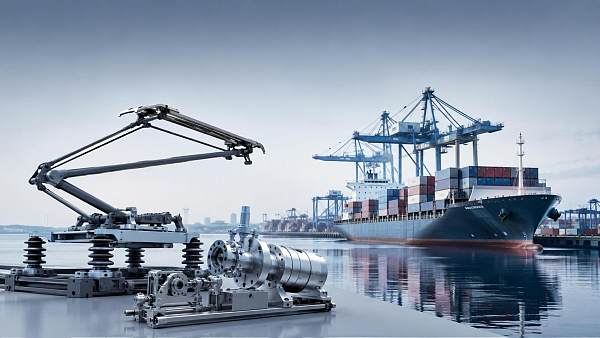
For rail infrastructure, that may mean integrating condition data from signalling control systems, axle counters, switches, traction power interfaces, pantographs, and braking equipment with work orders and operating history. For shipping companies, it may include vessel performance monitoring, propulsion and fuel data, cargo and containment-system information, weather routing, port-call coordination, and shore-side planning.
The goal is not maximum connectivity for its own sake. It is a reliable digital thread: a traceable line from field condition to engineering assessment, operational action, cost consequence, and future investment decision.
In practice, the most valuable systems tend to combine five functions:
- Data capture at the asset level. Sensors, control logs, inspection results, crew reports, and test records provide the operational evidence.
- Context and integration. Data is linked to asset identity, location, configuration, maintenance history, route, operating condition, and responsible party.
- Decision intelligence. Rules, analytics, and engineering models identify anomalies, trends, thresholds, and probable causes.
- Workflow execution. Findings trigger inspections, maintenance actions, route adjustments, procurement decisions, or management escalation.
- Governance and assurance. Cybersecurity, access control, data quality, auditability, and safety validation protect the integrity of the system.
Without the workflow layer, digitalization often remains an attractive reporting project. Without governance, it can create new safety and security concerns. Without data context, analytics can produce false confidence.

Where the return is easiest to prove
Enterprise decision-makers should avoid beginning with an abstract enterprise-wide ROI target. It is more useful to identify a limited number of value pools where baseline performance can be measured before implementation. The return on digitalization is usually strongest where the asset is expensive, interruptions are disruptive, and operating conditions are variable.
Railway signalling and control: protecting capacity as well as safety
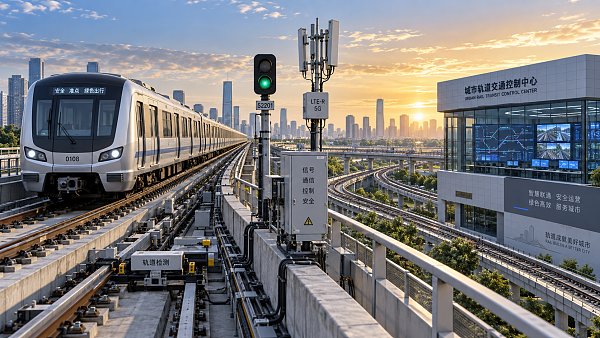
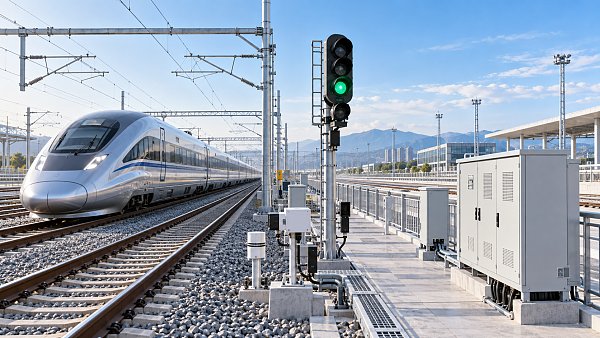
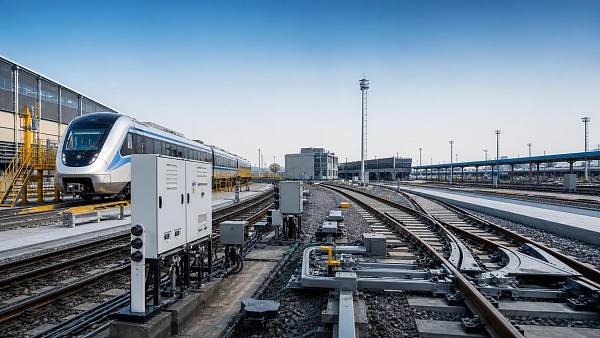
Rail signalling is often described as the central nervous system of a network for good reason. Its value is not limited to avoiding failure; it also supports headway management, incident response, service recovery, and safe automation. Digital systems are justified when they reduce the time required to identify faults, distinguish transient alarms from genuine degradation, and prioritize interventions according to network impact.
For SIL4-oriented environments, the procurement conversation must remain disciplined. A predictive or monitoring platform does not automatically become part of the safety function. Decision-makers need clarity about system boundaries, validation responsibilities, evidence trails, and how advisory outputs will be used by controllers and maintenance teams. The business case is strongest when a system improves maintenance planning and diagnostic confidence without making unsupported claims about replacing established safety assurance processes.
Traction, pantographs, and braking: turning condition data into availability
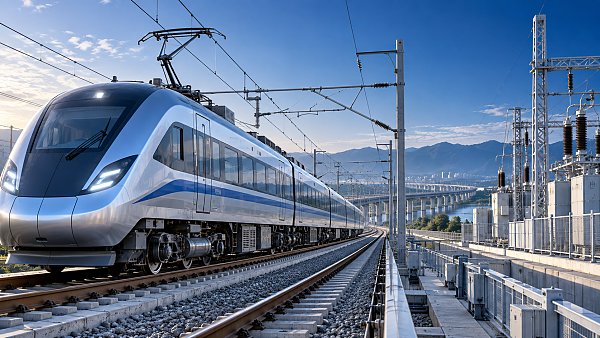
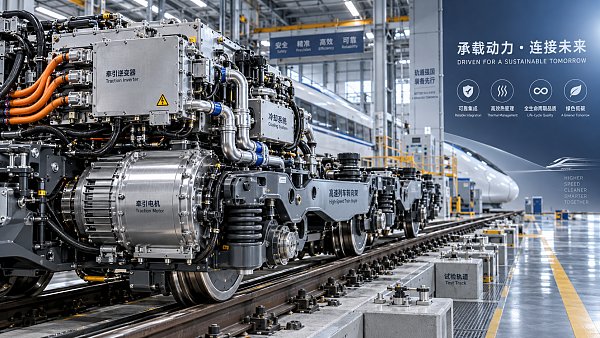
At high speed, a pantograph is operating under intense aerodynamic force, vibration, electrical load, and contact variation. A seemingly minor deterioration can affect current collection, overhead-line wear, service reliability, and workshop scheduling. Likewise, braking systems must maintain predictable performance across load conditions, weather, wear states, and demanding duty cycles.
Digital condition monitoring earns its place when it helps teams move from “inspect everything at fixed intervals” to “inspect the right component at the right time.” That can reduce unnecessary removal of usable parts while preventing a failure from developing unnoticed. Yet the savings calculation should include more than maintenance labor. It should consider unavailable rolling stock, disruption penalties, workshop capacity, spare inventory, and the risk of secondary damage.
Smart container ships: improving the quality of the voyage decision
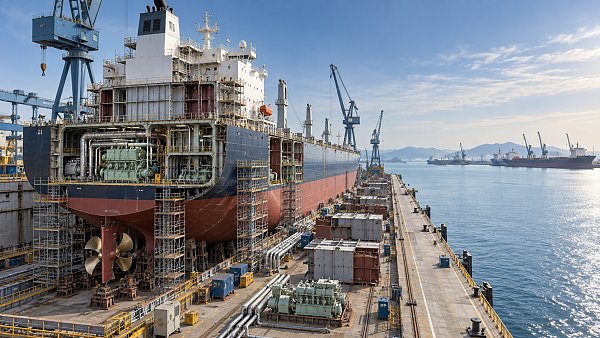
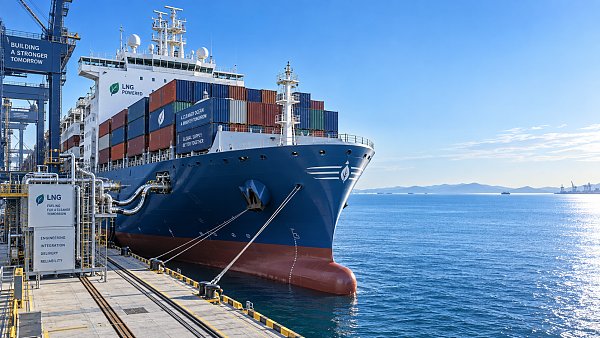
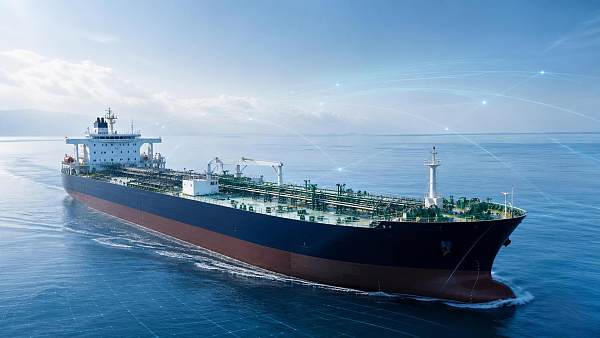
Container shipping is increasingly shaped by the interaction of route conditions, fuel strategy, cargo commitments, emissions obligations, port congestion, and equipment status. A full digitalization system can create value when it brings these elements together early enough to influence the voyage—not merely explain its outcome after arrival.
For example, route optimization becomes more meaningful when it is connected to actual hull and propeller performance, engine condition, weather forecasts, charter-party constraints, berth windows, and cargo priorities. The same principle applies to ship-to-shore coordination. Better visibility is valuable only if terminal teams, planners, and vessel operators have authority and procedures to act on it.
LNG carriers: a case for disciplined, high-integrity information
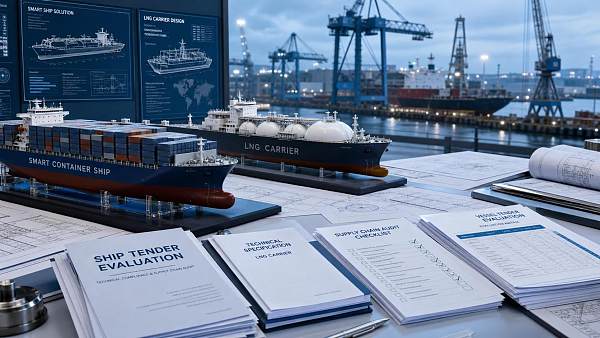
LNG carriers operate at the intersection of cryogenic containment engineering, cargo economics, propulsion strategy, and stringent safety management. Data from cargo tanks, boil-off gas handling, membrane containment monitoring, machinery performance, and voyage conditions can support better operational understanding. But this is an area where poor implementation can be more dangerous than no implementation.
Digitalization is justified where it improves early recognition of abnormal patterns, preserves an auditable condition history, and supports coordinated decisions between ship and shore. It must also respect the realities of shipboard connectivity, classification requirements, cyber resilience, crew workload, and the distinction between operational analytics and safety-critical control.
A simple test: can the organization name the decision that will improve?
Before approving a major platform, ask each proposed user group to complete one sentence: “If we had trusted, timely, integrated information, we would make this decision differently.” If the answer is vague—“we would be more efficient”—the program is not ready. If the answer is specific—“we would defer unnecessary brake overhauls while escalating units showing a defined thermal-fade risk pattern”—there is a usable foundation.
Cost is broader than software—and so is return
Procurement teams should be cautious about evaluating full digitalization systems only through licensing fees or initial integration costs. The true investment includes sensor upgrades, data cleansing, interfaces with legacy control and maintenance platforms, cybersecurity architecture, training, process redesign, and long-term data stewardship. In regulated environments, assurance activities can be substantial and should be planned from the beginning rather than treated as a late-stage compliance task.
Equally, the return should not be reduced to a single maintenance percentage. The most meaningful benefits may sit across several categories: improved asset availability, reduced service interruption, lower fuel use, fewer avoidable inspections, better spare-parts planning, strengthened compliance evidence, and more credible tender responses. For distributors, EPC contractors, and equipment specialists, a well-structured digital capability can also make technical value easier to demonstrate in restricted railway and maritime procurement processes.
That said, benefits should be assigned to accountable owners. If a projected saving belongs to maintenance, operations, and procurement simultaneously, it may belong to no one in practice. A sound business case specifies the baseline, the owner, the action that changes, and the method used to verify benefit realization.
When a phased approach is the wiser procurement choice
A full end-state architecture does not require a full-scale rollout on day one. In fact, a phased approach is often the more commercially responsible route for complex fleets and networks. Start with a high-value operational corridor, a critical equipment family, a vessel class, or a maintenance process with known data gaps. Prove data quality, user adoption, system interoperability, and decision impact before expanding.
For example, a rail operator may begin by connecting signalling fault history with maintenance work orders and network criticality, then later add traction and braking analytics. A shipowner may first establish a trusted vessel-performance and voyage-data foundation before integrating deeper cargo, machinery, and port-call workflows. The sequence should follow business consequence, not vendor feature lists.
Phasing also creates room to correct assumptions. Sensor readings may prove inconsistent across equipment generations. A useful engineering indicator may not fit the workflow of a control room. Crews and maintainers may identify context that the original data model overlooked. These discoveries are not failures; they are part of building a system that reflects real operations rather than an idealized process map.
Questions to put to potential suppliers
Technology demonstrations can be persuasive, especially when they show elegant visualizations. Decision-makers should bring the conversation back to operational fit. Ask suppliers how their platform handles intermittent connectivity, legacy protocols, evolving asset configurations, and data ownership. Request a clear explanation of which functions are advisory, which are operational, and which—if any—interact with safety-related systems.
It is also reasonable to ask how models are validated, how false alerts are managed, how audit records are retained, and how the system supports exportable data rather than creating a closed information silo. For rail and maritime assets with service lives measured in decades, interoperability and maintainability matter as much as immediate functionality.
The practical threshold for investment
Full digitalization systems justify the investment when they make critical transport assets safer to operate, easier to maintain, more predictable to deploy, and more transparent to manage—and when those improvements are visible in decisions rather than presentations.
The threshold is reached when an organization can identify costly information gaps, establish trustworthy data foundations, connect technology to accountable workflows, and measure the operational effect. For railway and maritime leaders, digitalization is not a substitute for engineering judgment, seamanship, or safety discipline. At its best, it gives those disciplines a clearer view of what is happening across the network, the vessel, the workshop, and the supply chain.
That is the real investment case: not digitizing every activity, but building the intelligence needed to protect speed, safety, cargo, energy, and asset value across land and sea.
Recommended News
 Sep 29, 2026What drives traction systems price differences between rail projects?Traction systems price differences explained: compare duty cycles, voltage compatibility, integration, localization, and lifecycle costs for smarter rail procurement.
 Sep 26, 2026What to assess before selecting an electric traction system manufacturerChoose an electric traction system manufacturer with confidence. Explore key criteria for performance, reliability, safety, integration, energy efficiency, and lifecycle support.
 Sep 25, 2026When do full digitalization systems justify the investment?Full digitalization systems: discover when rail and maritime operators can turn connected data into safer operations, higher availability, and measurable ROI.
 Sep 23, 2026What drives automatic train control systems cost on rail projects?Automatic train control systems cost depends on integration, migration, safety testing, communications, and lifecycle support. Explore the key budget drivers for rail projects.
 Sep 21, 2026How to assess an ocean going vessel builder’s delivery riskAssess an ocean going vessel builder’s delivery risk with proven checks for schedules, capacity, design maturity, critical equipment, quality, and project controls.
 Sep 20, 2026What drives rail safety technology costs over a project lifecycle?Rail safety technology cost goes beyond equipment—explore lifecycle drivers from integration and safety assurance to cybersecurity, commissioning, and obsolescence.
 Sep 16, 2026What to verify before choosing an advanced ocean-going vessels supplierAdvanced ocean-going vessels supplier checklist: verify design authority, build quality, digital systems, delivery reliability, and lifecycle support before you buy.
 Sep 15, 2026What rail safety technology best reduces level-crossing risks in Southeast Asia?Rail safety technology Southeast Asia: discover how fail-safe signalling, barriers, obstacle detection and remote monitoring reduce level-crossing risks.
 Sep 14, 2026How exporters can reduce customs delays in global trade logisticsGlobal trade logistics for exporters: reduce customs delays with accurate data, clearance-ready documents, early filing, and proactive exception management.
 Sep 13, 2026When do global transportation network systems reduce delivery delays?Global transportation network systems reduce delivery delays by improving rail-port-vessel coordination, real-time visibility, and proactive decisions across complex land-sea supply chains.
 Sep 09, 2026When should you choose a rail and maritime manufacturer with dual-sector capability?Rail and maritime manufacturer guide: learn when dual-sector capability reduces integration risk, improves lifecycle support, and strengthens rail-to-port operations.
 Sep 08, 2026What to verify before selecting a railway signalling equipment supplierRailway signalling equipment supplier checklist: verify safety evidence, integration, cybersecurity, delivery capability, and lifecycle support before award.
 Sep 07, 2026How to size a traction power transformer for railway load demandTraction power transformer sizing guide: model railway load demand, peak duty, voltage regulation, harmonics, and contingency capacity for reliable service.
 Sep 07, 2026How do customization options for industrial connectors affect lead times?Customization options for industrial connectors can impact lead times, cost, and compliance. Learn how to specify smarter for rail and marine projects.
 Sep 05, 2026What information should an industrial sourcing guide include?Industrial sourcing information procurement guide: evaluate suppliers, compliance, lifecycle costs, interfaces, and lead times for smarter rail and maritime purchasing decisions.
 Sep 01, 2026How to find reliable maritime tender information before biddingMaritime tender information: learn how to verify sources, define bid-ready scopes, check qualifications, and reduce risk before submitting competitive marine bids.
 Aug 30, 2026How to select railway automation equipment for depots with phased upgradesRailway automation equipment for depots: learn how to plan phased upgrades that improve safety, throughput, integration, and lifecycle control.
 Aug 27, 2026How industrial sourcing intelligence pricing data supports budget approvalIndustrial sourcing intelligence pricing data helps teams benchmark scope, assess supplier risk, and build defensible budget approvals for complex rail and maritime assets.
 Aug 26, 2026When does a marine fuel efficiency solution make financial sense in the Middle East?Marine fuel efficiency solution Middle East: learn when retrofit savings, compliance value, and vessel data align to deliver credible ROI and smarter shipping investment decisions.
 Aug 24, 2026When does maritime automation for tankers deliver a real payback?Maritime automation for tankers delivers real payback when it cuts fuel use, reduces cargo risk, and improves uptime. See how owners can time investment for stronger ROI.
 Aug 23, 2026When do maritime logistics systems in the Middle East justify the costMaritime logistics systems Middle East: discover when rising delays, manual coordination, and poor visibility make system investment the smarter move for regional operators.
 Aug 22, 2026What drives vessel navigation system price for commercial fleetsVessel navigation system price depends on integration, compliance, automation, and support—not just hardware. Learn what drives fleet costs and compare quotes with confidence.
 Aug 21, 2026How to assess shipbuilding maritime tenders before biddingShipbuilding maritime tenders require more than price checks. Learn how to assess technical scope, compliance, supply chain, and commercial risk before bidding with confidence.
 Aug 20, 2026When does working with an ocean-going vessels distributor reduce supply risk?Ocean-going vessels distributor: learn when this partner cuts supply risk through stronger compliance, faster response, and better sourcing resilience in complex maritime procurement.